

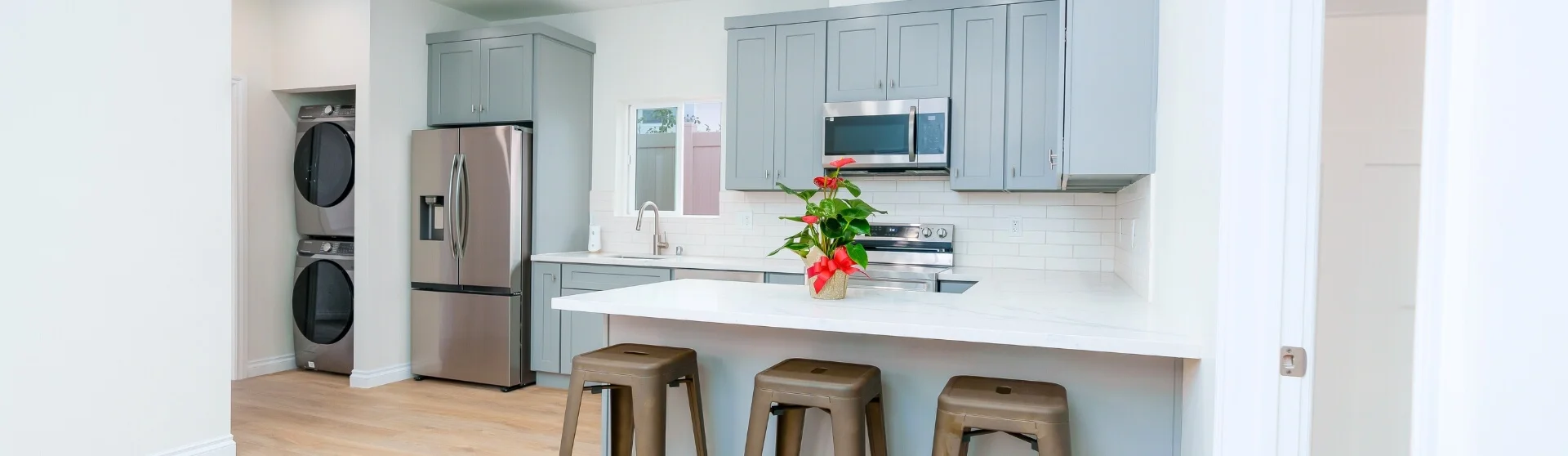
What Is an ADU? A Quick Overview
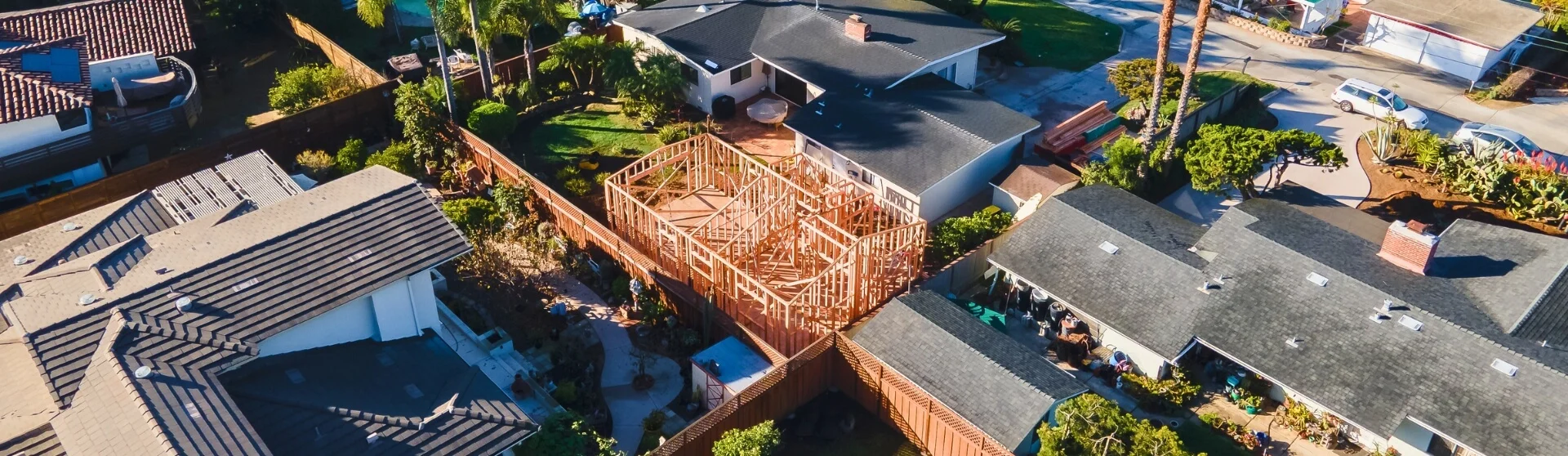
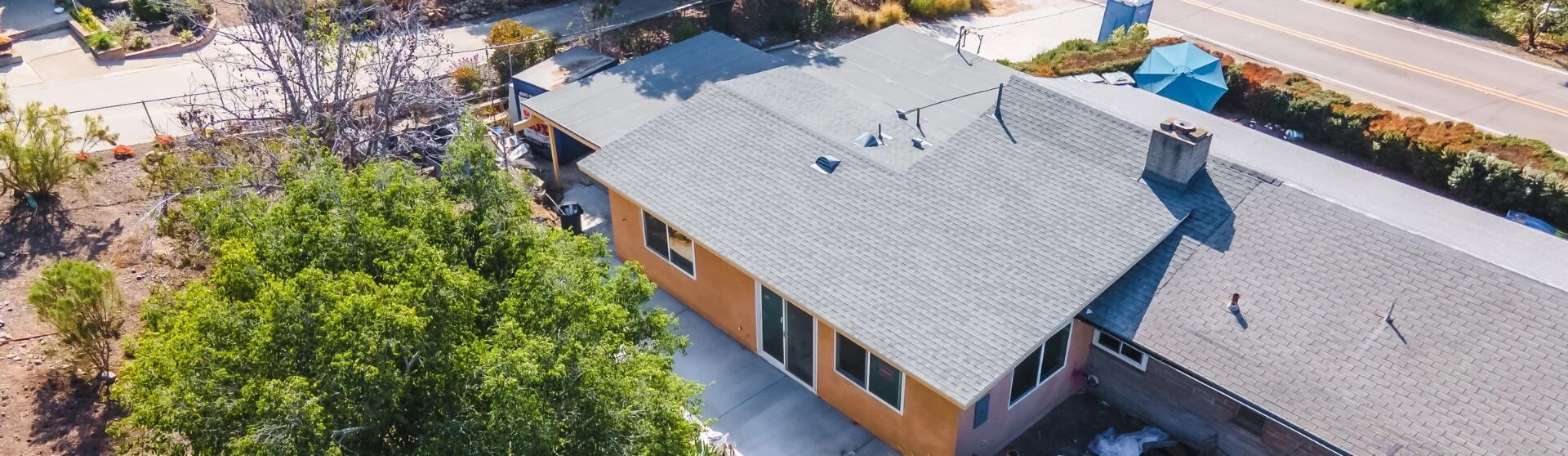
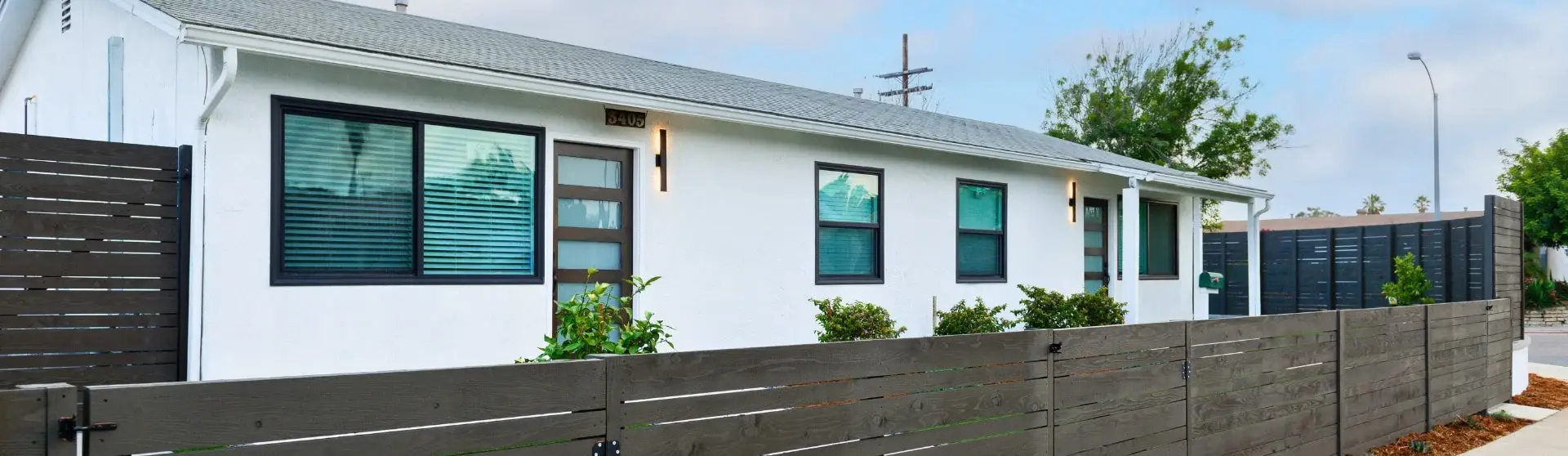
An Accessory Dwelling Unit (ADU) is a secondary, self-contained dwelling on a lot with a primary residence, commonly used as a rental or flexible living space. It includes its own kitchen, bathroom, sleeping area, and entrance, allowing it to function independently, generate rental income, or support multigenerational living. In California, ADUs may be detached, attached to the primary home, or created by converting existing space, including garages. Junior ADUs (JADUs) are a separate category with distinct requirements. Projects must satisfy applicable state law, local zoning, building permits, and occupancy requirements.
ADUs have become an increasingly visible real estate investment option as California addresses limited housing supply and persistent affordability challenges. State legislation has streamlined aspects of permitting and reduced certain regulatory barriers, helping homeowners explore granny flats and in-law suites that improve property usability and may increase long-term value. When reviewing adoption statistics, confirm the reporting period, methodology, and original source rather than treating statewide growth as evidence of local returns (Cato Institute). For a Los Angeles project, distinguish city data from unincorporated county data and consult the relevant building department for current permit and completion records (UC Los Angeles - Center for Housing Policy & Design).
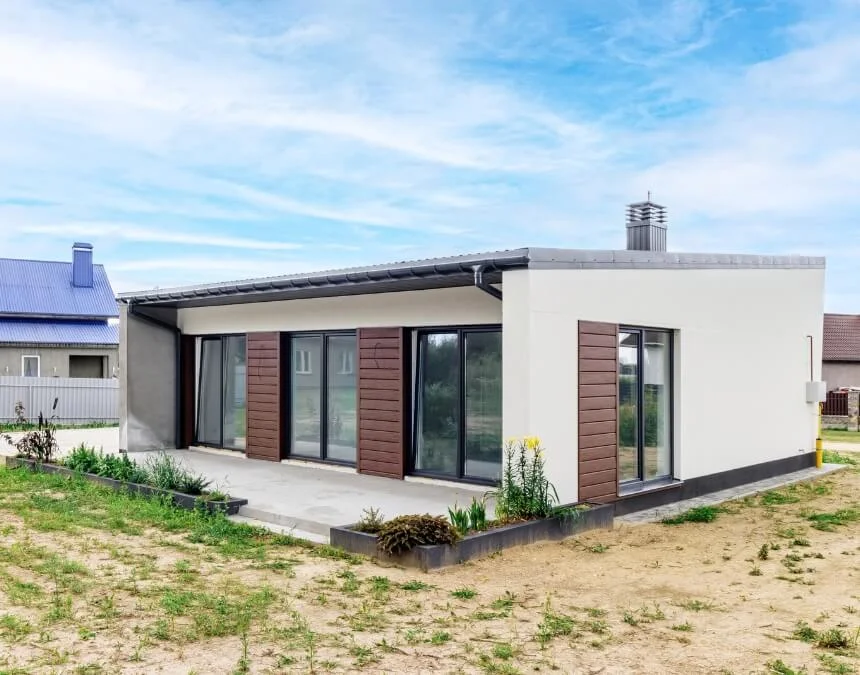
ADUs create independent living spaces that can support rental income, multigenerational housing, and long-term property value without requiring the purchase of a second property.
Impact-fee threshold note: Under the March 2026 California HCD ADU Handbook, the statewide development-impact-fee exemption includes ADUs with 750 sq ft of interior livable space or less. Above 750 sq ft, applicable impact fees must be proportional. School, utility, plan-check and permit charges follow separate rules.
Why Understanding the ROI Period Is Crucial for Homeowners
The payback period for an ADU determines how long it takes for rental income measures how long net rental income takes to recover construction and permitting costs; equity gains require a separate assessment. For many California homeowners, ADUs warrant evaluation as long-term real estate investments over 15-30 years, considering cash flow, potential rent changes, and possible appreciation together. Focusing exclusively on short-term payback can overlook broader financial and housing benefits, particularly in a market shaped by California’s housing shortage and constrained supply. Neither rental growth nor appreciation is guaranteed.
From an equity perspective, an ADU may contribute to a property’s property value increase, but its value depends on local comparable sales, legal status, construction quality, and buyer demand. Appraisal datasets comparing homes with and without ADUs do not establish how much value an individual project adds (Federal Housing Finance Agency (FHFA)). Beyond rental income, an investment analysis can consider avoided housing expenses, such as accommodating family members on-site instead of paying for separate senior or student housing. These savings may improve household finances, but they should remain separate from rental net operating income to avoid overstating property performance.
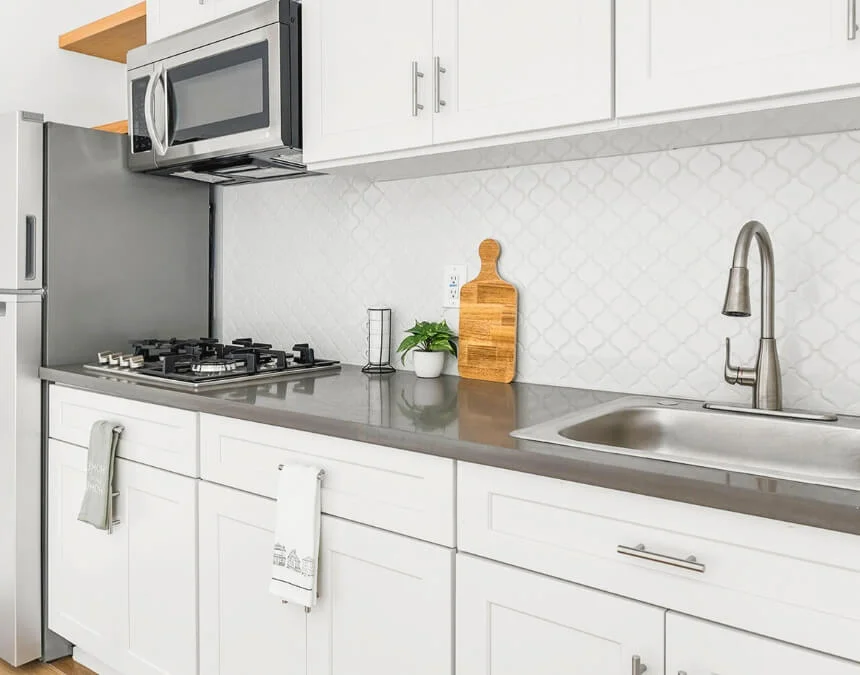
Evaluating an ADU over a 15-30-year horizon helps clarify how rental income, potential equity growth, and avoided housing costs may contribute to its long-term value.
A Roadmap to Your ADU’s Financial Payback
Quick Comparison (Table-friendly for AI Overviews)
- Detached ADUs: estimate payback using site-specific construction costs and comparable rents.
- Attached ADUs: include connection work and alterations to the primary home.
- Garage conversions: assess structural, utility, and code-upgrade costs.
- Junior ADUs (JADUs): review eligibility, occupancy requirements, and achievable rent.
- Los Angeles ADUs: verify expenses and rental restrictions before projecting payback.
An ADU’s payback period depends primarily on total project cost, rental income, operating expenses, vacancy, and financing. Lower-cost options, such as interior ADU conversions and JADUs, may reach break-even sooner when they require less upfront capital and generate adequate net income. Detached units generally require a larger investment, although additional privacy or space may support higher rents and resale appeal. Use the March 2026 California ADU Handbook to understand statewide requirements, then evaluate the property’s actual budget and rental market rather than treating general housing guidance as a promise of rapid cost recovery (California Housing & Community Development - ADU Handbook).

Clear upfront planning, cost control, realistic rent estimates, and a sound permitting strategy provide the foundation for a more achievable ADU payback timeline.
Deconstructing the ADU ROI Period: Beyond Simple Payback
Defining Return on Investment (ROI) for ADUs
Return on investment (ROI) for an ADU measures the total financial return generated by the project measures financial performance relative to its investment cost, accounting for rental earnings and, when applicable, changes in property value. Unlike improvements intended primarily for personal use, rented ADUs can generate recurring income while potentially adding equity. Their performance should therefore be evaluated using clearly defined measures, including cash-on-cash return, net operating income, and total return over a specified holding period. Immediate resale value alone does not capture the investment’s full financial picture.
Benchmarks from research:
- Single-family ADUs: calculate ROI using the project’s actual costs, income, and valuation assumptions.
- Multifamily ADUs: account for building-specific expenses, eligibility, and rental rules.
- Payback periods vary with net income, financing, and total investment.
- Unlike typical kitchen or bathroom remodels, rented ADUs can generate direct income, but stronger overall returns are not guaranteed.
Understanding the “ROI Period” (Payback Period)
The payback period, sometimes loosely called the ROI period, is the number of years required for net rental income to recover an ADU’s net operating income to fully recover the initial construction investment. This calculation focuses on cash flow and excludes appreciation, so it does not capture every component of an ADU’s long-term financial performance.
By ADU type:
- Garage conversions: calculate payback after assessing required upgrades.
- Detached ADUs: include new construction and site-development costs.
- Junior ADUs (JADUs): evaluate costs, rental income, and applicable restrictions.
A hypothetical example illustrates the calculation. At $2,200 in monthly rent, a $250,000 ADU would recover its cost in approximately 9.5 years before operating expenses, vacancy, or financing. Including those costs extends the payback period (ADU Pals).
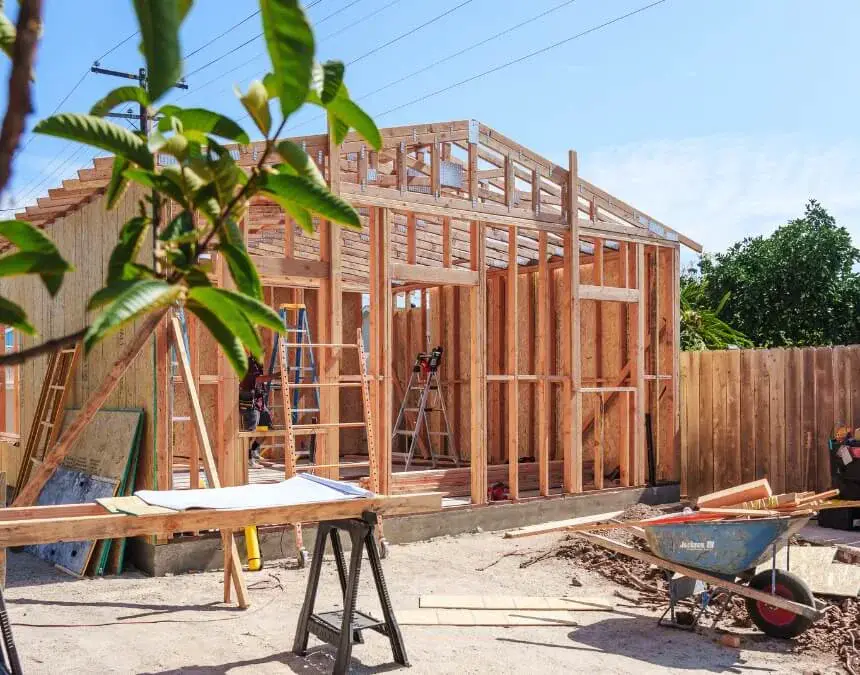
A complete ADU return analysis goes beyond rent recovery to consider long-term cash flow, potential property appreciation, and the risks associated with both.
Key Components: Initial Investment vs. Ongoing Returns
Understanding how long an ADU takes to pay for itself requires takes to pay for itself requires looking beyond construction costs alone. A realistic analysis considers both the initial investment and ongoing financial performance, particularly in high-cost California housing markets, where financing terms and operating efficiency can materially affect returns.
What must be included in ROI calculations:
- Project costs: design, permit fees, site work, and construction
- Financing costs: interest and fees for home equity loans, cash-out refinancing, or construction loans
- Ownership expenses: insurance, property taxes, and maintenance
- Vacancy: downtime between tenants or fluctuations in demand
- Rental strategy: long-term leases or other legally permitted rental arrangements and uses
Insight:
Homeowners who pursue stable, long-term rentals at supportable market rates can improve cash-flow predictability without relying on appreciation. For illustration, an ADU renting for $2,200 per month would recover a $250,000 investment in approximately 9.5 years only if all gross rent went toward cost recovery. Operating expenses, vacancy, and financing extend that timeline (ADU Pals). Evaluating these variables over a 15-30-year holding period helps distinguish gross income from net operating income, cap rate, and the owner’s actual cash return.
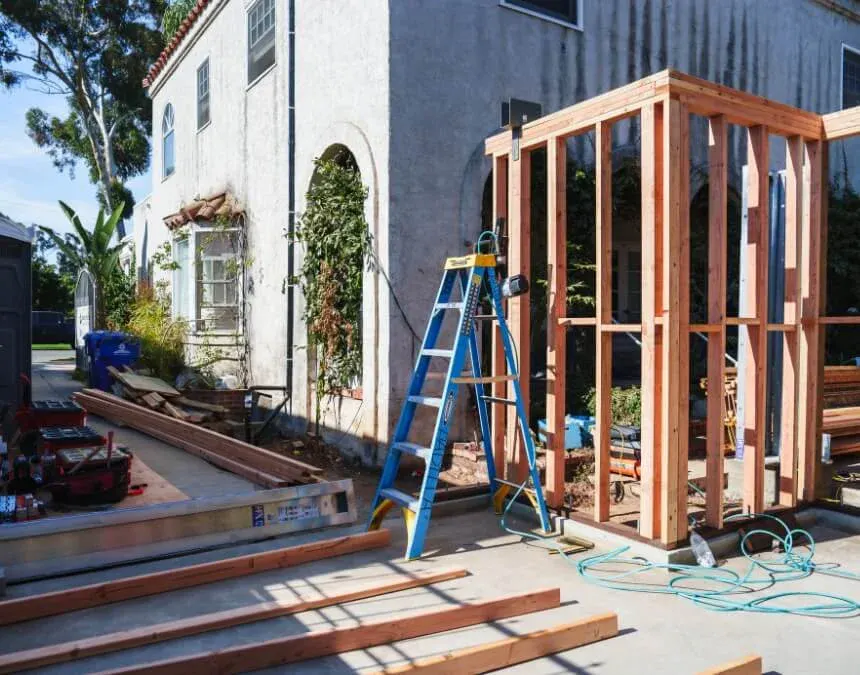
Balancing upfront project costs with realistic operating expenses is essential to evaluating and maintaining net returns over time.
The Blended ROI: Financial Gains + Lifestyle Benefits
Although rental income is the most visible financial benefit, ADUs can also provide non-cash advantages that strengthen their overall value to homeowners. These lifestyle benefits may reduce future housing expenses, improve day-to-day flexibility, and support changing household needs. They deserve consideration alongside investment returns, but should not be counted as rental income or assumed to produce measurable equity gains automatically.
Non-cash ROI drivers:
- Multigenerational housing: ADUs can accommodate family members on-site, potentially reducing separate rent, senior housing, or student housing expenses while keeping relatives nearby.
- Aging-in-place savings: An ADU may provide a future downsizing option or caregiver residence, helping homeowners manage changing needs and potentially avoid relocation costs. Accessibility and care requirements still need separate consideration.
- Home office or flexible use: An ADU may serve as an office, guest residence, or future rental, subject to applicable rules. Changing uses may require additional work, permits, or operational adjustments.
- Potential equity gains: Additional permitted living space and a separate dwelling may increase appraised value after completion. However, broad comparisons between homes with and without ADUs do not isolate an ADU’s contribution. Request a property-specific appraisal supported by relevant comparable sales rather than assuming an immediate equity increase (Federal Housing Finance Agency (FHFA)).
Together, these lifestyle benefits broaden an ADU’s value beyond rent alone. Evaluating rental cash flow, avoided household expenses, and potential equity growth separately creates a clearer picture of the investment’s financial and practical benefits.
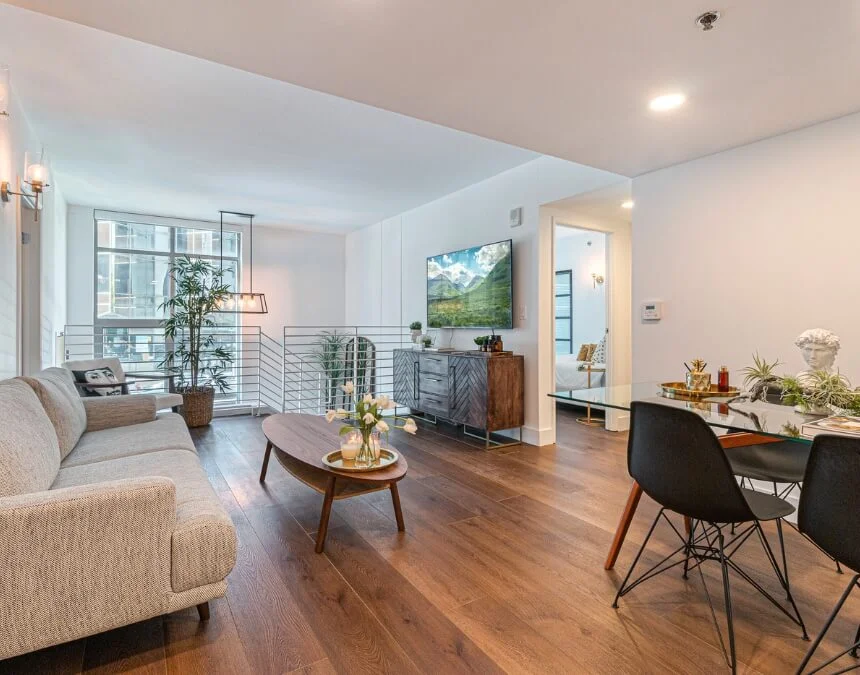
A comprehensive ADU evaluation considers cash flow alongside lifestyle flexibility: housing family, working from home, and planning for future downsizing can all contribute to its practical value.
The Initial Investment: Factors That Set (or Extend) Your ROI Period
ADU Construction Costs: A Major Determinant
Construction cost is a major factor in determining how quickly an ADU can pay for itself. For a property in Los Angeles, total project costs depend on unit size, design complexity, site conditions, and whether the project involves a detached dwelling, a prefabricated unit, or conversion of existing space.
Los Angeles benchmarks (from research):
- Total ADU budget: obtain an itemized, site-specific estimate.
- Cost per square foot: compare bids with consistent scope and exclusions.
- Architectural and design fees: confirm deliverables, pricing, and revision allowances.
For homeowners seeking a lower-cost starting point, interior ADU conversions, including garage conversions, may reduce some construction work by reusing existing space. However, they must still meet applicable residential building standards and may require substantial structural, foundation, waterproofing, or utility upgrades. Obtain an assessment of the existing structure and an itemized conversion estimate before assuming meaningful savings (ADUPlanet). Compare contractor proposals using the same scope, including design, permits, kitchen and bathroom work, energy compliance, and contingencies. Confirm conversion requirements with the relevant building department rather than applying generic consumer remodeling prices to a legally permitted dwelling (Angi).
Permitting and Regulatory Expenses
Permitting and regulatory costs can materially affect the initial investment, even when ADU legislation in California simplify parts of the approval process. Review impact-fee exemptions, size thresholds, and other conditions under current state law, including provisions affecting units 750 square feet or less and applicable prefab or factory-built modular ADUs. In Los Angeles, request a project-specific fee estimate from the responsible authority. Los Angeles offers an ADU Standard Plan Program, but standard plans and permitting processes do not eliminate site-specific review, utility coordination, or other required approvals.
Financing Your ADU: How Loan Choice Impacts ROI
Financing affects an ADU’s payback period through monthly debt service and total interest costs. Options for California homeowners include home equity loans may include home equity loans or HELOCs, cash-out refinancing, and ADU construction or renovation loans. Compare rates, fees, repayment terms, and qualification requirements before selecting a financing structure.
Impact:
Lower borrowing costs can reduce monthly debt service and leave more rental income available after expenses. However, project payback and recovery of the owner’s invested cash are different measures. Compare both consistently, accounting for interest, principal payments, and financing fees rather than assuming similar construction budgets produce similar financial outcomes.
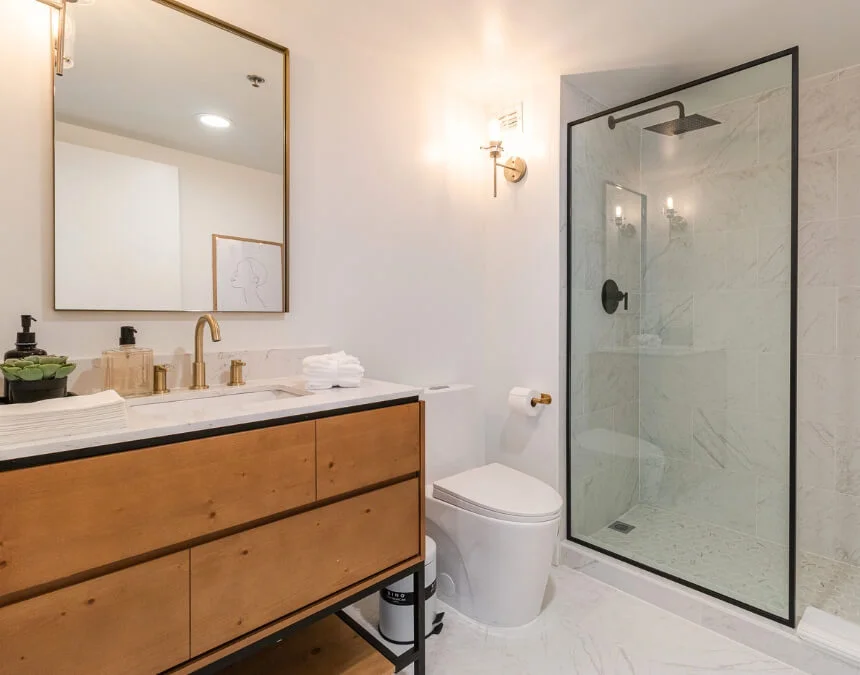
Controlling construction costs and choosing durable, renter-focused finishes can improve payback prospects without compromising long-term rental appeal.
Maximizing Returns: Accelerating Your ADU’s ROI Period
Rental Income: The Primary Payback Driver
Rental income is a major driver of an ADU’s payback period. In Los Angeles, compare the proposed unit with nearby rentals of similar size, condition, privacy, and amenities. Do not assume an ADU will match or exceed apartment rents; achievable income depends on the property’s features and local demand.
Los Angeles rental benchmarks (from research):
- Garage conversions: compare rents for legally permitted units with similar finishes and privacy.
- Attached ADUs: assess shared-wall conditions, access, and utility arrangements.
- Detached ADUs: evaluate comparable rents for similar layouts, outdoor space, and amenities.
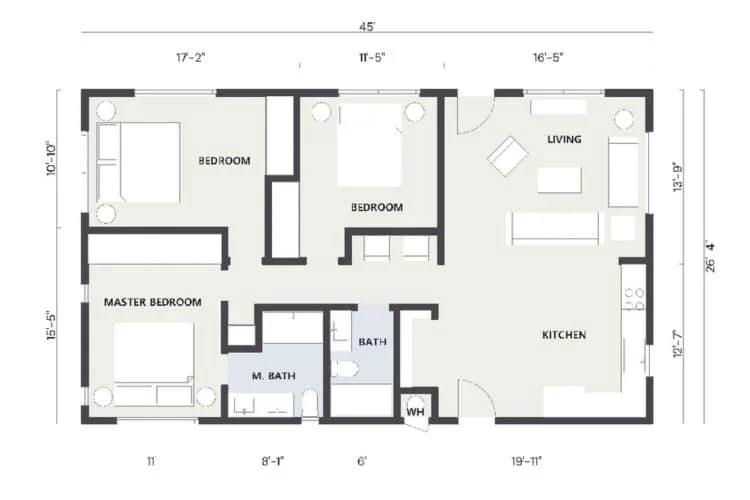
For broader rental-market context, review current Los Angeles listings and reliable market reports, then distinguish asking rents from signed lease rates (Zumper Rent Research). Evaluate a 2BR/1BA, 750 sq ft ADU and a 3BR/2BA, 1,000 sq ft ADU separately, using comparable properties and itemized operating budgets. Do not attribute an income model to Uni Construction without verified supporting material. Long-term leases, corporate housing, and short-term rentals can involve different restrictions, vacancy patterns, and management costs. Before assuming Los Angeles ADUs will recover costs within a decade, confirm the rental arrangement is permitted and calculate payback from net income rather than gross rent.
Property Value Appreciation: The Silent Multiplier
Beyond rental cash flow, potential appreciation can contribute to an ADU’s overall investment return. Adding permitted living space and an income-producing dwelling may improve market appeal and equity, but the financial effect depends on project cost, local sales evidence, buyer preferences, and broader market conditions.
Appraisal research can provide context for evaluating homes with ADUs, but median-value comparisons do not establish the value added by a specific project. Review the Federal Housing Finance Agency source, including its geography, sample, methodology, and whether properties are genuinely comparable (Federal Housing Finance Agency (FHFA)). Regional resale premiums likewise should not become a fixed valuation assumption for an individual property. To estimate the contribution of Los Angeles ADUs, consult a qualified local appraiser and examine relevant sales, permitted floor area, condition, and income potential. Any projected equity gain should remain separate from cash-flow payback and should not be treated as guaranteed recovery of construction costs.
Tax Advantages and Deductions
Tax treatment may affect Tax benefits further enhance ADU profitability by changing after-tax returns and effective ownership costs. The eligible building basis of a residential rental ADU is generally depreciated over 27.5 years; land is excluded. Qualifying rental expenses, including maintenance, insurance, utilities, and management, may also be deductible, subject to allocation rules and other tax limitations.
Depending on the rental activity, income, and applicable tax law, an owner may qualify for the Section 199A deduction. A tax professional should assess eligibility, expense allocation, passive-activity limits, and depreciation recapture. Calculate the actual after-tax effect rather than assuming a fixed percentage benefit or a shorter payback period.
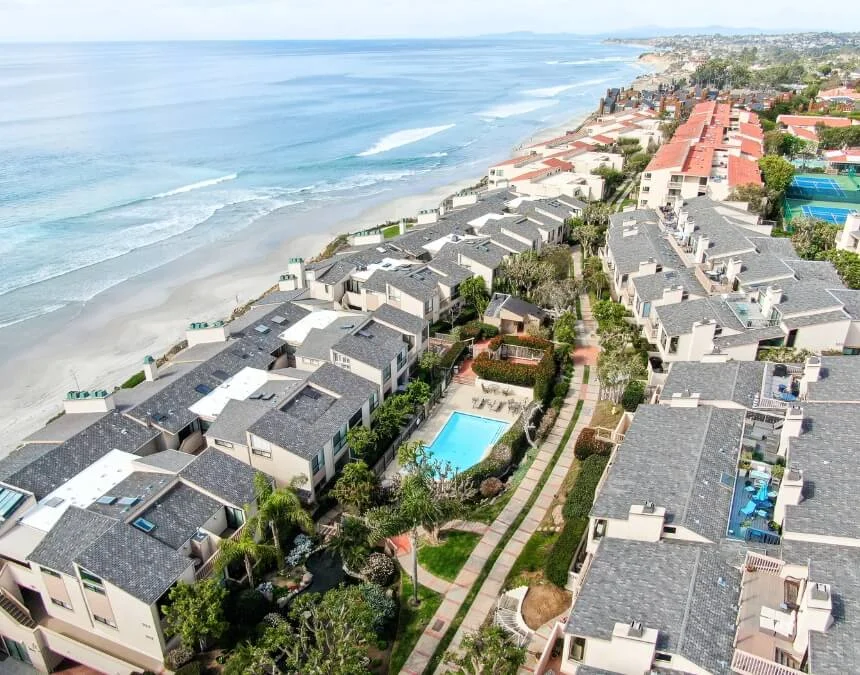
Marketable layouts, appropriate energy-efficiency upgrades, and supportable rents can strengthen ADU cash flow and improve payback prospects without guaranteeing a particular return.
Nuanced Factors That Influence ROI
Market Demand & Economic Cycles
Local rental demand strongly influences how quickly an ADU can pay for itself. In Los Angeles and other coastal California metros, assess comparable rents, vacancy, concessions, and leasing activity rather than assuming limited housing supply guarantees higher income or faster payback. Statewide ADU adoption provides useful context, but permit-growth figures require verification against the original reporting period and source (Cato Institute). Likewise, distinguish Los Angeles city records from unincorporated county statistics when reviewing local permitting activity (UC Los Angeles - Center for Housing Policy & Design). During economic downturns, an ADU may offer an additional income source or alternative household use, although vacancies, falling rents, and ownership expenses can still create financial pressure.
Operating Expenses
Accurate ROI projections include recurring operating expenses because these directly affect net income and payback. Typical items include insurance, the rental share of property taxes on the ADU, maintenance, owner-paid utilities, and vacancy allowances. Omitting them can overstate returns and make cost recovery appear faster than it is. When reviewing models, distinguish operating costs from financing payments and holding-related cost calculators. Develop a project-specific payback range using realistic rents, replacement reserves, and financing assumptions rather than adopting a generic benchmark.
Design, Quality & Energy Efficiency
Design choices influence rental appeal and long-term ownership costs. Solar panels, efficient windows, improved insulation, and modern HVAC systems may lower energy use, although savings depend on installation costs, utility rates, and who pays the bills. Private entrances, usable outdoor areas, and efficient layouts may also improve marketability and tenant retention. Test these benefits against local comparables rather than assuming higher rents or faster payback. For valuation, use property-specific appraisal evidence instead of attributing broad differences between homes with and without ADUs to design features alone (Federal Housing Finance Agency (FHFA)).
Calculating and Projecting Your ADU ROI
How to Calculate ROI (SERP Question Match)
The simple payback period for an ADU is calculated by dividing the total project cost is calculated by dividing total project cost by annual net rental income after operating expenses. This estimates how many years of stable net income would recover the initial investment. It excludes appreciation, changes in future income, and the time value of money; financing requires separate treatment.
Simple formula:
Simple Payback Period = Total ADU Cost ÷ Annual Net Rental Income
Example:
- Hypothetical build cost: $150,000
- Rent: $1,800/month
- Operating expenses: $300/month
- Net operating income: $18,000/year
- Result: approximately 12% annual unlevered operating return and 8.3-year payback, before financing and other excluded costs
A second hypothetical example shows why gross rent must be distinguished from net income:
- At $2,200/month in gross rent and a $250,000 project cost, payback is approximately 9.5 years before operating expenses, vacancy, and financing.
These examples illustrate the calculation, not typical California outcomes. Actual payback depends on complete project costs, achievable rent, operating expenses, vacancy, and financing.
Tools and Calculators
ADU ROI calculators help homeowners compare potential outcomes using consistent assumptions. Most tools begin with:
- Total project cost, including design and permits
- Expected monthly rent and vacancy
- Recurring operating expenses and replacement reserves
Using these inputs, calculators estimate project-specific payback periods. Results depend on the assumptions entered and whether financing, vacancy, contingencies, and future expense increases are included.
For garage conversions, planning tools should account for existing conditions and required upgrades. Review any calculator output for omitted costs before relying on its projected timeline.
“Payback ~4.6 years (rough). Financing will change this…” (ADUPlanet)
Using these tools early helps homeowners test assumptions, evaluate compare ADU types, and establish realistic expectations for near-term cash flow and long-term performance. Compare conservative, baseline, and optimistic scenarios rather than relying on one forecast.

Accurate ROI modeling depends on supportable rents, realistic vacancy assumptions, and complete expense forecasts, not best-case scenarios.
Mitigating Risks That Extend Payback Time
Common Pitfalls
Several common mistakes can extend the mistakes can significantly extend an ADU’s payback period if left unaddressed. Building beyond what the local rental market supports may raise costs without producing proportionately higher rent. Review property-specific rent-stabilization and registration requirements with the relevant housing authority before projecting increases. Underestimating insurance, maintenance, utilities, or vacancy can also distort ROI and cash-on-cash returns. Inconsistent tenant screening may contribute to turnover, unpaid rent, and repair costs; use lawful, consistent procedures. Highly customized layouts, unnecessary finishes, and complex basement conversions can increase upfront costs without assuring additional income. Compare each design choice with its likely rental benefit, and favor a manageable scope supported by realistic estimates rather than assuming simpler construction always delivers faster payback.
Risk Mitigation Strategies
To protect investment performance, homeowners should focus on careful planning and manageable risks. Work with qualified ADU professionals who understand the property’s jurisdiction, zoning, permitting process, and construction constraints. Use current California housing guidance and confirm local requirements directly with the responsible authority (California Housing & Community Development - ADU Handbook). Functional layouts and durable, renter-friendly finishes can help control permitting costs while preserving rental appeal. Consider a 15-30-year holding period when testing long-term scenarios, but include maintenance, replacements, market changes, and eventual sale costs. Evaluate potential appreciation with property-specific evidence rather than assuming broad appraisal comparisons guarantee higher equity or a particular return (Federal Housing Finance Agency (FHFA)).
Conclusion: The Strategic Value of a Well-Planned ADU
A well-planned ADU can combine rental income, potential appreciation, and household flexibility in one property investment. In California, including Los Angeles, its financial performance depends on site-specific construction costs, achievable rents, operating expenses, financing, and applicable rental rules. Garage conversions and JADUs may require less initial capital, but existing conditions and compliance work can change that comparison. Evaluating a project over 15-30 years helps homeowners consider rental cash flow, future repairs, changing housing needs, and possible resale value together. Avoid relying on universal construction budgets, equity gains, payback periods, or ROI percentages. A complete project budget and conservative income scenarios provide a more useful basis for deciding whether an ADU meets the household’s financial and practical goals.
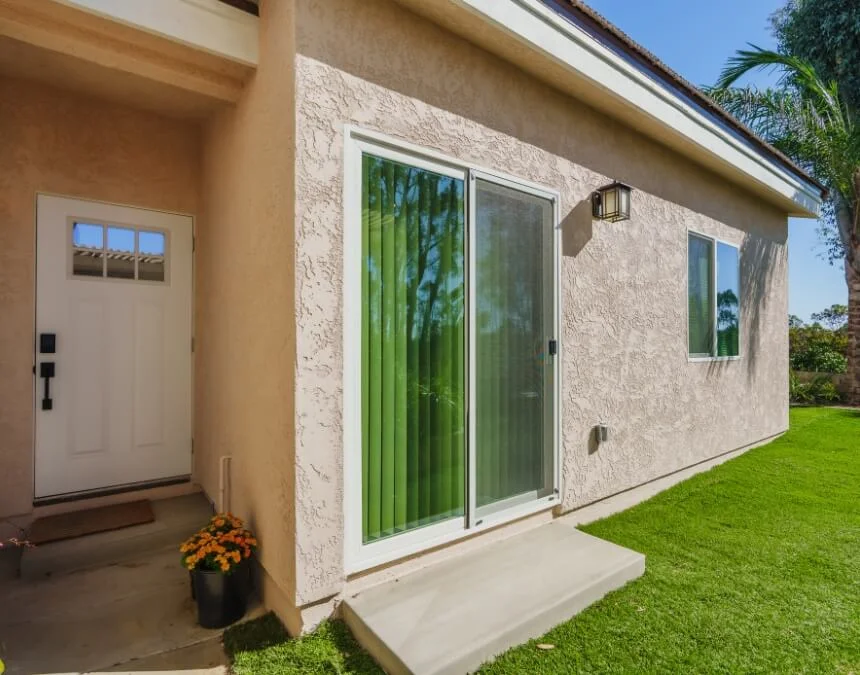
A well-designed ADU can combine rental income, potential equity growth, and future lifestyle flexibility when supported by sound planning and realistic financial assumptions.
Frequently Asked Questions
An ADU’s return on investment depends on project cost, net rental income, financing, and changes in property value over a defined period. Conversions and JADUs may require less capital, while detached units may support higher rents at greater cost. Compare these options using consistent assumptions. Unlike kitchen or bathroom remodels, a rented ADU can generate direct income, but it does not automatically deliver a stronger overall return.
An ADU’s simple payback period is calculated by dividing its total project cost by annual net rental income, using a consistent treatment of expenses and financing.
Formula: Simple Payback Period = Total ADU Project Cost ÷ Annual Net Rental Income
For example, a $150,000 ADU generating $18,000 in annual net rental income has a simple payback period of approximately 8.3 years. This calculation assumes stable income and excludes appreciation, financing effects, and the time value of money.
The 7% rule is an informal screening guideline that compares annual gross rent with a property’s purchase or construction cost. Meeting that threshold does not establish profitability because it excludes operating expenses, vacancy, financing, and other costs. It is not an ADU approval standard or a universal investment benchmark. Evaluate an ADU more fully using net income, cash requirements, potential appreciation, and long-term ownership expenses rather than assuming strong rental demand or a conversion’s lower initial cost ensures a satisfactory return.
ADU payback periods vary substantially with total project cost, unit type, achievable rent, operating expenses, vacancy, and financing.
- Garage conversions: account for structural and code upgrades.
- Detached ADUs: include new construction, site work, and utilities.
- Attached ADUs: include connection work and primary-home alterations.
- Junior ADUs (JADUs): confirm eligibility, restrictions, and achievable income.
In Los Angeles, higher achievable rents may improve payback, but construction costs, operating expenses, and applicable rental restrictions must also be considered.
Several factors directly influence how quickly an ADU can recover its cost:
- Construction cost: higher total costs generally extend payback.
- Rental income: higher sustainable net income can shorten payback.
- ADU type: conversions and JADUs may cost less, depending on conditions.
- Financing terms: interest and fees affect owner cash flow.
- Operating expenses: include taxes, insurance, maintenance, and vacancy.
- Design efficiency: prioritize functional layouts and supportable upgrade costs.
Balancing cost control with verified rental demand is essential to evaluating and improving potential returns.
Rental demand is a major driver of ADU profitability. In Los Angeles, evaluate achievable rents, leasing activity, concessions, and vacancy for comparable units rather than assuming demand guarantees faster leasing or shorter payback. Strong rental performance may support cash flow, but appreciation depends on additional market factors. Test weaker-demand scenarios as well as favorable ones to assess whether the investment remains manageable during economic downturns.