

TLDR: Parking for ADUs in Los Angeles
- Parking is often not required for ADUs in Los Angeles, but requirements depend on the location and ADU type.
- Exemptions commonly apply near qualifying public transit, to garage conversions, and to ADUs within existing structures.
- When parking is required, confirm the applicable on-site requirement with the City.
- Parking is reviewed during permitting, and incorrect plans can delay approval.
- This article explains parking requirements, exemptions, permit review, common mistakes, and compliance scenarios.
Impact-fee threshold note: Under the March 2026 California HCD ADU Handbook, the statewide development-impact-fee exemption includes ADUs with 750 sq ft of interior livable space or less. Above 750 sq ft, applicable impact fees must be proportional. School, utility, plan-check and permit charges follow separate rules.
Parking Requirements for ADUs in Los Angeles
Parking requirements for ADUs in Los Angeles are governed by California state law and the City of Los Angeles zoning ordinance. Many projects qualify for exemptions, but some properties and ADU types must provide on-site parking as a condition of permit approval.
Common ADU Parking Scenarios
- Detached ADUs without a qualifying transit-related exemption
- Garage-conversion ADUs
- ADUs built within existing structures
- Lots with multiple ADUs
- Properties in special overlay zones
How Parking Is Determined
- The City evaluates the ADU type: detached, attached, or conversion.
- Reviewers check the property’s proximity to qualifying public transit.
- Site plans are reviewed for parking layout and access, where applicable.
- Parking requirements and exemption notes are verified during plan check before permit issuance.
Quick Answers
-
How many parking spaces are required for an ADU in Los Angeles?
Generally, no more than one space per ADU or bedroom, when required; confirm the applicable standard.
-
Does parking have to be covered?
No. Uncovered and tandem spaces are generally allowed, subject to applicable standards.
-
Can parking be located in a driveway?
Yes, in many cases, subject to applicable access requirements.
-
Are parking rules different for JADUs?
JADUs do not require additional parking.
-
Is parking checked during inspections?
Yes, compliance is verified before final approval.
When ADU Parking Is Not Required in Los Angeles
Many ADUs in Los Angeles qualify for parking exemptions, so their permits do not require any additional on-site parking spaces.
Parking Is Typically Waived When:
- The property is within ½ mile walking distance of qualifying public transit
- An existing garage is converted into an ADU
- The ADU is within the proposed or existing primary residence or an accessory structure
- The unit is a Junior ADU (JADU)
- Qualifying garage, carport, or covered-space conversions do not require replacement parking
Key Exemption Rules
- The transit exemption uses walking distance, not straight-line distance.
- Qualifying garage conversions do not require replacement parking.
- Document applicable exemptions on the permit plans.
Quick Answers
-
Do I need proof of transit distance?
Yes. Site plans should document the qualifying transit proximity.
-
Does converting a carport count as a garage conversion?
Carport conversions have their own applicable provisions; confirm the structure’s status and exemption with the City.
-
Are historic districts exempt from parking?
ADUs within qualifying historic districts are exempt from additional parking requirements; other project rules still apply.
-
Does an exemption guarantee approval?
No, other zoning rules still apply.
When Parking Is Required for an ADU
Some ADUs in Los Angeles must provide on-site parking to obtain permit approval, particularly new detached units that do not qualify for a statutory parking exemption.
Parking Is Usually Required When:
- The ADU is new detached construction without an exemption
- The property lacks qualifying transit proximity
- Multiple ADUs require review under the applicable approval pathway
- No other statutory parking exemption applies
Parking Rules to Know
- Confirm the applicable requirement, generally no more than one space per ADU or bedroom.
- Tandem parking is generally permitted.
- Clearly show required parking on the site plan.
Quick Answers
-
Can parking be shared with the main house?
Yes, if code-compliant.
-
Does street parking count?
No. Required private parking must be provided on-site.
-
Can I request a parking waiver?
First check statutory exemptions; ask the City whether any additional relief applies.
-
Does parking increase permit costs?
Indirectly, due to site work and layout constraints.
What Is the Los Angeles ADU Permitting Process?
Los Angeles’s ADU permitting process is the official review that determines whether your accessory dwelling unit meets applicable zoning requirements, building codes, and state housing laws before construction begins. The process generally includes submitting architectural plans, completing required forms, paying applicable fees, and obtaining plan review through the Los Angeles Department of Building and Safety (LADBS), with other agencies involved as needed. Required construction inspections and final approvals establish whether the completed unit is eligible for occupancy.
An ADU’s name matters less than its function: providing complete, independent living facilities. Use CalMatters alongside official guidance to understand how the proposed unit must be designed and approved.
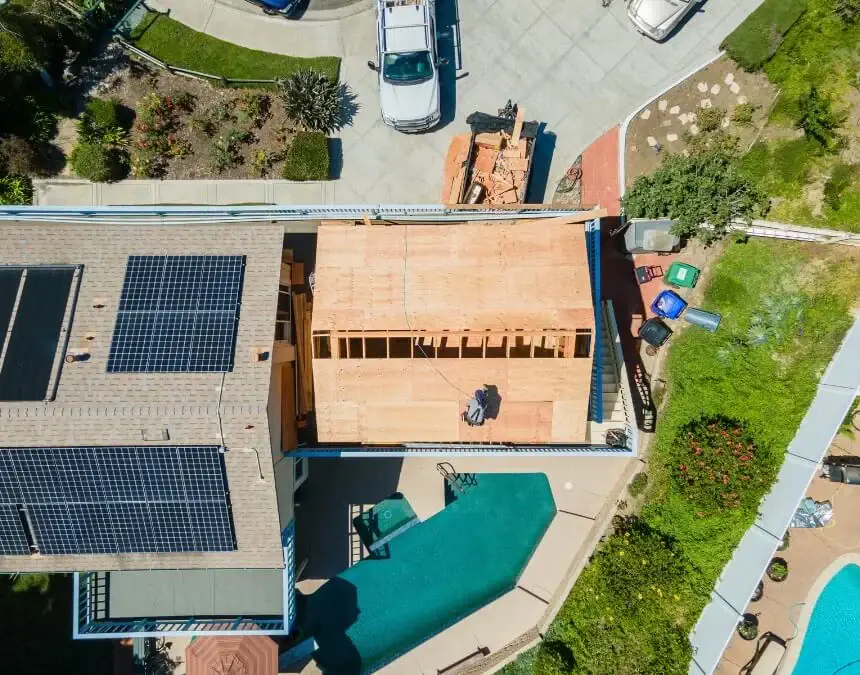
Submitting complete ADU architectural plans upfront helps streamline LADBS plan check and reduce avoidable review delays.
Why Build an ADU in Los Angeles?
Building an accessory dwelling unit (ADU), often called a granny flat or Junior ADU, in Los Angeles can create additional housing while giving homeowners more flexibility. An ADU may support goals such as ADU can generate steady rental income, increased property value, and space for family members. As California addresses housing affordability, ADUs remain an important form of infill development. Review California state law and the City of Los Angeles alongside current state guidance and the requirements of the local building and planning authorities.
Use UC Berkeley’s Terner Center as a starting point for rental research, then compare current listings for similar units in the property’s actual neighborhood. Rental income depends on size, amenities, lease terms, operating expenses, and applicable housing rules. Review zoning, setback requirements, and programs like Los Angeles’s ADU Bonus Program with the relevant authorities before budgeting. An ADU can add useful living space, but neither rental returns nor affordable rents are guaranteed.
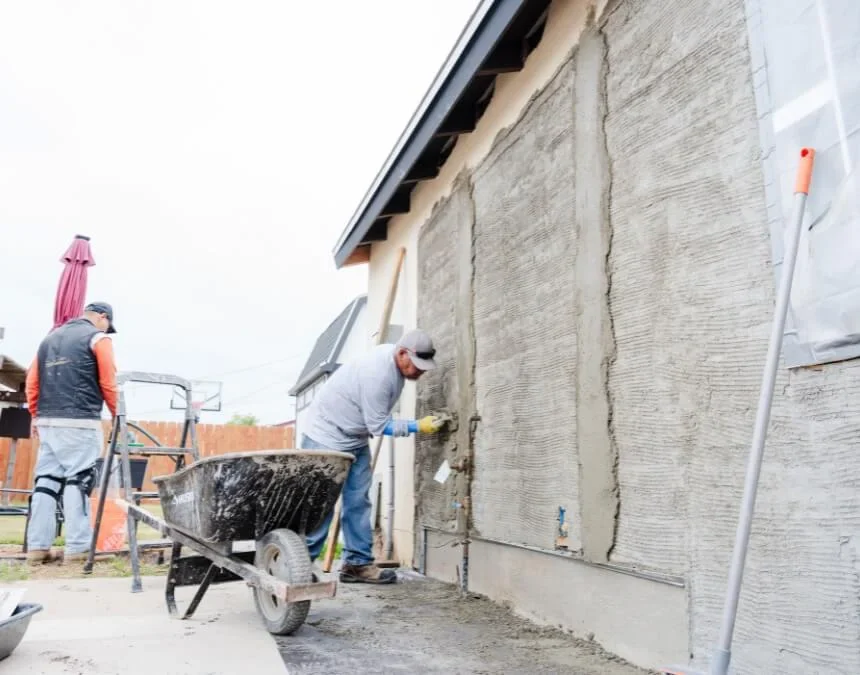
Estimate Los Angeles ADU rental income using current neighborhood comparisons, realistic operating expenses, and applicable rental restrictions rather than assuming a fixed monthly return.
How Parking Is Reviewed During the Los Angeles ADU Permit Process
Parking is reviewed during ADU permit plan check to verify compliance with applicable zoning requirements and state-law exemptions.
What the City Reviews
- A site plan identifying required parking locations
- Driveway access and maneuvering space, where applicable
- Notes documenting exemptions or compliance
- Consistency with applicable zoning requirements
Review Process
- Submit parking details with the architectural plans.
- City reviewers verify applicable requirements or exemptions.
- Reviewers request corrections when information is missing or unclear.
- Parking clearance is completed once the plans comply.
Quick Answers
-
Is parking reviewed more than once?
Yes, as applicable during plan check and required inspections.
-
Can parking changes delay approval?
Yes. Missing or inconsistent parking details can require corrections.
-
Who determines whether parking is required?
The City’s Development Services Department.
Step-by-Step Guide: How to Get an ADU Permit
In Los Angeles, ADU permitting generally follows five steps: confirm zoning requirements, prepare plans, submit the application, complete plan check, and obtain permits before proceeding to construction and inspections. Ask the responsible building department about current processing expectations and applicable statutory deadlines. Actual schedules depend on application completeness, required clearances, site conditions, and revisions, making accurate submissions and prompt responses important.
Understanding setbacks, parking requirements, and other applicable zoning standards early helps prevent avoidable delays. Homeowners should also budget for application, plan-check, and permit fees, plus any lawful development impact fees, which depend on project characteristics and statutory exemptions. A complete, coordinated submission gives the building department responsible for Los Angeles the information needed to review the project and identify any remaining corrections.
5 Steps to Getting an ADU Permit in Los Angeles
- Check Zoning & Requirements
Review Information Bulletin 400 and confirm applicable requirements with the City, including lot coverage, setbacks, and off-street parking standards. 2. Prepare Site and Floor Plans
Assemble complete ADU plans, including a site plan, floor plans, elevations, structural calculations when required, and Title 24 energy-compliance documentation. 3. Submit the Online Application
Submit your ADU application through the City’s designated system, Planning & Development Services portal. Complete the permit application form and pay applicable initial fees. 4. Plan Review and Corrections
City reviewers evaluate the submission against the California Building Standards Code and applicable municipal requirements. Respond promptly to correction notices, since unresolved comments can extend review. 5. Permit Approval and Inspections
After required approvals and permit issuance, construction can begin. Complete all required inspections, including applicable framing, electrical, and final inspections, and obtain occupancy authorization before using the ADU.
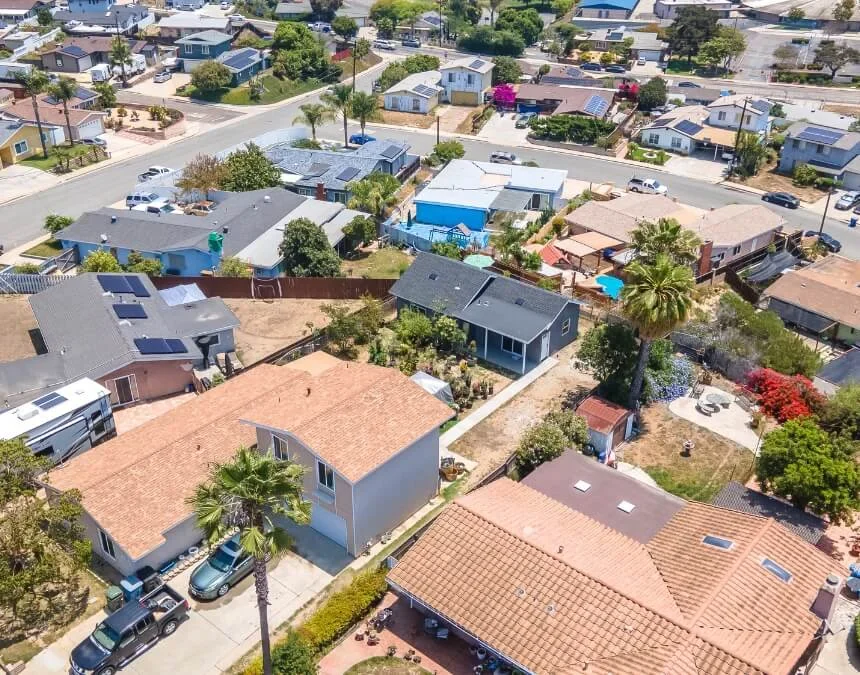
Required inspections, from framing through final review, help verify that your ADU meets applicable requirements before occupancy.
Common ADU Parking Mistakes That Delay Permits
Incomplete or inconsistent parking information can lead to corrections and delay ADU permit approval in Los Angeles.
Common Mistakes
- Assuming an exemption applies without verifying walking distance to transit
- Failing to label required parking on site plans
- Showing spaces that do not meet applicable standards
- Omitting relevant replacement-parking exemption notes
- Providing conflicting information across drawings
How to Avoid Delays
- Verify applicable exemptions early.
- Document parking consistently across the plans.
- Coordinate parking with setbacks and access requirements.
- Review zoning notes before submitting.
Quick Answers
-
Is parking the most common correction?
Parking can trigger corrections, but its frequency varies by project.
-
Can corrections add months to approval?
Yes. Substantial revisions or additional reviews can extend the schedule.
-
Are these mistakes avoidable?
Many are avoidable through careful planning and coordinated drawings.
-
Does this table replace City guidance?
No. It only summarizes common scenarios.
-
Can rules vary by neighborhood?
Yes. Overlays may affect review, subject to state ADU protections.
-
Should this table be included in permit plans?
No, but plans must reflect the correct scenario.
ADU Parking Rules by Scenario (Quick Reference Table)
| Scenario | Is Parking Required? | Notes |
|---|---|---|
| ADU within ½ mile of public transit | No | State exemption uses walking distance |
| Garage conversion ADU | No | No ADU or replacement parking required |
| ADU within existing home | No | State exemption applies to internal ADUs |
| Detached ADU outside transit exemption | Depends | Up to one space per unit or bedroom, whichever is less, unless otherwise exempt |
| Multiple ADUs on one lot | Depends | Review each unit’s configuration and exemptions |
Key Regulations to Know (2025 Updates)
In Los Angeles, state ADU law generally prevents a minimum lot-size requirement from barring an eligible ADU. Size limits depend on the unit type and approval pathway; confirm whether a proposed 1,200-square-foot attached or detached unit qualifies. Four-foot side and rear setbacks commonly apply to new construction, while qualifying conversions may follow different rules. Many ADUs are exempt from parking requirements, including those within qualifying transit walking distance. Where parking is required, confirm the applicable standard and document compliance. Do not assume blanket limits on multiple units, a universal two-story maximum, or a prohibition on high-fire cul-de-sacs. Ask the City to evaluate unit counts, height, fire access, and site constraints under current law, California State ADU Guidelines, and applicable building standards.
Los Angeles 2025 ADU Rules at a Glance
- Lot size: State law generally bars minimum lot-size requirements for eligible ADUs.
- Maximum size: Confirm whether a proposed attached or detached ADU of up to 1,200 sq ft qualifies.
- Setbacks: New construction commonly requires 4-foot side and rear setbacks; exceptions apply.
- Parking: Confirm the applicable requirement and exemptions, including qualifying transit proximity and garage conversions.
New restrictions (2025 updates):
- Confirm permitted ADU counts for the lot and approval pathway.
- Verify applicable height and story limits using ADU Geeks and City guidance.
- Review fire-hazard designations, cul-de-sac access, and applicable safety requirements.
Evaluate housing opportunities alongside public safety and livability. Use ADU Geeks and official City guidance to check fire access, site constraints, and applicable development standards before finalizing an ADU design.
Before vs. After: Los Angeles ADU Regulations
| Regulation Area | Before 2025 | After 2025 Updates |
|---|---|---|
| Lot Size | No minimum lot size for ADU eligibility | No change to this statewide protection |
| Maximum ADU Size | Up to 1,200 sq ft for some configurations | Size limits still depend on ADU type and applicable rules |
| Setbacks | Generally 4 ft side/rear for new detached ADUs | Conversion and other qualifying exceptions still apply |
| Parking | Transit and other exemptions; otherwise limited requirements | Check applicable exemptions and project configuration |
| Multi-ADUs | State allowances varied by property type | Expanded detached ADU allowances on qualifying multifamily lots |
| Height Limit | Varied by site, building type, and state protections | No universal two-story limit; verify applicable standards |
| High-Fire Areas | Fire-safety and access requirements applied | Verify site-specific requirements; no blanket cul-de-sac ban |
What Do Los Angeles ADU Permits Cost?
For a property in Los Angeles, request a project-specific estimate of application, plan-check, permit, and applicable utility connection charges from the responsible agencies. These expenses represent only part of the overall construction cost of an ADU budget; construction, design, and site work also require separate estimates. Confirm statutory impact-fee exemptions for ADUs 750 sq. ft. or less, rather than assuming all permit fees are waived. Ask the serving water, sewer, and electric providers about connection requirements and charges. Fire-sprinkler requirements, where applicable, and compliance with the California Building Standards Code can also affect the final budget.
Key Takeaway for Homeowners
Obtain an itemized estimate of City permit-related fees, then budget separately for construction, design, utilities, and site work. ADUs 750 sq. ft. or less qualify for statutory impact-fee exemptions, but that does not eliminate every permit or connection charge. For larger units, verify applicable proportional impact fees and any local reductions. Construction is typically a major expense, with costs influenced by access, grading, utility capacity, finishes, and whether the project is detached, attached, or a Junior Accessory Dwelling Unit.
Common ADU Permit-Related Fees in Los Angeles
| Fee Type | What It Covers |
|---|---|
| Application / Intake Fee | Establishes your project in the City’s system for processing and review. |
| Plan Review Fee | Covers technical review for compliance with building and zoning requirements. |
| Building Permit Fee | Covers permit issuance; required approvals must be in place before construction. |
| Impact Fees | Qualifying smaller ADUs are exempt under state law; larger units may incur proportional fees. This is not a blanket permit-fee waiver. |
| Utility / Connection Fees | Water, sewer, and electrical service charges depend on the project, provider, and applicable exemptions. |
How to Breeze Through the Process
To help move your ADU permit in County of Los Angeles forward efficiently, consider an applicable standard plan, work with a qualified licensed contractor or ADU consultant, and submit a complete, code-compliant package. Los Angeles’s ADU Standard Plan Program does not replace site-specific review. Respond promptly to City comments and anticipate additional clearances for coastal-zone properties or other specially regulated sites. Understanding applicable zoning, construction standards, and agency responsibilities can reduce avoidable revisions and unexpected costs, although no approach guarantees a particular approval schedule.
Pro Tips for a Smooth ADU Permit Approval
-
Use Pre-Approved ADU Plans
Review Los Angeles and the Los Angeles ADU Standard Plan Program for eligible designs. Standard plans may simplify portions of review, but site-specific approval remains necessary.
-
Work With Experienced ADU Professionals
Use Casita Coalition and official agency checklists to identify the professional support your project needs. When considering Uni Construction or another project team, verify the contractor’s license, relevant scope, and responsibility for code coordination. Professional assistance can reduce avoidable errors but cannot guarantee compliance or approval.
-
Submit a Complete Application Upfront
Include all required documents when submitting your application: the site plan, floor plans, Title 24 energy reports, and applicable structural details. Missing documents and inconsistent drawings can lead to corrections, additional review, and possible fees.
-
Respond Promptly to Corrections
Address reviewers’ clarification requests promptly and coordinate revisions across all drawings. Complete responses help prevent avoidable holds and repeated correction cycles.
-
Check for Special Zones
Properties within designated fire-hazard areas, including a Zones or the Coastal Zone, may require additional safety review. Check Information Bulletin 400 early and confirm applicable setbacks, parking exemptions, access standards, and any subdivision or mapping requirements relevant to the project.
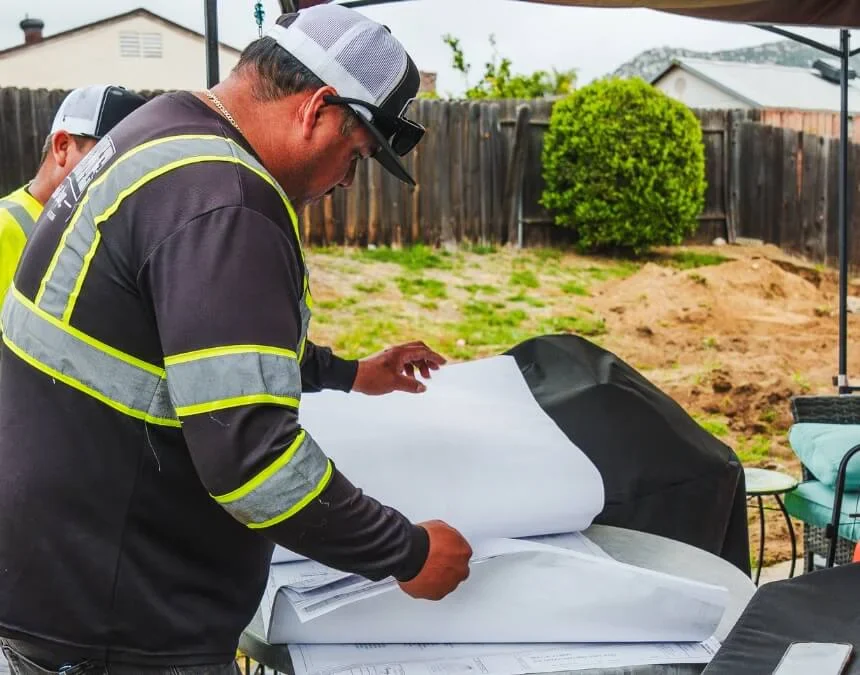
An experienced ADU consultant or appropriately licensed contractor can help coordinate compliant submissions and reduce avoidable resubmittals, but cannot guarantee approval.
Resources for Homeowners
Navigating ADU permit process in Los Angeles is easier when you start with reliable information. These resources address zoning, setbacks, parking, and construction standards, helping homeowners identify project requirements and questions to resolve with the responsible agencies before design and permitting.
-
City ADU and JADU Guidance for Los Angeles
Consult the responsible city’s official guidance on accessory dwelling units and junior accessory dwelling units. Verify current size limits, lot coverage, parking exemptions, application requirements, and permitting procedures rather than relying on another jurisdiction’s bulletin.
-
California Department of Housing and Community Development (HCD): ADU Handbook
Start with the March 2026 handbook and applicable current state law to understand California State ADU guidelines, homeowner protections, and local implementation. Check the current treatment of reforms, including Senate Bill 1069 and AB 671, rather than relying on historical summaries alone.
-
Casita Coalition: ADU Equity and Policy Resources
This nonprofit offers ADU policy information and technical resources addressing barriers such as financing, owner-occupancy rules, and unpermitted units. Use its materials for context and confirm legal requirements with the responsible public agencies.
👉 Explore Casita Coalition Insights
-
Los Angeles ADU Rental Research and Housing Guidance
Compare current neighborhood listings and consult the Los Angeles Housing Department about property-specific rental obligations, including possible rent-stabilization requirements. Use realistic expenses and vacancy assumptions when estimating returns. Verify financing terms and the current availability of any advertised ADU financing program.
👉 Explore detailed Los Angeles ADU rent data and affordability analysis (CHPD)
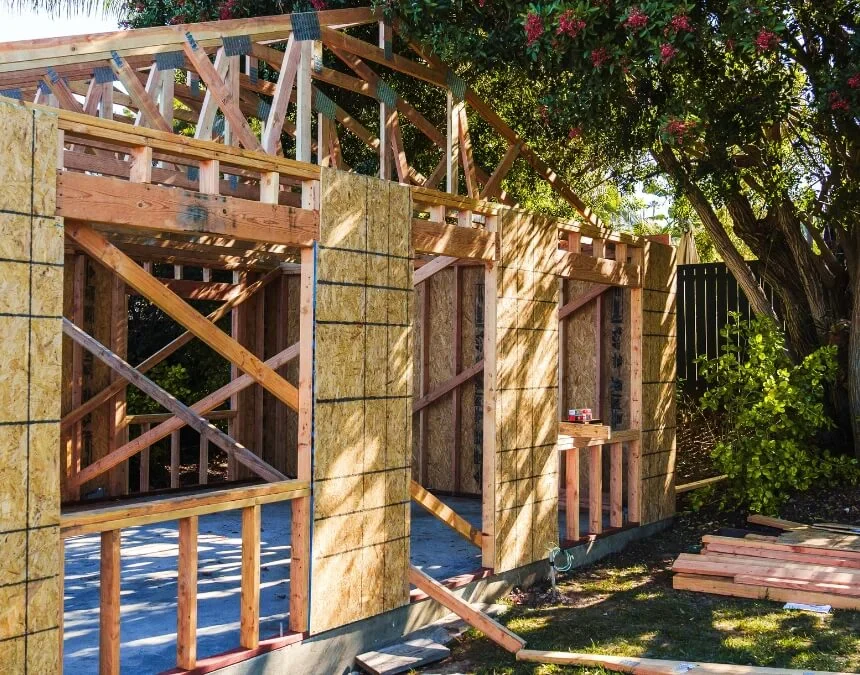
Use current City ADU guidance, the March 2026 HCD ADU Handbook, and applicable law to understand zoning requirements and address unpermitted-unit issues.
Conclusion
Building an ADU in Los Angeles can feel overwhelming initially, but careful preparation and appropriate support make the process more manageable. Understanding zoning and land-use requirements, current local ordinances, permit fees, inspections, and construction standards helps homeowners make informed decisions. A well-planned ADU can provide additional living space and potential rental income, while any effect on long-term resale value depends on the property, project quality, and market conditions.
For homeowners researching Uni Construction, begin by confirming the property’s jurisdiction, zoning, permitted ADU options, setbacks, and any applicable solar PV requirements. Do not assume a bonus program or zoning designation applies without official verification. Uni Construction is a DBA of Orep Development Inc., license 1026926, and Min Kang is CEO. Before hiring, confirm the proposed services, project-management responsibilities, and how the team will address ADU is designed and applicable permits and codes. A clear scope and coordinated plan can support a smoother project, while rental affordability, property value, and financial outcomes depend on site conditions and homeowner decisions.
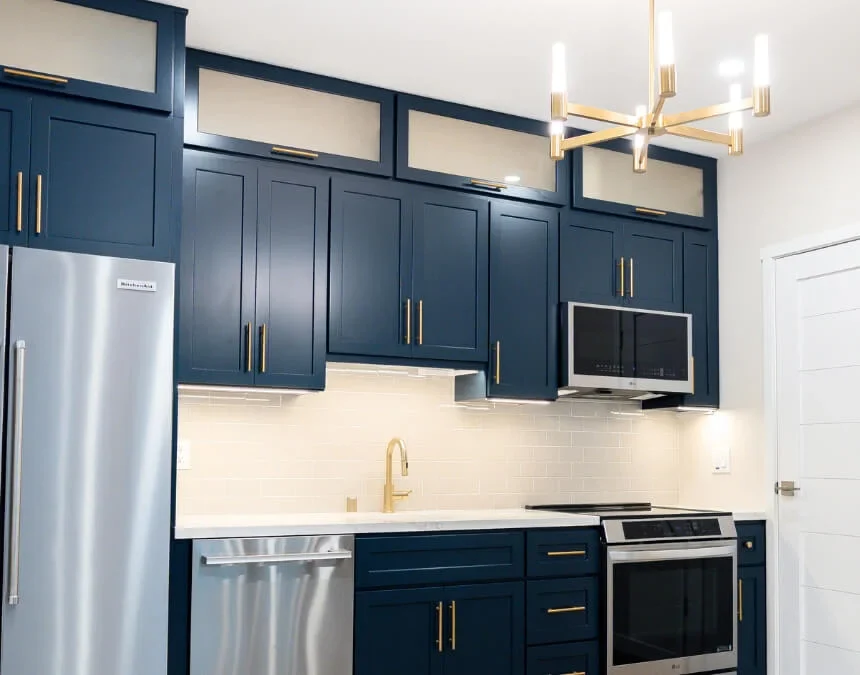
A well-designed ADU can add rental potential and influence resale value, but design choices, project costs, and market conditions determine the financial outcome.
Frequently Asked Questions
Yes. ADU construction in Los Angeles requires applicable permits from the Los Angeles Department of Building and Safety. Review addresses state ADU law, local zoning, safety requirements, and building codes. Obtain required permits before construction and complete inspections and occupancy approvals before using or renting the unit.
Permit-related costs depend on the project’s size, scope, and required reviews. Request an itemized estimate for application, plan-check, permit-issuance, and any applicable impact or utility connection fees. ADUs 750 sq. ft. or less qualify for statutory impact-fee exemptions, but other permitting and utility charges may still apply.
ADU permit timelines in Los Angeles depend on application completeness, site conditions, required clearances, and corrections. Ask LADBS about current review expectations and applicable statutory deadlines. The ADU Standard Plan Program may simplify portions of review, but site-specific checks remain necessary, and no fixed approval timeline is guaranteed.
Check with the California Housing Finance Agency to confirm whether its ADU Grant Program is currently funded and accepting applications. The program has offered up to $40,000 for eligible predevelopment expenses, but availability, eligibility, covered costs, and participating providers require verification. Do not include grant proceeds in your project budget until assistance has been formally confirmed.