

You may have heard that California is working to make all new construction more sustainable, with a greater emphasis on energy efficiency and renewable energy.
You may also have heard conflicting information about whether accessory dwelling units (ADUs) require solar panels. That confusion reflects evolving regulations, differences between project types, and variations in how local jurisdictions interpret and apply the applicable energy code.
Understanding these changes can help you plan confidently. We explain the key regulations and what they could mean for your ADU project. Read on to learn when solar panels may be required on your new California ADU and which project details determine the answer.
Do I need to install solar panels for my Accessory Dwelling Unit?
California’s Energy Code generally requires solar on newly constructed homes, including new detached ADUs. Depending on the applicable code edition, two exceptions may be particularly relevant:
- Insufficient usable roof area: A solar exemption may apply if the roof has less than 80 contiguous square feet of solar access area, as defined by the applicable code’s shading and roof-orientation criteria.
- Small calculated system: An exemption may apply if the calculated solar system capacity for your ADU is less than 1.8 kWdc. Confirm both exceptions under the code edition governing your permit.
The required system capacity depends on the ADU’s conditioned floor area, climate zone, and applicable code factors. Whether solar is required therefore depends on both the project’s size and location. A smaller ADU in a mild coastal climate may be more likely to qualify for the 1.8 kWdc exemption than an otherwise comparable inland ADU.
Do not rely on a single square-footage cutoff to determine whether your ADU needs solar. Ask your energy consultant to calculate the required capacity using the project’s conditioned floor area, climate zone, and applicable code edition. Coastal, inland, and mountain locations can produce different results, even for similarly sized units. During feasibility, confirm any proposed exemption with the building department responsible for your property in Los Angeles, Diamond Bar, or Pomona.
ADU conversions and attached additions generally follow different solar requirements from newly constructed detached ADUs. Confirm the classification and applicable requirements for your project.
You can find the applicable formula and exceptions in the California Energy Commission’s 2025 Residential Compliance Manual, Chapter 7.
Can you tell me if I need solar on my ADU?
When reviewing a proposal from Uni Construction, confirm that it includes look up your climate zone and the necessary ADU solar calculation. This assessment should provide a reasonably accurate estimate of whether solar is required and, if so, the system capacity to include in your project budget.
Why is the initial assessment only reasonably accurate? Final requirements depend on the applicable code edition, project details, and the reviewing jurisdiction’s determination. During revisions and permitting, ask the project team to advocate for the homeowner whenever a local interpretation appears inconsistent with state requirements. Request clarification supported by the relevant code provisions rather than assuming an exemption will be approved.
How big of a solar system will I need for my ADU?
Your solar system’s required capacity is calculated using the applicable Energy Code formula. Where Equation 150.1-C applies, the photovoltaic sizing equation is: kWpv = (CFA x A) / 1000 + (Ndu * B).
The following variables are in play:
kWpv = Required PV system capacity in kWdc
CFA = Conditioned floor area
Ndu = Number of dwelling units
A = Conditioned floor area adjustment factor from Table 7-1
B = Dwelling unit adjustment factor from the applicable code table; confirm whether Table 7-1 applies
How can I satisfy the solar requirement for my ADU?
California Energy Commission (CEC) guidance addresses whether panels can be installed on the accessory dwelling unit or the primary unit. Confirm that the guidance applies to your project and code edition. Coordinating solar installation with the ADU build can simplify roof access, wiring, and inspections, but installation requirements and scheduling depend on the approved design and site conditions.
Can I add solar to my main home to meet the ADU solar requirement?
If your primary residence already has solar panels, adding photovoltaic (PV) modules to that system may satisfy the ADU’s California Energy Code requirements under Title 24, Part 6. Include the proposed modules in the permit documents, confirm sizing under the applicable provisions of Section 150.1(c)14, and verify compliance with the California Building Standards Code and utility interconnection requirements.
This approach may allow the property to provide the required additional solar capacity without a separate, stand-alone system on the ADU. The proposed expansion must meet the capacity and other requirements documented in the ADU’s Certificate of Compliance (CF1R). Capacity alone does not establish compliance, so confirm the arrangement with the energy consultant, reviewing building department, and utility.
An approved expansion may be installed on the primary residence rather than the ADU. If it serves a different meter from the ADU, ask the energy consultant to verify compliance with the applicable provisions of Joint Appendix JA11 and other relevant requirements. Confirm the same-property arrangement with both the building department and utility before relying on it.
New solar modules may require an upgrade to your existing electrical service. If an upgrade is necessary, coordinate the installation sequence with the electrician, building department, and utility before scheduling the solar work. Electrical service upgrades should be performed by the ADU contractor so that service capacity, equipment, and connections can accommodate the ADU’s electrical needs.
How will solar affect my accessory dwelling unit cost?
The cost of an ADU solar system depends on its required capacity, equipment, roof conditions, electrical work, and installation scope. Ask for an itemized, project-specific estimate rather than relying on a general price range. Your contractor should address solar costs early in budgeting so you can plan for permitting, potential service upgrades, and utility coordination. Properly designed panels can help reduce electricity purchased from the grid, although actual savings depend on consumption, rates, and system performance. Discuss how the proposed system could affect your energy bills and make your ADU more sustainable overall.
Is there a tax credit for solar in California?
The federal Residential Clean Energy Credit, which previously offered a 30% credit for qualifying homeowner-owned solar systems, is not available for expenditures made after December 31, 2025. Homeowners with qualifying installations completed by that date may still be eligible to claim the credit, subject to IRS timing rules and other requirements.
Although federal incentives have changed, utility programs, financing options, and other incentives may still be available, depending on your location, utility provider, project details, and eligibility.
Because tax laws and incentive programs change, consult a qualified tax professional about your circumstances and verify current eligibility before including incentives in your budget.
How will solar affect my ADU timeline?
ADU solar design, permitting, and installation can often be coordinated during the ADU build alongside the broader design and construction process. However, additional time may be required for plan review, electrical upgrades, inspections, or utility approval. Integrating solar early helps the team coordinate these steps and reduce avoidable scheduling conflicts, but it does not guarantee that the overall construction timeline will remain unchanged.
Solar scheduling depends on the design, reviewing jurisdiction, and utility, so request a project-specific timeline rather than assuming a fixed completion window. Design includes evaluating energy-code requirements, panel capacity, roof layout, and electrical connections, not simply estimating household consumption. Ask the building department whether solar requires a separate permit or can be reviewed with the ADU plans. Your proposal from Uni Construction should identify the included design and permitting services, submission responsibilities, and any utility coordination. Confirm the submission sequence with the project team and relevant authorities before construction begins.
Panel installation generally occurs after the relevant roof work is complete and the mounting details are ready. Installation, inspections, and utility authorization have separate scheduling requirements, so confirm each milestone with your contractor. Integrating solar into the ADU construction schedule can reduce disruptions, but roof conditions, equipment availability, electrical upgrades, or review delays may add time. Ask your contractor for regular updates throughout the process, including any changes affecting installation, final inspection, or permission to operate the completed system.
How will solar affect my ADU design?
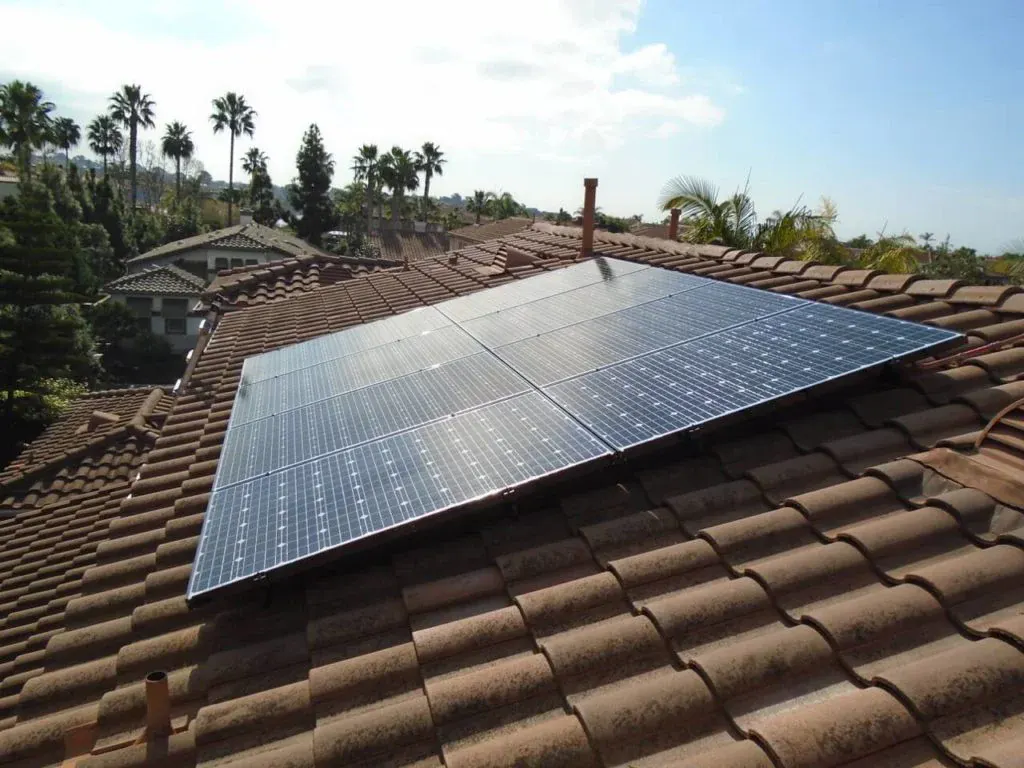
Solar panels can often be incorporated without substantially changing an ADU’s overall design, especially when considered early. A solar-friendly roof provides suitable orientation, usable area, structural capacity, and access. Both sloped and flat roofs can accommodate panels with appropriate mounting systems. Ask your designer to evaluate shading, roof penetrations, required setbacks, and equipment placement rather than assuming every standard roofline will work.
Custom ADUs with distinctive designs or irregular roofs may require closer evaluation of panel placement. A flat roof is not necessarily the best option; orientation, shading, structural capacity, and mounting requirements also matter. Address these considerations during design so you understand whether the proposed roof can accommodate the required system. Many roof configurations support solar, but particularly custom guest house designs conditions may require an alternative layout, another approved location, or further code review.
Will my existing solar panels on the main home count towards my required ADU solar?
Do not assume an unchanged solar array on your primary residence satisfies the solar requirement for a newly constructed ADU. An expansion of the existing system may qualify if it provides the required additional capacity and meets applicable code provisions. Confirm the proposed arrangement during energy modeling, permitting, and utility review before including it in your compliance strategy.
Existing solar capacity and proposed expansions should be evaluated against the applicable CEC requirements, not assumptions about individual plan reviewers. For a property in Los Angeles, Diamond Bar, or Pomona, ask the responsible building department which documentation is needed to demonstrate compliance. Identify the existing system’s capacity, installation history, meter connections, and proposed additions in the plans. If a reviewer questions the arrangement, request the relevant code citation and have your energy consultant address it. Separately confirm utility interconnection and tariff consequences, since building-code acceptance does not establish utility approval.
Confirm requirements for existing solar systems and expansions with the reviewing jurisdiction and utility, using current rules and the code edition applicable to your permit.
If I already have solar on my main home on NEM 2.0, would building an ADU get me kicked off NEM 2.0?
An existing system may retain its NEM 2.0 status if it remains eligible under the utility’s rules. Do not assume an electrical service upgrade or system modification preserves that status automatically. Solar serving a separate ADU meter may fall under a different export tariff, including a net-billing tariff sometimes called NEM 3.0. Verify both arrangements with the serving utility.
Under net-billing tariffs often called NEM 3.0, exported solar electricity is generally compensated differently from electricity purchased from the grid. Export values and time-of-use rates depend on the utility and tariff. Higher evening prices, which may apply during hours such as 4 PM to 9 PM, can affect savings. Confirm the actual rate schedule before estimating bill reductions.
The Solution: Add a Battery
Battery storage may improve the value of your solar system by storing daytime production for use when electricity costs more. Instead of exporting all surplus power at the applicable compensation rate, the system can reserve some energy for later household use. Actual savings depend on your tariff, consumption, battery capacity, and control settings. Request a project-specific quote covering equipment, installation, permits, and any electrical upgrades. If you want outage backup, generator input, or additional battery capacity, specify those features during design. Backup capability is not automatic, and placement must satisfy applicable fire, electrical, clearance, and manufacturer requirements. Exterior wall mounting near the ADU’s electrical panels may be possible, but the approved layout will determine the final location.
Could I have my own solar vendor install a system on the ADU?
If you want to use an outside solar vendor, clarify coordination responsibilities before signing the construction contract. PV design must align with the ADU’s electrical plans, wiring routes, main service panel, and any service upgrades. Separate vendors can handle these tasks, but their scopes, permit responsibilities, insurance, warranties, and schedules must be clearly defined. Ask Uni Construction whether outside-vendor work is permitted under the proposed agreement and who will resolve design conflicts, arrange inspections, and manage utility interconnection. Written coordination requirements can help prevent gaps and delays.
Does an ADU need Title 24?
Yes. Every new ADU must comply with applicable provisions of Title 24, California’s Building Standards Code. Part 6 is the Energy Code, which establishes energy-efficiency requirements for insulation, windows, HVAC, water heating, and, for some ADUs, solar. Solar requirements depend on the project type and applicable exceptions discussed above. Read more about what Title 24 means for ADUs.
When an ADU requires solar, its design and permitting can be coordinated with the ADU plans. Separate permits, inspections, or utility approvals may still be necessary.
Can I build an off-grid ADU? What are the requirements?
For homeowners considering an off-grid ADU, requirements depend on the jurisdiction, site, and applicable codes. If Encinitas is relevant to your project, verify its current requirements rather than assuming grid connection is optional. Ask the building department whether a stand-alone power system is permitted and what documentation is required. Solar panels, batteries, and any proposed generator must be evaluated as a complete, reliable power system.
An off-grid proposal may require electrical load calculations and supporting analysis showing that the PV system and battery storage can reliably meet the ADU’s needs. Ask the reviewing authority which documentation is required, including provisions for sustained demand, seasonal solar variation, and any approved supplemental power source.
Off-grid ADUs can require additional technical documentation and closer plan review. Costs may also vary more widely because power reliability, storage capacity, and site-specific requirements need careful evaluation.
Reach out to experts for your unique situation
Alongside solar compliance, consider the warranties provided by your builder and the written warranties included in your construction agreement. Ask Uni Construction to specify coverage for workmanship, materials, mechanical, electrical, plumbing, and structural components, as well as separate manufacturer warranties for solar panels, inverters, and batteries. Confirm coverage periods, exclusions, maintenance obligations, and the process for reporting defects. Do not assume that 1-year, 2-year, or 10-year coverage applies unless it is expressly documented. Clear warranty terms help you understand who is responsible for addressing problems after completion.
This article provides general guidance on ADU solar design, permitting, and construction, not a property-specific compliance determination. State requirements, local procedures, and utility rules can change, and the code edition governing your application matters. Confirm project details with your energy consultant, building department, and utility. Administrative steps also deserve attention, including obtaining your ADU address and completing any registration, inspection, or interconnection requirements before operating the solar system.
Early planning can help identify likely requirements and establish a realistic budget and scope. Ask for clear assumptions, documented exclusions, and updates when design or permitting decisions affect costs or scheduling. Although no project is free from uncertainty, coordinated design, timely communication, and careful review can make the process more predictable and help deliver an ADU that meets your needs.