

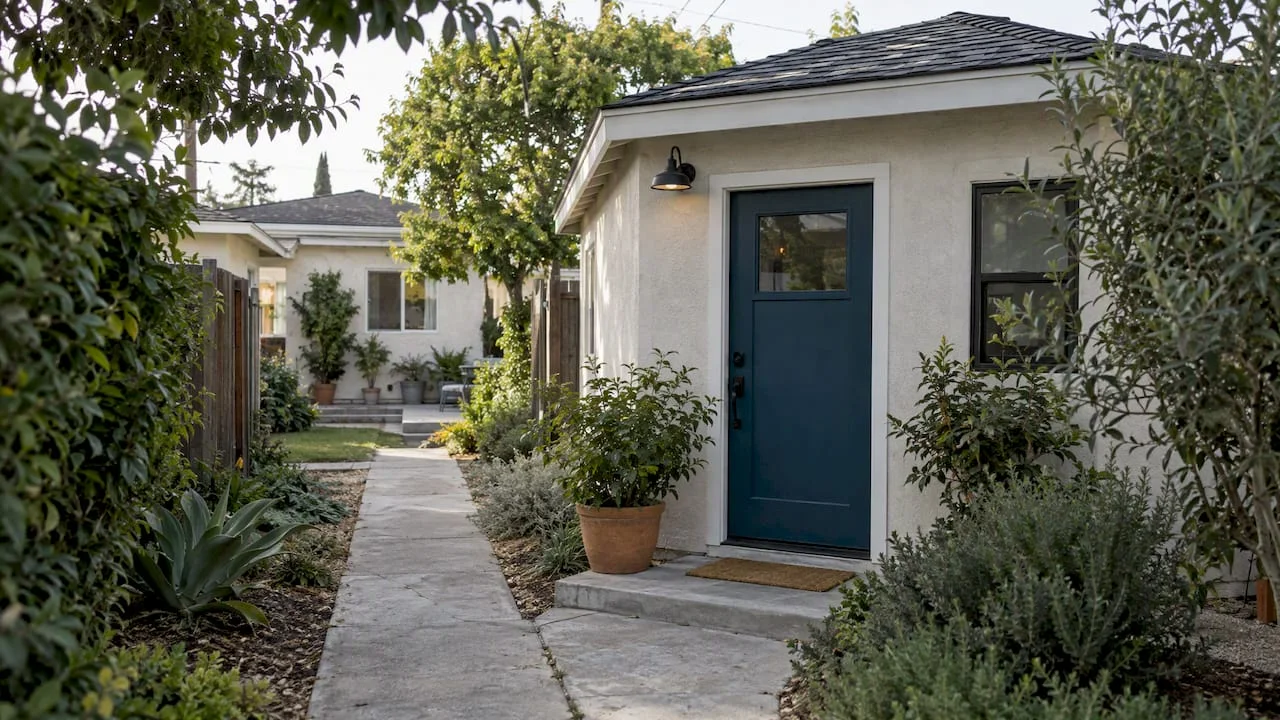
Yes, a standard accessory dwelling unit (ADU) in Los Angeles can have its own address, but it isn’t automatic and you can’t invent one. The address comes from the city or county after your ADU has a valid permit. In Los Angeles County it usually takes the form of a fractional number, such as 1234 ½ Main Street. A Junior ADU (JADU) cannot get a separate address at all.
This guide covers who can get an address, when it’s worth requesting one, the steps after the address is issued, and the related question many owners ask: whether you can sell the ADU separately.
TL;DR
- A separate address is optional for a full ADU. Los Angeles County’s ADU guidelines say an ADU can be permitted under the main house’s address.
- A JADU is part of the primary dwelling, so it gets no separate address and no separate utility service.
- You request the address from the agency that handles your property, and it expects a valid building permit and a site plan. You can’t self-assign a number.
- A new address does not tell the USPS or your utilities about the unit. You contact each of them yourself.
- A separate address does not make the ADU a separately sellable property. In California that needs a local condo ordinance.
Does an ADU in Los Angeles need its own address?
No. Los Angeles County’s guidelines state that an ADU can be permitted under the existing address. If you want a separate one, you request a ½ fractional number tied to the main address. The county’s own example turns 1234 Main Street into 1234 ½ Main Street for the ADU.
The EPIC-LA address request manual makes the same point from the application side: addresses are not required for every project. For residential work, you need one if you want mail at the new address or you are adding a new unit that needs its own identification.
So the real question is not whether the law lets you. It is whether you have a practical reason. Those reasons are usually:
- You want mail and packages delivered to the ADU’s own door.
- You want a separate utility meter, so a tenant or family member pays their own electric, gas or water bill.
- The ADU has a separate driveway or street access, which makes emergency location harder with one shared number.
- You want the unit to look like a distinct home for insurance, banking or tenant paperwork.
If none of those apply, a shared address is simpler. Plenty of owners run a backyard cottage on the main house’s address for years with no trouble.
Which units can get a separate address
The rule turns on what type of unit you build.
| Unit type | Separate address | Separate utility meters |
|---|---|---|
| Detached ADU | Optional | Optional |
| Attached ADU | Optional | Optional |
| Garage conversion ADU | Optional | Optional |
| Junior ADU (JADU) | Not allowed | Not allowed |
The county guideline’s side-by-side table lists the address as optional for an ADU and as a flat no for a JADU. The reasoning is simple: a JADU is carved out of the existing house, so the law treats it as part of the primary dwelling. The Los Angeles County guidelines also say a JADU is capped at 500 square feet when attached or converted.
This is where homeowners get caught. They plan a JADU, expect to rent it out with its own mailbox and meter, and learn at plan check that neither is possible. If a separate address or separate meters matter to your plan, say so at the first design meeting, because it can steer you toward a full ADU. Our types of ADUs page lays out the options we design and build.
Who issues the address: city or county
Los Angeles has more than one jurisdiction, and the agency depends on where your parcel sits.
- Inside the City of Los Angeles: the Bureau of Engineering handles address assignment. Its address assignment procedures start by locating the property through NavigateLA and the County Assessor’s records and verifying the legal description.
- Unincorporated Los Angeles County: the county’s Mapping and Property Management Division issues the ½ number, as described in the county’s ADU guidelines.
- Other cities in the county (Pasadena, Glendale, Diamond Bar and so on) run their own address processes. Check with your city’s planning or public works department.
If you aren’t sure which one governs your lot, the mailing city on your tax bill is not a reliable guide. A lot with a Los Angeles mailing address can sit in unincorporated county territory. Confirm the jurisdiction before you submit anything.
What you need before you apply
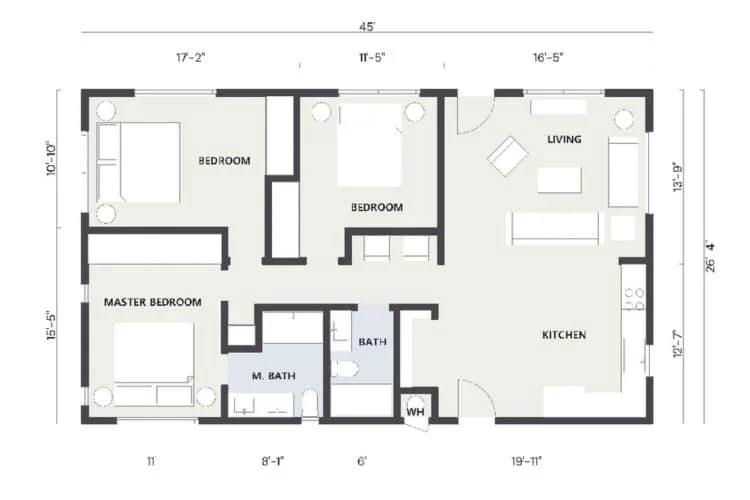
Addresses exist so that 911 dispatchers, postal carriers and utilities can find a unit. Because of that, agencies want paper before they issue a number. According to the county guidelines, an address request needs a site plan showing the unit’s location, its access and where the intended utility meter will go. Requests without a valid building permit or an approved site plan review are typically rejected.
In practice, prepare:
- A permit or approved plans. The ADU should already be in the permit pipeline. For the City of Los Angeles, all new ADUs need a building permit from the Department of Building and Safety, and by state law the city must approve or deny a complete application within 60 days.
- A site plan. It shows the main house, the ADU, the driveway or walkway and the planned meter location.
- Parcel details. Assessor’s parcel number, legal description and the existing address.
- Your utility plan. Decide early whether you want separate meters, since that decision belongs in the building permit phase.
Owners cannot create or self-assign address numbers under any circumstances. Painting 1234 ½ on a door without an issued number can cause real problems for emergency response.
Step by step: from permit to mailbox
- Design with the address decision in mind. Tell your designer whether you want a separate address and separate meters. The site plan and the electrical and plumbing layouts change if you do.
- Get the ADU permitted. This is the longest step. Our guides to the ADU approval process in Los Angeles and to getting plans approved without delays cover what plan check looks for.
- Request the address. File with the Bureau of Engineering (city) or the county division, attaching the site plan and permit information.
- Contact the USPS. Per the City of Los Angeles procedures, getting a city address does not automatically set up postal delivery. You coordinate with the Postal Service to establish the unit as a delivery point.
- Apply to utilities. Separate meters are a separate application. Shared metering remains the default unless independent meters were requested and approved during the permit phase.
- Update your records. Tell your insurer, lender and any tenant, and update the address on the lease.
The common mistake is stopping after step 3. Owners assume the address does the rest, then wonder why mail is returned.
Separate meters and a separate address are linked
The county guideline’s FAQ answers the utility question directly: a separate meter or service panel is not required for an ADU, but the owner can request one. It also notes that new utilities are optional but required for a new address. So think of the two as a package. If you want the address, plan for the meters in your electrical, gas and water design, and show their placement on the site plan.
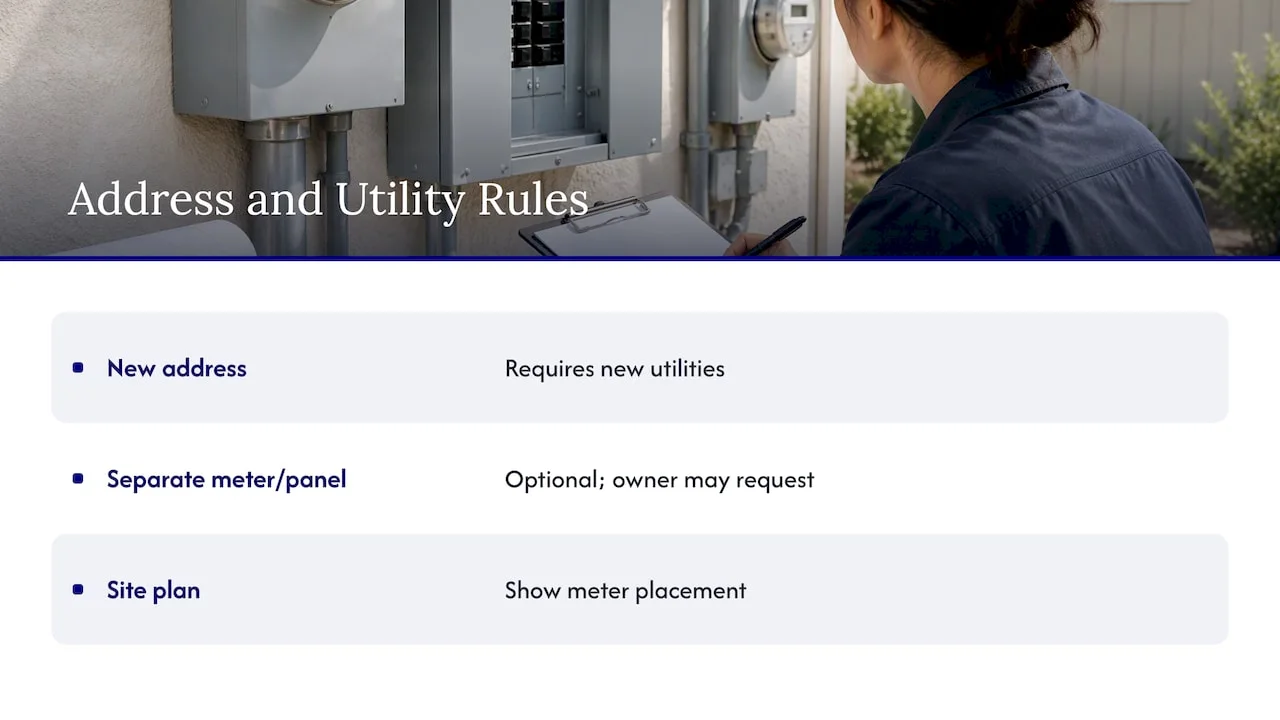
There is a cost trade-off. Separate meters can mean new panels, trenching or longer utility runs. They also let a tenant pay their own usage, which many landlords prefer. We’d rather you weigh this at the design stage than discover the cost after framing. If a structural or electrical load question comes up, our structural engineering and design engineering teams can work it through with you.
Garage conversions and the address question
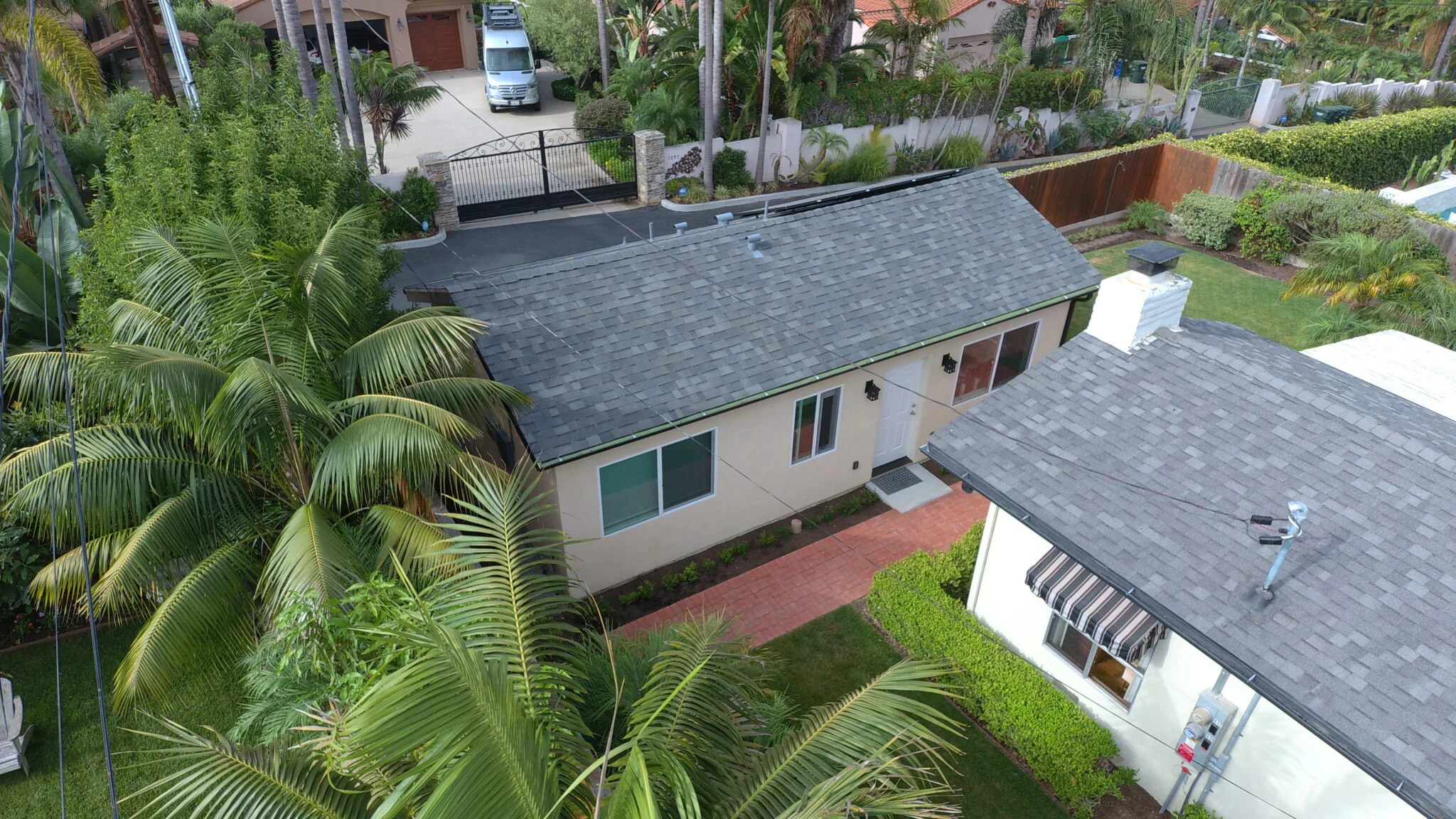
Garage conversions are the most common ADU we hear this question about, because the unit often shares a driveway with the house. A shared driveway with one door onto the same frontage is a case where the shared address works fine. If the garage conversion has its own walkway or entrance from a side street or alley, a ½ address is worth considering, because it helps visitors and responders find the right door. Details on the process are on our garage conversion ADU page.
Does an address mean you can sell the ADU separately?
No, and this is the most misunderstood point. An address identifies a unit. It does not create a separate legal parcel.
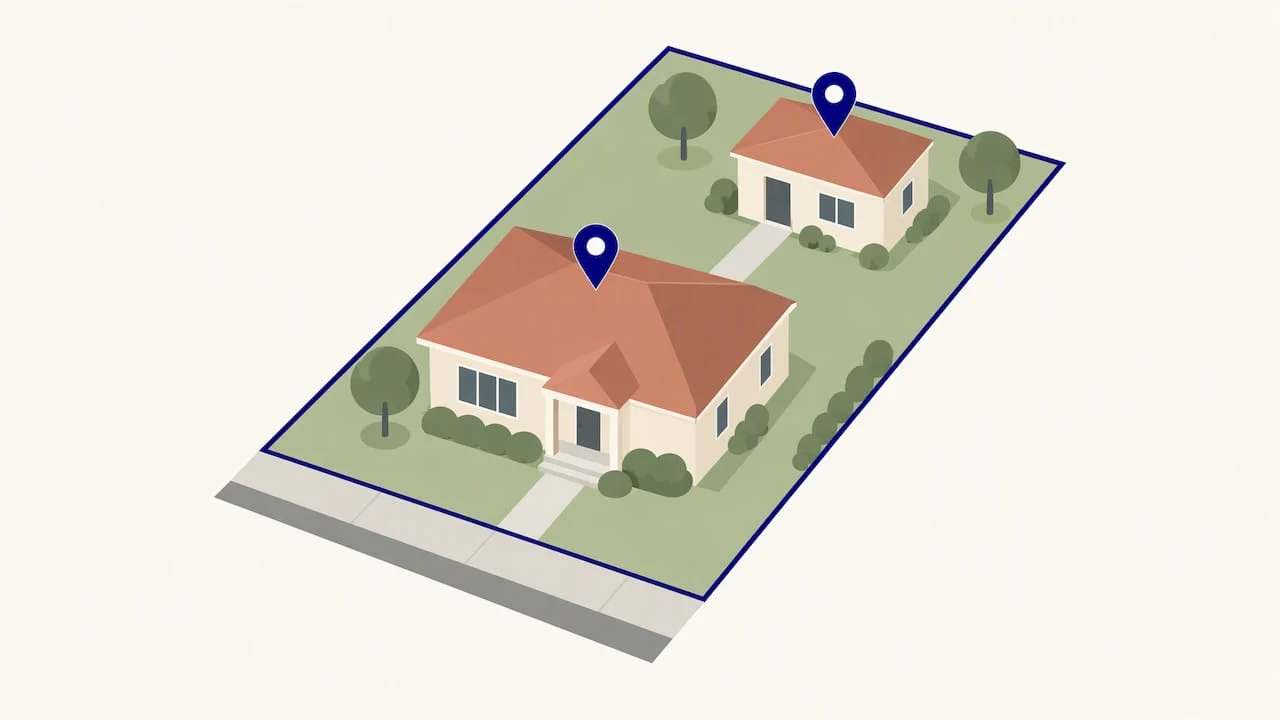
Under California law, ADUs generally cannot be sold separately from the primary dwelling. The state’s ADU handbook describes two exceptions. A local agency can choose to allow the main home and the ADU to be conveyed as condominiums, if it adopts an ordinance meeting the requirements of Government Code section 66342 and the Davis-Stirling Common Interest Development Act. There is also a narrow exception for a qualified buyer when the ADU was built by a qualified nonprofit corporation.
The condo route is opt-in for cities. According to ADU Pilot’s 2026 analysis, Los Angeles was still at the draft-ordinance stage as of June 2026, so owners cannot yet sell an ADU as a condo there. The same analysis notes that a condo unit must have a separate mailing address, so in places that do adopt a program, the address request becomes a required step rather than an option. Check the city’s current status before you build on the assumption that it will pass.
If you may refinance or sell the whole property later, it also helps to understand how appraisers treat an ADU. A guide to making an ADU appraisal lender ready explains the documentation that supports valuation, and the same logic applies when your Los Angeles paperwork is clean: permits finaled, an address on record and utilities clearly documented.
Do you have to accept deed restrictions?
Owners sometimes worry that asking for an address, or building an ADU at all, ties them to restrictive conditions. The HCD handbook says state law prohibits local agencies from imposing owner-occupancy requirements or deed restrictions on most ADUs. That leaves you flexibility to rent the unit. Rules still vary by unit type and by city, so confirm the details for your lot.
Where a second address is useful and where it isn’t
The LegalClarity overview of multiple addresses on one property frames the test well: the deciding factor is whether the property holds two genuinely independent spaces, each needing its own identification for mail, utilities and emergency response. A bedroom or basement sharing a front door with the house doesn’t qualify. A cottage with its own entrance, kitchen, bath and meters usually does.
A quick self-check:
- Own entrance, own meters, long-term tenant: request the address.
- Family member living there, shared utilities: keep the main address.
- JADU: no option. Use the main address.
- Planning to sell it separately: an address will not get you there. Watch the city’s condo ordinance.
Our perspective on ADU addresses
We design and permit ADUs across Los Angeles and the San Gabriel Valley, and the address question almost always arrives late, after the design is set. That is the wrong time. A separate address pulls in site plan details, meter placement and utility load, and those are far cheaper to settle on paper than after framing.
Our advice: decide at the start whether the unit is a rental with its own bills or a family space on shared services. Then pick the unit type to match. If you want separate meters and an address, a full ADU is the right unit, not a JADU. Treat the address request as a permit-phase task, not a closeout chore, and keep the USPS and utility steps on your checklist, since neither follows automatically.
We also keep timelines honest. Plan check, corrections and inspections set the schedule, and the address follows them. Our guides on how long an ADU takes to build in Los Angeles and on avoiding permit resets show where time is usually lost.
, Uni Construction
Plan the address into your ADU from day one
If you’re designing an ADU in Los Angeles and want its own address and meters, we can build that into the drawings, site plan and permit set from the start. We handle architectural design, permit-ready drawings, structural engineering and construction. See our Los Angeles ADU design and build page, or contact us through Uni Construction to talk through your lot.
FAQ
No. A JADU is defined as part of the primary dwelling, so state law and the Los Angeles County guidelines exclude it from a separate address and separate utility service. If you need either, plan a full ADU instead.
In Los Angeles County it is usually a fractional number added to the main address. If the house is 1234 Main Street, the ADU becomes 1234 ½ Main Street. The agency assigns it, and you cannot choose or self-assign the number.
Generally not. State law allows condo-style separate sales only where a city has adopted a qualifying ordinance, plus a narrow nonprofit-builder exception. As of June 2026, Los Angeles had not adopted one, so confirm the current status before planning around it.
No. After you receive the address, you coordinate with the USPS to establish a delivery point and apply to the utility companies for separate meters. Without a request approved during the permit phase, shared metering stays the default.
Sources
- Los Angeles County ADU and JADU Building and Safety Guidelines
- EPIC-LA Address Request Manual
- Address Assignment and Maintenance Procedures, Bureau of Engineering
- California HCD Accessory Dwelling Unit Handbook, March 2026
- AB 1033 in 2026, ADU Pilot
- Los Angeles Building Permits, Permit Place
- Can You Have 2 Addresses on the Same Property? LegalClarity