

Tiny homes and ADUs are both small, but they’re not necessarily the same thing. A ADU (Accessory Dwelling Unit) generally provides a permanent, permitted second home on your lot. A tiny home is often built on wheels and classified as an RV. In some cities, including Los Angeles, a tiny home on wheels can qualify as an ADU if it meets specific requirements. This guide compares the two, explains what California and Los Angeles allow, and helps you evaluate which option makes sense for your property.
Impact-fee threshold note: Under the March 2026 California HCD ADU Handbook, the statewide development-impact-fee exemption includes ADUs with 750 sq ft of interior livable space or less. Above 750 sq ft, applicable impact fees must be proportional. School, utility, plan-check and permit charges follow separate rules.
Is an ADU the Same as a Tiny Home?
No. The distinction largely depends on how each structure is classified. A conventional ADU is a permanent dwelling on a foundation, permitted under applicable California building standards and treated as part of your real estate. A tiny home on wheels is usually classified as a vehicle, built to RV standards, and registered with the DMV. That classification affects where it can be placed, whether full-time occupancy is permitted, and how appraisers treat it. Here’s how the two compare side by side.
| Feature | Tiny home on wheels | ADU |
|---|---|---|
| Legal classification | Usually an RV or park model; residential use requires local approval | Permanent dwelling unit |
| Typical size | 100 to 400 sq ft | Varies by type; detached ADUs may reach 1,200 sq ft under applicable rules |
| Foundation | Wheels, with approved supports as required | Permanent foundation |
| Permits | Local Approval Required; full-time occupancy depends on applicable rules | Local Approval Required; qualifying ADUs receive ministerial review |
| Built to | Applicable RV standards, such as NFPA 1192 or ANSI A119.5 | Applicable California residential or building codes |
| Utilities | Off-grid systems or hookups, subject to local requirements | Approved water, wastewater and power connections |
| Registration | Generally registered with the DMV | No DMV registration; part of the property |
| Property value | Appraisal treatment varies by classification and installation | May add appraised value, depending on the property and market |
| Can it be moved? | Yes, subject to transport requirements | Not designed for routine relocation |
Sources: California HCD Information Bulletin 2016-01; City of Los Angeles Information Bulletin 403. Rules for tiny homes on wheels vary by city.
Pros and Cons of ADU vs. Tiny House
- Flexibility: Tiny homes can offer greater relocation flexibility, especially models on wheels. Permanent ADUs provide stable housing that may enhance property value.
- Legality: ADUs must meet applicable zoning and building requirements, creating a defined approval process. Tiny homes’ legal status varies widely, which can complicate full-time occupancy and utility connections.
- Investment: ADUs represent a substantial property investment, with potential rental income and increased property value. Tiny homes may offer a lower initial cost and appeal to minimalist lifestyles, but they may not contribute comparable real estate value.
Can a Tiny Home Be Used as an ADU in California?
It depends on how the tiny home is built and where your property is located. Tiny homes generally fall into two categories, which California law treats differently.
A tiny home on a foundation is a small house. If it provides the required independent living facilities and is permitted as an ADU under applicable building standards, statewide ADU law applies. Approval depends on meeting the relevant legal and site-specific requirements.
A tiny home on wheels is usually classified as a recreational vehicle. State ADU law does not require cities to accept it as a dwelling, so full-time backyard occupancy depends on the applicable local ordinance. Some cities, including Los Angeles, allow movable tiny houses as ADUs under specific conditions. Others do not provide that option.
If you’re considering a tiny home for use as an ADU, confirm your city’s requirements before buying. A unit that fails to meet them may be restricted to temporary or recreational use rather than lawful residential occupancy.
Tiny Homes as ADUs in Los Angeles
The City of Los Angeles allows movable tiny houses as ADUs, subject to requirements that include the following:
- Size: 150 to 430 sq ft, limited to one story.
- Construction standard: Built and certified to NFPA 1192 or ANSI A119.5, with the certification label attached to the unit.
- Registration: Licensed and registered with the California DMV; the unit cannot be self-propelled.
- Site: Supported by leveling or support jacks on a paved surface that meets City standards. Wheels remain attached, but wheels, axles, and the hitch must be concealed from view.
- Utilities: Connected to water, sewer, and electricity. Natural gas connections are not allowed.
- Permit: A building permit is required, with a site plan, floor plan, elevations, and utility connection details.
Source: City of Los Angeles Information Bulletin 403, Movable Tiny Houses
A movable tiny house is permitted as an ADU, not as an automatic additional dwelling allowance. Confirm with Los Angeles City Planning and LADBS how existing units, a proposed junior ADU, and current state law affect your lot’s eligibility.
A tiny home can cost more than expected once you include the pad, utility connections, and permits. Its appraisal treatment also differs from that of a permanent ADU. Before choosing, obtain site-specific estimates for both options and discuss valuation with a qualified appraiser.
Impact on Property Value
One important distinction between a permanent ADU and a tiny home that does not qualify as one is their potential effect on property value. ADUs that meet applicable requirements and are permanently attached to the property may increase a property’s value. Appraisers generally treat these units as part of the real estate, although their contribution depends on the property and local market. Any increase in value reflects factors such as additional usable living space, lawful occupancy, construction quality, and potential rental income.
By contrast, tiny homes that do not qualify as permanent ADUs, particularly those without permanent foundations, typically do not contribute to real estate value in the same way. Although they may provide practical living space or lawful rental accommodation where permitted, their mobility and classification as personal property can exclude them from a real estate appraisal. This distinction matters when comparing investments in tiny homes and permanent ADUs, particularly if your priorities include financing, resale value, rental use, or long-term flexibility.
How Big is a Tiny House vs. an ADU?
Size is one difference between a tiny home and an accessory dwelling unit (ADU), but classification, construction, and permitted use are equally important. Understanding typical dimensions and applicable size limits helps homeowners compare these housing options and determine which best fits their needs, available space, and property constraints.
Tiny Home Dimensions
Tiny homes, known for their minimalist approach to living, typically range from 100 to 400 square feet, although legal size requirements depend on their classification and location. Their compact design reflects the movement’s emphasis on simplicity, efficiency, and a smaller environmental footprint. Rather than replicating a traditional home at full scale, tiny homes make efficient use of limited space through multifunctional furniture, flexible layouts, and carefully planned storage.
ADU Size Regulations
California limits how restrictive local ADU size caps can be rather than imposing one universal statewide maximum. Generally, a local maximum cannot be below 850 square feet, or 1,000 square feet for an ADU with more than one bedroom, subject to applicable statutory provisions. For a property in Los Angeles, Diamond Bar, or Pomona, check that jurisdiction’s current ordinance and the state handbook for the relevant limits and exceptions. Larger ADUs can provide separate living, sleeping, and kitchen areas, making them suitable for family housing or lawful rentals. A dedicated office or studio area can also fit within a complete dwelling.
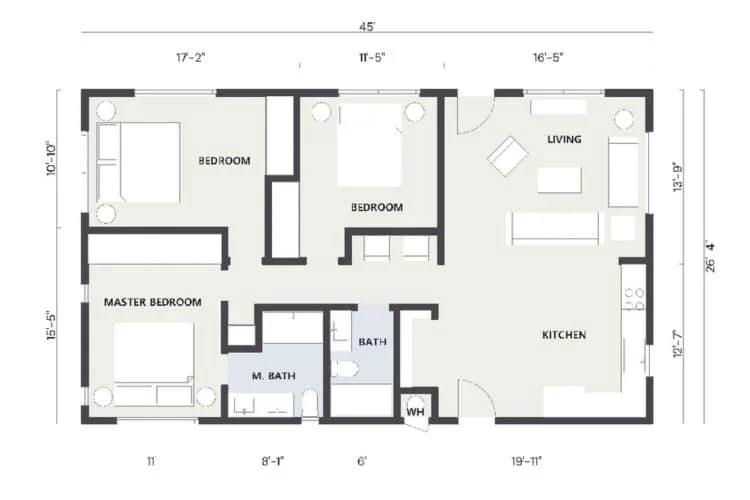
View ADU floor plans under 500 sqft.
What Is the Smallest ADU You Can Build?
In California, 150 square feet is commonly cited as the minimum for an efficiency unit, but it is not a universal minimum total ADU size. Confirm how applicable floor-area definitions, bathroom space, kitchen facilities, sleeping areas, and building-code requirements affect your proposed layout with the permitting authority.
For a compact ADU, consider whether a 300- to 500-square-foot layout can accommodate a full kitchen and bathroom without feeling cramped. Smaller units may also qualify for fee exemptions. Under state law, ADUs 750 square feet or less are generally exempt from impact fees, but other permitting and utility charges may still apply.
Read more about ADU sizes.
Making the Choice
Choosing between a tiny home and an ADU requires considering your long-term goals, available property space, and intended use. If you want a permanent, independent dwelling with the potential to increase real estate value, a conventional ADU may be preferable. A tiny home may appeal more if you prioritize minimalist living or mobility, but temporary placement and residential occupancy still require confirmation under local rules.
A larger ADU may require more space and higher construction costs, while permanent dwellings and wheeled tiny homes follow different construction and approval standards. If your space or budget is limited, or mobility is a priority, a tiny home may be worth considering, provided its intended use is lawful. Others may consider a attached ADU.
Choosing between a tiny home and an ADU, or deciding on the construction method for your ADU, ultimately depends on your needs, property constraints, and long-term goals. Understanding each option’s legal classification, practical limitations, and approval requirements can help you make an informed decision for your lifestyle and property.
Read more: 5 Conversations to Have With Your Family Before Building an ADU
Frequently Asked Questions
Is a tiny home considered an ADU?
A tiny home on a permanent foundation can qualify as an ADU if it meets dwelling requirements and receives the necessary permits. A tiny home on wheels qualifies only where local rules specifically allow it, including Los Angeles under defined conditions.
Can I put a tiny home in my backyard in Los Angeles?
Yes, subject to City requirements, including 150 to 430 sq ft, approved RV or park-model certification, DMV registration, an approved paved surface, and utility connections. A building permit is required. Confirm site eligibility and how the unit affects your property’s ADU allowance with LADBS.
What's the smallest ADU allowed in California?
An efficiency unit may have 150 square feet of qualifying living area; required bathroom space and other code provisions can increase the total.
Does a tiny home add property value?
A tiny home on wheels is generally treated as personal property rather than included in a real estate appraisal. A permitted ADU on a permanent foundation is part of the real estate and may increase its value, depending on market conditions.
Continue Your Planning
For a complementary explanation, read ADU vs Tiny House: Which One Is Right for You?. Compare the ideas with your property and household needs before deciding on a direction.