

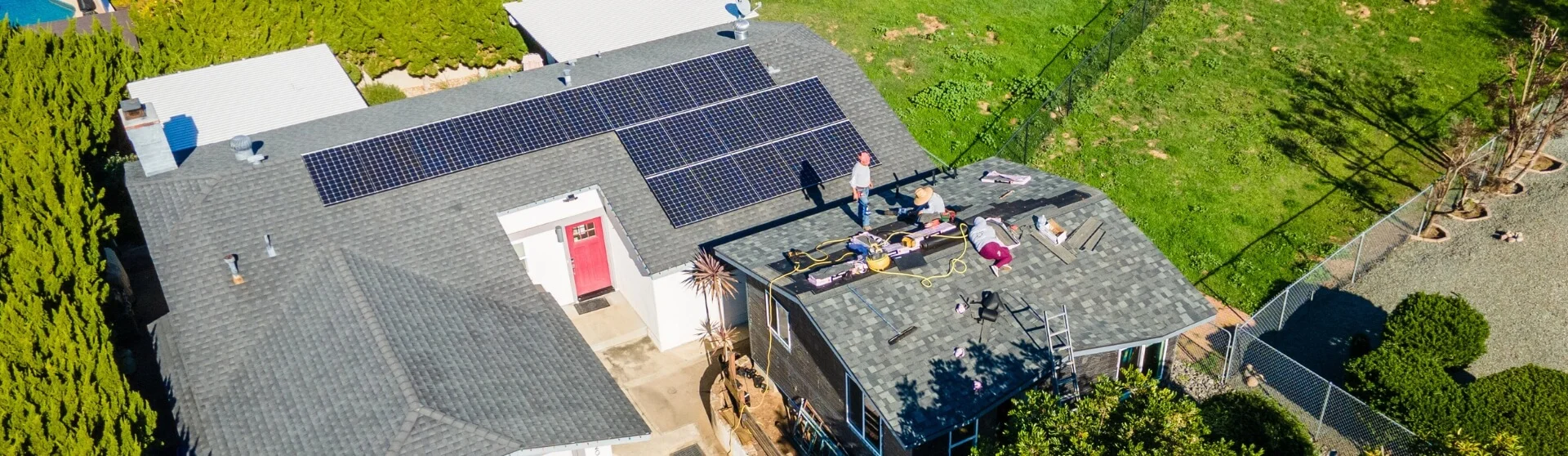
What is the Role of Solar in Los Angeles ADU Development?
Accessory dwelling units (ADUs), small secondary homes with independent living facilities, can be well suited to solar integration because of their compact size and potentially lower energy needs. Properly designed solar systems can improve ADU efficiency, reduce electricity costs, and support sustainability.
California’s Title 24 energy standards generally require photovoltaic systems for newly constructed, non-manufactured, detached ADUs, subject to applicable exceptions. Consult the California Department of Housing and Community Development (HCD) March 2026 ADU Handbook and current California Energy Commission guidance to determine which requirements apply to your project.
Los Angeles homeowners may benefit from solar where available sunlight, electricity rates, and household consumption support a favorable financial case. Check whether incentives such as 30% Federal Residential Clean Energy Credit remain available and apply to your installation. Evaluate resale claims, including the historical 4.1% premium reported by Zillow research., against current local sales data rather than assuming a comparable increase.
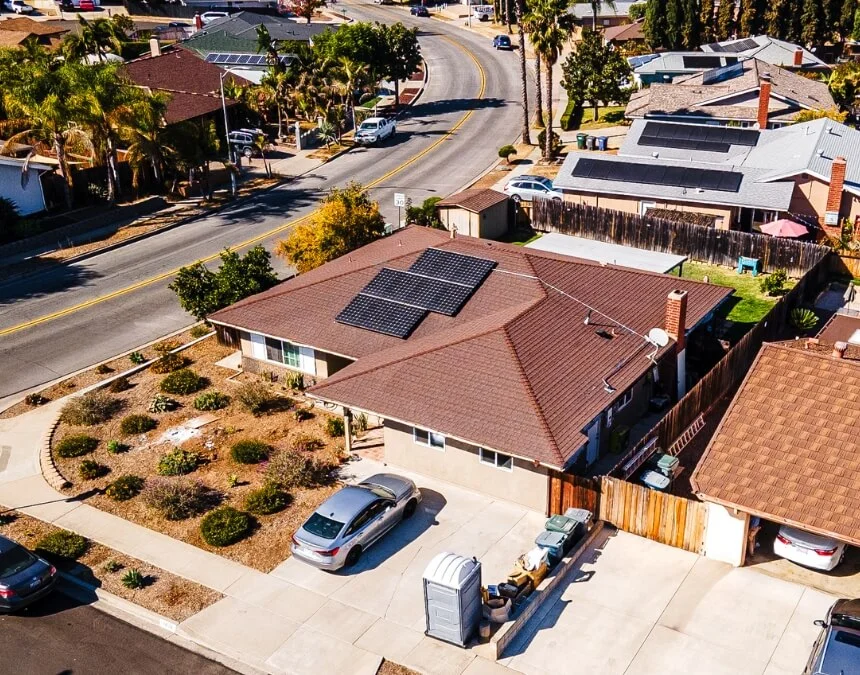
Los Angeles’s solar potential makes early planning worthwhile, but your ADU’s efficiency and return depend on site conditions, utility rates, and installation costs.
Why Integrate Solar Panels in ADUs?
Integrating solar panels into your accessory dwelling unit (ADU) can offer several meaningful benefits. Beyond generating renewable electricity, a well-designed system may reduce operating costs, support resale appeal, and align with sustainability goals and applicable requirements in ADU with California’s. Results depend on your property, energy use, and project costs. Here is a closer look at the key advantages:
Long-term Electricity Bill Savings
Solar panels can reduce monthly electricity bills, with savings accumulating over time. Rather than relying on a general 6-8-year payback estimate, request a calculation based on your installed cost, electricity use, utility tariff, financing, and maintenance. Electricity is not entirely free after payback because fixed charges, repairs, and equipment replacement may remain. Likewise, treat a $50,000 estimate over 25 years as a scenario requiring documented assumptions, not a guaranteed California outcome (EnergySage).
Increase in Property Resale Value
Installing solar panels on your ADU can lower electricity costs and may improve your property’s market appeal, although any increase in resale value depends on local conditions.
What the Data Shows
- Studies and real estate analyses have associated owned solar systems with higher sale prices, but results vary by market and study period.
- A historical analysis referenced in 2019 Zillow study reported that homes with solar-energy systems sold for 4.1% more on average than comparable homes without solar.
- That study reported an additional $9,274 for its median-valued home. Neither figure establishes a current premium for your property.
- When reviewing research from Lawrence Berkeley National Laboratory or equipment and pricing resources, check the publication date, study population, ownership arrangements, and methodology before applying a 3% to 5% estimate.
- For properties in Los Angeles, ask a qualified local appraiser to review comparable sales rather than assuming a 5-7% premium based on sunshine or electricity rates.
Beyond potential added property value, solar panels may appeal to buyers seeking energy-efficient homes. However, faster sales are not assured. System ownership, financing obligations, equipment condition, and documented electricity savings can all influence a buyer’s assessment.
Environmental Benefits
Beyond potential financial benefits, solar panels can reduce greenhouse gas emissions associated with purchased electricity, supporting California’s environmental objectives. Generating renewable energy on-site can lower an ADU’s operational carbon footprint, although the overall impact depends on system production, consumption patterns, and the electricity displaced. This gives homeowners a practical way to support broader sustainability efforts.
Compliance with California State Energy Codes
California’s Title 24 energy standards generally require solar panels for newly constructed, non-manufactured, detached ADUs, subject to applicable exceptions. Review California Energy Commission (CEC) alongside the March 2026 HCD ADU Handbook and current Energy Commission guidance. Planning solar during ADU design helps homeowners address applicable requirements, coordinate permit documentation, and avoid redesigns without assuming that installation alone establishes full compliance.
Achieving Energy Independence
Solar-powered ADUs can reduce homeowners’ reliance on purchased electricity and limit exposure to some electricity price changes. However, grid-connected solar alone generally does not provide power during an outage. When paired with appropriately sized batteries, compatible inverters, and approved backup controls, a system can support selected loads during interruptions. Backup duration depends on stored energy, sunlight, equipment capacity, and household consumption.
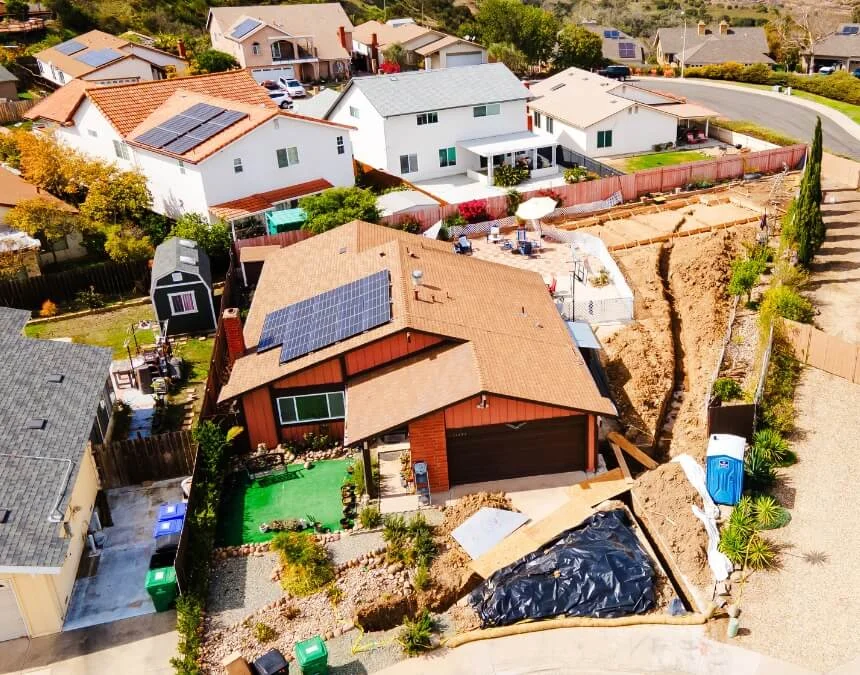
Planning solar during ADU construction can support energy savings, applicable Title 24 compliance, and long-term property appeal, depending on project conditions.
What Are the Costs and Savings of Installing Solar on an ADU?
Investing in solar panels for your accessory dwelling unit (ADU) involves upfront costs and the potential for long-term financial benefits. Understanding project-specific pricing, currently available incentives, and installation timing can help Los Angeles homeowners evaluate savings and make a realistic assessment of their potential return on investment (ROI).
Typical Initial Investment
Solar installation costs depend on system capacity, equipment, roof conditions, electrical work, permitting, and whether batteries are included. Treat a quoted $12,000 to $18,000 range as a preliminary budgeting reference, not an established price for your ADU. When reviewing 2025 industry guide, confirm the estimate’s date, location, system specifications, and exclusions. Obtain itemized proposals from qualified contractors and verify any claimed federal, state, or utility incentives with the administering authority before subtracting them from your expected project cost.
If proposals reach $20,000 or $25,000, compare their scope with any $12,000 to $18,000 estimate. Electrical upgrades, storage, roof work, equipment specifications, and installation complexity can make otherwise similar ADU solar proposals materially different.
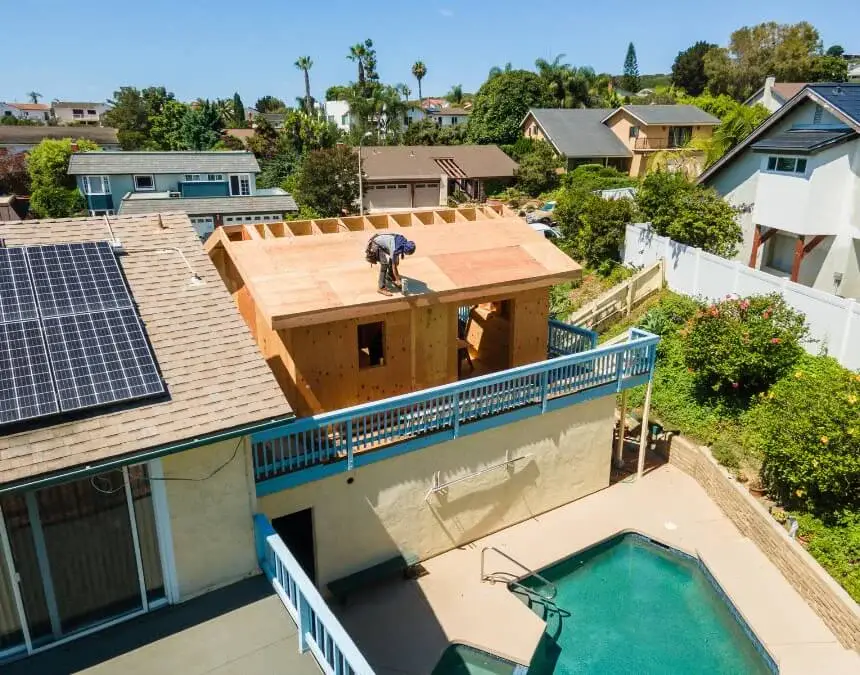
Plan solar during ADU construction to limit retrofit work, verify incentive eligibility, and evaluate long-term energy savings before committing to installation.
Federal Incentives: Residential Clean Energy Credit
Do not assume that a new solar installation qualifies for the former 30% Residential Clean Energy Credit. Federal law ended that homeowner credit for expenditures made after December 31, 2025. A $15,000 installation would have produced a $4,500 credit only if it met the applicable eligibility rules. Confirm expenditure timing, ownership, and any remaining tax benefits directly with the IRS and a qualified tax professional rather than relying on an older estimate (EnergySage).
Optimal Integration for Maximum Savings
Planning solar during initial ADU design can reduce retrofit work, simplify electrical coordination, and support applicable Title 24 compliance. Coordinate roof layout, structural loads, conduit routes, equipment locations, and permit submissions before construction begins. Do not assume solar adds no construction time: equipment availability, inspections, utility upgrades, and interconnection review can affect the schedule. Ask your project team to identify dependencies and document a coordinated installation plan.
Summary of Costs and Incentives
| Cost and Savings Factors | Typical Range/Details |
|---|---|
| Initial Investment | Obtain a project-specific quote based on system size and site conditions |
| High-end Cost Estimates | Complex roofs, electrical upgrades, and batteries can increase costs |
| Federal Tax Incentive | Confirm current federal eligibility rules for the installation year |
| Optimal Installation Timing | Coordinate solar installation with initial ADU construction |
| Long-term Savings (25-year estimate) | Model savings using projected usage, utility rates, and system output (EnergySage) |
What are California’s Title 24 Solar Requirements for ADUs?
California’s Title 24 building energy standards generally require photovoltaic systems for newly constructed, non-manufactured, detached accessory dwelling units (ADUs), subject to applicable exceptions. Established by the California Energy Commission (CEC), these standards support energy efficiency and renewable electricity generation. Understanding the code edition governing your permit application, along with its requirements and exceptions, is essential when planning your Los Angeles homeowners planning an ADU project.
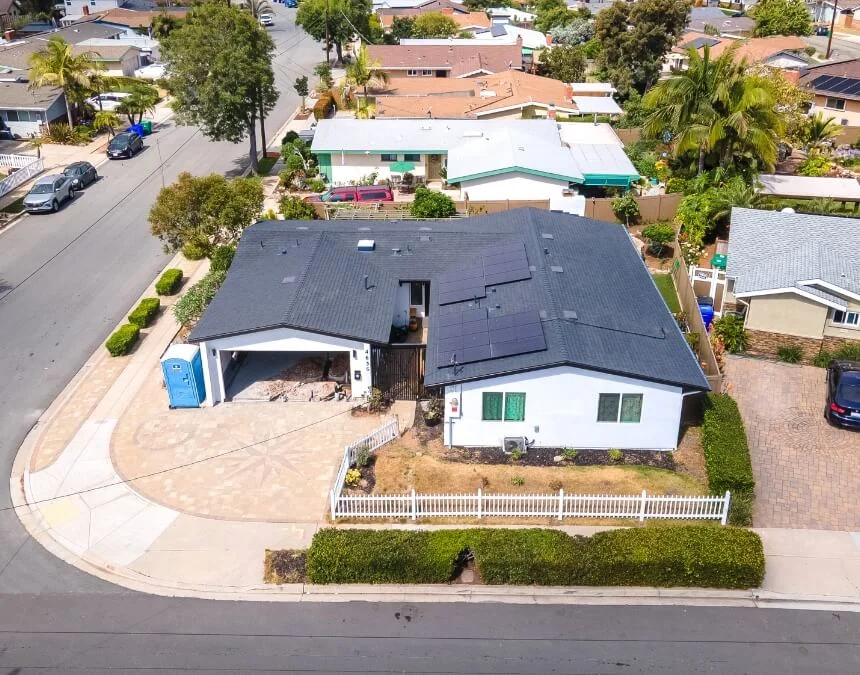
Title 24 generally requires solar for new detached ADUs. Verify applicable requirements and exceptions early with your energy consultant and permitting authority.
When Are Solar Installations Required?
Under Title 24, newly constructed, non-manufactured, detached ADUs generally require solar unless an applicable exception applies. There is no universal 1,125-square-foot threshold that determines whether every ADU needs panels. Requirements depend on the governing code edition, prescribed calculations, available solar access, and other project-specific conditions reviewed by your energy consultant and permitting authority.
Key Exemptions to Title 24 Solar Requirements
California’s solar requirements include exceptions that depend on the applicable code edition and project conditions. Review CEC’s Title 24 guidelines and confirm the following scenarios with your energy consultant:
- Conversions and Additions: ADUs created within existing buildings, including garage conversions and portions of a primary residence, are generally treated differently from newly constructed detached units. Confirm how any addition affects the applicable energy requirements.
- Manufactured or Prefabricated ADUs: Manufactured homes and factory-built modular buildings are not interchangeable classifications. Applicable standards depend on the construction type; prefabrication alone does not establish a solar exemption.
- Small ADUs (Below 620 sq ft): Do not assume an ADU below approximately 620 square feet is automatically exempt. Ask the permitting authority serving unincorporated Los Angeles to confirm the applicable calculation and exceptions.
- Solar System Size Below 1.8 kWdc: Verify whether the governing code includes a small-system exception, its precise threshold, and any conditions before relying on a calculated capacity below 1.8 kWdc.
Summary of Title 24 Solar Exemptions
- Confirm the applicable code edition, documentation requirements, and exception criteria with your local Los Angeles building department before finalizing the design.
- Do not treat 1.8 kWdc as a universal exemption threshold. Ask your energy consultant to identify the governing calculated requirement from Title 24’s formula and applicable exception language.
| Exemption Type | Description/Threshold | Typical Examples |
|---|---|---|
| Conversion/Addition | Solar requirements depend on the scope and applicable energy code | Garage conversions, basement ADUs |
| Manufactured ADU | Verify requirements under the applicable factory-built housing standards | Factory-built modular units |
| Small Unit (by size) | Any exception depends on applicable code criteria, not size alone | Compact, detached backyard ADUs |
| Small PV System Requirement | Confirm whether the calculated system qualifies for a code exception | Small or energy-efficient units |
What Are Practical Considerations for Solar-Powered ADUs?
When planning solar integration for an accessory dwelling unit (ADU) in Los Angeles, homeowners should evaluate practical factors affecting efficiency, compliance, and cost. Beyond the initial investment, system sizing, construction sequencing, permit requirements, utility interconnection, and verified incentive eligibility can influence the outcome. Addressing these considerations early helps establish a realistic project scope and budget.
System Size Requirements
Selecting an appropriate solar system size affects both compliance with California’s Title 24 standards and long-term financial performance. The applicable minimum photovoltaic (PV) capacity must be established through the governing energy-code calculation, which considers ADU’s conditioned floor area and other prescribed factors. Household demand may justify a different installed capacity.
For production estimates, homeowners and builders can use tools such as PVWatts Calculator from the National Renewable Energy Laboratory. These tools estimate generation under specified location, equipment, and shading assumptions. They support design decisions but do not replace approved energy-compliance calculations or establish that a proposed system satisfies regulatory requirements.
Installation Options and Timelines
Understanding the sequence of solar design, permitting, installation, inspection, and utility approval helps avoid preventable delays. Some activities can proceed alongside ADU construction, but the project schedule should identify dependencies rather than assume both processes will finish together.
Installation Timeline (60-90 Days):
Do not assume the complete solar process will take 60 to 90 days. Request project-specific estimates from your contractor, permitting authority, and serving utility for each stage, including:
- Site assessment and solar system design
- Coordination with the serving utility
- Installation of panels and associated equipment
- Final inspections and utility permission to operate (PTO)
After permits are issued, confirm installation and utility review schedules separately. A 2-4-week estimate may exclude inspections, service upgrades, corrections, or interconnection requirements.
Permitting Timeline (Approximately 45 Days):
Verify current permit processing times with the authority reviewing your property rather than assuming 45 days or a 2-to-8-week range. Review duration depends on application completeness, project scope, corrections, and inspection availability. Ask whether an expedited or automated online permitting pathway is available and whether your specific solar installation qualifies for that process.
Timeline Summary for Solar Installation on ADUs
| Step | Typical Duration | Notes |
|---|---|---|
| Permitting | Confirm the project-specific review schedule | Timing depends on application completeness and required reviews |
| Installation & Build | Establish a schedule with the installer and utility | Includes assessment, installation, inspection, and utility permission to operate (PTO) |
Navigating Potential Tax Incentives
Federal tax treatment can materially affect solar costs, but the former 30% Residential Clean Energy Credit ended for expenditures made after December 31, 2025. Verify any applicable benefit with the IRS before budgeting.
For a $10,000 installation, a hypothetical $3,000 tax credit would leave $7,000 before financing and other expenses. Do not use that example as evidence that a current federal credit is available.
Verified incentives can improve project economics, but solar’s financial appeal should be evaluated using current eligibility rules, actual installation costs, utility tariffs, and expected electricity production.
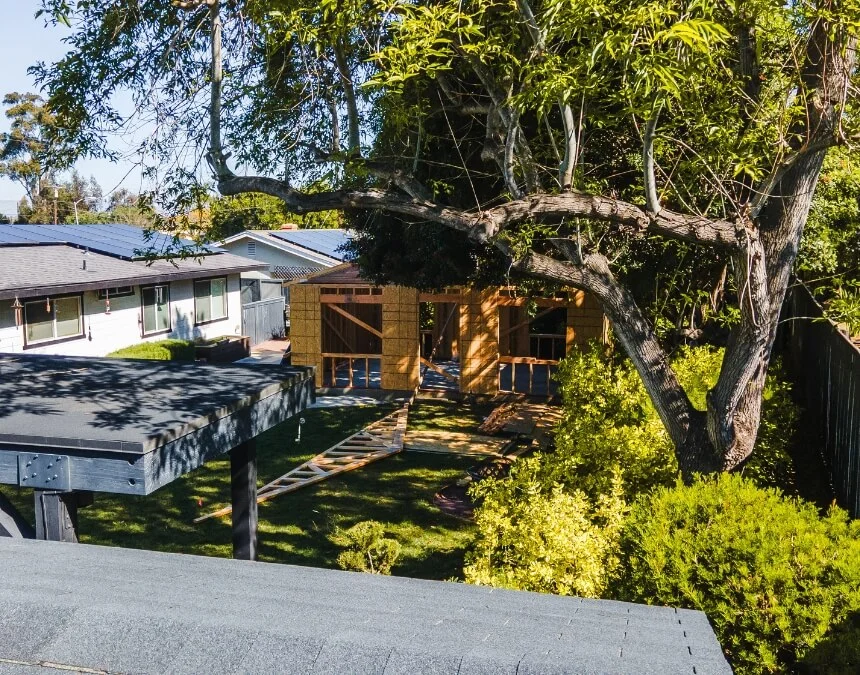
Coordinate solar design, utility upgrades, and permitting with ADU construction. Early planning can reduce avoidable delays and costly rework.
How Can You Integrate Solar Panels into ADU Construction and Design?
Integrating solar into an accessory dwelling unit’s (ADU’s) design can support applicable Title 24 compliance, improve energy performance, and preserve architectural consistency. By planning early, homeowners in Los Angeles can coordinate construction activities, identify potential cost savings, and maintain visual harmony between the primary residence and ADU. Final results depend on site conditions, equipment choices, and coordinated permit approval.
Coordinating Solar Systems with ADU Electrical Setup
ADU solar panels do not always need to be installed on the ADU itself. Depending on code requirements, site layout, roof orientation, shading, and utility arrangements, options may include the main home, a ground-mounted array, or an expansion of an existing system. Confirm that the proposed location and electrical configuration satisfy project-specific compliance and interconnection requirements.
Some projects, including certain conversions of existing garages or attached spaces, may not trigger the same solar requirements as new detached ADUs. However, prefabricated modular construction does not automatically qualify for an exemption. Confirm the building classification and applicable energy requirements before simplifying the electrical plan (Autonomous.ai).
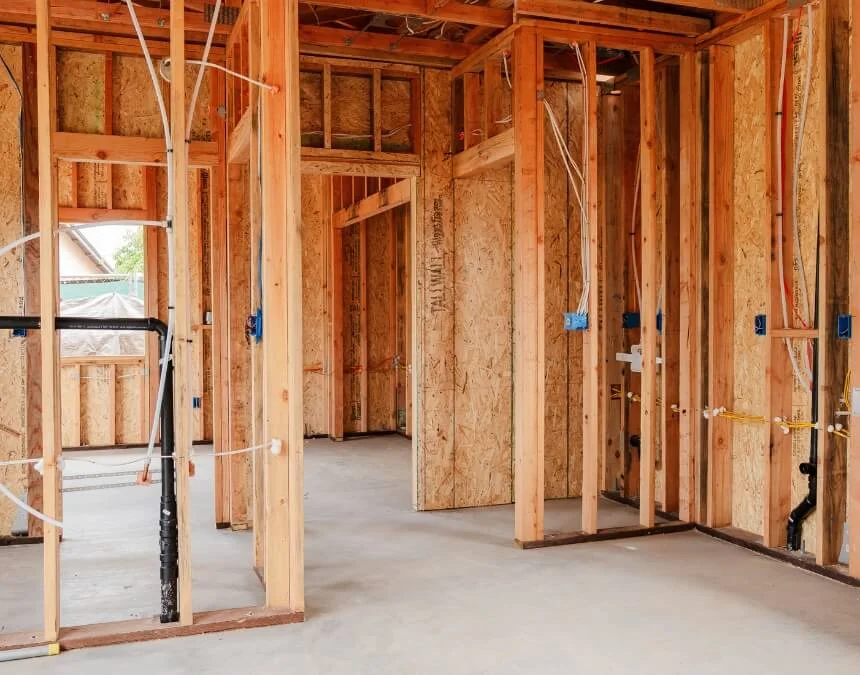
Integrate solar planning early in the ADU project to reduce retrofit work and coordinate electrical design with applicable Title 24 requirements.
Addressing Construction Timelines
Planning solar during the early planning stages of your ADU construction stages can improve coordination and reduce avoidable delays. Align solar design, permit submissions, equipment procurement, and installation with the broader construction schedule. This helps the team identify whether solar inspections and utility approval can coincide with ADU completion. Early coordination also reduces the risk of later changes to roofing, conduit routes, electrical equipment, or finished surfaces.
Seamlessly Integrating Solar in Design
Effective solar integration for your ADU’s design requires coordinated electrical design and planning for potential future expansion. Work with your electrical contractor to assess service capacity, panel ratings, inverter compatibility, utility connections, and metering requirements. Allow space and infrastructure for additional equipment where practical. Future expansion may require revised permits, utility review, or metering changes, so do not assume an existing configuration will accommodate added capacity without further work.
Solar Panel Aesthetics and Home Design Compatibility
Homeowners often want solar panels to complement the appearance of both the ADU and primary residence. Consider how panel finish, roof materials, mounting height, and equipment placement relate to the property’s architecture. Modern options include black-on-black panels and low-profile mounting systems, although product availability, roof ventilation, structural requirements, and cost should also guide the final selection.
To preserve design compatibility, homeowners should:
- Select panel finishes that match or complement the roof’s tones.
- Consider low-profile panels or integrated solar roof tiles, subject to suitability and cost.
- Coordinate the ADU’s architectural style and color palette with the primary residence to maintain visual consistency across the property.
Grid-Tied vs. Off-Grid Systems for ADUs: What Should You Choose?
When planning solar for your ADU, a key decision is whether to use a grid-tied system, which connects to the public electricity grid, or an off-grid system, which operates independently. Each approach has different implications for resilience, equipment costs, and California regulatory compliance. Understanding these differences helps homeowners assess which configuration fits their property, energy needs, and permitting requirements.
Advantages and Disadvantages of Grid-Tied Systems
Grid-tied systems are a practical option for many ADUs in Los Angeles because they can work with existing utility service and approved energy-compliance designs. A 2-to-5-kilowatt (kW) system may be worth evaluating, but it is not a universal sizing standard. Capacity should reflect code calculations, usable solar area, electrical loads, and financial objectives.
Advantages of Grid-Tied Systems:
- Potentially lower upfront costs than a comparable off-grid system because fewer backup components may be needed.
- Possible compensation for exported electricity under the serving utility’s applicable tariff, not necessarily traditional Net Energy Metering (NEM).
- Integration with existing electrical equipment where capacity and utility rules permit.
Disadvantages of Grid-Tied Systems:
- Generally unable to supply power during grid outages without approved backup equipment.
- Financial performance depends on applicable utility rates, export compensation, and future policy changes.
Adding battery storage and compatible backup controls can improve a grid-tied system’s resilience during outages. Batteries store electricity for later use, but they do not guarantee uninterrupted power to every circuit. Ask the designer to identify supported loads, usable storage capacity, expected backup duration, and operating limitations so the system matches your household’s priorities.
Exploring Off-Grid Solutions
Off-grid solar systems operate independently of the public electricity grid, typically using solar generation, battery storage, and sometimes backup generation. Although appealing to homeowners seeking independence, a fully off-grid ADU in an urban area such as Los Angeles requires careful evaluation of year-round reliability, equipment costs, utility-service obligations, and local permitting requirements.
Practical Considerations:
- Requires enough battery capacity and generation to support expected loads during low-sunlight periods.
- Usually involves higher upfront costs for storage, controls, and any required backup generator.
Permitting Processes and Challenges:
- Confirm whether an off-grid ADU is permissible and what documentation the building authority requires to demonstrate a code-compliant, reliable electrical supply.
- Costs and design complexity vary with site conditions, seasonal production, household demand, equipment requirements, and local regulations.
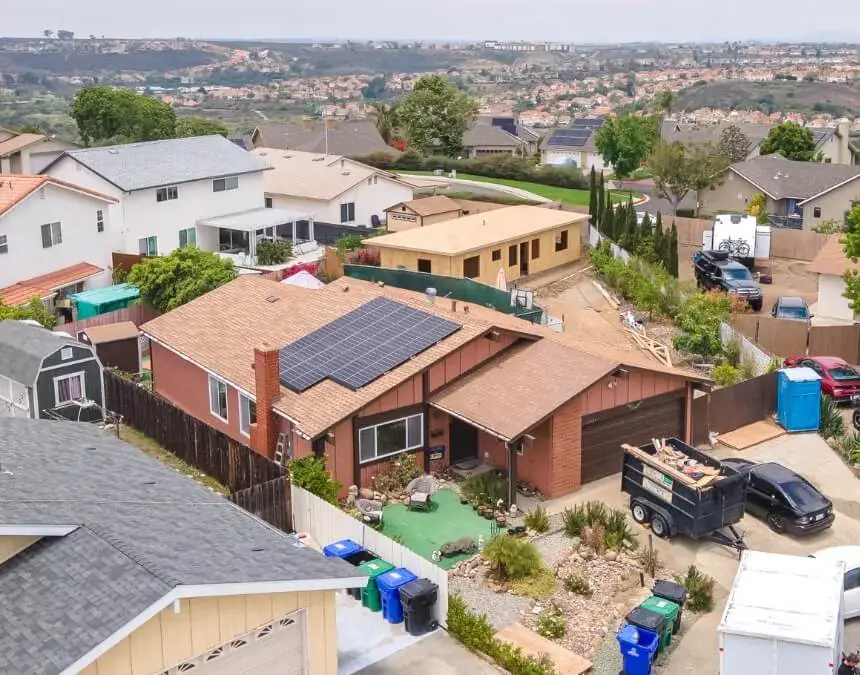
Compare grid-tied solar with and without battery storage to assess cost and resilience before considering the additional demands of a fully off-grid ADU.
How to Choose the Right Solar Vendor and Equipment for Your ADU
Selecting suitable solar equipment and a qualified installer is essential to a well-performing ADU energy system. Homeowners in Los Angeles can compare specialized solar providers with general contractors coordinating solar as part of the broader build. Reviewing each approach’s scope, pricing, licensing, equipment options, warranties, and maintenance responsibilities helps establish a sound basis for a long-term investment.
Should You Choose an Independent Solar Vendor or a General Contractor?
Hiring an independent solar provider and choosing a general contractor’s coordinated solar package offer different advantages and trade-offs. Compare the actual scope and responsibilities of each proposal.
Independent Solar Vendor Pros:
- Specialized solar design and installation experience, subject to verification.
- Potential access to broader equipment choices suited to specific energy needs.
- Opportunities for competitive pricing, depending on purchasing volume and project scope.
Independent Solar Vendor Cons:
- Requires coordination between the solar installer and ADU construction team.
- Separate submissions or scheduling responsibilities may add complexity if the teams do not coordinate closely.
General Contractor-Integrated Solution Pros:
- Coordinated planning for ADU construction, solar permitting, and installation.
- A single point of contact can simplify communication and project management.
- Synchronized scheduling may reduce avoidable delays, without guaranteeing faster approvals.
General Contractor-Integrated Solution Cons:
- Equipment choices may be narrower than those offered by specialized providers.
- Bundled pricing can obscure solar-specific costs unless the proposal clearly itemizes equipment, labor, permits, and exclusions.
Ultimately, weigh streamlined project management against specialized design options, while comparing qualifications, itemized pricing, equipment quality, and accountability.
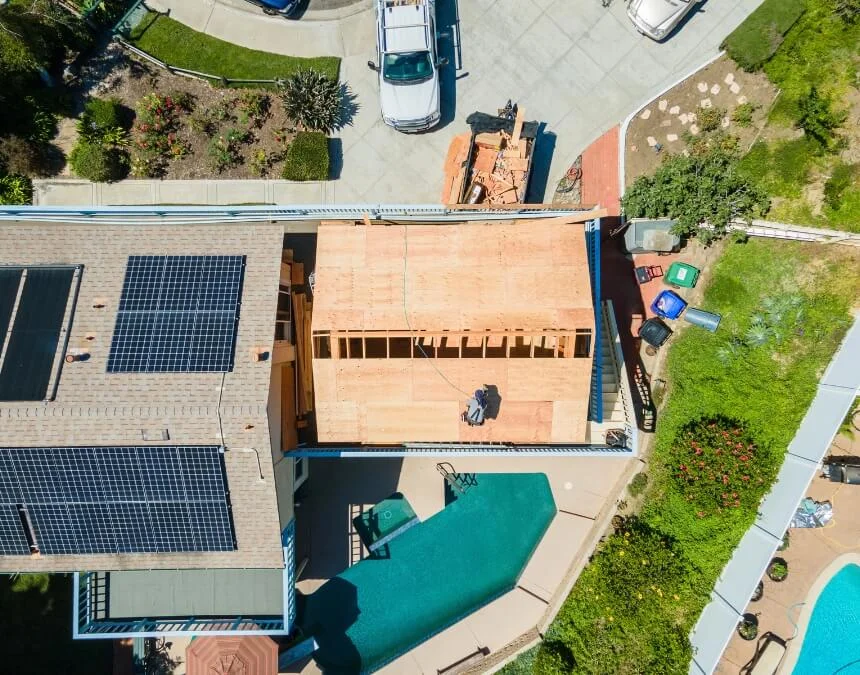
Choose a qualified contractor who coordinates solar with your ADU build to simplify communication, address permitting requirements, and verify electrical compatibility.
Why Should You Integrate Battery Storage with Your Solar System?
Battery storage can improve a solar-powered ADU’s flexibility and resilience, particularly during outages, but its value depends on system design, household priorities, and overall costs.
Key Advantages of Battery Storage:
- Energy Resilience: Support selected loads during outages when batteries are paired with compatible backup controls and sufficient capacity.
- Energy Cost Management: Shift stored energy to higher-priced periods where permitted and financially beneficial under the applicable utility tariff.
- Long-Term Savings: Compare upfront costs, efficiency losses, degradation, and replacement needs against projected savings. Batteries do not automatically pay for themselves.
Prepare a project-specific cost-benefit analysis that distinguishes backup value from bill savings. Battery storage can reduce reliance on purchased electricity, but financial returns are not guaranteed.
What Are Common Concerns About Solar and Electric Bills?
Homeowners often have questions about solar performance and potential savings. Clear production estimates, current utility rates, and realistic consumption assumptions help distinguish common misconceptions from outcomes that depend on the individual property.
Common Misconceptions and Clarifications:
- Misconception: “Solar panels always eliminate electricity bills.”
- Reality: A well-sized system can reduce electricity purchases, but fixed charges, nighttime consumption, tariffs, and financing may leave substantial ongoing costs.
- Misconception: “Solar panels generate useful electricity only under perfect conditions.”
- Reality: Panels can produce electricity on cloudy days, although output falls with reduced sunlight, shading, and unfavorable weather. Evaluate expected annual production rather than assuming consistent daily performance.
Solutions to Billing and Consumption Queries:
- Monitor system output regularly through the available monitoring platform.
- Conduct periodic energy audits to identify opportunities to reduce household consumption.
- Ask your installer or utility to investigate billing discrepancies, unexpected production changes, and tariff questions.
How Should You Select Solar Equipment and Components?
Choosing suitable solar panels, inverters, and monitoring equipment is essential to supporting your ADU’s energy performance, reliability, and long-term durability.
To compare equipment and pricing, consider resources such as EnergySage Solar Marketplace. Review specifications, customer feedback, and available quotes, but independently verify installer licensing, insurance, references, and the scope of any vendor-screening claims before selecting a provider.
Here’s a concise comparative guide:
| Component | Considerations | Recommended Brands |
|---|---|---|
| Solar Panels | Efficiency, manufacturer warranty, appearance, availability | REC, Qcells, Canadian Solar |
| Inverters | Reliability, equipment compatibility, performance monitoring | SolarEdge, Enphase (microinverters), SMA |
| Monitoring Systems | Ease of use, detailed analytics, inverter compatibility | SolarEdge Monitoring, Enphase Enlighten, SMA Sunny Portal |
How Do You Ensure Proper Maintenance and Longevity of Your Solar Panels?
Regular maintenance and a clear understanding of warranty coverage support long-term solar performance. Panels may operate for 25-30 years or longer, while inverters and batteries may require earlier replacement.
Recommended Maintenance Practices:
- Arrange annual visual checks for panel damage, debris, or soiling, using safe inspection methods.
- Monitor output regularly to identify unusual performance changes.
- Discuss professional inspections every 3-5 years, or at the manufacturer’s recommended interval, to assess electrical connections and inverter performance.
Typical Warranty Coverage:
- Many solar panel manufacturers offer 25-year performance warranties specifying a minimum output level. Check whether the actual guarantee is approximately 80-90% of rated output at the stated endpoint.
- Inverter warranties may range from 10-25 years, depending on the model, manufacturer, and any purchased extension.
- Battery warranties commonly last around 10 years, with capacity-retention, usage, and throughput limits. Review exclusions, labor coverage, and claim procedures.
FAQs
Generally, yes. California’s Title 24 energy standards require solar for newly constructed, non-manufactured, detached ADUs, subject to applicable exceptions. Conversions, attached ADUs, and manufactured housing may be treated differently. Do not assume an ADU under approximately 600 sq. ft. or a calculated system below 1.8 kW is automatically exempt. Confirm the governing code and exception criteria with your energy consultant and permitting authority.
High bills after solar installation can result from increased consumption, inefficient equipment, low production, fixed charges, or electricity use outside solar-generating hours. California’s Net Billing Tariff, often called NEM 3.0, applies to certain utility customers and generally values exports differently from earlier NEM arrangements. Confirm your serving utility and tariff. Storage may improve savings by shifting energy use, but its financial benefit requires a project-specific analysis.
There is no universal California ADU “20% rule” allowing every required solar system to be reduced to 80% of calculated electricity use. Any permitted capacity reduction depends on the governing energy-code provisions, compliance method, and qualifying equipment. Ask your energy consultant to identify the specific allowance, required battery characteristics, and supporting documentation before relying on a 20% reduction in your design.
An ADU’s minimum solar capacity is established through the applicable Title 24 calculation, while the preferred installed size also depends on consumption, roof conditions, and utility economics. Illustrative estimates such as 1.8-2 kW for 600 sq. ft. or 3-4 kW for 1,200 sq. ft. are not code determinations. Likewise, 4-6 or 8-12 panels depends on panel wattage. Obtain a project-specific compliance calculation and production estimate.
Conclusion
Building a solar-powered accessory dwelling unit can support sustainability, reduce purchased electricity, and improve energy resilience when appropriately designed. California’s applicable Title 24 requirements make early solar planning important for many new detached ADUs. Evaluate compliance, expected savings, and potential resale appeal separately rather than assuming every installation delivers the same financial benefits.
By evaluating system size, installer qualifications, battery integration, and maintenance needs, homeowners can make better-informed decisions about immediate costs and long-term benefits. Resources such as PVWatts Calculator and EnergySage Solar Marketplace can support that assessment when used alongside current official guidance and project-specific professional advice.
Ultimately, solar planning for your ADU positions you to take full advantage of Los Angeles’s should account for available sunlight, verified incentives, and the serving utility’s renewable-energy rules. A well-designed installation can reduce purchased electricity and environmental impact while supporting applicable building requirements. Its financial value depends on installation costs, operating conditions, and future maintenance, making a documented, property-specific assessment more useful than a promise of universal savings.
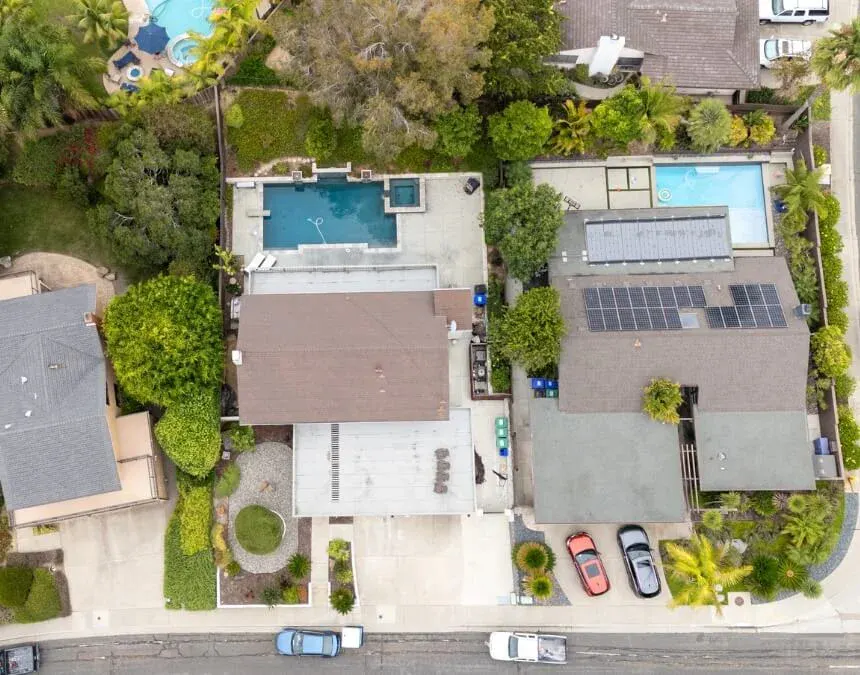
Los Angeles’s solar potential makes early ADU planning worthwhile. Coordinating installation with construction can support efficiency, applicable compliance, and a more realistic financial assessment.