

TL;DR: Can an ADU Be a Primary Residence?
- An ADU can serve as someone’s primary residence while remaining legally accessory to the main dwelling. Lawful occupancy and the property’s legal structure matter.
- In California, living in an ADU does not require a condominium conversion under AB 1033, a lot split, or temporary occupancy approval. Those processes address different legal questions.
- An ADU generally requires an existing or proposed primary dwelling on the lot. A vacant-lot project needs coordinated review of both dwellings and applicable construction requirements.
- Financing, taxes, and insurance may treat an ADU differently depending on whether you occupy it or rent it out, affecting long-term costs and risk.
- The rest of this article explains legal definitions, owner-occupancy rules, California ownership options, and financial considerations homeowners should understand before deciding to live in an ADU full-time.
“Can an ADU be a primary residence?” is a common legal question. Generally, someone can live in a lawful ADU full-time while it remains accessory to the main dwelling. Condominium conversions and lot splits concern ownership and parcel structure, not basic permission to live there. Before moving in, confirm that the unit has all required permits and occupancy approvals.
What Is an ADU and How Does It Function?
An ADU is an ADU is a secondary housing option built on the same lot as the main dwelling and may be attached or detached. Interest in compact living spaces has grown, especially in urban areas such as Los Angeles, where these units can provide an affordable living option in densely populated communities.
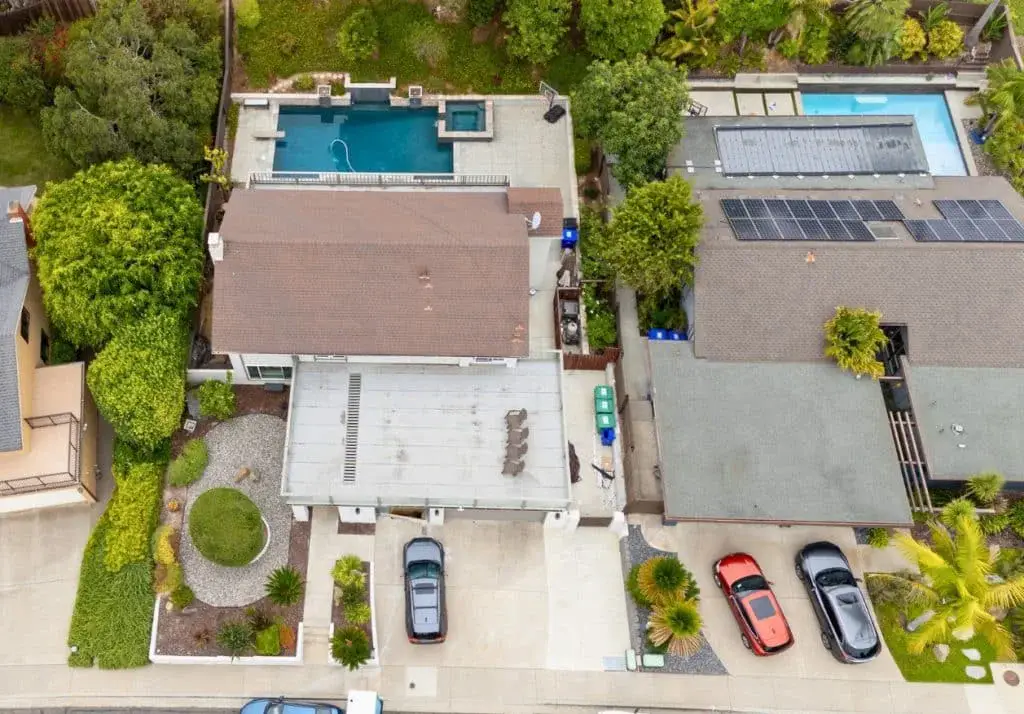
California’s ADU policies support flexible living arrangements and additional housing, with property-value effects depending on the project.
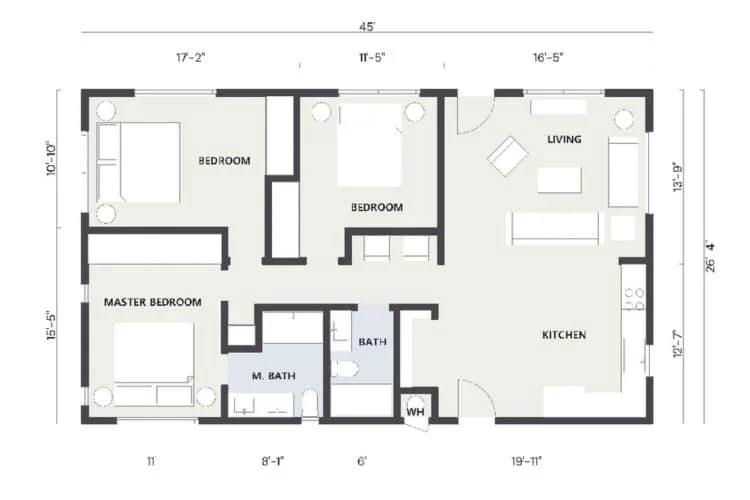
An ADU must provide essential amenities, including cooking, bathroom, sleeping, and living facilities. The terms designed to function and self-contained living quarters should reflect its approved classification and suitability for full-time occupancy.
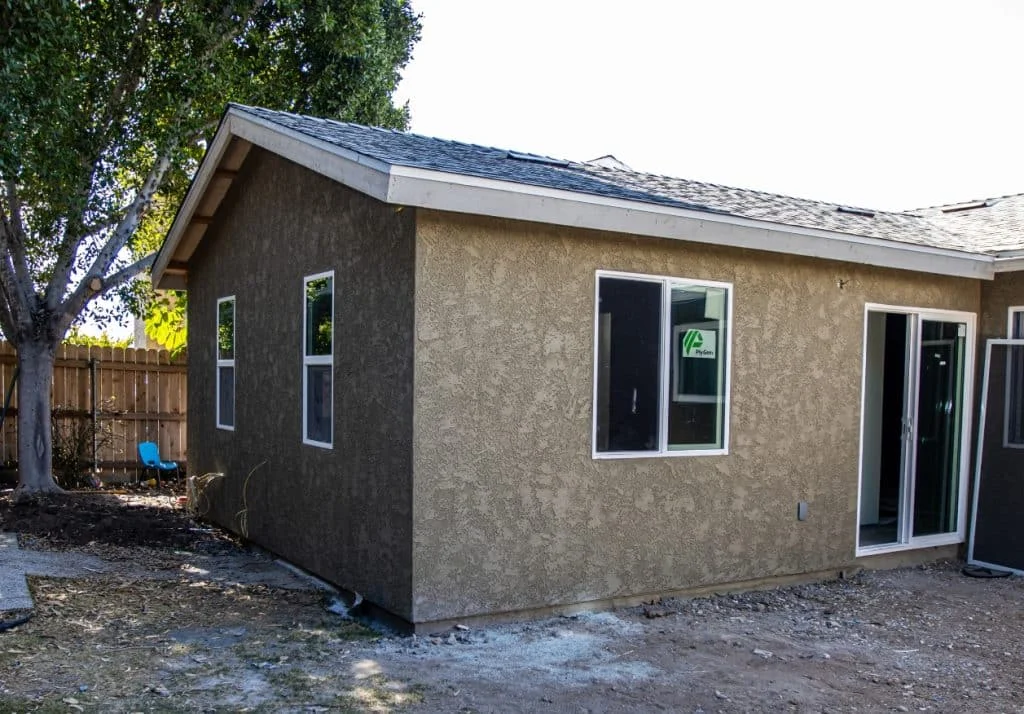
With essential amenities, ADUs provide efficient, self-contained housing suited to urban living.
Exceptions: When Can an ADU Be a Primary Residence?
Although legally accessory to a main dwelling, an ADU can serve as someone’s full-time primary residence. Common living arrangements and ownership options include the following:
Purchased as a Condo
In areas such as Los Angeles, separate ADU condominium purchases depend on local authorization and project approval. Where permitted, this option may help buyers maximize their living space or invest in housing while complying with local regulations. Full-time occupancy does not itself require separate ownership.
Converted as a Secondary Unit
An approved ADU can serve as an occupant’s primary residence without becoming the property’s legally designated main dwelling. The main house need not have been completed before the ADU was proposed. Confirm permitting and occupancy requirements while considering options for allowing for the ADU.
A Temporary Living Solution
Homeowners may live in an approved ADU while the main house is being built or renovated, provided applicable occupancy and construction requirements are met. This arrangement can offer practical housing during the project. Confirm whether temporary approvals are needed, particularly when utilities, access, or other essential services will be affected by construction.
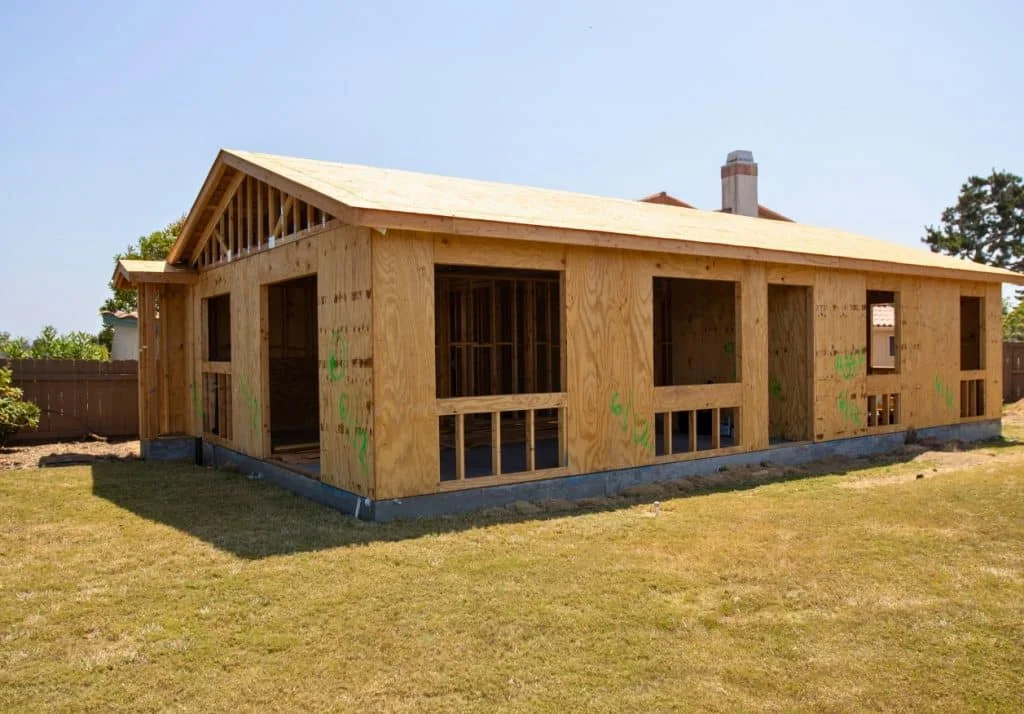
In Los Angeles, an approved ADU can provide a full-time home while remaining legally accessory to the main dwelling.
Owner-Occupancy Rules: Do You Have to Live in the Main House?
Owner-occupancy rules determine whether a property owner must live in the main dwelling or the accessory unit. These requirements differ from rules governing lawful residential occupancy and can affect rental arrangements, particularly when comparing an ADU with a junior ADU.
California law generally prohibits local owner-occupancy requirements for ADUs. Junior ADUs follow separate rules, so consult the current state handbook and the permitting jurisdiction for project-specific requirements.
Common Owner-Occupancy Scenarios
- The homeowner lives in the main house and rents out the ADU.
- The homeowner lives in the ADU and rents out the main house.
- Tenants occupy both units, subject to applicable rental and occupancy requirements.
- A junior ADU (JADU) generally requires owner occupancy in the main house or JADU, subject to statutory exceptions.
How to Verify Owner-Occupancy Requirements
- Review current state ADU law and guidance.
- Check applicable municipal zoning and rental ordinances.
- Confirm JADU requirements, including owner-occupancy rules and exceptions.
- Verify requirements with the local planning and housing departments before leasing either unit.
Quick Answers
- Is owner occupancy currently required for ADUs in California? Generally, no. State law prohibits local ADU owner-occupancy requirements; check current law for the applicable provisions.
- Are JADUs treated differently? Yes. Junior ADUs generally require owner occupancy in the JADU or main dwelling, subject to statutory exceptions.
- Can a property investor rent out both units? Generally, yes, subject to applicable rental, occupancy, and property-specific restrictions.
- Do owner-occupancy rules affect financing? Yes. Some loan programs require the borrower to occupy one unit.
Can an ADU Be Sold Separately? (AB 1033 Explained)
California Assembly Bill 1033 (AB 1033) allows local jurisdictions to authorize separate sales of ADUs through a condominium process. Where locally adopted, this creates a path to separate ownership. An occupant can otherwise use an approved ADU as a primary residence without purchasing it separately.
Separate-sale eligibility is not automatic; it depends on local adoption and project-specific compliance.
When Separate Sale May Be Possible
- The jurisdiction has adopted an ordinance authorizing AB 1033 sales.
- The ADU meets applicable building and safety requirements.
- The property completes the required condominium mapping and ownership process.
- Utility arrangements and legal documents satisfy applicable requirements.
General Process Overview
- Confirm whether the jurisdiction authorizes separate ADU condominium sales.
- Obtain required condominium mapping approvals.
- Establish the ownership structure, utility arrangements, and legal documentation.
- Record required legal instruments before transferring ownership.
Quick Answers
- Can I automatically sell my ADU separately? No. An AB 1033 sale requires local authorization and compliance with applicable requirements.
- Does this make the ADU a primary residence? It enables separate ownership. An approved ADU can already serve as an occupant’s primary residence.
- Are there additional costs? Yes. Mapping, legal filings, and compliance costs may apply.
- Is this available in all California cities? No. Local adoption is required for this pathway.
ADU vs JADU: Can Both Be a Primary Residence?
An accessory dwelling unit (ADU) and a junior accessory dwelling unit (JADU) follow different regulations. Both can provide living space, but a JADU may share sanitation facilities with the main dwelling.
JADUs are created within qualifying single-family dwellings and generally carry owner-occupancy requirements that differ from ADU rules.
Quick Answers
- Can a JADU be used as a primary residence? Yes, if approved for occupancy and applicable owner-occupancy requirements are satisfied.
- Is an ADU more flexible than a JADU? Generally, yes, particularly regarding size, facilities, and potential separate sale.
- Which option is better for rental income? Compare lawful rental options, costs, privacy, and projected demand.
Comparison Table
| Feature | ADU | JADU |
|---|---|---|
| Detached Allowed | Yes | No |
| Separate Kitchen | Yes | Efficiency kitchen |
| Owner Occupancy Required | No | Generally yes, with statutory exceptions |
| Separate Sale Allowed | Only where authorized by applicable law and local ordinance | No |
| Can Function as Primary Residence | Yes, with required approvals | Yes, subject to occupancy requirements |
California ADU Regulations: Can You Build an ADU Before the Main House?
Under California statewide ADU laws, an ADU is an accessory unit with complete living facilities on a lot with an existing or proposed primary dwelling. A proposed primary dwelling need not already be under construction when ADU permits are issued. For a vacant lot, confirm coordinated permitting, construction sequencing, and occupancy requirements with the jurisdiction. Any exceptions and special cases involving an ADU can be built before the main structure require project-specific review.
California ADU legislation continues to evolve. Updates can affect owner-occupancy requirements, condominium sales, and interactions with lot-split rules, making current regulatory review essential before proceeding.
- Temporary occupancy approvals may be relevant during construction of the main dwelling. Ask the building department whether they are needed, what conditions apply, and whether construction progress or time limits affect occupancy.
- Lot splits: California law permits certain qualifying lot divisions. If a proposal involves planned as an ADU, confirm how parcel boundaries, dwelling classifications, and ADU eligibility would change before assuming separate ownership is possible.
- Disaster rebuilding or major renovation may involve special occupancy procedures. Confirm that the ADU remains safe and legally occupiable throughout the work.
- Rural or agricultural housing proposals require review of applicable ADU rules, including any distinct agricultural-worker housing provisions.
Requirements involving ADU regulations can be complex and change over time. Homeowners should consult the local planning department and work with a local company experienced in the proposed project type.
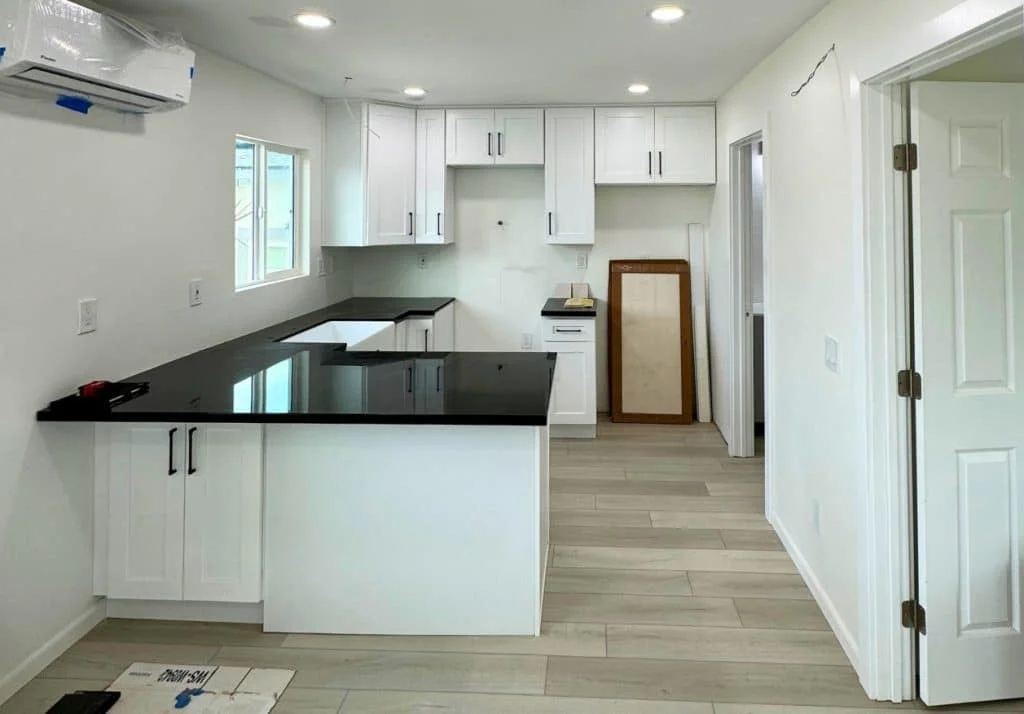
Temporary occupancy approvals and lot splits address distinct project needs; neither is generally required to live in an approved ADU.
Financing an ADU as a Primary Residence
Financing requirements can differ depending on whether you occupy the main house or the ADU. Lenders evaluate the property’s occupancy classification, which can affect loan terms, underwriting, and eligibility.
Fannie Mae guidelines permit qualifying ADU rental income in certain circumstances, subject to current loan-program rules, documentation requirements, and lender review.
Common Financing Scenarios
- Living in the main house and renting out the ADU.
- Living in the ADU and renting out the main house.
- Refinancing a property that includes an ADU.
- Using eligible projected ADU rental income to qualify for financing.
Steps to Clarify Financing Eligibility
- Confirm whether the lender classifies the property as owner-occupied.
- Determine whether ADU rental income qualifies for consideration.
- Verify underwriting requirements for the specific loan program.
- Confirm the insurer’s occupancy and coverage requirements.
Quick Answers
- Can ADU rental income help me qualify for a mortgage? Sometimes, if the loan program permits it and documentation requirements are satisfied.
- Is an ADU considered a multifamily property? Not necessarily. A single-family home with an ADU may retain a one-unit lending classification, depending on program rules.
- Does living in the ADU affect my interest rate? Possibly, depending on the lender’s occupancy classification and guidelines.
- Can I refinance after building an ADU? Yes, subject to appraisal, eligibility, and underwriting requirements.
Tax and Insurance Considerations When Living in an ADU
Using an ADU as your primary residence may affect property-tax exemptions, homestead protections, and insurance coverage. These are distinct issues whose treatment depends on ownership, occupancy, and applicable rules.
In California, ADU construction generally adds assessed value for the new improvements without automatically triggering reassessment of the entire property. Other transactions may have separate consequences.
Key Considerations
- Assessment of newly constructed improvements.
- Eligibility for the homeowners’ property-tax exemption and applicable homestead protections.
- Insurance updates reflecting occupancy and rental use.
- Rental-income reporting requirements.
Quick Answers
- Will building an ADU reassess my entire home? In California, generally only the new construction receives an additional assessment; other property changes may affect treatment.
- Can I claim an exemption if I live in the ADU? Ask the assessor about homeowners’ exemption eligibility and an attorney about homestead protections.
- Do I need special insurance? Your homeowners policy may need updates for the ADU, occupancy, or rental use.
Comparison Overview
| Topic | Living in Main House | Living in ADU |
|---|---|---|
| Property Classification | Single-family property with ADU | Single-family property with ADU |
| Homestead Exemption | Depends on eligibility and exemption type | Depends on eligibility and exemption type |
| Insurance Policy | Homeowners policy with appropriate ADU coverage | Policy updated for occupancy and rental use |
| Rental Income Reporting | Report taxable ADU rental income | Report taxable main-house rental income |
California-Specific Rules for Using an ADU as a Primary Residence
California law treats an ADU as accessory to an existing or proposed primary dwelling. That classification does not prevent someone from using the ADU as their full-time home.
Related issues include lot splits, disaster rebuilding, temporary occupancy approvals, and condominium sales, each of which has distinct requirements.
Situations That May Allow Primary Use
- Occupancy during construction of the main house.
- Qualifying SB 9 lot splits and resulting parcel requirements.
- Locally authorized AB 1033 condominium sales.
- Separate agricultural-worker housing provisions in rural areas.
Quick Answers
- Can I build an ADU before the main house? Confirm sequencing with the building department. State law recognizes proposed primary dwellings, but permitting and occupancy requirements still apply.
- Does SB 9 change ADU rules? A qualifying lot split can affect parcel configuration and applicable housing entitlements.
- Are rules identical across California? No. State requirements apply alongside lawful local standards.
Los Angeles-Specific ADU Regulations and Trends
Los Angeles supports ADU construction through state ADU law and city permitting resources. Check progressive policies with the Los Angeles Department of Building and Safety, including its ADU Standard Plan Program. Confirm permitted unit counts, applicable fees, and any pre-approved plans for the specific property rather than assuming regional incentives apply.
Across Los Angeles neighborhoods, ADUs can add housing within established residential areas. In a high-cost market, they may offer an additional living space, potential rental income, and flexibility for multigenerational households. Evaluate construction costs, lawful rental arrangements, and any separate-sale eligibility before assuming an ADU offers affordable ownership or a financial return.
When evaluating ADU development incentives in Los Angeles, ADU Acceleration Program, and Housing Solutions Program, confirm each program’s availability and eligibility with the responsible authority. Los Angeles’s ADU Standard Plan Program offers plan resources, but site-specific review remains necessary. Diamond Bar and Pomona are separate jurisdictions, so their planning departments must confirm locally applicable approvals, fees, and requirements.
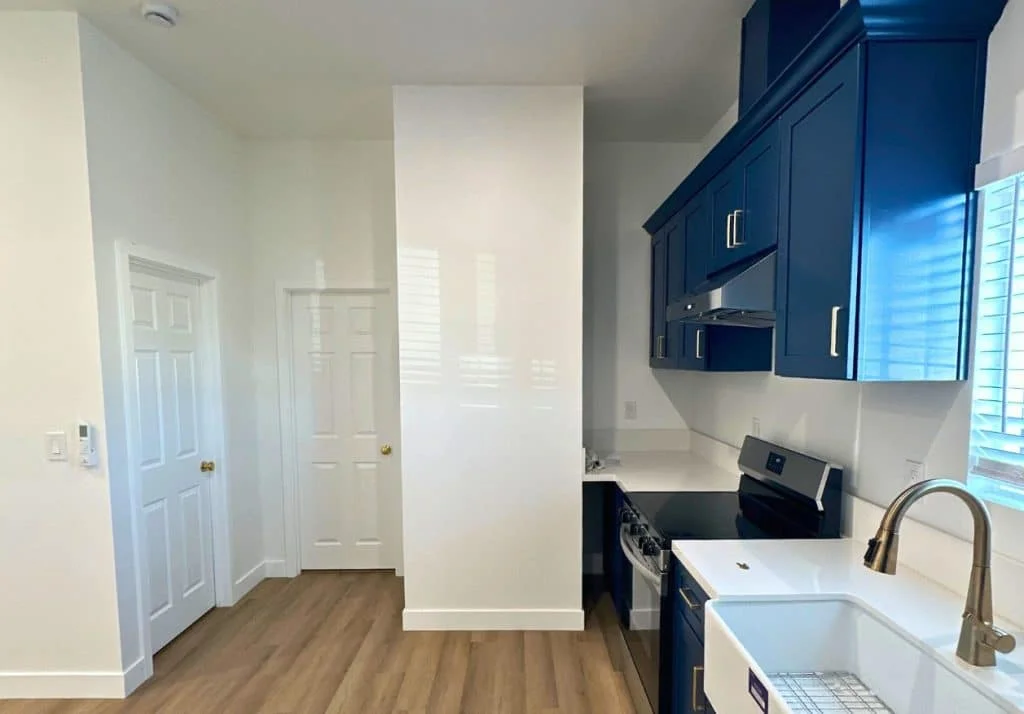
Los Angeles offers ADU planning resources, but approvals, fees, and site requirements depend on the specific project.
Benefits and Challenges of Using an ADU as a Primary Residence
For homeowners considering homeowners use ADUs, one arrangement involves renting out their main house while living in an approved ADU. Evaluating benefits and challenges of using an ADU alongside financing, taxes, insurance, and rental obligations can help them reach an informed decision about whether this approach suits their circumstances.
| Benefits | Challenges |
|---|---|
| Building an ADU as a primary residence may cost less overall than building a larger traditional home. | Smaller layouts can limit storage and living space, while proximity to the main house may reduce privacy. |
| A smaller, efficiently designed ADU can use less water, electricity, and building material than a larger home. | Using an ADU as a primary residence requires compliance with applicable zoning, building, and occupancy requirements. |
| An ADU may increase property value in Los Angeles, depending on its design, permitted use, and market conditions. | Operating another dwelling can increase utility expenses and may require service upgrades or separate billing arrangements. |
| A permitted ADU can provide temporary living space during renovations to the main residence. | Even with a smaller footprint, an ADU requires a substantial budget, and financing options may be limited. |
Frequently Asked Questions (FAQ)
Have more questions? We can help you explore the next steps. If you cannot find the information you need, contact us.
You can rent out an approved ADU when you live elsewhere, including in the main house. If you live in the ADU, you may instead rent out the main house. Where multiple accessory units are permitted, you may occupy one and rent out others, subject to applicable rental rules, occupancy approvals, and property-specific restrictions.
An ADU project in Los Angeles generally requires building approval and applicable electrical, plumbing, and mechanical permits. Grading or demolition permits may also be necessary, depending on site work and existing structures. Confirm application procedures, plan-review requirements, and permit coordination with the Los Angeles Department of Building and Safety. Standard plans do not eliminate site-specific review or other required approvals.
A detached ADU may qualify for up to 1,200 square feet under applicable standards. An attached ADU’s size may depend on the existing dwelling’s floor area, but state minimum-size protections and other exceptions matter. A detached ADU can sometimes exceed the main home’s size. Confirm the allowable floor area and site requirements with the permitting jurisdiction.
Contact Uni Construction for Personalized ADU Solutions
At Uni Construction, we help homeowners navigate entire ADU process, from initial planning and design through permitting and construction. Discuss your property, project goals, and jurisdiction’s requirements with our team. Ready to explore your ADU options? Contact us to ask about consultation availability.