

Key Takeaways / TLDR
- Building permits are required for any new ADU build or major renovation in Los Angeles.
- Request a project-specific estimate for Los Angeles ADU permit costs from the Los Angeles Department of Building and Safety (LADBS). Fees depend on size, type, valuation, and whether the project involves new construction or a conversion.
- State law exempts ADUs under 750 sq ft from development impact fees under SB 13. Confirm school-fee exemptions and current rates with the school district serving the property.
- Water and sewer connection or capacity charges depend on project eligibility, service requirements, and the responsible providers. Confirm any required unincorporated Los Angeles Water Authority meter fees directly with the serving water utility.
- Review new California ADU laws for changes to ADU owner-occupancy requirements, multifamily development rights, and coastal approval procedures. Separate JADU requirements may apply.
- Bonus ADU programs require jurisdiction-specific verification. Ask Los Angeles City Planning whether your property qualifies for additional units, what affordability restrictions apply, and whether zoning, density, or other eligibility limits affect the proposal (Pacific Research Institute).
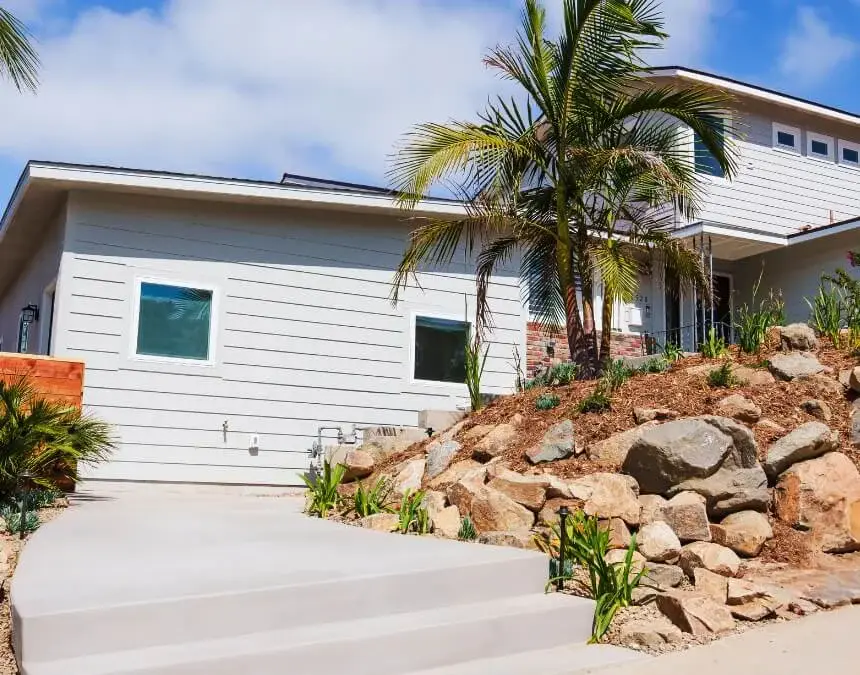
Site conditions, such as slopes or narrow lots, can affect permitting timelines more than base fees alone.
Impact-fee threshold note: Under the March 2026 California HCD ADU Handbook, the statewide development-impact-fee exemption includes ADUs with 750 sq ft of interior livable space or less. Above 750 sq ft, applicable impact fees must be proportional. School, utility, plan-check and permit charges follow separate rules.
How Much Does an ADU Permit Cost in Los Angeles?
Los Angeles Los Angeles ADU building permit fees depend on unit size, construction type, valuation, and project scope, so request a current, itemized estimate rather than relying on a general price range. ADUs under 750 sq ft are exempt from development impact fees under SB 13; school fees follow separate size-based rules that the serving district should confirm. Water and sewer connection charges also require project-specific review. Los Angeles standard plans may reduce repetitive building-plan review, but they do not eliminate site-specific permitting or guarantee lower utility costs (City of Los Angeles). Use current LADBS fee schedules and available estimating tools, then review site preparation, inspections, and potential design revisions. Separating these expenses helps you establish a realistic construction cash-flow plan.
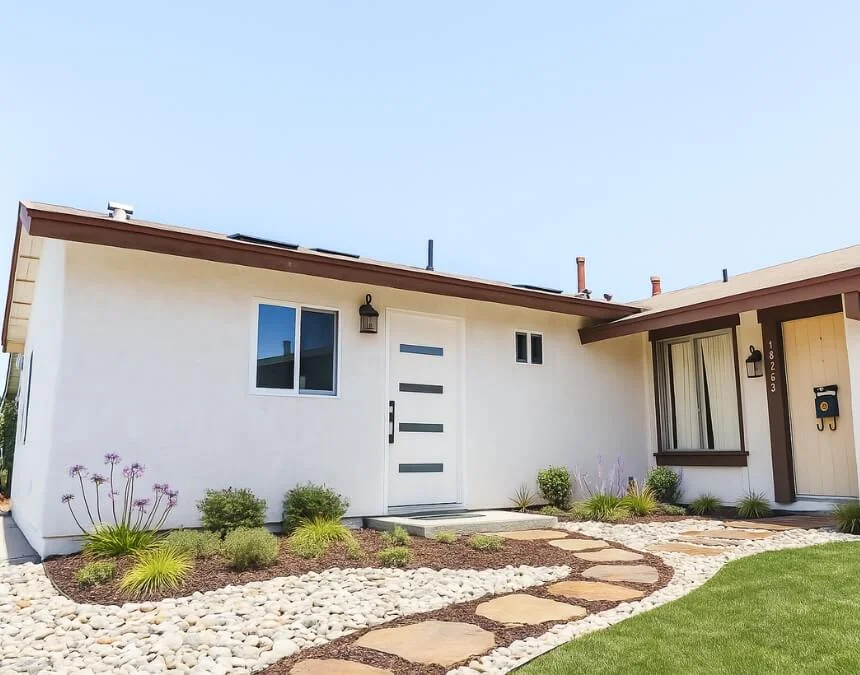
Review statewide fee exemptions and verified local incentives to manage ADU permitting costs while meeting applicable building-code requirements.
Why Fees Are Lower Now
California’s ADU reforms, including SB 13 and AB 68, have reduced certain fees, limited zoning barriers, and established approval deadlines for qualifying applications. The commonly cited 60-day review period depends on statutory eligibility and application completeness; it is not a guaranteed construction-start date. Los Angeles also offers an ADU Standard Plan Program that can simplify portions of building-plan review. Consult the March 2026 California ADU Handbook and LADBS for current requirements, remaining site reviews, and applicable charges.
(Confirm current Los Angeles fees and the serving school district’s rates and exemptions before budgeting; Los Angeles Unified.)
| ADU Size | Plan Check | Permit | School Fee | Water/Sewer Capacity | Approx. Total | $/sq ft |
|---|---|---|---|---|---|---|
| 400 sq ft | Obtain project quote | Confirm permit charges | Exempt | Confirm utility requirements | Total applicable charges | Total ÷ 400 |
| 750 sq ft | Obtain project quote | Confirm permit charges | Confirm district assessment | Confirm utility requirements | Total applicable charges | Total ÷ 750 |
City of Los Angeles ADU Permit Fees (2025)
ADU permit costs in Los Angeles comprise multiple line items rather than a single flat fee. Rates depend on unit size, type (detached, attached, JADU, or conversion), valuation, and any historic review or special inspections. ADUs under 750 sq ft qualify for the statewide development-impact-fee exemption under SB 13. School fees follow separate rules, including an exemption for qualifying construction under 500 sq ft; verify applicability with the serving district (Los Angeles Unified).
JADUs, generally limited to 500 sq ft within a single-family residence, and qualifying garage or basement conversions may receive certain fee exemptions. Confirm utility, addressing, and school charges individually rather than assuming all conversions avoid them.
TABLE: City of Los Angeles Permit Fees (2025)
Verify this information against the City of Los Angeles’s current Fee Schedule for Construction Permits-Structures.
| Fee Type | Amount (2025) | Notes |
|---|---|---|
| Plan Check Fee | Confirm applicable fee schedule | Based on project scope and valuation |
| Permit & Inspection Fee | Request project-specific estimate | Confirm included permits and inspections |
| School Fee | Confirm school district rate | ADUs of 500 sq ft or less are exempt |
| Water Capacity Fee | Confirm with water provider | Connection requirements and exemptions vary |
| Sewer Capacity Fee | Confirm with sewer provider | Assessment depends on project conditions |
| Address Assignment | Confirm applicable charge | Verify whether a new address is required |
| Historic Review | Confirm review requirements and fees | May apply to designated historic properties |
| Stormwater Review & Inspections | Confirm applicable charges | Requirements depend on site and project scope |
Often-missed City fees
Homeowners often budget for plan checks and inspections but overlook smaller charges that may arise at submission, permit issuance, or inspection. Use the table below to check potential line items and payment timing, including General Plan, mapping, lead-hazard, state valuation, addressing, and stormwater charges. Ask LADBS which items apply to your project, then use the checklist at each permitting stage to plan cash flow and avoid surprises.
TABLE: Often-missed City of Los Angeles Fees & When Paid (2025)
| Fee Type | Amount (2025) | When paid | Notes |
|---|---|---|---|
| General Plan Maintenance | Confirm applicability and rate | Confirm billing stage | Verify whether a planning surcharge applies |
| Mapping | Confirm applicable charge | If required | Depends on mapping or subdivision work |
| Lead Hazard Prevention | Confirm applicable requirements | Before affected work | Assess hazards when altering pre-1978 buildings |
| State Seismic Assessment | Confirm current state rate | Permit issuance | Based on valuation and building classification |
| State Building Standards | Confirm current state rate | Permit issuance | Valuation-based state assessment |
| C&D Recycling Deposit | Confirm local requirements | Before work, if required | Verify waste plan and refund conditions |
| Fee Collection Processing | Confirm applicable charge | When billed | Check the itemized fee estimate |
| Addressing (new address) | Confirm applicable charge | During address assignment | Verify requirements for the proposed ADU |
| Stormwater Review & Inspections | Confirm applicable charges | During review or inspections | Site conditions determine required reviews and visits |
Understanding ADU Fees Waived with SB 13 & Other 2023–2025 Laws
California’s ADU legislation has revised fee requirements, limited certain zoning restrictions, and streamlined qualifying permit applications. These changes may reduce costs for Los Angeles homeowners through development-impact-fee exemptions and restrictions on some utility connection charges. However, savings and review timelines depend on the project, application completeness, and applicable law. Use the March 2026 California ADU Handbook as a starting point, then confirm building-plan review, residential site review, development taxes, and application charges with the responsible Los Angeles agencies.
- SB 13 (effective 2020): Established development-impact-fee exemptions for ADUs under 750 sq ft and proportionality requirements for larger ADUs. Qualifying conversions within the main home may also receive utility-connection protections. School-fee exemptions follow separate rules. (Senate Housing Committee)
- AB 976 (effective 2024): Permanently prohibits owner-occupancy requirements for ADUs, giving owners, including those with garage conversions or detached garages, greater flexibility. JADUs remain subject to separate requirements. (California ADU Experts)
- AB 1033 (2023): Allows local jurisdictions to authorize separate ADU sales as condominiums through an implementing ordinance. Confirm whether Los Angeles has adopted applicable rules before planning a separate sale. (Builders Now)
- SB 1211 (2024): Allows up to eight detached ADUs on qualifying existing multifamily lots, subject to statutory limits, including the existing dwelling count. Confirm parking provisions and applicable fees separately.
- AB 2533 (2024): Establishes a legalization pathway for certain unpermitted ADUs and JADUs built before 2020. It does not provide unconditional amnesty or waive correction of qualifying health and safety violations. Consult LADBS.
- AB 3057 (2024): Extends specified California Environmental Quality Act exemptions to JADUs. It does not automatically waive fire review or other required permits. (California YIMBY)
- SB 1077 / SB 1092 (2024): Check the current handbook and California Coastal Commission guidance for each measure’s scope and any effect on coastal permit delays for ADUs in Los Angeles’s historic districts. Do not assume either eliminates a required coastal development permit. (Ohana Dwellings)
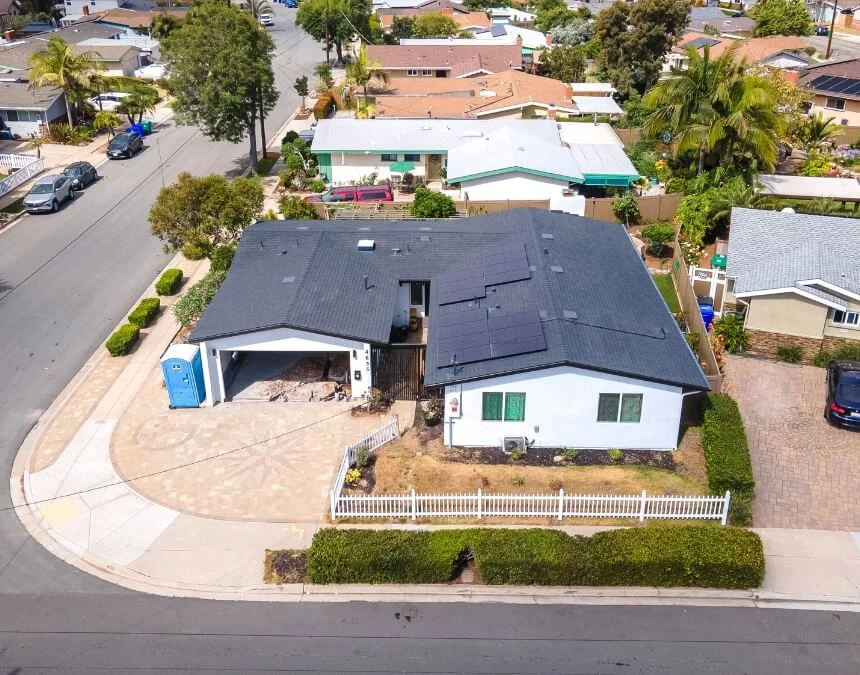
Laws such as SB 13 and AB 976 provide important fee protections and flexibility for qualifying ADU projects.
Is There an ADU Permit Fee Waiver in Los Angeles?
Do not assume that Los Angeles waives plan-check fees for standard-plan or manufactured ADUs. Confirm current charges with LADBS and review the statewide impact-fee exemption for units under 750 sq ft under SB 13. Any claimed pilot waiver, parks-fee reduction, or City of Los Angeles incentive requires verification with the jurisdiction administering it. Targeted assistance may depend on project eligibility and available funding. Build your cost breakdown using current official fee schedules and any applicable building-permit estimating worksheet before submitting an application.
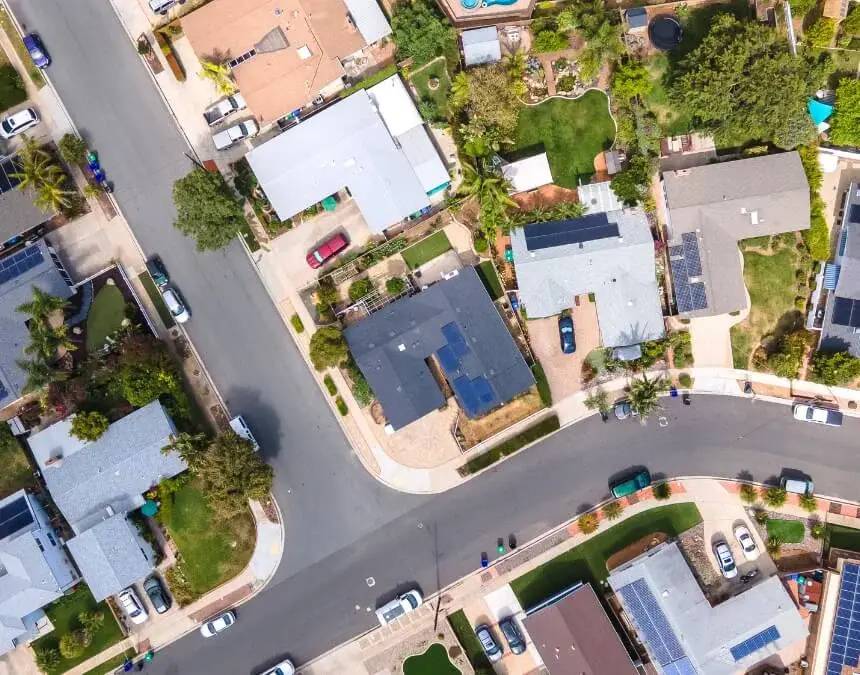
State law exempts ADUs 750 sq ft or less from development impact fees; verify plan-check fees and local incentives separately.
Current Fee Waiver & Incentives
- Impact-Fee Exemption for Small ADUs: State law exempts ADUs 750 sq ft or less from development impact fees, including qualifying transportation and park charges. Historic-district status in Los Angeles does not eliminate other required reviews or fees.
- Verify Plan-Check Charges: Ask LADBS about current plan-check fees and any documented exemptions. Do not apply a Los Angeles regional government pilot waiver or water-capacity reduction to a Los Angeles project without confirmation.
- Green or Affordable ADU Incentives: Ask the responsible planning, housing, and building agencies whether your project qualifies for funding, expedited review, or affordability incentives. Confirm fire-review requirements and program conditions separately (Fortune ADU).
- Bonus-Unit Eligibility and Limits: Verify any additional-unit allowance with Los Angeles City Planning. Request property-specific guidance on lot size, affordability covenants, parking, transit proximity, wildfire hazards, and access before assuming a bonus program applies (Wesley Tyler Real Estate Group).
When estimating ADU fees and costs using the City’s online calculator, account for current zoning requirements, any photovoltaic-system review or permit fees, and other site-specific charges before finalizing architectural plans and your project budget.
Quick Overview Table
| Program / Policy | Status (2025) |
|---|---|
| Statewide Impact Fee Exemption (750 sq ft or less) | ADUs 750 sq ft or less are exempt from development impact fees; other charges may apply |
| Citywide Plan-Check Fee Waiver | No blanket permit-fee waiver; confirm plan-check, permit, and inspection charges separately |
| Expedited Review (Green / Affordable) | Confirm current Los Angeles eligibility, availability, and any additional charges |
| ADU Bonus Programs (Lot Limits) | Verify applicable Los Angeles provisions; unit counts depend on property conditions and current law |
Los Angeles ADU Incentives & Financing Programs (2025)
Notes & Context
- Additional-Unit and Affordability Programs: Ask Los Angeles City Planning whether an applicable program permits additional ADUs and what density limits, affordability covenants, and site restrictions apply (Axios).
- CalHFA ADU Grant: Check the California Housing Finance Agency’s current program status. Previous funding rounds offered up to $40,000 for eligible preconstruction costs, subject to income limits and available funding (CalHFA).
- Local Housing Assistance: Ask the Los Angeles Housing Department about current ADU loans, grants, or technical assistance, including any affordability, occupancy, and repayment requirements (Los Angeles Housing Department).
- Green-Building Incentives: Verify any permit-fee discount with the agency serving the property. Unincorporated county programs do not automatically apply within Los Angeles city limits (Los Angeles regional government).
- Expedited Review: Ask LADBS whether your project qualifies for an available expedited-review pathway, including eligibility criteria, added charges, and the reviews it covers (City of Los Angeles).
| Program / Incentive | What It Is | Who Qualifies | Potential Savings / Benefit |
|---|---|---|---|
| Affordable Housing Incentives | Potential incentives tied to affordability commitments; confirm whether they apply to the proposed ADU | Owners whose projects meet applicable Los Angeles program requirements | Possible development benefits; verify unit allowances, deed restrictions, and site eligibility |
| CalHFA ADU Grant | State program historically offering up to $40,000 for eligible predevelopment and closing costs | Income-qualified homeowners, subject to program rules and available funding | Potential help with eligible upfront costs; confirm funding availability before budgeting |
| ADU Financing Options | Construction, renovation, or other financing evaluated for the specific property | Owners meeting lender requirements for income, equity, credit, and project feasibility | Compare rates, fees, repayment terms, and any affordability restrictions before selecting financing |
| Green Building Incentives | Potential incentives for qualifying energy-efficiency or sustainable-design measures | Projects meeting the relevant utility or agency requirements | Confirm available rebates or incentives; do not assume a permit-fee discount |
| Expedited Review Options | Potential priority or expedited review under applicable Los Angeles procedures | Projects accepted under current eligibility and submittal requirements | May shorten eligible review stages; confirm fees, scope, and scheduling without assuming approval dates |
Water & Sewer Capacity Fees
Los Angeles water and sewer charges must be confirmed with the agencies serving the property. Some charges may reflect capacity, fixture counts, meter size, or discharge assumptions, but an Equivalent Dwelling Unit (EDU) formula is not universal. Ask each provider how it evaluates your ADU and any proposed separate connection.
How Capacity Fees Work (EDU-Based)
EDU Metric: An EDU represents a provider-defined measure of demand. Confirm the applicable definition and fixture calculation; do not assume that 20 fixture units equal 0.5 EDU.
City of Los Angeles Capacity Fees (per EDU):
- Water capacity: request the serving utility’s current applicable charge.
- Sewer capacity: confirm the current assessment with the responsible sewer agency.
Confirm current rates, effective dates, and any inflation adjustments before budgeting.
regional authority Water Authority Meter-Size Charges:
- <1″ meter: Request current installation, service, and capacity charges.
- 1″ meter: Confirm current charges and whether this size is required.
These are one-time capacity charges linked to meter size.
(unincorporated Los Angeles Water Authority)
Fixture counts and service requirements can affect utility charges, so review your ADU plumbing plan with the responsible providers.
When Fees Are Waived, Reduced, or Costly
- Potential Exemptions: Certain qualifying internal ADUs or JADUs may avoid new connection or capacity charges. Confirm eligibility rather than assuming that sharing a meter guarantees no fees.
- Proportionate Charges: Where state law permits connection or capacity charges, ask how the provider calculates demand and applies proportionality requirements to your ADU.
- New-Service Charges: A separate meter, larger service line, or additional infrastructure may create project-specific costs. Obtain written estimates from the water and sewer agencies before finalizing the plumbing design.
Smart Strategies to Avoid Higher Fees
- Evaluate shared connections: Ask whether the existing service can legally and safely support the ADU without a separate connection.
- Review fixture demand: Have your designer calculate fixture units and confirm the provider’s capacity methodology; do not assume a fixed EDU threshold.
- Avoid unnecessary meter upgrades: Confirm required meter size and existing capacity before paying for a separate or larger meter.
- Check payment options: Ask the responsible utility or sewer agency whether any documented deferral, installment, or assistance program applies to your project.
(Los Angeles regional government, Uni Construction, Uni Construction, City of Los Angeles)
Example Fee Scenarios
- Confirm whether the serving utility charges for a new meter, meter upsizing, or changes to an existing service.
| ADU Size / Type | EDU Applied | Utility Capacity Fee | Water Meter Charge | Estimated Total |
|---|---|---|---|---|
| JADU (≤500 sq ft) | Confirm provider assessment | Verify applicable exemptions | Confirm shared-service eligibility | Obtain utility estimate |
| Standalone 400 sq ft ADU | Confirm provider assessment | Verify connection requirements | Confirm meter requirements | Obtain utility estimate |
| Detached 750 sq ft ADU | Confirm provider assessment | Verify connection requirements | Confirm meter requirements | Obtain utility estimate |
Development Impact & School Fees
What You Need to Know
- State law exempts ADUs 750 sq ft or less from development impact fees, including qualifying park, library, and transportation charges. Larger ADUs are not automatically exempt; applicable impact fees generally must be proportionate to the ADU’s square footage relative to the primary dwelling. Confirm any additional local exemption with LADBS (How To ADU ™).
- School fees follow separate rules. Verify the under-500-sq-ft exemption, assessable area, and current rate per square foot with the school district serving the property.
Note on Other School Districts
Los Angeles Unified does not serve every property in the region. Confirm the responsible school district, its current fee schedule, and its application of statewide exemptions. Do not assume that another district’s rate or an older published figure applies to your project (Los Angeles Unified School District).
Example Fee Calculations
| ADU Size | School Fees | Development Impact Fees | Total |
|---|---|---|---|
| 600 sq ft | Confirm district rate and assessable area | Exempt under statewide law | School assessment plus other applicable charges |
| 750 sq ft | Confirm district rate and assessable area | Exempt from development impact fees at this interior livable area | Sum applicable school and impact fees |
| 1,200 sq ft | Confirm district rate and assessable area | Confirm proportional assessment and any applicable exemptions | Sum applicable school and impact fees |
How Long Does It Take to Get an ADU Permit in Los Angeles?
The approval timeline for Los Angeles homeowners typically receive ADU depends on application completeness, design complexity, site conditions, and required agency reviews. Los Angeles standard plans can simplify portions of building-plan review, but they do not guarantee approval within a particular number of weeks or months. Ask LADBS for current processing expectations and any eligible expedited-review options. Confirm whether quoted timeframes cover only the initial plan check or also corrections, planning clearance, utility coordination, and permit issuance. Budget time for each applicable stage rather than relying on unsupported fast-track estimates.
Qualifying preapproved-plan applications may receive a shorter statutory review period. Ask LADBS whether the 30-day provision applies and what it covers; it is not a minimum waiting period or universal approval guarantee (City Express Plan Check) (Rapid Review).
Typical Permit Timeline
| Scenario | Timeline | Notes |
|---|---|---|
| Using an LA Standard Plan | Confirm project-specific schedule | Local Approval Required. Plan acceptance is separate from site approval and may reduce plan review work |
| Custom Plan or Complex Project | Allow for design and review cycles | Local Approval Required. Revisions, zoning review, and site-specific studies may affect scheduling |
| Expedited Review / Express Plan Check | Confirm eligibility and availability | Local Approval Required. Verify additional fees and covered review stages; approval dates are not guaranteed |
Common Permit Delays & How to Avoid Them
ADU permit delays in Los Angeles can arise from incomplete documentation, zoning conflicts, and unresolved site conditions. Standard plans, available online permitting services, and current coastal guidance may help applicants prepare more effectively. Confirm which tools and procedures apply to your property before relying on them to shorten review.
Documentation Errors
Missing or incomplete documents, such as California Energy Code compliance forms, required surveys, or agency clearances, can delay an application. Los Angeles standard plans can simplify review of the approved design, but they do not establish site-specific zoning compliance, fire access, or fee eligibility. Submit the required site plans and supporting documents, and ask LADBS which electrical, plumbing, state surcharge, and supplemental fees apply. This helps reduce avoidable corrections without assuming that standard plans eliminate mandatory charges. (GatherADU)
Zoning and Code Issues
Setback violations, height limits, and lot-coverage conflicts can delay review. Garage conversions and coastal properties also require careful evaluation of applicable exemptions and approvals. Do not assume SB 1077 exempts a project from a Coastal Development Permit. Confirm current requirements with Los Angeles City Planning and, when applicable, the California Coastal Commission. Coastal and historic-district reviews address different requirements. (AduAbl, ohanadwellings.com)
City’s Online Portal
Use the applicable Los Angeles online permitting services to submit documents and monitor available status updates. Confirm which project records, correction notices, and fee estimates are accessible online, and obtain water and sewer calculations directly from the responsible agencies.
Use of Pre-Approved Plans
Los Angeles offers an ADU Standard Plan Program, while Diamond Bar, Pomona, and Chula Vista require separate jurisdiction-specific checks. An approved standard design can reduce repeated review of covered building elements, but it does not establish site-specific zoning compliance or eliminate utility assessments. Confirm plan acceptance, required modifications, and water or sewer capacity charges with the agencies serving the property. (onestopadu.com, Fortune ADU)
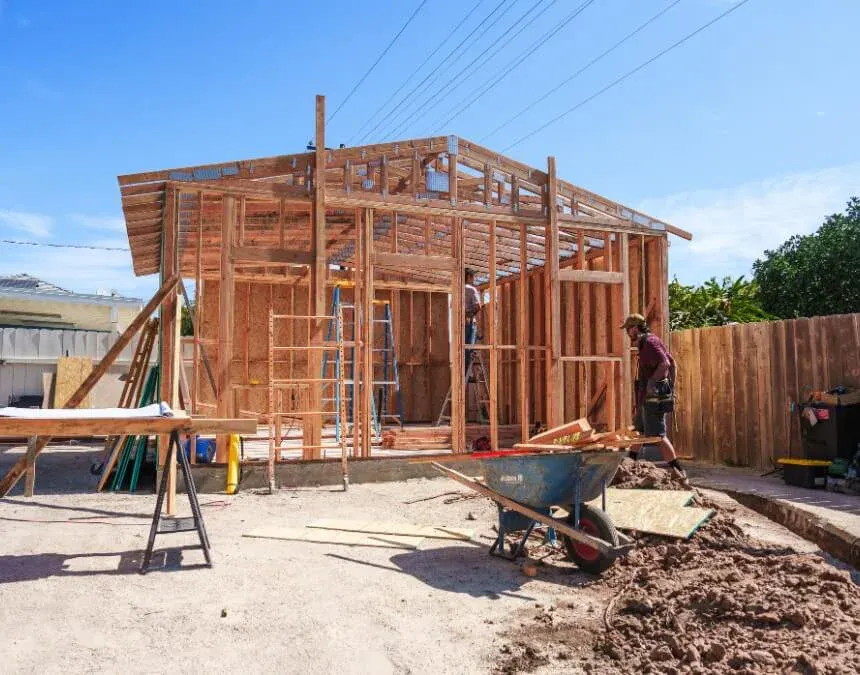
Complete, code-compliant submissions and suitable standard plans can reduce avoidable corrections, but every ADU still requires the applicable site-specific review.
Get Started With Your ADU Permit
Ready to turn your ADU plans into reality? At Uni Construction, start by discussing your Los Angeles property, design goals, and permitting needs. Review current state-law protections, applicable fee exemptions, and standard-plan options with the responsible agencies. A property-specific assessment can help identify required approvals, likely costs, and the next practical steps before construction.
Before you begin, we recommend:
- Reviewing current City of Los Angeles fee schedules and available estimating tools (Development Services Fee Calculator) to build a project-specific budget.
- Evaluating standard ADU plans (unincorporated Los Angeles’s Pre-Approved Plan Set Program) for potential design and review efficiencies, while accounting for site-specific requirements.
- Requesting a consultation to discuss your property, design options, service scope, consultation charges, and a practical approach to your build.
Get started today → Book your ADU consultation.
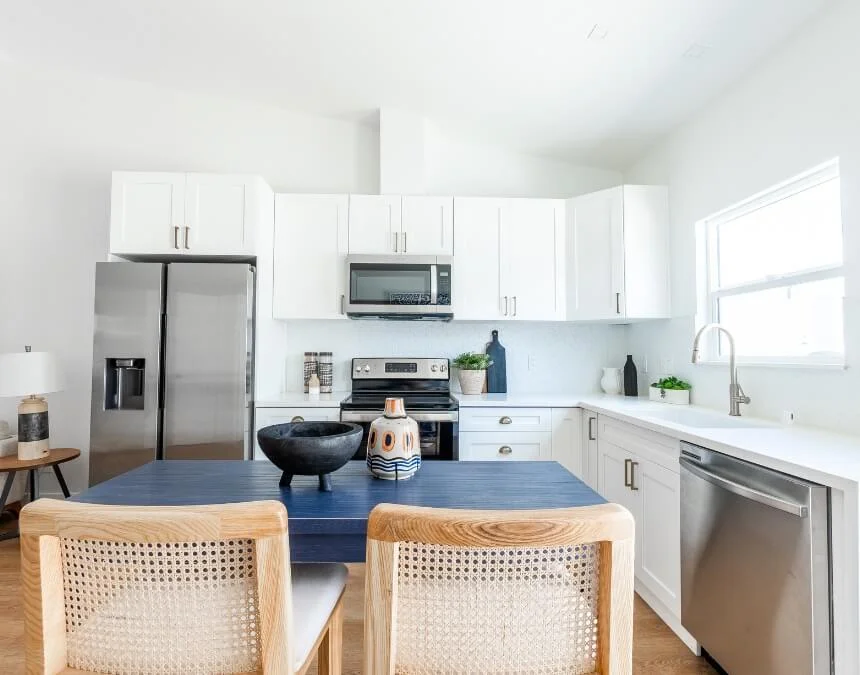
Use current city fee resources and suitable standard plans to prepare a stronger application, while accounting for site-specific costs and reviews.
FAQs about ADU Permit Costs
Yes, ADU projects generally require inspections, and related charges form part of the permitting budget. Properties within the City of Los Angeles fall under city procedures, while properties in unincorporated Los Angeles County follow the county’s requirements. Do not assume their fee schedules are interchangeable. Ask the responsible building department whether routine inspections are included in the permit fee and which services carry separate charges. Project size, valuation, construction type, and complexity can affect the assessment. Foundation, framing, building systems, and final inspections may be required, along with project-specific stormwater, fire-safety, or other checks. Reinspections and special inspections may involve additional costs. Request an itemized estimate and payment schedule before permit issuance, and confirm whether any inspection services must be arranged and paid for separately.
Los Angeles development impact fees depend on the development type, location, and applicable fee program. For ADUs, state law exempts units 750 square feet or less from development impact fees and generally requires proportionate assessments for larger units. These protections do not automatically eliminate school fees, utility charges, or ordinary building-permit costs, which follow separate rules. For single-family and multifamily housing, ask the responsible city department how each applicable fee is assessed and whether the calculation uses floor area, dwelling count, or another authorized measure. Commercial projects, including retail, hotels, and offices, require use-specific estimates rather than a borrowed per-square-foot rate. Industrial assessments likewise depend on the relevant program and project characteristics. Mixed-use developments may require separate residential and commercial calculations. Review applicable ordinances, fee schedules, and supporting nexus studies to understand infrastructure charges. Confirm any affordable-housing exemptions, reductions, or additional project obligations directly with the administering agency before including them in a budget.
Seismic-related charges may apply to a Los Angeles building project, but distinguish permit surcharges from engineering and construction expenses. California’s Strong Motion Instrumentation Program (SMIP) assessment is a state-mandated charge collected through permitting. Confirm the current rate, valuation basis, and building classification with LADBS rather than applying a percentage based solely on story count. Seismic retrofit work, such as foundation bolting or structural reinforcement, may also require engineering, plan review, and inspections. These costs depend on the building’s condition and proposed scope; they should not be treated as a standard local fee range. Retaining walls, substantial structural alterations, or challenging ground conditions may require additional calculations, geotechnical reports, or specialized review. Ask which requirements are mandatory for your ADU and whether related review charges are included in the permit estimate. Consult LADBS and a California-licensed structural or geotechnical professional, as appropriate, for a project-specific assessment before finalizing your budget.