

TL;DR: ADU vs JADU
- An ADU (accessory dwelling unit) is a fully independent secondary home that can be detached or attached, while a JADU (junior accessory dwelling unit) is a smaller unit within a single-family residence.
- ADUs may reach 1,200 square feet, depending on applicable standards, while JADUs are limited to 500 square feet.
- JADUs may share a bathroom with the main house, which affects owner-occupancy requirements; ADUs provide separate facilities.
- ADUs generally cost more and take longer to build, while JADUs often involve simpler conversions of existing space.
- This article compares size limits, rental rules, costs, permitting timelines, and ROI considerations.
ADU vs. JADU compares two types of accessory housing allowed under California law: an accessory dwelling unit (ADU) and a smaller junior accessory dwelling unit (JADU). Their main differences involve size limits, kitchen and bathroom requirements, and owner-occupancy rules. JADUs often cost less and take less time to build because they convert space within a single-family residence.
ADU vs JADU: Side-by-Side Comparison Table
Beyond their footprints, ADUs and JADUs differ in size and requirements, particularly for kitchen, bathrooms, parking, and owner occupancy. Rental requirements also differ, so homeowners should not assume that either unit qualifies for short-term use. California law establishes rental-term requirements for certain ADU and JADU approval pathways, while local ordinances may impose additional restrictions. In Los Angeles, Diamond Bar, or Pomona, verify the applicable rental period, occupancy conditions, and any rent-stabilization requirements with the relevant city before advertising either unit.
Quick Answers
- Is a JADU smaller than an ADU? Yes. A JADU is limited to 500 square feet, while ADUs may be significantly larger.
- Can a JADU be detached? No. It must be within a single-family residence, including eligible attached garage space.
- Does a JADU need its own entrance? Yes. It must have a separate exterior entrance.
- Can both have kitchens? Yes, but a JADU requires only an efficiency kitchen.
ADUs and JADUs are accessory housing units allowed under California law, but they differ significantly in size, location, independence, and occupancy requirements. This side-by-side comparison highlights their most important legal and practical distinctions.
| Feature | ADU | JADU |
|---|---|---|
| Maximum Size | Generally up to 1,200 square feet; attached units may face a 50% limit, subject to statutory exceptions | 500 square feet maximum |
| Kitchen | Full kitchen required | Efficiency kitchen required |
| Bathroom | Required | May share a bathroom with the main residence |
| Separate Entrance | Required | Required |
| Parking Requirements | May be waived under qualifying conditions, including proximity to public transit | Cannot be required |
| Owner Occupancy (in Primary Residence) | Not required | Generally required in the primary residence or JADU, subject to applicable exceptions |
| Ministerial Approval Process | Local Approval Required | Local Approval Required |
| Connection and Capacity Fees | Depend on unit type and applicable utility rules | Generally exempt for qualifying conversions |
| Fire Separation | Depends on configuration and applicable building codes | Depends on configuration and applicable building codes |
Key Takeaways
An ADU, or accessory dwelling unit, is a fully independent living space on the same property as the primary residence. It can be attached to a single-family home or be an entirely detached structure.
A JADU, or junior accessory dwelling unit, is a living space of no more than 500 square feet within a single-family residence. An attached garage or extra bedroom may qualify for conversion, provided the design meets efficiency-kitchen, entrance, sanitation, and other applicable requirements. Staying within the home’s footprint alone does not establish eligibility.
Although both ADUs and JADUs can be used as granny flats, rental units, or apartments for adult children, each must meet specific regulations and building-code requirements, including:
- Size: An ADU may reach 1,200 square feet under applicable standards, while a JADU can be no larger than 500 square feet.
- Kitchen requirements: ADUs need permanent cooking facilities. A JADU requires an efficiency kitchen with cooking facilities, a food-preparation counter, and storage cabinets sized appropriately for the unit.
- Bathroom requirements: ADUs require their own bathroom. JADUs may share sanitation facilities with the main house.
- Rental regulations: ADUs generally do not require the owner to live in the main home. JADU owner-occupancy requirements depend on whether sanitation facilities are shared and on applicable statutory exceptions.
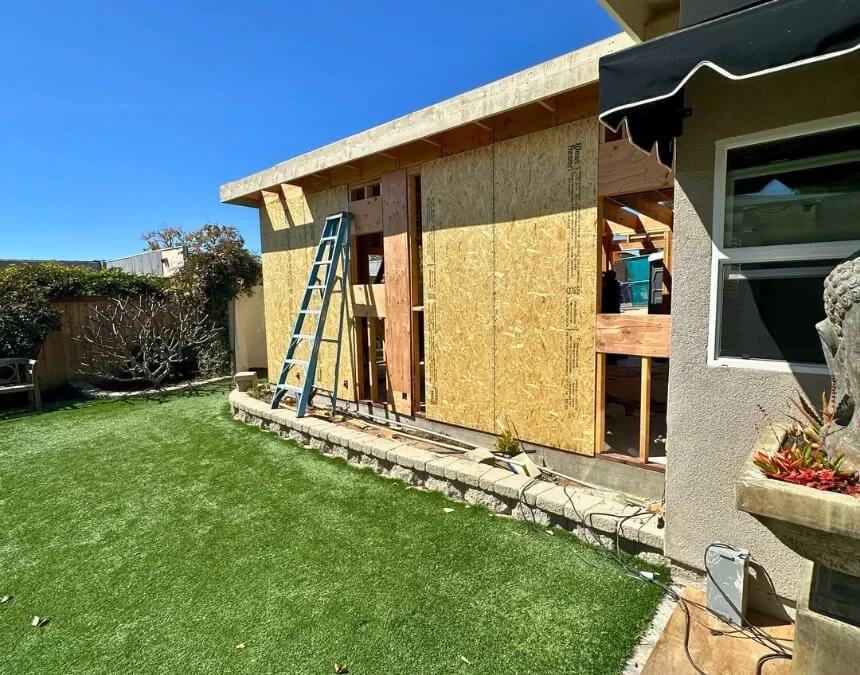
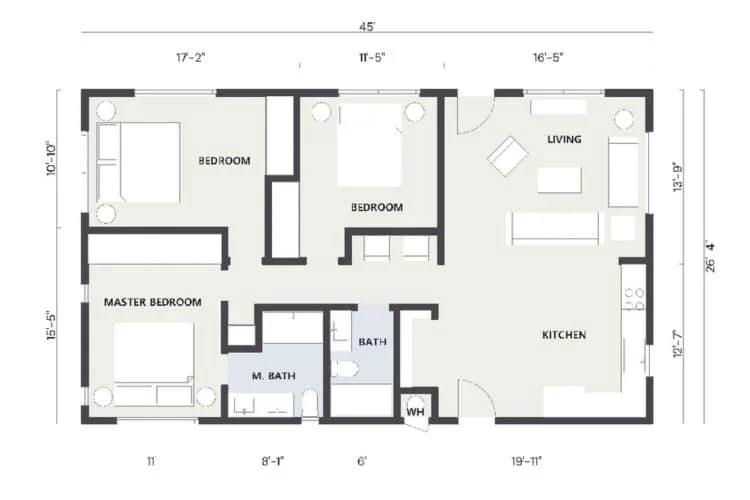
Framing plans help establish the unit’s layout, structural scope, and relationship to the main home, informing space planning, utility routing, and code compliance from the outset.
What Are ADUs and JADUs?
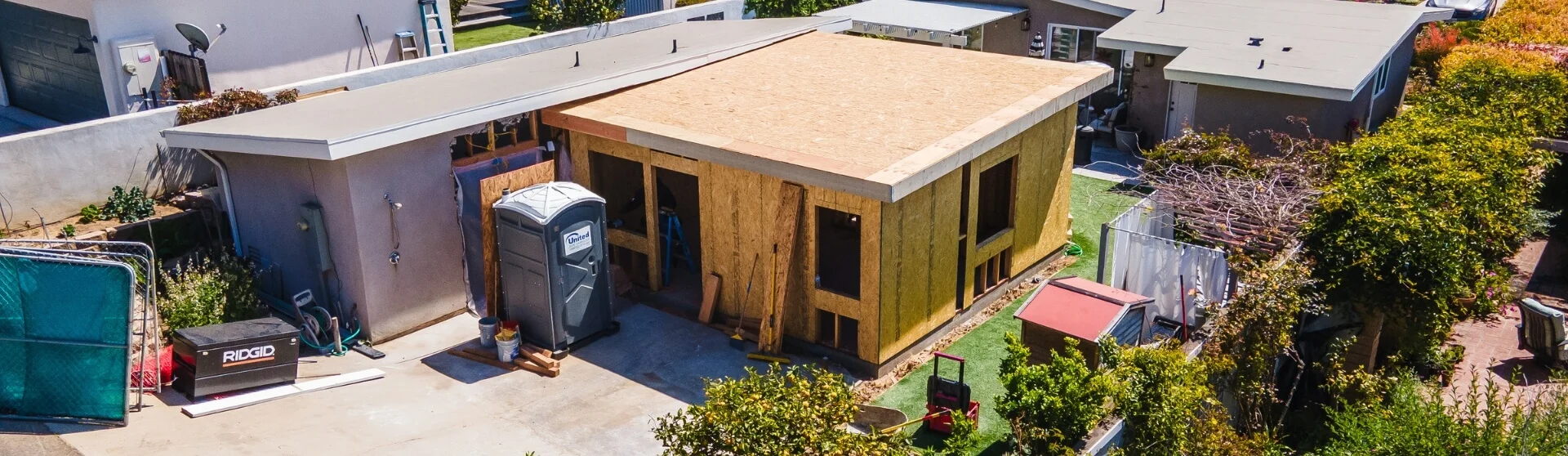
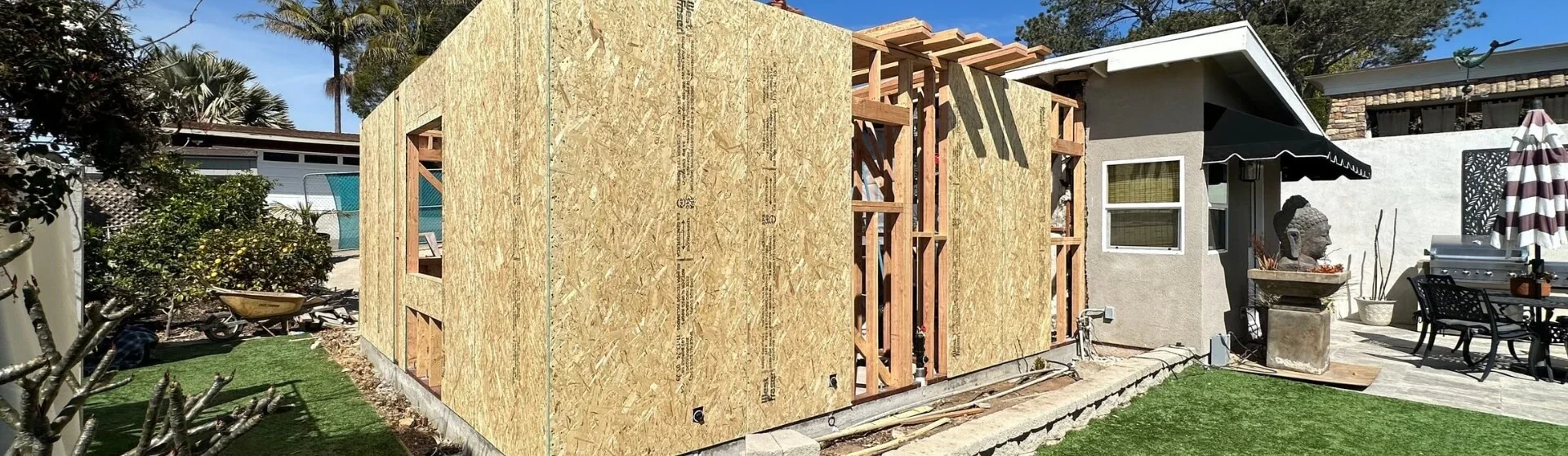
An accessory dwelling unit, or ADU, provides independent living facilities on the same property as a primary residence. ADUs take several forms, including attached additions that share a wall with the main home, detached garage conversions, and freestanding backyard cottages. Eligible multifamily properties may also accommodate ADUs.
To qualify as an ADU, a living space must contain:
- A kitchen with permanent cooking facilities
- A bathroom
- Independent access through an appropriate entrance
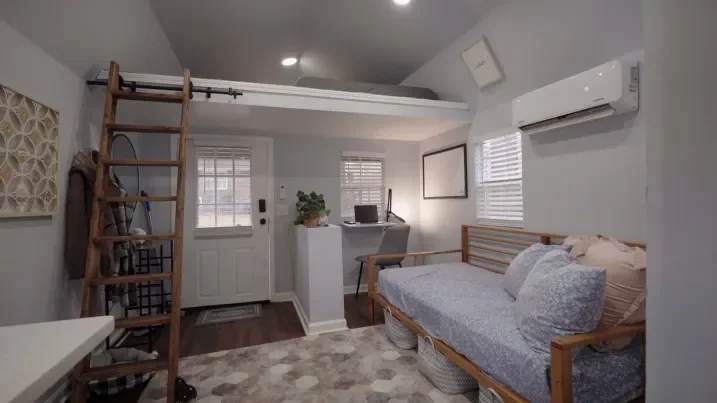
JADUs are smaller living spaces built within the boundaries of an existing home. A homeowner may convert an eligible bedroom, attic, basement, or attached garage into an efficiency apartment, provided it meets applicable building standards. JADUs require an efficiency kitchen and a separate exterior entrance. They may share a bathroom with the main residence, although a private bathroom can improve independence and affect owner-occupancy requirements.
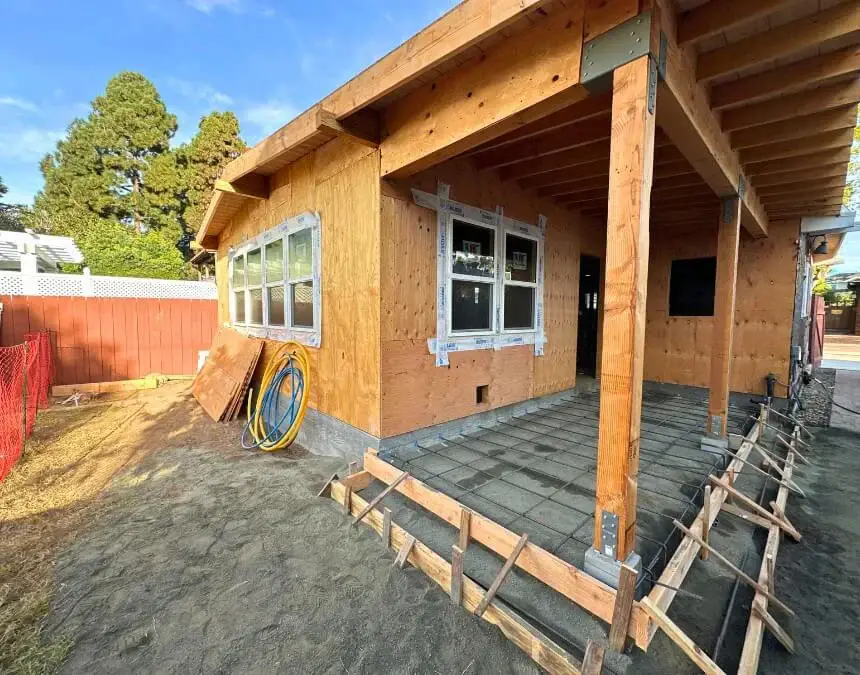
Detached ADUs can provide privacy and functional separation for long-term rentals or multigenerational living, offering layout options unavailable to JADUs located within a single-family residence.
Benefits of ADUs vs JADUs
Adding an ADU or JADU to your property can potentially increase your property value. Both may serve as in-law suites, guest houses, or rental units. Choosing between an ADU and a JADU generally depends on your property’s layout, intended use, applicable requirements, and overall budget.
Advantages of Building an ADU
ADUs often give homeowners greater flexibility with flexibility. They are typically larger than JADUs and must include independent cooking and bathroom facilities, allowing their use to evolve over time. For example, an ADU might initially house family members and later become a rental or home office, subject to applicable occupancy and use requirements.
Because ADUs are often larger and more private than JADUs, they may generate higher rental income, depending on local demand and comparable properties.
Advantages of Building a JADU
JADUs are often less expensive than ADUs because they are smaller and reuse the home’s existing structure. Sharing an existing bathroom may also reduce plumbing and fixture costs, although required structural, electrical, ventilation, or accessibility work can affect the overall budget.
JADUs may also have a shorter permitting process, giving homeowners additional living space sooner and at a lower cost when existing conditions support a straightforward conversion.
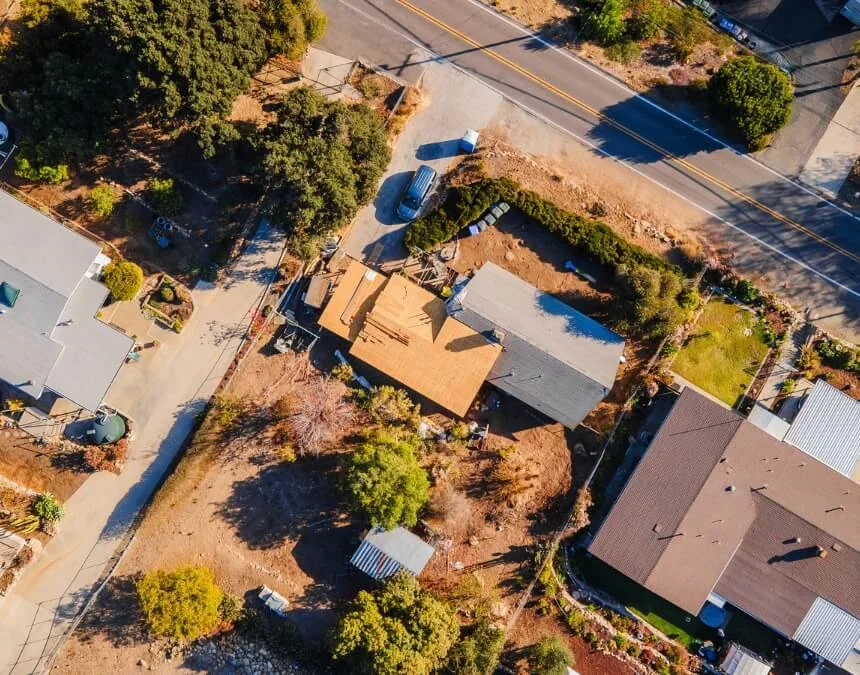
Full kitchens and separate living areas can strengthen an ADU’s rental appeal, but ROI depends on construction costs, operating expenses, financing, and local rental demand.
Legal and Zoning Considerations
California supports ADUs and JADUs as ways to address housing shortages and provide more affordable housing options, with state laws limiting certain local approval barriers. An experienced design and construction team can help navigate either project, but approvals remain dependent on the property and proposed plans. Requirements continue to evolve, particularly around owner occupancy, utilities, and local implementation. Start with the March 2026 California ADU Handbook, then verify current law and the applicable city’s standards before proceeding.
Permitting Process
Over the past several years, laws have been put in place to streamline ADU and JADU permitting, although each application must still satisfy applicable requirements.
California generally requires a permitting agency to approve or deny a qualifying, complete permit for an ADU or JADU application within 60 days, subject to statutory conditions and exceptions.
Actual review schedules depend on application completeness, required corrections, and applicable statutory exceptions. A straightforward JADU conversion may involve less review than a detached ADU, but its smaller scope does not guarantee faster approval.
Zoning Differences
AB 2221 helped strengthen California’s limits on restrictive local ADU standards. Current law generally prevents cities from imposing side and rear require setback requirements greater than 4 feet on qualifying ADUs, while separate provisions address conversions and other approval pathways.
Because JADUs occupy space within a single-family residence, they often raise fewer site-planning issues. However, homeowners should not assume a blanket exemption from homeowner’s association regulations or other review requirements; entrances, windows, fire safety, and proposed exterior changes still require evaluation.
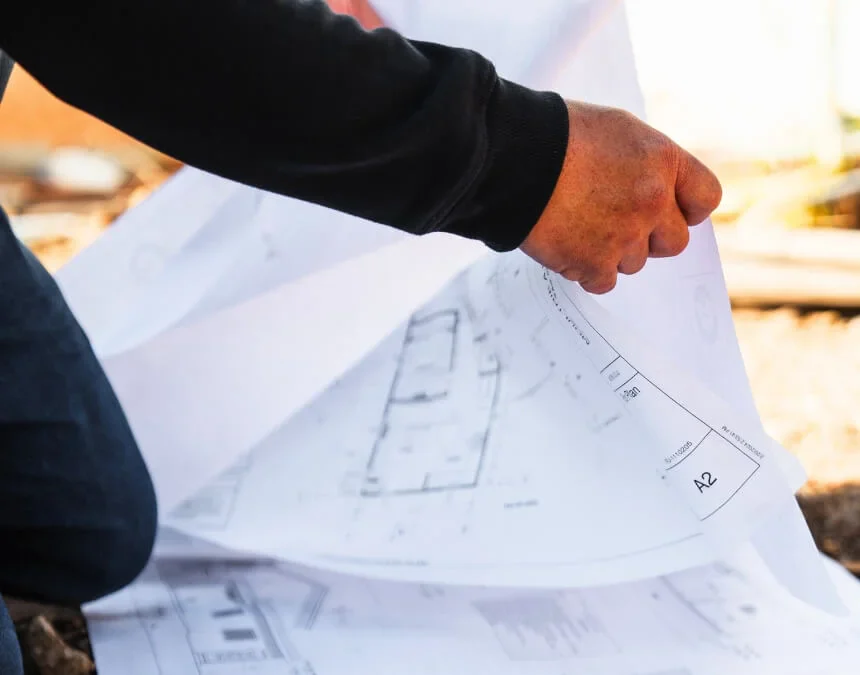
Complete, professionally prepared plans support code-compliant design and timely review under California’s ADU framework, including the 60-day decision requirement and protections strengthened by AB 2221.
Owner-Occupancy Rules for ADUs and JADUs (2025-2026 Update)
California’s owner-occupancy requirements differ for ADUs and JADUs. For JADUs, shared versus separate sanitation facilities can affect rental flexibility and long-term planning.
Core Rule Differences
- JADUs sharing sanitation facilities generally require the owner to live in the primary residence or JADU, subject to statutory exceptions.
- State law generally prohibits owner-occupancy requirements for ADUs.
- JADU permitting may require recorded restrictions documenting applicable occupancy, size, and separate-sale limitations.
How Owner Occupancy Is Determined
- Confirm which recorded restrictions the permitting authority requires.
- Maintain owner occupancy when required for a shared-sanitation JADU.
- Review potential rental and financing implications before changing occupancy arrangements.
Quick Answers
- Is owner occupancy required for a JADU in California? Generally, when it shares sanitation facilities with the main home, subject to statutory exceptions.
- Is owner occupancy required for an ADU? State law generally prohibits this requirement.
- Can you rent out both an ADU and a JADU? Potentially. Check sanitation arrangements, applicable occupancy requirements, and whether the owner must occupy the primary home.
- Are short-term rentals allowed? State approval conditions and local ordinances may restrict or prohibit them.
Cost Differences: ADU vs JADU
The cost difference between an ADU and a JADU largely depends on size, the extent of new construction, existing conditions, and required utility upgrades.
Typical Cost Considerations
- New detached ADUs generally require foundations, building systems, and complete interior construction.
- JADUs reuse existing walls and structural elements.
- JADUs may require fewer utility upgrades.
- Impact-fee exemptions and charges vary by unit size and applicable law.
Quick Answers
- Is a JADU cheaper than an ADU? Often, because it is smaller and reuses existing space.
- Does a JADU require a new utility meter? Often not; verify applicable legal protections and provider requirements.
- Which offers better ROI? ADUs may earn more rent, while JADUs may require less upfront investment. Compare net returns.
General Cost Comparison
| Cost Factor | ADU | JADU |
|---|---|---|
| Construction Complexity | Often higher; depends on scope | Often lower for interior conversions |
| Utility Work | New or upgraded connections may be needed | Existing systems may be reused if adequate |
| Permit Fees | Project-specific; impact-fee exemptions do not waive all charges | Confirm plan-check, permit, and other applicable charges |
| Overall Investment | Often higher; obtain a project-specific estimate | Often lower; verify conversion and upgrade costs |
Cost and ROI Comparison
Although ADUs often cost more to construct, their rental income and resale potential may support stronger returns than JADUs in some circumstances.
Construction Costs for ADUs
ADU costs depend on whether the project involves a garage conversion, an attached addition, or a new detached structure. Rather than relying on a generic price range, obtain a site-specific estimate covering design, permits, foundations, utilities, construction, and contingencies. Overall size, access, soil conditions, and finish selections also influence the budget. Ask contractors to identify allowances and exclusions so you can compare proposals consistently.
Evaluate upfront costs against a property-specific appraisal and realistic rental projections rather than assuming a fixed percentage increase in value. Investigate any several financing options available for ADUs, confirming current eligibility, funding availability, and repayment conditions.
Construction Costs for JADUs
JADUs often cost less because they reuse existing space and require only an efficiency kitchen. Request an itemized estimate covering structural work, utilities, fire safety, and either shared or private bathroom arrangements.
A JADU may provide a worthwhile return, but compare net income and total investment rather than assuming it will underperform a detached ADU.
Property Tax Implications
Both ADUs and JADUs may increase property taxes. Evaluate the added annual expense alongside potential rental income and any independently supported increase in property value.
Adding an ADU or JADU generally does not trigger reassessment of the entire property. Instead, the assessor determines the taxable value of assessable new construction, which is not necessarily its construction cost. Confirm treatment with the Los Angeles County Assessor and review partial assessments here.
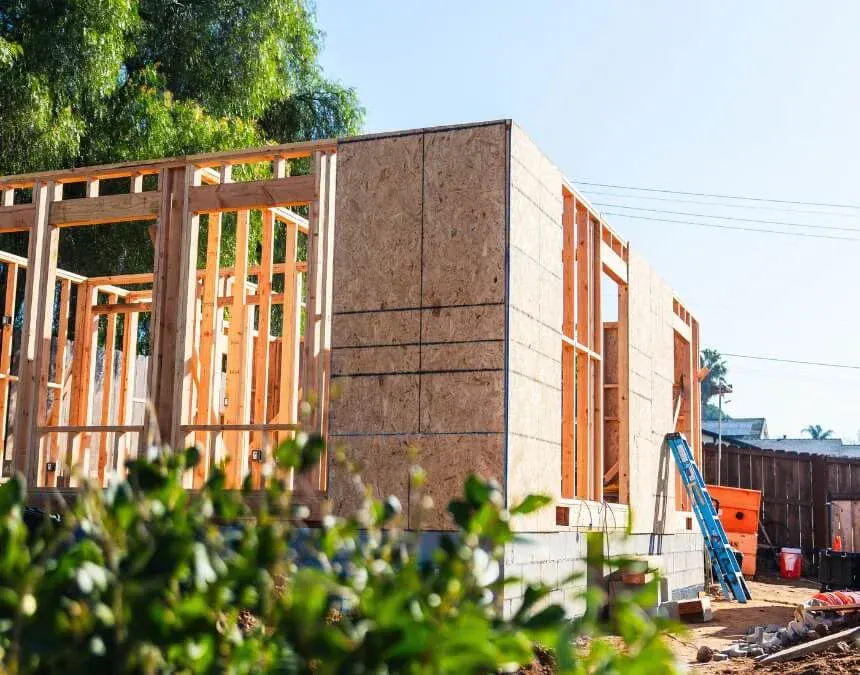
ADUs usually require greater upfront investment. Standalone layouts and well-chosen finishes may improve appeal, but higher returns depend on project costs, market conditions, and ongoing expenses.
Permitting and Timeline Differences
ADUs and JADUs often follow similar approval pathways, but construction scope, existing conditions, and application completeness affect review complexity and overall timelines.
General Timeline Expectations
- Feasibility assessment and zoning verification.
- Plan preparation and application submission.
- City review and required corrections.
- Permit issuance.
- Construction, inspections, and final approval.
New detached ADUs generally require foundation and structural review, utility coordination, and additional inspections, which can lengthen construction compared with straightforward interior conversions.
Quick Answers
- Does a JADU receive approval faster? Sometimes, but review time depends on completeness, conditions, and required corrections.
- Does a detached ADU take longer to build? Often, because it requires foundations, framing, and utility installations.
- Are both eligible for ministerial approval? Yes, when statutory criteria and applicable objective standards are met.
Comparison Overview
| Factor | ADU | JADU |
|---|---|---|
| Plan Complexity | Often higher; depends on design and site | Often lower for interior conversions |
| Structural Review | Depends on construction type and scope | May be limited if structural changes are unnecessary |
| Construction Duration | Depends on scope, site conditions, and sequencing | May be shorter for straightforward conversions |
| Inspection Count | Depends on scope and required inspection stages | May involve fewer stages for simpler conversions |
Rental Income and ROI Considerations
ADUs and JADUs can both provide long-term rental income, but their earning potential, operating costs, and occupancy restrictions differ.
Rental Differences
- ADUs may command higher rent because of their size and independence.
- JADUs may rent for less but cost less to construct.
- Shared-sanitation JADUs generally carry owner-occupancy requirements that affect rental flexibility.
Strategic Considerations
- ADUs may contribute more to resale value, depending on the market.
- JADUs can offer a lower-cost entry into rental housing.
- Building both may increase unit count when the property and proposal meet applicable requirements.
Quick Answers
- Which generates more rent? ADUs often command higher rents because of their size and privacy, but compare local listings.
- Is a JADU suitable for multigenerational living? Yes, particularly when shared bathroom access is acceptable.
- Can you Airbnb an ADU or JADU? Check state rental-term requirements and local short-term rental restrictions first.
How to Choose Between an ADU and a JADU
JADUs often suit homeowners seeking a smaller, less expensive conversion, while ADUs generally offer more independence and design flexibility, with potentially higher rental income rather than guaranteed returns.
A JADU may be the ideal choice if you:
- Want a lower-cost project supported by a site-specific estimate
- Have unused space within your existing home
- Have a small lot with limited building opportunities
- Prefer a potentially simpler review process
- Plan to live on the property long term
- Want an in-law suite or apartment for adult children
- Want to limit disruption to the home’s exterior during construction
- Need to evaluate HOA requirements alongside state-law protections
An ADU may be the ideal choice if you:
- Have a larger construction budget
- Want a separate, private structure
- Have suitable lot space
- Want the option to rent both the ADU and primary home
- Seek greater rental-income potential
- Want more flexibility in design and use
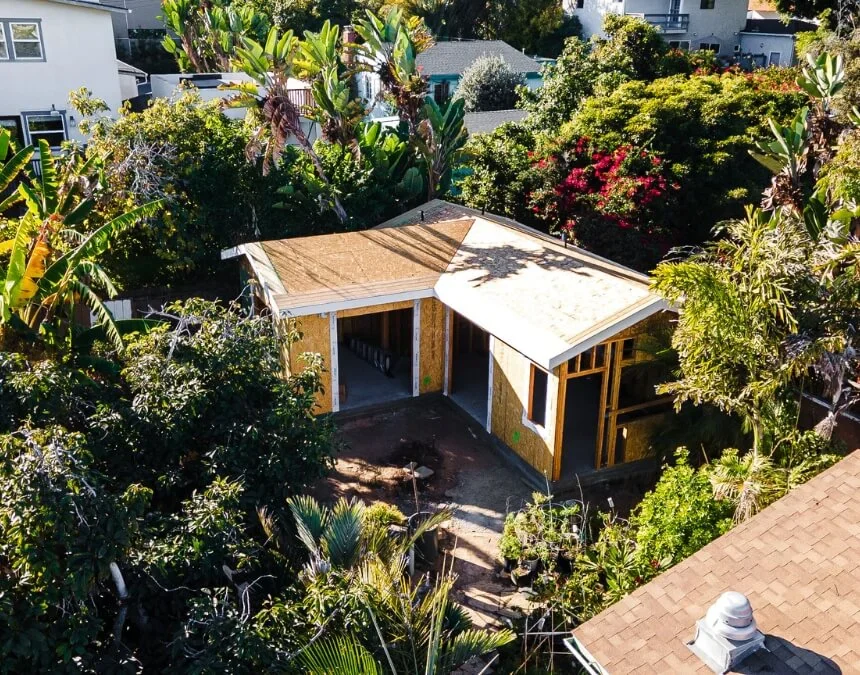
When space is limited, an eligible JADU conversion may offer a lower-cost solution for long-term homeowners, although permitting requirements and existing conditions still need careful review.
Can You Build Both an ADU and a JADU on the Same Property?
California law allows qualifying single-family properties to accommodate both an ADU and a JADU, subject to the applicable approval pathway, building standards, and site conditions.
When This Is Allowed
- The property contains an existing or proposed single-family residence.
- The JADU is within the residence, including eligible attached garage space.
- The ADU meets applicable size and setback standards.
- Any applicable JADU owner-occupancy requirements are satisfied.
Quick Answers
- Can you have both simultaneously? Yes, qualifying single-family lots can accommodate an ADU and a JADU.
- Does this double rental income? Not necessarily. Rents, expenses, and applicable owner-occupancy requirements affect income.
- Are parking requirements different? JADUs require no additional parking; ADU requirements depend on statutory exemptions and project conditions.
Can You Build Both an ADU and a JADU on the Same Property?
When This Is Allowed
- The property contains an existing or proposed single-family residence.
- The JADU is within the residence, including eligible attached garage space.
- The ADU meets applicable size and setback standards.
- Any applicable JADU owner-occupancy requirements are satisfied.
Quick Answers
- Can you have both simultaneously? Yes, qualifying single-family lots can accommodate an ADU and a JADU.
- Does this double rental income? Not necessarily. Rents, expenses, and applicable owner-occupancy requirements affect income.
- Are parking requirements different? JADUs require no additional parking; ADU requirements depend on statutory exemptions and project conditions.
FAQs About ADUs and JADUs
A JADU does not need its own bathroom. Adding one can improve privacy and flexibility while affecting applicable owner-occupancy requirements, construction costs, and potential rental appeal.
An eligible attached garage may be converted into a JADU if all requirements are met. A detached garage conversion would need to qualify as an ADU instead.
JADUs must:
- Be within a single-family residence, including eligible attached garage space
- Be no larger than 500 square feet
- Have an efficiency kitchen
- Have a separate exterior entrance
- Meet applicable owner-occupancy requirements when sanitation facilities are shared
Although JADUs often rent for less than ADUs, they may still offer a practical investment in Los Angeles. Review current comparable listings, permitted rental terms, vacancy assumptions, and operating expenses before estimating income or deciding whether the project meets your financial goals.
Maximize Your Space with Uni Construction
When planning building beautiful, functional ADUs and JADUs, consider how the space will meet your immediate needs while maximizing their ROI over time. Discuss those priorities with Uni Construction before selecting a design.
Not sure whether an ADU or JADU is right for you? Discuss your budget, property, and goals with Uni Construction to explore suitable options. Ask what the initial consultation includes and how proposed costs, schedules, and design services are developed. Get in touch to schedule your free consultation today.
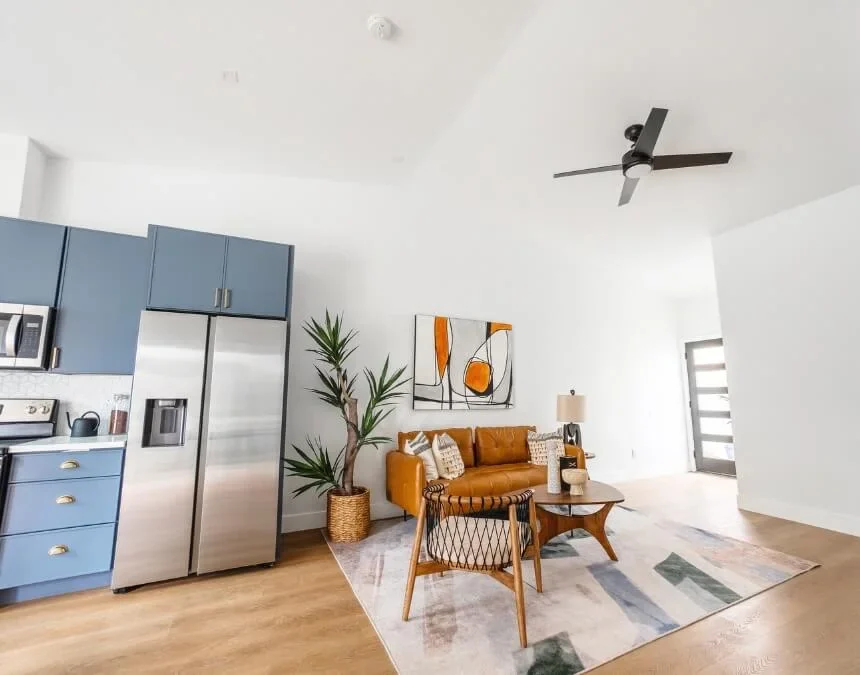
Converting eligible space within a home into a JADU may save time and money. Discuss existing conditions, site constraints, and project goals with Uni Construction to evaluate the fit.