

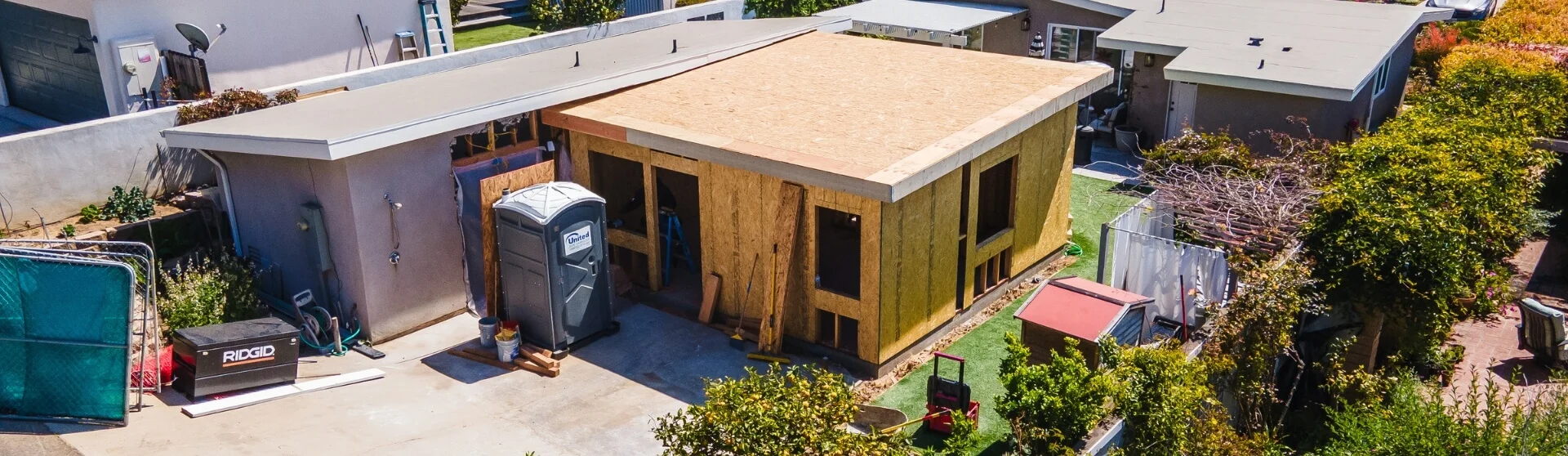
TL;DR: SB9 ADUs
The term “SB9 ADUs” describes housing projects that combine California’s SB9 development or lot-split provisions with accessory dwelling unit (ADU) regulations, where permitted, to add homes to a residential property. An SB9 lot-split project typically requires eligibility checks, subdivision and building approvals, utility coordination, and construction. These additional zoning and legal requirements can make it substantially slower and more expensive than a traditional ADU project.
- SB9 is a California housing law that allows qualifying single-family lots to be split and developed with up to four primary housing units across the resulting parcels. ADUs are accessory homes on residential properties.
- Traditional ADUs are often simpler and faster to permit than SB9 lot-split projects, which involve additional subdivision, site-planning, and infrastructure requirements.
- SB9 projects may require planning review, utility coordination, lot-split approvals, and legal documentation, increasing timelines, complexity, and overall project costs.
- Some California properties do not qualify for SB9 because of restrictions involving lot configuration, fire hazards, historic resources, environmental protections, or owner-occupancy requirements for lot splits.
- Homeowners may sometimes combine SB9 development with ADUs or JADUs, subject to state law, local implementation, site conditions, and applicable limits on units per parcel.
- This guide compares SB9 and ADUs across costs, timelines, permitting, eligibility, financing, risks, and long-term property value to help homeowners evaluate which approach fits their goals.
Impact-fee threshold note: Under the March 2026 California HCD ADU Handbook, the statewide development-impact-fee exemption includes ADUs with 750 sq ft of interior livable space or less. Above 750 sq ft, applicable impact fees must be proportional. School, utility, plan-check and permit charges follow separate rules.
Key Takeaways
Passed in 2021, California’s Senate Bill 9, commonly called SB9, expanded housing opportunities on qualifying single-family residential lots to help address the state’s housing shortage. It allows eligible two-unit developments through a streamlined approval process. Under specified conditions, it also permits an urban lot split, potentially allowing up to four primary homes across the two resulting parcels.
SB9 establishes statewide requirements, but eligibility and approval depend on statutory criteria and property-specific conditions. Homeowners seeking additional independent living space may find an accessory dwelling unit, or ADU, more practical than another primary dwelling under SB9, particularly when an SB9 proposal would require a lot split, additional infrastructure, and more extensive approvals.
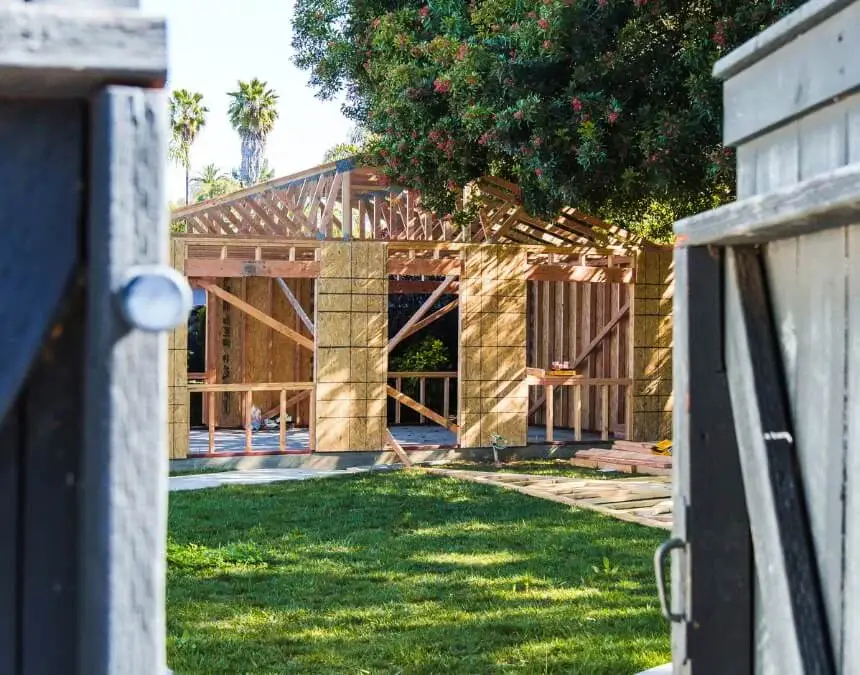
Compare SB9 and ADU timelines side by side to determine which development path best aligns with your goals.
What Is SB9 and How Does it Work?
SB9 was one of several state laws enacted in recent years to increase California’s housing supply. Where zoning previously allowed only a single-family home, SB9 can now permit two primary residences on a qualifying residential lot, subject to applicable eligibility requirements.
Under specified conditions, SB9 also allows an eligible lot to be split into two parcels. A property previously occupied by one single-family home could then accommodate up to four primary residences across the resulting lots.
To qualify for SB9:
- The property must be in a qualifying single-family residential zone and urbanized location
- The lot must satisfy environmental, hazard, and historic-resource eligibility requirements, including any applicable exceptions
- For a lot split, the applicant generally must intend to occupy a home on either parcel for at least 3 years
- Neither resulting parcel may be smaller than 40% of the original lot, and minimum parcel-size requirements apply
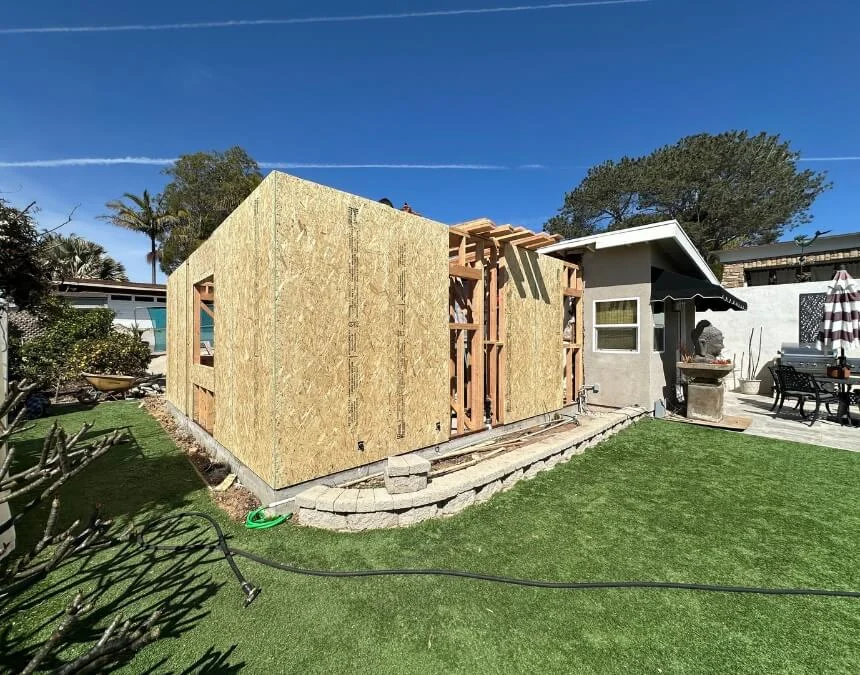
SB9 can allow two primary units on a qualifying lot, but an ADU may offer homeowners a simpler, faster alternative.
Is SB9 Still Legal After the LA Lawsuit?
Yes. five Southern California cities provides context on legal challenges to SB9, but homeowners should verify current legal developments and their local agency’s implementation requirements. Eligibility still depends on the property and the applicable statutory criteria.
State law establishes the requirements that local agencies must follow. Cities may apply lawful, objective standards and administer their own application procedures, but they cannot disregard state protections. Differences in implementation can still affect project design, documentation, and review.
California’s ADU and housing laws continue to evolve, making current guidance essential when evaluating a project in 2026. Start with the March 2026 California ADU Handbook and applicable statutes. Confirm state oversight provisions, application-completeness requirements, permit-review deadlines, and streamlining measures with the responsible agency rather than assuming that every update applies to every project.
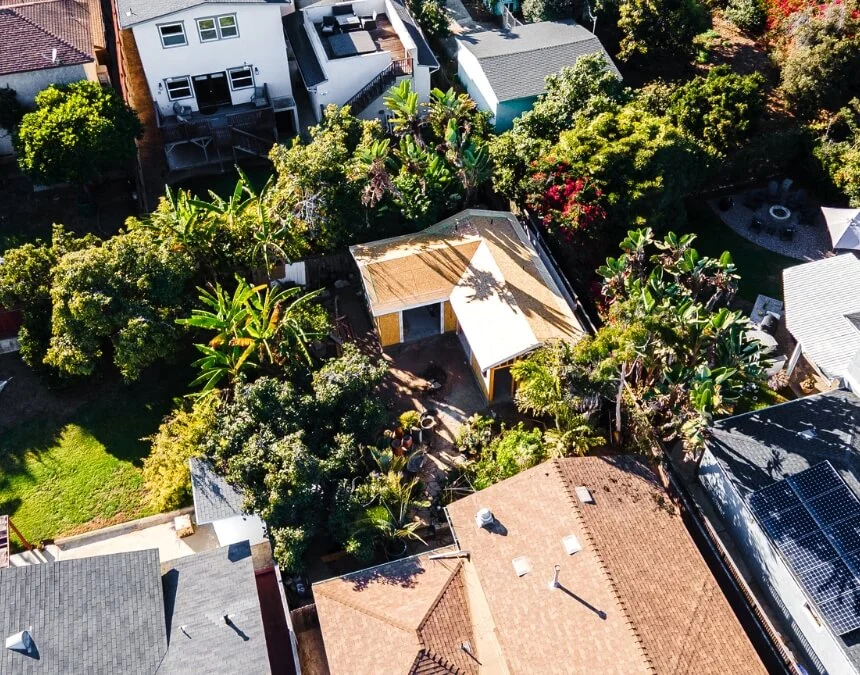
Check current SB9 requirements and local implementation procedures. Property-specific eligibility and lawful city standards can significantly affect your project.
2025–2026 California SB9 and ADU Law Updates
California continues updating housing laws to streamline ADU approvals and limit conflicting local restrictions. When comparing SB9 projects with traditional ADUs, homeowners should verify which 2025 and 2026 provisions apply to their property and application.
Important Recent Changes
- Check state enforcement procedures for local ADU ordinances that conflict with state law
- Confirm whether the proposed ADU qualifies for school impact fee exemptions or reductions
- Verify current coastal permitting requirements and applicable review deadlines
- Identify application-completeness and permit-review deadlines for each responsible agency
- Confirm current owner-occupancy requirements and exceptions for JADUs
Why These Updates Matter
State ADU protections can simplify approval for qualifying projects. SB9 lot splits may remain more complex because they also require subdivision review, utility coordination, and additional legal documentation, depending on the property and proposed development.
Quick Answers
-
Did SB9 change in 2025?
California continues refining ADU and local permitting laws, which can influence how homeowners evaluate SB9 development strategies.
-
Are ADUs becoming easier to permit?
In many cases, state law limits local restrictions and establishes permit-review deadlines for qualifying applications.
-
Do these changes eliminate SB9 restrictions?
No. SB9 projects must still satisfy applicable subdivision, zoning, environmental eligibility, and site-safety requirements.
-
Do local city rules still matter?
Yes. Cities administer applications and apply lawful objective standards, overlays, and permitting procedures within state-law limits.
How Many SB9 Projects Have Been Approved in Los Angeles?
Before comparing SB9 adoption with ADU development in the City of Los Angeles, review the City’s current Permitting Center Dashboard and confirm what each dataset measures. Application counts, issued permits, and completed projects represent different stages and may cover different reporting periods. Lot splits, utility coordination, environmental constraints, and subdivision requirements can affect individual projects, but their influence should not be inferred from unsupported statistics. Check the available reporting categories:
- Applications received
- Permits issued
- Issuance summaries
- Permits completed
Permitting Insights for SB9 Projects in Los Angeles
Do not treat permit counts as an SB9 approval rate without verifying the reporting period, application status, and dataset definitions. Ask the City of Los Angeles whether pending, withdrawn, incomplete, and denied applications are reported separately.
For a property in Los Angeles, ask planning staff about recent comparable SB9 applications, required documents, and current review conditions. Use based on news reports to confirm the scope and reporting period of any published data. A qualified project team can help evaluate subdivision, utilities, and permitting, but neither applicant experience nor a general timeline establishes how long your particular application will take.
Current California ADU laws establish application-completeness and permit-review requirements for qualifying projects. Confirm the applicable deadlines, exceptions, and submission requirements with the responsible agency. Although these provisions may streamline traditional ADU approvals, SB9 lot-split projects can remain more complex because they involve subdivision review, utility coordination, environmental eligibility checks, and additional legal documentation.
To compare schedules realistically, ask Uni Construction Home & Design for a property-specific estimate covering design, application preparation, agency review, utility work, and construction. Confirm which phases are included and what could cause delays.
Potential reasons an SB9 application may be ineligible, incomplete, or denied include:
- Zoning incompatibility, such as a property outside a qualifying single-family residential zone or eligible urban area
- Environmental and hazard constraints, including wetlands and fire hazards, subject to statutory exceptions and mitigation provisions
- Lot-size or configuration problems. Resulting parcels generally must each contain at least 1,200 square feet unless a smaller size is allowed, and neither may comprise less than 40% of the original lot
- Protected rental or affordable housing. Proposed demolition or alteration may conflict with SB9’s tenant and housing protections
- Owner-occupancy requirements. A lot-split applicant generally must intend to occupy a home on either parcel for 3 years, subject to exceptions
- Incomplete or noncompliant applications, including missing documents or failure to meet applicable objective standards
- Coastal Act and Local Coastal Program (LCP) requirements, which may introduce additional review or constraints
- Specific public health or safety impacts that meet the statutory standard for denial and cannot be satisfactorily mitigated
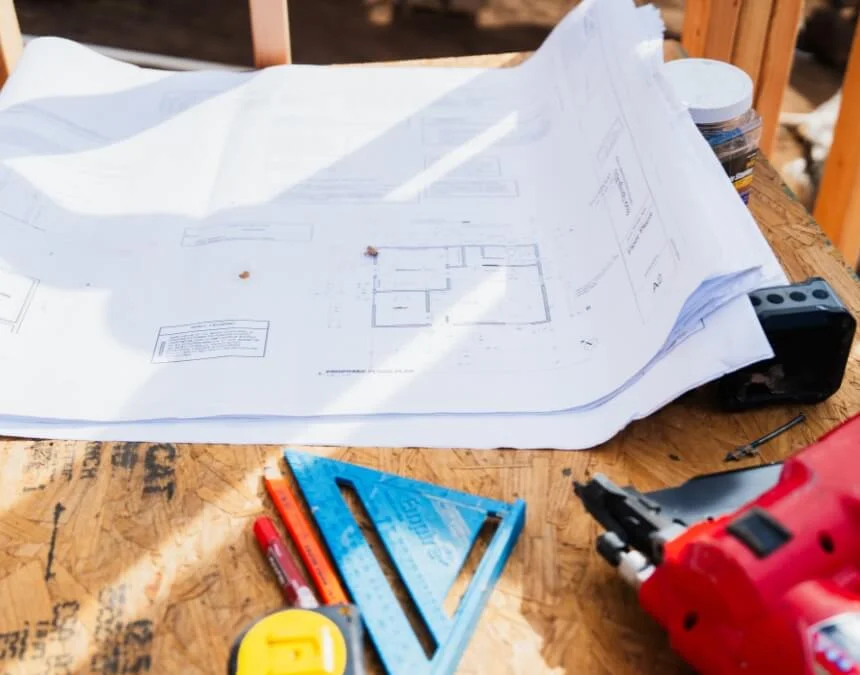
Verify Los Angeles SB9 eligibility and current review requirements before applying. Qualified professionals can help identify constraints and compare alternatives.
Common Risks and Challenges With SB9 Projects
SB9 projects can create valuable development opportunities, but they may also introduce greater permitting, infrastructure, and financial complexity than traditional ADUs. Homeowners should assess lot-split and subdivision requirements early rather than assuming that approval will be straightforward.
Common SB9 Challenges
- Utility upgrades and possible separate-service requirements
- Environmental overlays and fire-hazard restrictions
- Potentially longer permitting timelines
- Additional legal and surveying costs
- Financing complexity
- Easement and access issues
- Infrastructure coordination for split parcels
- HOA restrictions or neighborhood concerns
- Property tax and reassessment considerations
Why Some SB9 Projects Fail
- The property fails applicable zoning, environmental, or hazard eligibility requirements
- Utility infrastructure costs exceed the budget
- Lot-split requirements reduce usable development space
- Owners underestimate timelines and soft costs
- Financing assumptions prove unrealistic
Signs an ADU May Be the Better Fit
- The homeowner prioritizes a potentially simpler approval process
- Rental income is a primary goal
- Site restrictions make SB9 less feasible, while an ADU remains eligible
- The owner wants to avoid subdivision complexity
- The homeowner plans to retain the property long term
Quick Answers
-
Are SB9 projects risky?
SB9 lot-split projects can be significantly more complex than standard ADUs because they require subdivision approval and coordinated permitting.
-
Why might SB9 approvals be limited in some cities?
Environmental constraints, eligibility requirements, project feasibility, and incomplete applications can limit activity or delay approvals.
-
Do SB9 projects cost more than ADUs?
Often, yes. Additional legal, surveying, utility, and permitting requirements can increase the total project budget.
-
Can SB9 projects increase property value?
They may, particularly when additional homes or separate parcels are feasible, but market conditions and development costs affect the outcome.
Eligibility Criteria for SB9 Projects
What Are the Key Requirements for SB9 Projects?
California’s SB9 eligibility requirements, outlined in requirements, generally require the existing lot to meet the following conditions:
- Located in a qualifying single-family residential zone, such as R1, and an eligible urban area
- Large enough to meet applicable parcel-size and split-ratio requirements
- Compliant with environmental, hazard, and historic-resource restrictions and applicable exceptions
For a Los Angeles property, consult the City’s current guidance, expands on that last point, and verify restrictions or exceptions involving the following site conditions:
- High or very high fire hazard severity zones
- Wetlands
- 100-year flood hazard areas
- Regulatory floodways
- Prime farmland or farmland of statewide importance
- Historic districts, listed historical resources, designated historic properties, or landmarks
- Hazardous waste sites or sites on applicable hazardous-site lists
- Land designated for conservation under an adopted natural community conservation plan
- Habitat for protected species
- Land subject to a conservation easement
- Delineated earthquake fault zones
For coastal properties, verify current ADU review deadlines and Coastal Act requirements with the responsible local agency and, where applicable, the California Coastal Commission. Coastal overlays and Local Coastal Program provisions may affect both ADUs and SB9 projects, with additional subdivision issues arising when an SB9 lot split is proposed.
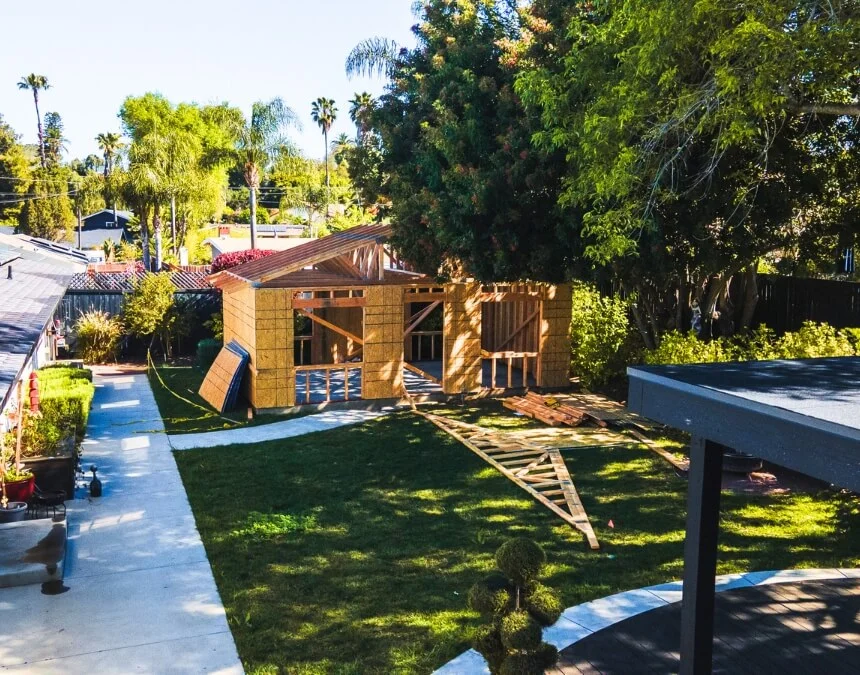
Before applying under SB9, confirm zoning, environmental eligibility, and site constraints. This preliminary review can save time and money.
What Is the SB9 Owner-Occupancy Rule?
For an SB9 lot split, the applicant generally must sign an affidavit stating an intention to occupy a home on either resulting parcel as a principal residence for at least three years.
Owner-occupancy requirements differ among ADUs, JADUs, and SB9 lot splits, so these pathways should not be treated interchangeably. Confirm current ADU and JADU rules in the state handbook. SB9 lot splits generally require an affidavit of intended owner occupancy for at least three years after approval, subject to statutory exceptions.
Does Having an Existing ADU Affect SB9 Eligibility?
An existing ADU does not automatically disqualify a property from SB9 eligibility.
Without SB9 approvals, qualifying single-family properties may accommodate a primary home, an accessory dwelling unit, and a junior accessory dwelling unit (JADU). Size and configuration limits apply to the ADU and JADU. Verify the applicable ADU allowance through no larger than 1200 square feet. A JADU cannot exceed 500 square feet and must fit within a proposed or existing single-family residence, including an attached garage where permitted.
SB9 may offer a pathway for homeowners seeking another primary home, but an existing ADU can affect the available layout and unit count. Before proceeding, confirm how the ADU’s location, lot dimensions, access, and applicable development standards influence whether another primary residence can be accommodated.
What Types of Homes Can You Build After an SB9 Lot Split?
An approved SB9 urban lot split creates two legal parcels from one eligible single-family residential lot, subject to applicable conditions.
Depending on applicable unit limits and site conditions, potential configurations may include:
- Two primary homes on each resulting lot
- One duplex on each resulting lot
- A permitted combination of primary homes and ADUs, subject to parcel dimensions, layout, and applicable limits on total units
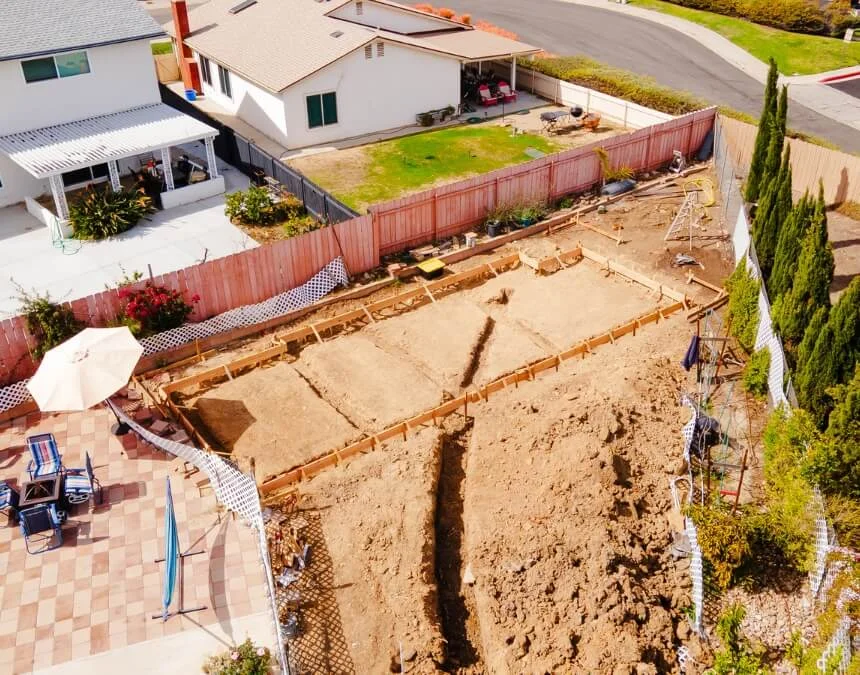
When planning a lot split, test the desired unit mix against parcel dimensions, access, utilities, and usable building space.
Can You Use SB9 to Split a Lot and Also Build an ADU?
Yes, though it can complicate an already complicated process.
Benefits of doing this include:
- Potentially increased property value
- Additional rental income potential
- More multigenerational living options
- Opportunities to sell parcels separately after an approved legal subdivision
Challenges of doing this include:
- More complex applications and approvals because SB9 and ADUs follow different requirements
- Potentially longer project timelines
- Higher total development costs
- Possible community concerns or enforceable HOA restrictions
For many homeowners, adding an eligible JADU and ADU to an existing property may provide the the rental income and extra living space they want without the subdivision requirements and additional complexity of an SB9 lot split.
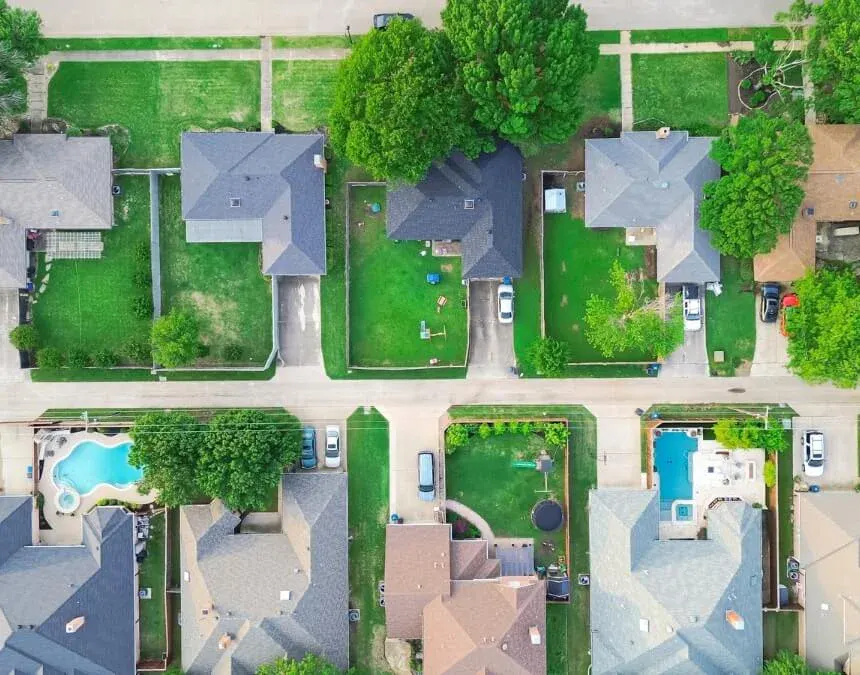
When exploring SB9 with an ADU, coordinate utilities early to reduce the risk of costly rerouting and delays.
Can I Split My Lot Now and Decide What to Build Later?
Potentially, but future construction remains subject to the laws, approvals, and site conditions applicable at that time. A lot split alone does not guarantee that every later building proposal will qualify for approval.
Planning development on both parcels early can help identify constraints and reduce uncertainty. Confirm approval validity periods and financing assumptions rather than relying on a guaranteed return.
Real Examples of SB9 and ADU Development Scenarios
Every property has different zoning constraints, financial goals, and development possibilities. The following hypothetical scenarios illustrate how homeowners and investors might compare options, rather than describing completed projects or guaranteed outcomes.
Example Scenarios
- A homeowner considers a detached ADU for rental income while remaining in the primary home
- A family evaluates an SB9 lot split to create additional homes for relatives
- An investor checks whether SB9 and ADU provisions allow the intended unit count
- A homeowner chooses another approach after estimating utility and subdivision costs
Quick Answers
-
Can you build both an SB9 unit and an ADU?
Sometimes, subject to applicable unit limits, state and local requirements, site layout, and utility access.
-
Are SB9 projects better for investors?
They may appeal to investors seeking multiple primary homes or separate parcels, depending on costs and feasibility.
-
Are ADUs better for homeowners?
For many homeowners seeking rental income or family housing, an ADU offers a simpler development pathway.
-
Can SB9 units be sold separately?
Homes on separate, legally created parcels may be sold separately. Multiple units on one parcel require another authorized ownership structure.
| Scenario | Better Fit |
|---|---|
| Homeowner wants one backyard rental unit | Traditional ADU |
| Family wants multigenerational housing | ADU or JADU, depending on space and occupancy needs |
| Investor wants to create separately saleable parcels | SB9, if the property qualifies |
| Property has limited backyard space | Compare ADU options with SB9 site requirements |
| Homeowner wants a simpler approval pathway | Traditional ADU, depending on project conditions |
| Goal is maximum density | Evaluate SB9 and ADU options together; unit allowances vary |
SB9 ADUs vs. Traditional ADUs: Key Differences
You do not need a lot split or SB9 approval simply to add an eligible ADU to your property. For many homeowners, a primary home with an ADU provides the desired benefits, including increased property value, additional living space, and potential rental income. This approach can avoid subdivision-related complications, although project timelines, permitting requirements, and property taxes still depend on site conditions and the proposed design.
| Aspect | SB9 Lot Split | Accessory Dwelling Unit (ADU) |
|---|---|---|
| Construction Costs | Costs depend on the proposed homes, site conditions, utility service, and infrastructure requirements. Obtain a project-specific estimate that includes site work and any improvements associated with separate parcels. | Conversions may cost less than new construction, but structural upgrades can affect savings. Review ADU construction cost considerations and obtain an estimate based on size, design, access, and site conditions. |
| Lot Splitting Costs | Budget for surveying, subdivision documents, application review, recording, and any required professional services or improvements. Confirm the scope and applicable charges before proceeding. | A conventional ADU does not require a lot split. Budget instead for site documentation, design, engineering, and any property-specific requirements. |
| Permitting Costs | Costs depend on subdivision review, residential permits, utility requirements, and applicable development charges. Request an itemized estimate for the proposed project. | Review permit cost considerations and confirm current Los Angeles charges separately. Streamlined review does not eliminate plan-check, building permit, utility, or other applicable fees. |
| Project Timeline | Subdivision review, residential design, utility coordination, and construction can add steps. Establish a project-specific schedule after reviewing parcel eligibility and infrastructure requirements. | Timing depends on application completeness, site conditions, agency coordination, and construction scope. State review deadlines for qualifying applications do not establish a guaranteed total project timeline. |
| Financing Options | Construction loans or parcel-specific financing may be available. Discuss subdivision timing, existing liens, collateral requirements, and potential parcel sales with the lender before selecting a financing structure. | Explore ADU financing options, including home equity lines of credit (HELOCs), cash-out refinancing, and construction loans. Eligibility depends on equity, income, credit, and lender requirements. |
| Property Taxes | New construction generally adds assessed value. A lot split alone does not necessarily trigger reassessment of the entire property; ownership transfers and other circumstances can affect the tax outcome. | An incremental property tax increase generally reflects the assessed value of new construction. Adding an ADU typically does not reassess the existing home or land solely because of the addition. |
| Future Resale Value | Separately saleable parcels may provide resale flexibility, subject to subdivision completion, title requirements, financing, and market demand. Obtain a property-specific valuation rather than assuming a larger gain. | An ADU adds usable housing and may increase property value. The resale benefit depends on permitted status, design, condition, rental potential, and comparable sales. |
| Rental Income Potential | Multiple homes may create additional rental opportunities, but projected income should reflect permitted unit counts, comparable leases, operating expenses, and applicable rental restrictions. | Evaluate ADU rental income potential using comparable long-term rentals and realistic expenses. Permitted unit counts vary by property and project type; qualifying ADU rentals generally require terms longer than 30 days. |
| Can Sell Dwelling Units Separately? | Approved and recorded parcels can generally be sold separately, subject to subdivision conditions, title restrictions, and financing requirements. A lot split does not automatically create separate ownership for every dwelling. | Generally not through a conventional ADU approval. State law allows local governments to authorize qualifying ADU condominium sales; confirm whether an applicable Los Angeles ordinance and project-specific requirements permit this option. |
| Applies to Multifamily Zoned Property? | SB9 applies to qualifying parcels in single-family residential zones, not multifamily zones. Other eligibility requirements also apply. | ADUs can be allowed on qualifying multifamily properties. Permitted configurations and counts depend on existing or proposed dwellings, available conversion space, and current state and local requirements. |
| Owner Occupancy Requirement | For an urban lot split, an applicant generally must sign an affidavit stating an intent to occupy one unit as a principal residence for three years, subject to statutory exceptions. | State law generally prohibits owner-occupancy requirements for ADUs. JADUs have separate occupancy rules, so confirm which unit type is proposed. |
| Allowed in High Fire and Historic Zones? | Historic properties and districts face statutory exclusions. Certain fire-hazard areas may qualify only when applicable statutory conditions and fire-safety requirements are satisfied; verify parcel eligibility. | Fire-hazard or historic status does not automatically rule out every ADU. Feasibility depends on applicable state protections, fire-safety standards, historic-resource requirements, and site-specific conditions. |
| HOAs Can Prohibit? | SB9 does not provide the same express protection against private restrictions as ADU law. Review recorded covenants and obtain legal advice about their enforceability. | Generally, HOAs cannot prevent qualifying ADU development. Reasonable restrictions may apply if they do not unreasonably increase costs or effectively prohibit construction. |
| Waived Impact Fees? | Do not assume an exemption. Confirm applicable development impact fees and any project-specific credits or exemptions with the reviewing agencies. | ADUs 750 sq. ft. or less are exempt from impact fees under state law; larger ADUs are subject to proportional limits. Separate school-fee rules may apply. This is not a blanket waiver of plan-check, permit, or utility charges. |
| Separate Utility Metering? | Separate connections or meters may be required depending on the subdivision, proposed buildings, and utility-provider standards. Confirm service arrangements and any required frontage improvements during feasibility review. | Separate connections and meters are not universally required or prohibited. Requirements depend on the ADU type, utility provider, and project conditions; connection charges and capacity fees must be evaluated separately. |
| 2025-2026 State Streamlining | Qualifying projects receive ministerial review, but subdivision eligibility, objective standards, and infrastructure requirements still apply. Local Approval Required. | State law provides streamlined review for qualifying ADUs, subject to applicable requirements. Under the LA Standard Plan Program, plan acceptance remains separate from site-specific approval. Local Approval Required. |
SB9 vs SB10: What’s the Difference?
SB9 and SB10 are California housing laws intended to support additional housing, but they operate differently. SB9 allows qualifying two-unit developments and urban lot splits, potentially accommodating four primary homes across two parcels. SB10 gives cities an optional process to rezone qualifying transit-rich or urban infill parcels for up to 10 residential units.
Common SB9 vs SB10 Scenarios
- A homeowner wants to divide an eligible lot and add primary homes → Evaluate SB9
- A city wants to enable denser housing near transit → Consider SB10
- A homeowner wants a potentially simpler rental project → Evaluate an ADU
- An investor wants small-scale residential development → SB9 may apply
Quick Answers
-
Is SB10 better than SB9?
They serve different purposes. SB9 provides property-level development pathways, while SB10 authorizes optional local rezoning for denser housing.
-
Can homeowners use SB10 directly?
Not by itself. The city must first adopt applicable zoning through the SB10 process.
-
Does SB10 replace ADU laws?
No. ADU laws remain separate and apply according to their own requirements.
-
Can you combine SB9 and SB10?
Do not assume their allowances can be combined. Rezoning may change SB9 eligibility; confirm the applicable development pathway locally.
| Feature | SB9 | SB10 |
|---|---|---|
| Applies To | Qualifying single-family residential parcels | Eligible transit-rich or urban infill sites |
| Main Purpose | Urban lot splits and two-unit housing | Optional local rezoning for greater housing density |
| Max Units | Generally up to 4 through a qualifying split and two-unit projects | Rezoning for up to 10 units per parcel |
| Requires City Participation | No optional local adoption required; local review applies | Yes, local government must adopt qualifying rezoning |
| Typical User | Homeowners and small-scale developers | Local governments and multifamily developers |
| Approval Process | Local Approval Required; qualifying projects receive ministerial review | Local Approval Required; rezoning precedes project permits |
| Best For | Small-scale housing, multigenerational living, and rental homes | Multifamily housing on eligible urban sites |
Financing Options for SB9 and ADU Projects
Financing an SB9 project can be more complicated than financing a traditional ADU because lot splits and multi-unit construction introduce additional lending considerations. Before choosing a development strategy, homeowners should compare loan eligibility, equity requirements, subdivision conditions, and repayment risks with lenders familiar with the proposed project.
Current ADU permitting protections may help lenders evaluate a project’s approval pathway, but they do not guarantee favorable financing. Ask lenders how they assess permit status, construction risk, anticipated rental income, and subdivision requirements. Compare actual terms for the proposed ADU and SB9 alternatives rather than assuming that recent legislation automatically improves borrowing options.
Common Financing Approaches
- HELOCs for eligible homeowners financing smaller ADU projects
- Cash-out refinancing where equity and loan terms support it
- Construction loans for larger SB9 developments
- Investor partnerships for lot-split and resale strategies
- DSCR loans for qualifying rental-focused properties
Financing Considerations
- Establish realistic project costs before applying for financing
- Estimate utility upgrades and subdivision expenses early
- Verify projected rents and applicable rental restrictions
- Allow for possible SB9 permitting and carrying-cost delays
- Review property tax implications before finalizing the budget
Quick Answers
-
Is it harder to finance an SB9 project?
They can be, because lenders may consider subdivision and multi-unit construction more complex or risky.
-
Can you use a HELOC for an ADU?
Yes, if you meet the lender’s equity, credit, income, and other requirements.
-
Do SB9 projects require larger down payments?
Some lenders require more equity or reserves, depending on the project, collateral, and loan structure.
-
Can rental income help qualify for financing?
In some cases, lenders may consider projected rental income.
| Financing Type | Traditional ADU | SB9 Project |
|---|---|---|
| HELOC | Option when sufficient equity is available | Possible, subject to lender and subdivision requirements |
| Cash-Out Refinance | Option based on equity and loan terms | Possible, with lender review of the proposed split |
| Construction Loan | Available from participating lenders | May suit new homes and subdivision-related work |
| Investor Financing | Depends on project goals and lender terms | May suit rental development or planned parcel sales |
| Complexity | Often lower without a subdivision | Often higher with subdivision and title coordination |
| Lender Requirements | Income, equity, plans, and project budget | Additional parcel, title, and subdivision documentation |
Evaluating the Best Path: SB9 vs. ADU
Beyond reviewing the comparison chart, ask yourself the following questions to determine whether an SB9 project or an ADU better fits your property, budget, development goals, and tolerance for complexity:
1. Is your property zoned single-family?
If not, SB9 may be unavailable, although the property could still qualify for an ADU.
2. Do you want to split the lot?
If so, an SB9 urban lot split may provide a pathway, subject to eligibility and subdivision approval.
3. How many units do you want to build?
If you want more than two detached living structures on a single-family lot, compare SB9 with available ADU configurations. The appropriate pathway depends on unit types, site conditions, and current law.
4. Are you comfortable with a potentially longer, more complex application process?
If not, consider an ADU before pursuing an SB9 lot split. Qualifying ADUs benefit from state permitting protections, but actual review periods depend on application completeness and site conditions. Check an experienced ADU builder for relevant guidance rather than assuming approval within a few months.
5. Is owner occupancy a concern?
If you expect to move away within the next 3 years, an ADU may offer more flexibility than an SB9 lot split. Confirm current occupancy rules, particularly if the proposal includes a JADU.
How SB9 Affects Property Taxes, Resale, and Rental Income
Both SB9 projects and ADUs can add property value and rental potential, but their tax, financing, and resale implications differ. Homeowners should assess development costs, ownership plans, operating expenses, and potential market conditions before choosing a long-term strategy.
Financial Considerations
- ADUs may generate rental income without subdivision-related development risks
- SB9 lot splits may create separate-parcel resale opportunities
- Utility and infrastructure expenses can reduce potential SB9 profits
- New construction and ownership changes may affect property taxes
- Additional units may increase insurance and maintenance costs
Quick Answers
-
Will an ADU increase property taxes?
New construction generally adds assessed value without automatically reassessing the entire property. Confirm the details with the county assessor.
-
Can SB9 increase resale value?
It may, particularly where additional homes or separate parcels are feasible, but costs and market conditions matter.
-
Which option generates more rental income?
SB9 may permit more homes, but net income depends on development costs, lawful rents, financing, vacancies, and operating expenses.
-
Do SB9 projects have higher holding costs?
They may, particularly when subdivision, utility work, or permitting extends the development schedule.
| Financial Factor | Traditional ADU | SB9 Project |
|---|---|---|
| Rental Income Potential | Evaluate comparable rents and operating expenses | Evaluate permitted units, comparable rents, and expenses |
| Property Tax Impact | New construction generally adds assessed value | New construction and ownership changes affect treatment |
| Resale Flexibility | Usually sold with the primary property | Separate parcel sales may be possible after subdivision |
| Financing Complexity | Often lower without a lot split | Often higher with subdivision and title requirements |
| Long-Term Appreciation | Depends on market conditions and property quality | Depends on market conditions, costs, and parcel utility |
FAQs About SB9 and ADUs
No. An SB9 home is a primary dwelling approved under SB9, not an ADU. ADUs provide independent living facilities on residential lots, and their permitted size depends on state law, unit type, and applicable local standards.
An SB9 lot split generally requires two parcels of at least 1,200 square feet each, implying 2,400 square feet total, unless the local agency permits smaller parcels.
Contact the local planning department to confirm SB9 eligibility, objective development standards, and subdivision procedures. Local agencies must follow state law, but site conditions and lawful implementation requirements can affect the available options.
Not necessarily. SB9 can offer more development options through additional primary homes and eligible lot splits, but it may also require more time, money, and coordination than an ADU. For many homeowners, an ADU can provide rental potential or additional living space through a simpler approval pathway, although actual costs, risks, and timelines remain project-specific.
In some cases, yes. California law limits certain HOA restrictions on ADUs, but homeowners should not assume those protections apply equally to SB9 projects. Private CC&Rs, subdivision restrictions, and architectural requirements may affect a proposed lot split or additional primary home. Obtain legal advice about enforceability before committing to the project.
Yes, where an approved SB9 lot split creates separate legal parcels that satisfy applicable requirements. Those parcels and their homes may generally be sold independently, subject to relevant conditions and financing arrangements. This potential resale flexibility can appeal to homeowners or investors, but multiple homes on one unsplit parcel are not automatically separately saleable.
Not automatically. Both ADUs and SB9 construction can add assessed value, but an SB9 lot split alone does not necessarily trigger reassessment of the entire property. New construction, ownership transfers, and the specific transaction structure determine the tax consequences. Consult the county assessor before assuming that either approach produces a particular reassessment outcome.
Often, financing is more complex. Lenders may scrutinize SB9 projects because they involve subdivision approvals, multiple homes, utility work, and longer schedules. Construction loans or investor financing may be appropriate, depending on the project. ADUs may be financed through HELOCs, cash-out refinancing, construction loans, or specialized programs, subject to borrower eligibility and current lender terms.
SB9 allows qualifying two-unit developments and urban lot splits, potentially creating up to four primary homes across two resulting parcels. SB10 separately allows cities to adopt qualifying rezoning for up to 10 residential units on transit-rich or urban infill parcels. SB9 offers a property-level approval pathway, while SB10 depends on local legislative action.
Sometimes. Combining SB9 development with an ADU or JADU depends on state law, the project configuration, local implementation, and applicable unit limits. Agencies are not always required to allow ADUs in addition to the units authorized on an SB9 split parcel. Confirm the permitted mix before investing in detailed designs, utility plans, or construction estimates.
An SB9 proposal may prove infeasible because of zoning eligibility, environmental protections, fire-safety requirements, or lot configuration. Other obstacles include incomplete applications, utility costs, owner-occupancy requirements, coastal regulations, easement conflicts, and financing constraints. Check these issues early with the relevant agencies rather than assuming that every qualifying zone or large lot guarantees approval.
How Uni Construction Can Help
Feeling overwhelmed by SB9? You may not need it to add useful living space, explore rental income, or create a home for an elderly parent. An eligible ADU can offer another pathway.
A traditional ADU may meet those goals with less subdivision-related complexity than an SB9 project. Uni Construction can help you compare property-specific options, budgets, and schedules without assuming one approach is always faster or cheaper.
Uni Construction works with homeowners to plan ADUs around their intended use, site conditions, and budget, emphasizing clear communication throughout design, permitting, and construction.
Explore your options before committing to a development strategy. Schedule a free consultation today to discuss your property, identify key constraints, and consider the next steps.
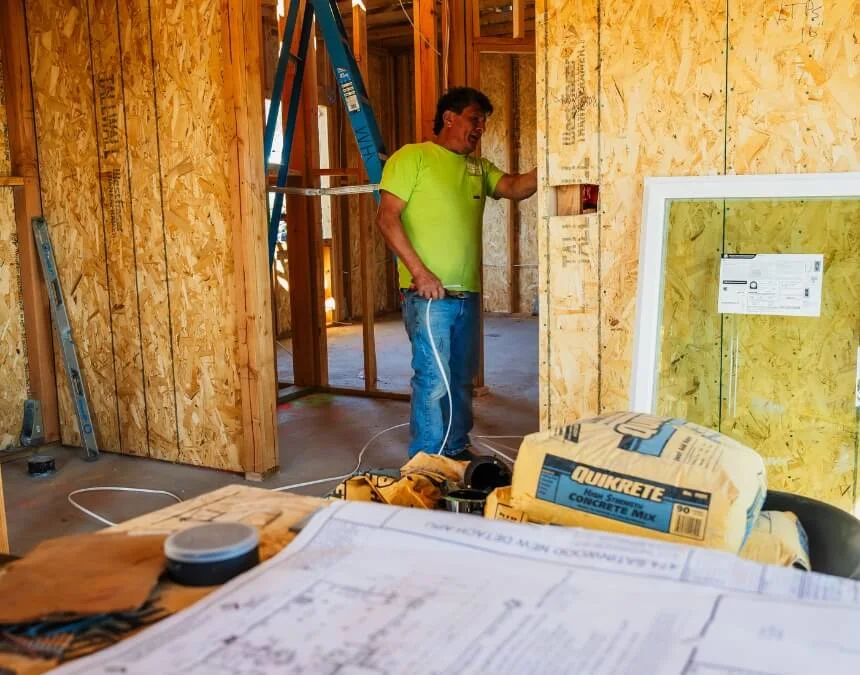
Work with qualified design, permitting, and construction professionals to compare SB9 and ADU options and coordinate your project.