

TL;DR: Can an HOA Prevent an ADU?
- In California, an HOA generally cannot prohibit an ADU protected by state law.
- HOAs may impose reasonable restrictions on exterior design, height, and setbacks, but those rules cannot effectively prevent construction.
- State ADU protections override HOA rules or CC&Rs that prohibit or unreasonably restrict qualifying ADUs.
- Homeowners should review HOA governing documents and align plans with applicable state requirements and lawful community standards.
- Disputes may arise during design review, but homeowners have legal protections against unreasonable restrictions.
- This article explains what HOAs can regulate, what they cannot, and how to navigate review.
What Power Does an HOA Have in California?
HOAs have substantial authority over the neighborhoods they govern. They can establish and enforce certain aesthetic requirements and community standards, subject to applicable law.
These community standards typically address how property owners use, maintain, or alter the appearance of their primary residence. Other rules may govern community living. For example, an HOA may regulate parking within its authority, noise levels, and pets. Owning property within an HOA generally means complying with its lawful rules. Violations can result in fines, subject to applicable enforcement procedures.
California generally allows HOAs to establish and enforce their own rules within legal limits. ADUs, however, receive specific protections. The state supports building of ADUs as a way to expand housing options and help address California’s housing shortage. To advance that goal, lawmakers have restricted HOAs’ ability to prohibit qualifying ADUs outright. HOAs may still impose what the law calls “reasonable restrictions,” including certain requirements concerning ADU size and appearance, provided those requirements satisfy the applicable legal standard.

HOAs can enforce community standards, but their restrictions must comply with California’s protections for qualifying ADUs.
California ADU Laws That Impact HOAs
If you belong to an HOA and want to add a granny flat or casita to your single-family property, familiarize yourself with AB 670 and Civil Code Section 4751. These are connected protections, not 2 independent laws: AB 670 added Section 4751, which limits outright bans and unreasonable restrictions that could prevent an ADU build.
AB 670 - Restrictions on Homeowners Associations Regarding ADUs
AB 670 was enacted in 2019 to protect homeowners’ rights concerning ADUs. It prevents HOAs from prohibiting qualifying accessory dwelling units or junior accessory dwelling units (JADUs) outright, while allowing reasonable restrictions, potentially including design standards and height limits, when building an ADU on their property. Such standards may reflect the appearance of the primary residence and neighboring homes, but they must satisfy the law’s reasonableness requirements.
Key Provisions
Although AB 670 limits outright bans on qualifying secondary housing units and protects individual homeowners, HOAs may still impose reasonable restrictions on the building of ADUs, subject to state law.
These include:
- Design standards. HOAs may require ADUs or in-law units on single-family lots to follow reasonable standards for architectural style, paint colors, and other exterior features.
- Setback requirements. An HOA may propose placement restrictions, but they must satisfy Civil Code Section 4751. Verify any greater than 4 feet requirement against applicable state protections and local permitting rules.
- Height and size limits. HOA restrictions require separate review from municipal development standards. Before relying on a 1200-square-foot ADU design in Los Angeles, confirm the applicable size allowance with the permitting authority and evaluate whether any HOA limit unreasonably restricts the project.
Although AB 670 allows reasonable HOA restrictions, they cannot unreasonably increase construction costs, effectively prohibit construction, or extinguish the ability to build a qualifying unit. HOA authority is not necessarily limited to exterior features, and choices involving interior design and floor plan remain subject to applicable requirements. Local agencies review qualifying ADU applications ministerially under state-defined procedures and timelines. That public permitting process is distinct from any lawful HOA review.
Civil Code Section 4751 - Enforcement Against Unreasonable Restrictions on ADUs
Civil Code Section 4751 establishes the standard for unreasonable restrictions under Civil Code Section 4751, originally added by AB 670. For example, if building a guest house would unreasonably increase construction costs through substantial fees or assessments, that restriction could be challenged. Whether a particular charge is lawful requires reviewing its basis and practical effect.
Civil Code Section 4751 protects qualifying uses of homeowners’ ADU as a rental unit against unreasonable HOA restrictions. These protections reflect California’s recognition that ADUs are important can expand housing options and help address the state’s housing shortage.
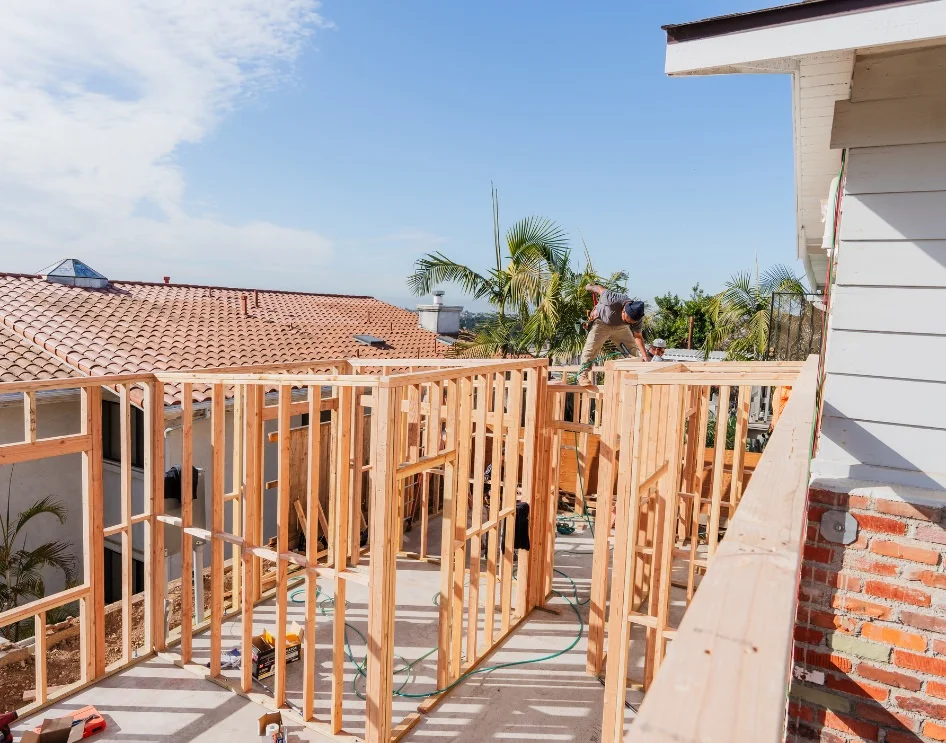
California law limits HOA restrictions on qualifying ADUs while allowing reasonable requirements that do not undermine homeowners’ statutory protections.
Key Provisions
Civil Code Section 4751 limits unreasonable restrictions involving additional costs, design guidelines, or permitting processes that effectively prohibit a qualifying ADU or unreasonably increase construction costs. If homeowners believe their HOA’s restrictions violate these protections, they can seek legal advice about requesting revised guidelines, using available dispute-resolution procedures, or pursuing appropriate legal action. The right approach depends on the governing documents, property, and restriction involved.
These protections may also affect restrictions on a property owner’s right to use their ADU used as a rental unit to earn income. However, rental rights require separate review, and HOAs may generally prohibit short-term rentals of 30 days or less.
Can an HOA Restrict ADU Rentals?
California law protects certain rental rights, but ADU construction protections do not automatically invalidate every HOA rental restriction. Review applicable law and governing documents. HOAs may generally prohibit short-term rentals of 30 days or less.
What HOAs May Regulate
- Minimum rental terms, subject to applicable law
- Community-wide short-term rental bans
- Lawful noise and occupancy standards
What HOAs Cannot Do
- Impose rental restrictions that violate applicable state protections
- Require owner occupancy contrary to applicable law
- Impose unreasonable ADU-related fees or assessments
Quick Answers
- Can I use my ADU for Airbnb? Possibly not. HOA rules and local regulations may restrict short-term rentals.
- Can my HOA require me to live in the main home? Review applicable occupancy protections and any JADU-specific requirements.
- Can the HOA increase my monthly dues for renting my ADU? Any increase requires a lawful basis and review of applicable assessment rules.
Owner-Occupancy Rules for ADUs and JADUs
California generally prohibits local owner-occupancy requirements for ADUs. JADUs may remain subject to owner-occupancy requirements, depending on their configuration and applicable exemptions. You may therefore be able to rent both your primary home and ADU without living on the property, but confirm rental restrictions separately. State ADU permitting protections and private HOA covenants are not identical, so evaluate any association occupancy requirement under the laws that specifically apply to it.
Key Differences
- ADU: Generally no local owner-occupancy requirement
- JADU: Owner occupancy may apply when sanitation facilities are shared
Quick Answers
- Do I have to live on the property if I build an ADU? Generally, local ADU rules cannot require it.
- Can an HOA require owner occupancy? Review the restriction under applicable state protections.
- Does this apply in condos? Condominium ownership, shared systems, and governing documents require additional review.
Do HOA Rules Override California ADU Law?
Generally, no. Civil Code Section 4751 invalidates HOA rules or CC&R provisions that prohibit or unreasonably restrict qualifying ADUs within the statute’s scope.
When HOA governing documents conflict with applicable state law, state law controls.
How This Works in Practice
- The homeowner designs an ADU that meets applicable state and local requirements.
- The HOA reviews the proposal under its lawful, reasonable restrictions.
- Any HOA provision that conflicts with applicable state ADU protections is unenforceable.
Quick Answers
- What if my CC&Rs say “no secondary units”? That provision is unenforceable against ADUs protected by applicable state law.
- Can my HOA deny my ADU based on old governing documents? Not if the restriction conflicts with applicable statutory protections.
- Does the city require HOA approval before issuing permits? Public permitting and private HOA review are generally separate processes; confirm local submission requirements.
How Many ADUs Can You Build on One Property in California?
California law allows multiple accessory units on some properties, depending on the lot and existing development. Certain single-family properties may accommodate three total units: a primary residence, an ADU, and a JADU. Other configurations may qualify for additional units. Evaluate HOA restrictions against the state protections applicable to the proposed configuration.
Quick Answers
- Can an HOA limit me to only one ADU? Any limit must comply with applicable state protections.
- Do all cities allow multiple ADUs? State minimum allowances apply, but eligibility depends on the property.
- Can I build two detached ADUs? Some qualifying properties allow this; verify the applicable development category.
For most single-family lots, you may build:
| Property Type | Detached ADU | Conversion ADU | JADU |
|---|---|---|---|
| Single-Family | 1 | 1 | 1 |
Types of Restrictions HOAs Can Legally Enforce
AB 670 and Civil Code Section 4751 protect homeowners’ ability to build qualifying ADUs, but they do not eliminate HOA authority. Associations may still enforce lawful, reasonable requirements that do not undermine those protections.
An HOA cannot use enforcement to circumvent state ADU protections. It may, however, pursue lawful remedies for violations of reasonable exterior-design or aesthetic rules, subject to applicable notice, hearing, fine-limit, and other enforcement requirements.
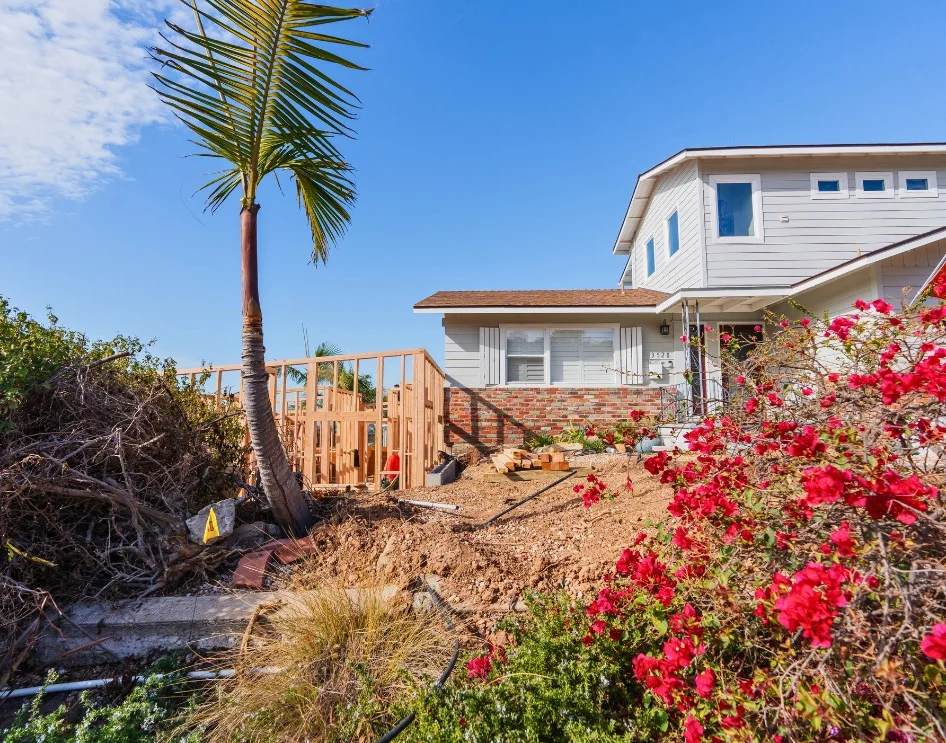
HOAs may enforce reasonable design and placement restrictions, provided those requirements comply with applicable state protections.
Permissible HOA Rules
Reasonable HOA rules potentially enforceable through lawful fines include:
Design and paint colors. HOAs may require ADUs to complement neighboring homes through reasonable architectural standards. Requirements for paint colors or roofing materials must also satisfy applicable legal limits.
Landscaping design. As with primary dwellings, HOAs may establish reasonable standards for the landscaping of ADUs, subject to state ADU protections.
Maintaining certain sight lines. Where an association has shared spaces, such as pools or parks, it may seek to require that an ADU avoid obstructing community views, subject to ADU protections. Maintaining noise and privacy standards. An ADU remains subject to lawful community rules governing noise and privacy. During construction, this may mean scheduling work outside designated quiet hours while also complying with local construction-noise requirements.
Reasonableness Requirement
Under California law, restrictions like these may qualify as reasonable when they do not effectively prohibit an ADU or unreasonably increase construction costs. Their legality depends on their actual effect, not simply their label. If you live in an HOA, you may already follow similar requirements for your primary home, but applying them to an ADU still requires a project-specific assessment.
HOAs may generally apply reasonable aesthetic requirements to ADUs, but standards used for primary dwellings must still satisfy state ADU protections.
What Restrictions Can an HOA Place on an ADU?
Although an HOA cannot prohibit a qualifying ADU protected by California law, it may impose reasonable requirements concerning appearance and community standards. Restrictions cannot unreasonably increase construction costs, effectively prohibit construction, or extinguish the ability to build a protected unit.
Examples of Permissible HOA Restrictions
- Reasonable architectural compatibility with the primary residence
- Appropriate paint colors or roofing materials
- Height limits that preserve applicable ADU protections
- Reasonable landscaping requirements
- Placement rules evaluated against state protections, including applicable 4-foot side and rear setbacks
Restrictions That Are Not Allowed
- Outright bans on statutorily protected ADUs
- Setback restrictions that defeat applicable state protections, including qualifying 4-foot side/rear allowances
- Design requirements that unreasonably increase construction costs
- Replacement-parking requirements that conflict with applicable state exemptions
Quick Answers
- Can an HOA require my ADU to match my house? It may require reasonable exterior compatibility, provided the requirement satisfies state protections.
- Can an HOA impose stricter setbacks than the city? Any additional restriction must satisfy Civil Code Section 4751 and cannot defeat applicable protections.
- Can an HOA limit the size of my ADU? Potentially, but not through restrictions that unreasonably increase costs or effectively prohibit a protected unit.
- Can an HOA require specific materials? Potentially, if the requirement is reasonable and otherwise lawful.
Parking and Garage Conversion Rules for ADUs in HOA Communities
State law limits local parking requirements for ADUs and exempts many projects, including qualifying garage conversions. HOA parking restrictions require separate review and cannot lawfully undermine applicable protections for qualifying ADU construction.
When Parking Is Typically Not Required
- ADU is within one-half mile walking distance of public transit
- ADU is created within a qualifying existing garage
- Another statutory parking exemption applies to the property
Quick Answers
- Can my HOA require me to replace a converted garage parking space? Review any demand against state parking exemptions and HOA-specific protections.
- Can it require guest parking spaces? Only where the requirement is otherwise lawful and does not unreasonably restrict a protected ADU.
- Does street parking factor into approval? HOAs may regulate parking within their authority, but parking concerns do not automatically justify blocking an ADU.
Do You Need HOA Approval to Build an ADU?
Although an HOA cannot prohibit a protected ADU, many associations require architectural review before construction begins. This review typically addresses exterior design and other lawful community requirements, without overriding applicable statutory protections.
Typical HOA Approval Process
- Submit architectural drawings to the HOA’s design review committee.
- Provide proposed materials and finishes.
- Obtain written approval or specific revision requests.
Skipping a lawful design-review requirement may lead to enforcement, even when the ADU qualifies for public permits.
Quick Answers
- Can I skip HOA approval if state law allows ADUs? Do not assume so. Lawful architectural-review procedures may still apply.
- Can the HOA delay my project indefinitely? Unreasonable delays may be challengeable; review applicable deadlines and governing documents.
- Can I build first and deal with the HOA later? Doing so risks fines, disputes, or other lawful enforcement action.
Navigating HOA Guidelines for ADU Construction
Before starting an ADU project in an HOA-governed neighborhood, review the association’s governing documents to identify applicable design requirements. Evaluate those requirements against state protections rather than assuming every restriction is enforceable. Addressing lawful standards early is usually easier and less expensive than revising plans after the permitting process is underway.
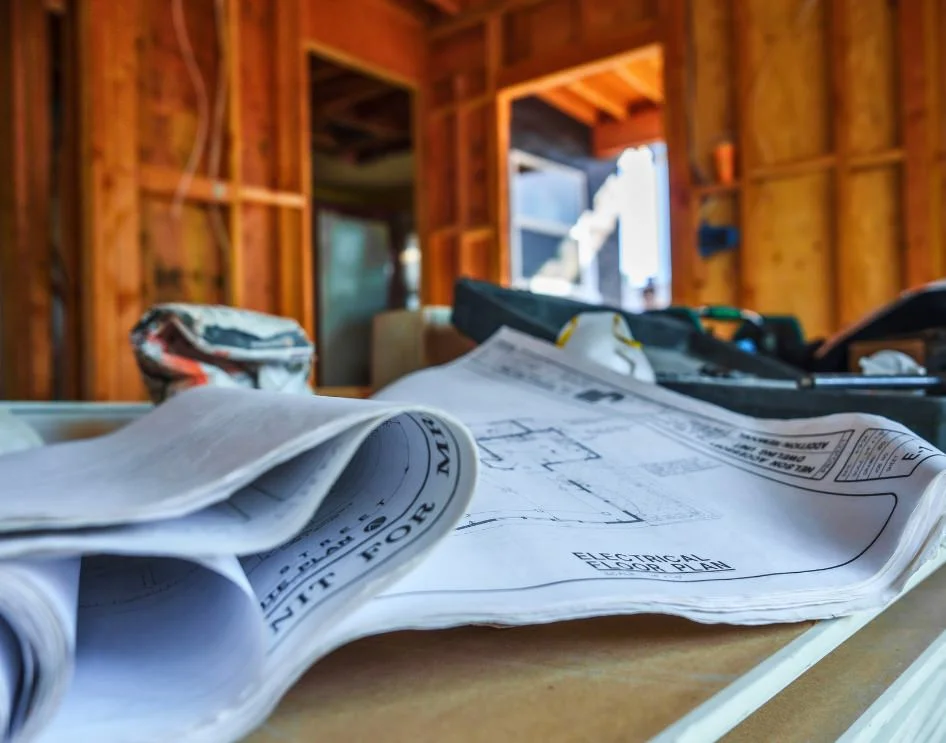
Reviewing HOA documents and planning ahead can save time and reduce the risk of costly design revisions during construction.
Reviewing HOA Governing Documents
When purchasing property within an HOA, you generally receive documents describing association fees, bylaws, and Covenants, Conditions, and Restrictions (CC&Rs). Review those materials, along with current architectural guidelines and adopted rules, for provisions affecting ADUs. A restriction’s appearance in the documents does not necessarily mean it is enforceable.
Seek HOA Approval (When Necessary)
Even when state law protects your proposed ADU, obtaining any required HOA design approval before construction is a prudent step. First, written approval helps confirm your understanding of the governing documents and reduces the risk of later enforcement disputes. Violations of lawful requirements may lead to fines or required modifications, subject to applicable enforcement procedures and limits. Second, addressing design concerns early can support constructive community relationships. Neither approval nor good communication guarantees a dispute-free project, but both can help clarify expectations and preserve quality of life within the association.
Consulting with Experts
Although pre approved plans may be available online at little or no cost, they may require revisions to meet site-specific requirements and lawful HOA standards. An ADU professional like Uni Construction can help evaluate those issues. We help homeowners coordinate applicable city requirements and HOA guidelines, identify potential conflicts, and plan the steps needed for permitting and construction.
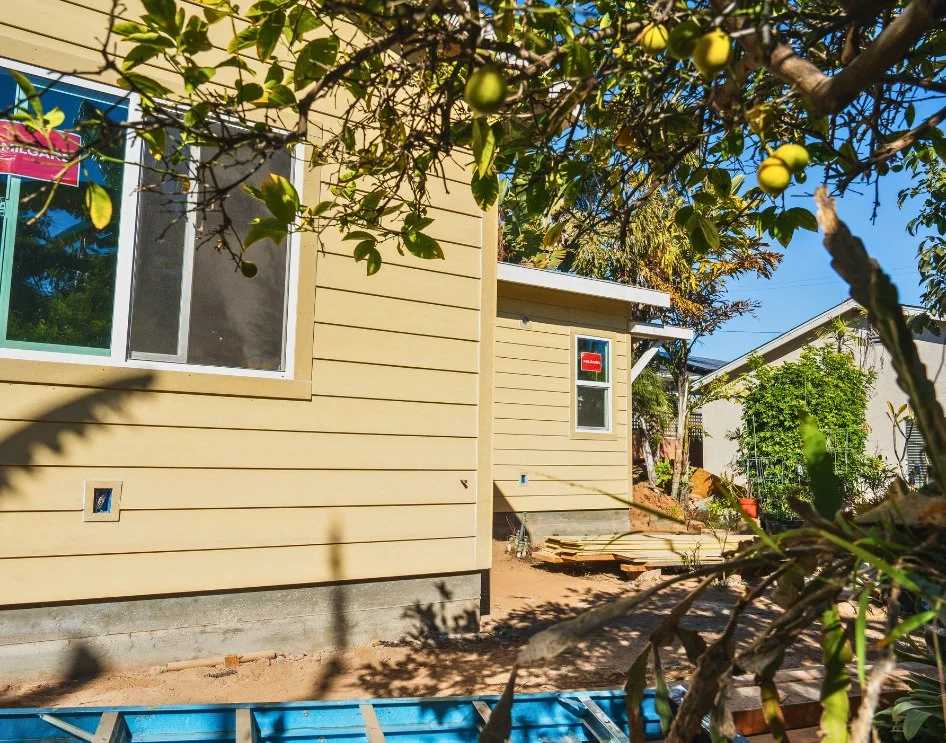
Work with qualified ADU professionals to evaluate HOA standards, coordinate applicable requirements, and reduce avoidable complications during design and construction.
What to Do if an HOA Blocks Your ADU Project
An HOA cannot lawfully prohibit an ADU protected by applicable state law. If your association objects to the project or says its design violates community standards, you generally have 2 options: revise your ADU plans to meet lawful requirements or challenge restrictions you believe are unreasonable.
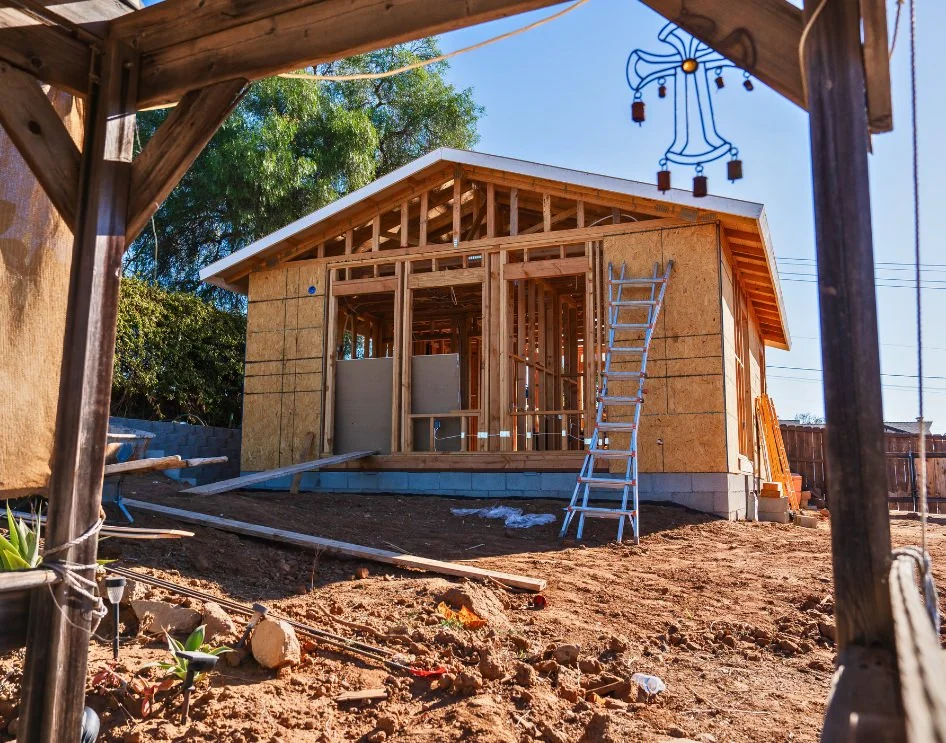
If your HOA blocks a protected ADU, consult a qualified attorney about challenging unreasonable restrictions under California law.
Challenging Unreasonable Restrictions
If your HOA rejects your proposed ADU plans because of a restriction you believe is unreasonable, consult a real estate attorney. Relevant concerns include conflicts with applicable law, unreasonable construction costs, or restrictions that effectively prevent the project. Available responses may include a written challenge, dispute resolution, or litigation when appropriate.
Alternative Solutions
If an HOA rejects your ADU plans over setback or height requirements, first determine whether those requirements are lawful and reasonable. You may need to revise the plans to meet enforceable standards, but restrictions that violate state protections can be challenged.
What You Should Know About Building an ADU in Condominiums
Building an ADU or JADU in a condominium development can be more complex than building on a single-family lot. Shared walls, utilities, ownership boundaries, and other building systems may affect feasibility and the approvals needed.
An ADU may be possible in some condominium settings, but consult your local building department, HOA, and an ADU expert to evaluate ownership rights, applicable rules, and project feasibility.

Condominium ADUs may face additional challenges involving shared systems, ownership, and space. Consult qualified professionals early to assess feasibility.
FAQs about HOAs and ADUs in California
An HOA generally cannot prohibit a statutorily protected ADU, but it may impose reasonable architectural requirements that comply with applicable law.
Yes. An HOA may enforce lawful rules affecting your backyard, even behind a fence, subject to applicable procedures and fine limits.
An HOA may pursue lawful enforcement for failing to obtain required design approval or violating enforceable design, height, or landscaping rules. It cannot penalize homeowners simply for exercising protected ADU rights.
Applicable state law overrides conflicting HOA provisions, while associations may enforce reasonable restrictions that satisfy statutory requirements and do not undermine protected ADU rights.
Work with Experts Like Uni Construction
At Uni Construction, we help homeowners plan an ADU that meets all their personal requirements while evaluating applicable state, city, and homeowners association requirements. Explore what may be feasible in your backyard, identify restrictions that need further review, and discuss practical next steps by scheduling a free consultation.