

ADU soft costs are everything you pay for before and around construction: design, engineering, surveys, plan review, permits, insurance and temporary utilities. In Los Angeles they are the part of the budget homeowners most often miss, because a contractor’s per-square-foot number usually does not include them. This guide explains what falls into the category, what drives the total up or down on an LA lot, and how to build a budget that holds.
We design, engineer and build ADUs across Los Angeles and the San Gabriel Valley, so the examples below come from the way these projects actually unfold.
Impact-fee threshold note: Under the March 2026 California HCD ADU Handbook, the statewide development-impact-fee exemption includes ADUs with 750 sq ft of interior livable space or less. Above 750 sq ft, applicable impact fees must be proportional. School, utility, plan-check and permit charges follow separate rules.
TL;DR
- Soft costs are the planning and approval expenses (design, engineering, surveys, plan check, permits). Hard costs are the physical build.
- No official source we found gives a Los Angeles soft-cost percentage. A Bay Area county guide uses roughly 15% of the total budget as a planning benchmark, so treat it as a starting point and not an LA quote.
- Lot complexity, ADU type and how much the city has to review move the number more than square footage does.
- Ask every designer and builder for an itemized scope that says what is and is not included, including revisions.
- California’s CalHFA grant of up to $40,000 can reimburse predevelopment costs, which are largely soft costs.
What soft costs are, and how they differ from hard costs
Think of the budget in two buckets. Hard costs are the things you can photograph: materials, labor, equipment, site work. Soft costs are the work that makes the build legal, buildable and insurable. The San Mateo County ADU Guidebook describes soft costs as pre-development expenses such as design, engineering, surveys and permitting, and hard costs as the expenses of physically building the unit.
New York City’s official ADU guide gives a longer list that is useful as a checklist anywhere. It counts surveyor, design-professional and engineering fees, construction insurance, submetering, permit fees, property insurance, possible tax increases, testing consultants and temporary utilities as soft costs. Its hard costs include materials, contractor labor, excavation, utility hookups, demolition and site restoration.
The line between the two is not always sharp. A utility hookup is a hard cost, but the engineering drawing that tells the plumber where it goes is soft. When you compare bids, what matters is not the label but whether every item is in someone’s scope.
Why soft costs get missed
A builder quoting a price per square foot is pricing the building. Design, engineering and city fees are often separate contracts with separate invoices, and some arrive months before the builder is even hired. Industry research from a company blog notes that soft costs are frequently left out of contractor bids and per-square-foot estimates, which makes them the most commonly overlooked line in a homeowner’s budget.
The result is a familiar pattern. An owner sees a headline cost, secures financing for that number, and then discovers a survey, a structural package and a plan-check bill that were never in it. Putting soft costs on their own line from day one avoids that.
The soft costs to expect on a Los Angeles ADU
The exact package depends on the lot, the scope and the agency. Here is how we group them for LA clients, following the categories the San Mateo guide lays out.
Design and drafting
Someone has to turn your idea into a permit-ready set: site plan, floor plans, elevations, sections, details and notes. Depending on the project, that person is an architectural designer, a building designer or a drafter working with an engineer. A simple garage conversion needs far less design than a two-story detached unit with a custom roofline.
For reference only, the San Mateo guide lists 2023 sample design fees of $11,000 for a basic studio and $22,000 for a high-end two-bedroom ADU. Those are Northern California figures, not Los Angeles prices, but they show how much design fees scale with complexity.
Structural, civil and geotechnical engineering
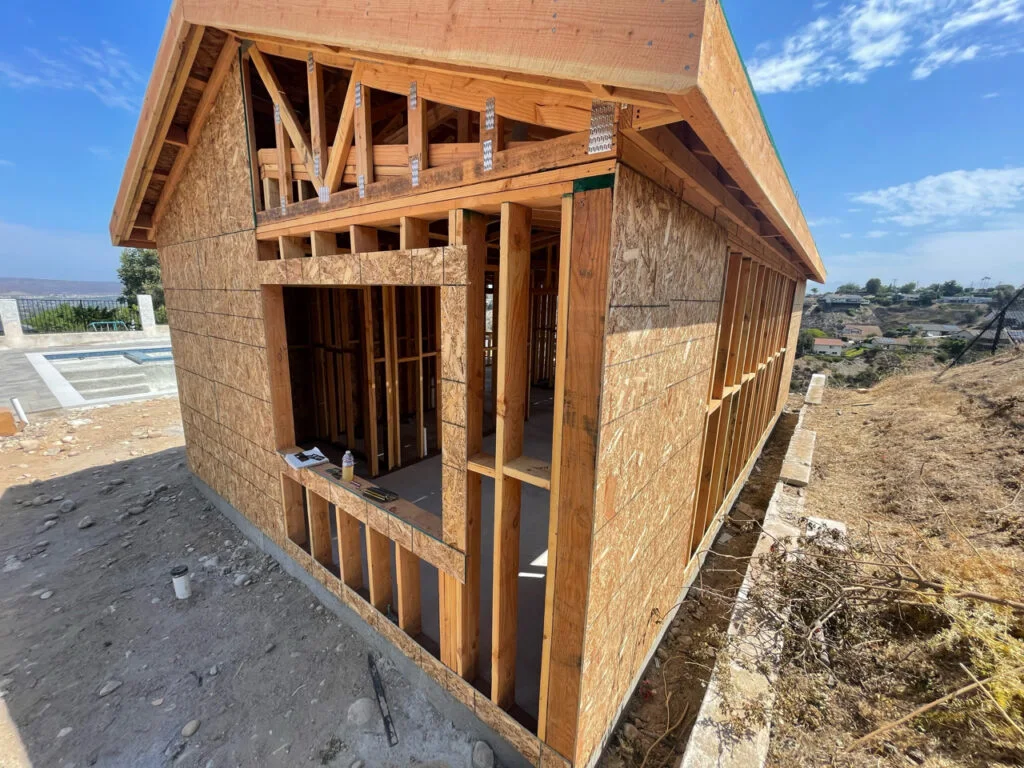
Nearly every new structure needs structural calculations and details. A detached ADU needs a foundation design. A garage conversion may need new framing, a replaced garage door opening and a slab review. Depending on the site, you may also need civil work for drainage or grading and a geotechnical report for soil conditions.
On a flat lot this can be a modest package. On a slope it grows quickly, which we cover below. Our structural engineer and design engineer services exist because these pieces have to agree with each other and with the architectural set.
Surveys and site assessments
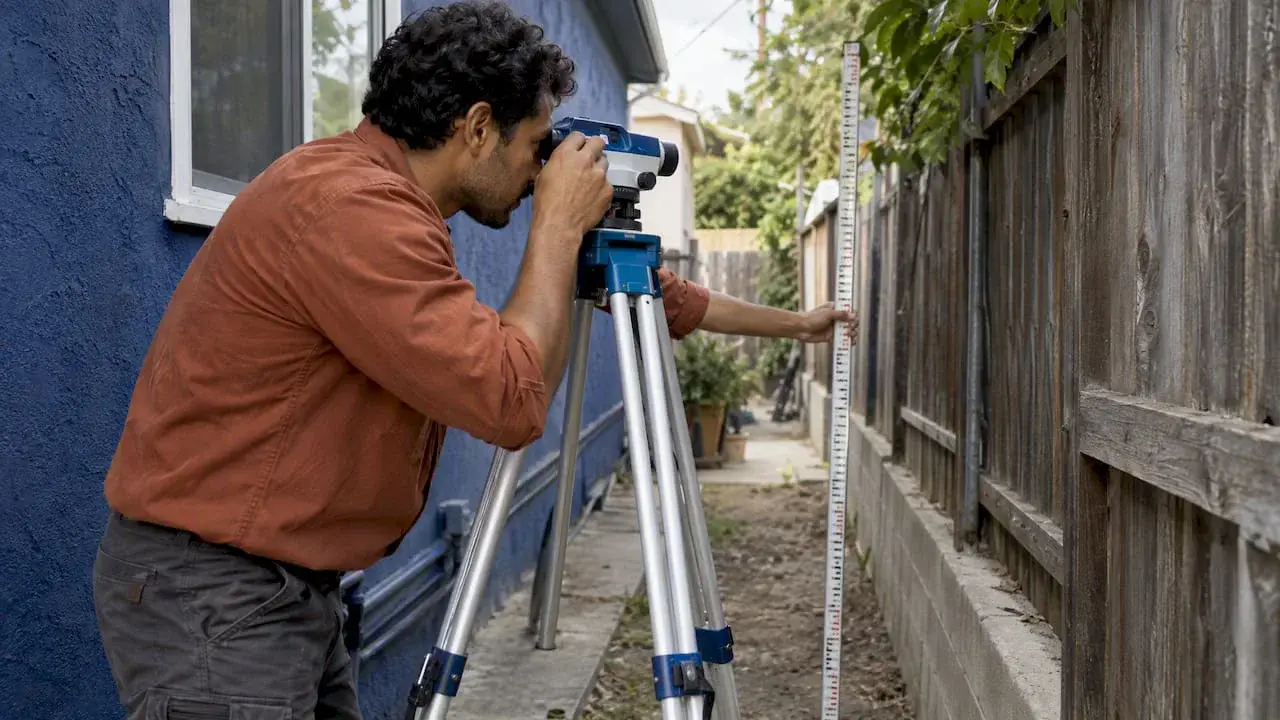
A boundary and topographic survey tells you where the property lines, existing structures, easements and grade changes really are. Setbacks are measured from those lines, so a wrong assumption here can move your ADU or shrink it. For the rules that survey feeds into, see our Los Angeles ADU zoning guide.
Plan review and permit fees
The Los Angeles Department of Building and Safety reviews building, MEP and grading plans and offers different levels of plan check depending on project size and complexity. That is why two ADUs of the same size can generate different bills: the review pathway, not just the footprint, sets the cost. We break down the typical line items in our guide to ADU permit cost in Los Angeles.
Title 24 energy compliance is also part of this package. It is a required document for the permit set, not an optional extra.
Impact and connection fees
State law limits what a local agency can charge here. California HCD says impact fees may not be imposed on ADUs 750 square feet or less or on JADUs, and for larger ADUs they may be charged proportionately by comparing the ADU’s floor area to the primary dwelling. If you are planning a unit above that threshold, read our explainer on ADU impact fees in California.
Insurance, testing and temporary utilities
These are the small items that add up. Construction insurance during the build, a change to your homeowner’s policy once the ADU exists, special testing or inspection consultants where required, and temporary power or water on site all belong in the soft-cost line. So do possible property-tax changes after completion, which the NYC guide lists and which every owner should ask a tax professional about.
How much should you set aside?
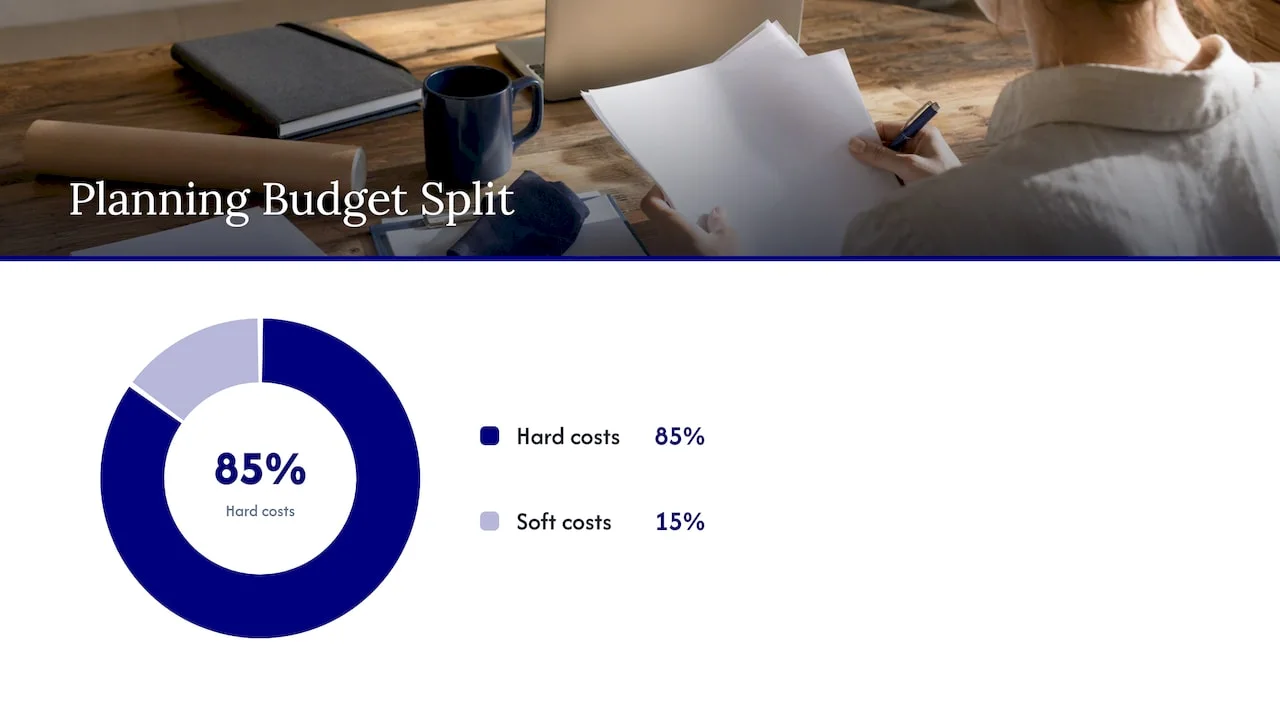
Here is the honest answer: we found no official source that publishes a reliable soft-cost percentage for Los Angeles. What exists is a planning benchmark. The San Mateo guide says hard costs typically represent about 85% of the total ADU budget, which leaves roughly 15% for soft costs. It gives 2023 examples running from $40,000 for a simple interior-conversion JADU to $400,000 or more for a large, high-end detached ADU on a hillside lot.
Use the 15% figure the way you would use a rule of thumb for a kitchen remodel: to decide whether a project is in the right neighborhood, not to sign a contract. Two things push an LA project away from it.
- Small projects often run proportionally higher. Drawings, a survey and plan check do not shrink in step with the build. A modest conversion can carry a bigger soft-cost share than a large detached unit.
- Complicated lots run higher in dollars. More engineering, more review, more revisions.
A better method is to get a scope-based number. After a site evaluation, we can tell you which documents your property requires, and that list is the real budget.
What makes soft costs vary in LA
ADU type
A JADU carved out of existing space needs less than a new detached unit. A garage conversion sits in between, with the structure already there but the code requirements for living space still applying. See the differences on our types of ADUs page, or go straight to garage conversion design and JADU design.
Lot conditions
The San Mateo guide names slope, trees and fault lines among the lot complexities that raise project budgets, along with required sidewalk, sewer or water work, sprinklers and emergency-egress requirements. Los Angeles has a lot of hillside parcels, and those add engineering and review steps. Our hillside ADU guide walks through them.
Sewer and utilities
A new unit may need a sewer capacity review before the city signs off. Skipping the early check can cost weeks. We explain the process in our piece on the LASAN sewer capacity review for LA ADUs.
Which agency reviews your plans
State law sets some limits, but the local agency decides the plan-review requirements and the review track. California’s own fact sheets make this clear: the same state rules play out differently by jurisdiction. If you own in the San Gabriel Valley or elsewhere in the county, do not assume the City of Los Angeles numbers apply to you.
Design changes
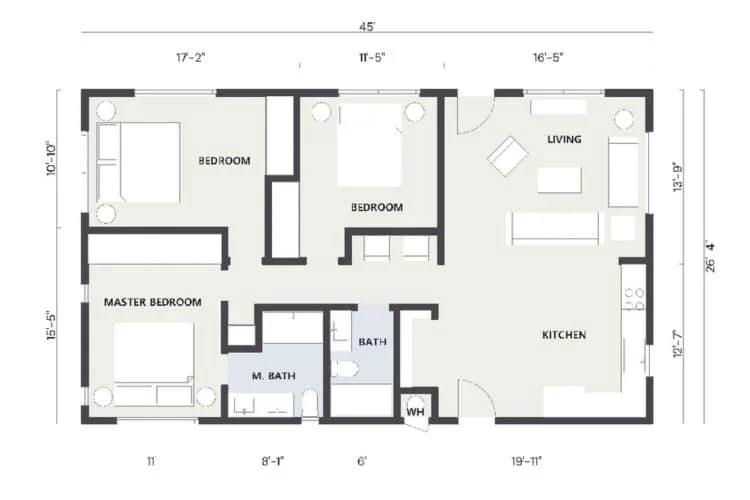
Revisions are the quiet driver. Each time the layout, window count or roofline changes after plans are submitted, someone redraws and re-submits. Locking the layout before the engineering starts is the cheapest soft-cost saving there is. If you are still weighing floor plans, ADU layout planning tools can help you test options before paying for construction drawings.
A soft-cost checklist you can use today
| Item | Who provides it | Ask this |
|---|---|---|
| Feasibility and zoning review | Designer or consultant | Does it cover setbacks, height, utilities and easements? |
| Boundary or topographic survey | Licensed surveyor | Is it needed for my lot and who orders it? |
| Architectural plans | Architectural or building designer | How many revision rounds are included? |
| Structural calculations | Structural engineer | Is a foundation design for my soil included? |
| Soils or civil reports | Geotechnical or civil engineer | Does my lot trigger them? |
| Title 24 energy report | Energy consultant or design team | Is it in the design fee? |
| Plan check and permit fees | City or county agency | Which review track applies? |
| Impact and utility fees | Agency or utility | Does my unit size trigger them? |
| Insurance and temporary utilities | You and your builder | Who pays during construction? |
Take this table to every bid conversation. A line left blank is either included somewhere else or missing from the budget. Find out which before you sign.
Ways to keep soft costs under control
- Get the site and code assessment first. The San Mateo guide advises keeping estimates provisional until a professional team evaluates your property. A short feasibility review is cheaper than a redesign. Our ADU feasibility checklist for Los Angeles shows what to gather beforehand.
- Ask for an itemized scope. It should state whether surveys, engineering, permitting and revisions are included. Vague “full service” language is where surprises hide.
- Keep plumbing near existing utilities. The same guide notes this reduces hard costs. It also simplifies the drawings, without leaving out any required professional work.
- Use one coordinated team. When the designer, engineer and builder work from one set of assumptions, there are fewer conflicts between drawings and fewer rounds of plan-check comments.
- Choose the right review track. Ask what your project qualifies for. For a room addition, for instance, our guide to 60-day versus full plan check shows how the track changes timing.
- Do not cut required work. Skipping a survey or soils report to save money tends to cost more later, in redesign or a failed inspection.
Can the California ADU grant pay for soft costs?
Partly, yes. The CalHFA ADU Grant Program provides up to $40,000 to reimburse homeowners for predevelopment costs necessary to build and occupy an ADU. Design, engineering, surveys and permits are the kind of expenses that category covers. Because it is a reimbursement, you generally fund the work first and recover it later. Check the HCD funding page for current eligibility, income rules and whether funds remain before you plan around it.
Our perspective: soft costs are where projects are won
Most of the budget fights we see are not about the build. They start when the paperwork costs more than the owner expected, or when two professionals worked from different assumptions and the city sent back comments.
We pair design and construction in one workflow for that reason. When the people drawing the plans also know what the build will cost and how Los Angeles reviewers read a set, fewer details get redrawn. We tell clients to separate the budget into two lines at the start, to hold the layout fixed before engineering begins, and to treat any estimate given before a site evaluation as provisional. A lot that looks simple from the street can hide a utility, grade or setback problem, and finding it during design is far cheaper than finding it during plan check.
We also believe a soft-cost quote should be a list, not a lump. If someone cannot tell you what is in the number, you cannot compare it to anything.
, Uni Construction
Get a scope-based number for your lot
If you own in Los Angeles or the San Gabriel Valley and want to know what your property actually requires, start with our ADU design team in Los Angeles. We handle design, structural engineering, permit-ready drawings, Title 24 and, when you want it, the build. For the full cost picture, our guide to ADU cost in Los Angeles covers hard costs by size and type. You can also see the ADU projects we have completed or look at our construction services.
FAQ
Yes. Plan check, building permit fees and any impact or utility connection fees are approval costs, so they belong in the soft-cost line. They vary with project size, the review track and the jurisdiction, so ask for a current fee estimate for your specific project.
No. The construction contract covers hard costs: labor, materials and site work. Design, engineering, surveys and agency fees are usually separate agreements, which is why a builder’s price per square foot rarely shows the full budget.
Not one we could confirm from official sources. A San Mateo County guide uses about 15% of the total budget as a planning benchmark, but that is Northern California. Your own number depends on ADU type, lot conditions and the review track, so get it from a scoped quote.
It is the CalHFA ADU Grant Program, which reimburses up to $40,000 of predevelopment costs needed to build and occupy an ADU. Those costs overlap heavily with soft costs. Confirm current availability and eligibility on the state HCD funding page.
Sources
- ADU Guidebook, San Mateo County ADU Resource Center
- ADU for You, NYC Housing Preservation and Development
- What Are ADU Soft Costs? Design, Engineering and Fees
- Housing Law Fact Sheets, California HCD
- Funding for ADUs, California HCD
- LADBS plan check information
- Best Apps and Services for ADU Layout Planning