

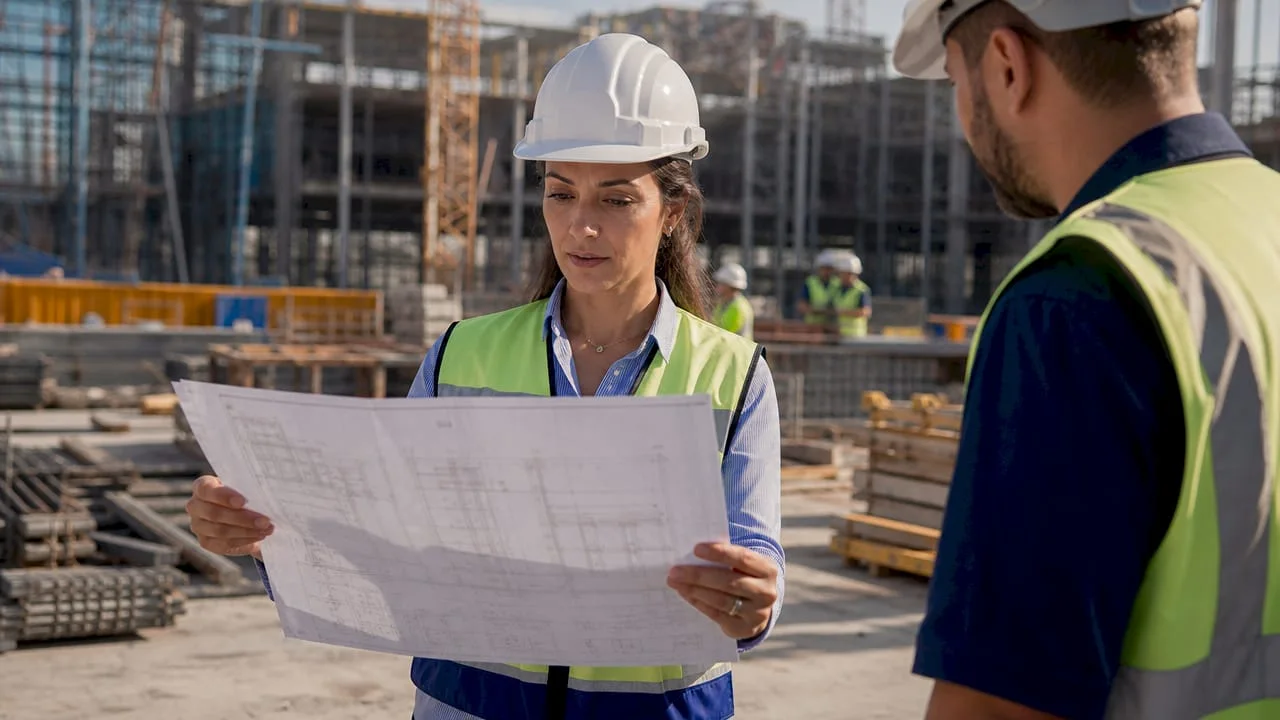
A construction project manager is the central figure who manages budgets, schedules, contracts, and stakeholder relationships to deliver construction projects from start to finish. Known formally as a construction PM, this role covers every business and coordination function that keeps a project on track, on budget, and compliant with quality standards. The role of project manager construction professionals fill is distinct from site supervision. Industry standards separate the PM, who manages business outcomes and contracts, from the superintendent, who manages onsite labor and execution. Understanding that distinction is the foundation of effective construction management.
What are the core responsibilities of a construction project manager?
The construction PM is the central hub for managing budget, schedule, contracts, and stakeholder communication from pre-construction through handover. Every major decision on a project flows through or past this role. That scope makes the PM the single most accountable person on any job.
Core project manager duties in construction fall into six categories:
- Scope, budget, and schedule setup. The PM defines the project scope, builds the baseline budget, and establishes the master schedule before a single shovel hits the ground.
- Subcontractor and team coordination. The PM selects, contracts, and coordinates all subcontractors, keeping their work sequenced and aligned with the overall plan.
- RFI and submittal management. Daily tasks include managing RFIs and submittals, monitoring costs, conducting meetings, and maintaining detailed documentation to protect margins and reduce liability.
- Budget tracking and cost control. The PM compares actual costs against estimates weekly, flags variances early, and forecasts the final cost at completion.
- Progress meetings and reporting. Regular meetings with owners, architects, and subcontractors keep everyone aligned and create a paper trail for decisions.
- Quality assurance and compliance. The PM monitors work against specifications, building codes, and contract requirements throughout construction.
Pro Tip: Set up a shared cost tracker from day one. Waiting until month three to reconcile costs against your budget almost always reveals surprises that are too late to fix without pain.
Construction management roles at the PM level require both technical literacy and business discipline. A PM who can read drawings but cannot read a contract is only half-equipped for the job.
How does a construction project manager differ from the site superintendent?
Role confusion between PM and superintendent causes more operational friction than almost any other structural problem on a construction project. The two roles are complementary but fundamentally different in focus.
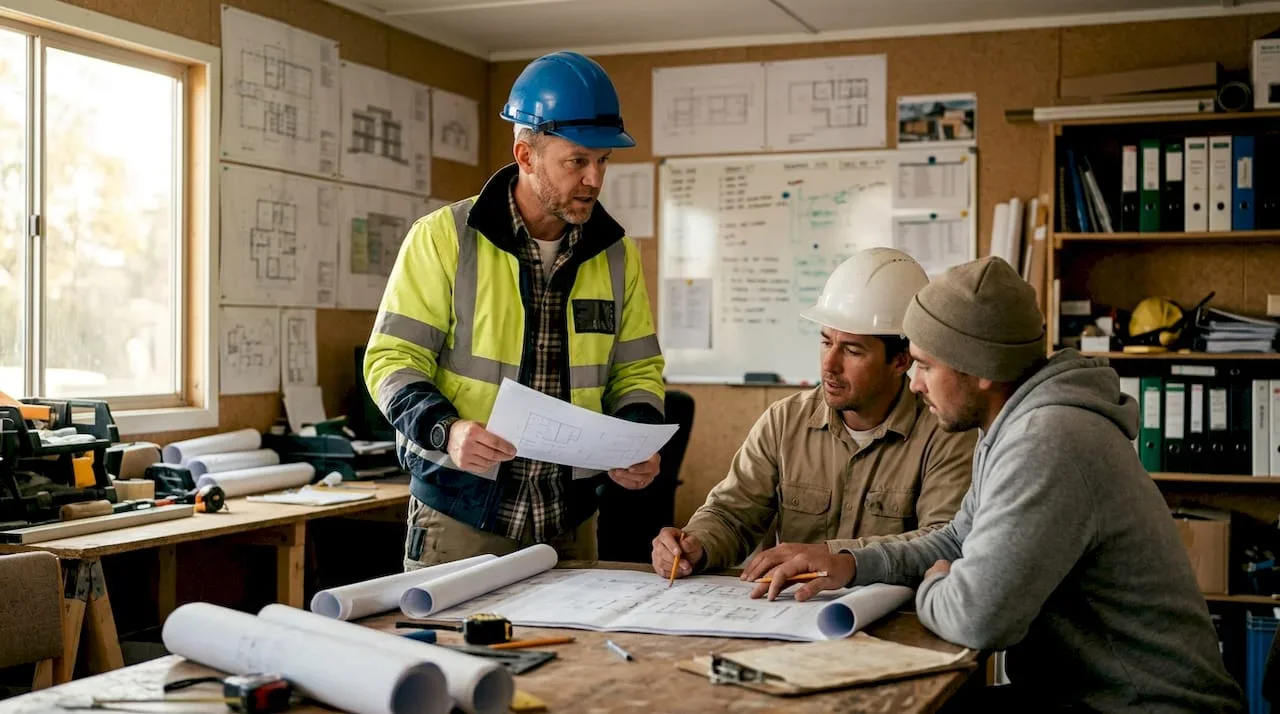
The PM operates primarily from an office or project trailer, managing the business framework: contracts, budgets, client communication, change orders, and legal documentation. The superintendent lives on the jobsite, directing labor, enforcing safety protocols, sequencing daily work, and solving field problems in real time. Both roles are critical. Neither can fully substitute for the other.
| Function | Project Manager | Site Superintendent |
|---|---|---|
| Primary location | Office or project trailer | Jobsite |
| Budget management | Owns and tracks project budget | No direct budget authority |
| Contract administration | Manages all contracts and change orders | Executes work per contract scope |
| Labor direction | Coordinates subcontractor schedules | Directs daily field labor |
| Client communication | Primary client contact | Minimal direct client contact |
| Safety oversight | Sets safety requirements in contracts | Enforces safety on the ground daily |
| Schedule | Builds and updates master schedule | Executes daily work plan |
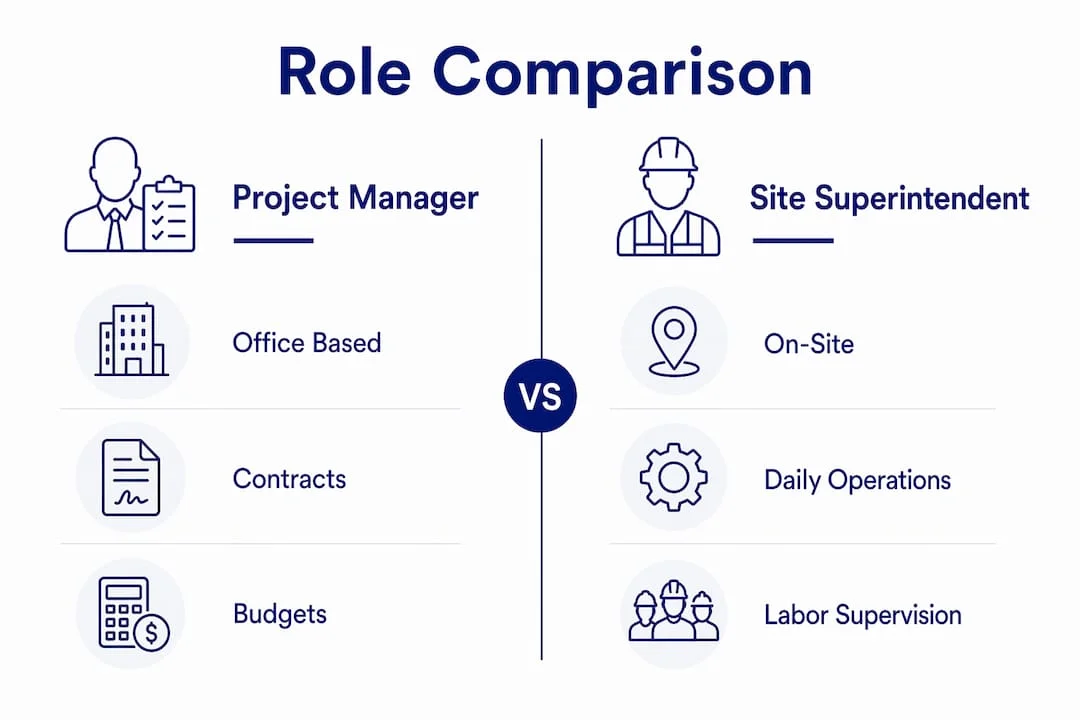
The most productive PM-superintendent relationships operate on clear, agreed boundaries. The PM sets the what and when. The superintendent controls the how. When those boundaries blur, both roles lose effectiveness and the project suffers.
Pro Tip: Hold a weekly alignment meeting between PM and superintendent every monday morning. Thirty minutes of shared situational awareness prevents three days of miscommunication later in the week.
Common friction points include the superintendent making scope commitments to subcontractors without PM approval, or the PM issuing schedule changes without consulting the superintendent on field feasibility. Clear role definitions, written into the project’s internal operating procedures, prevent both problems.
What skills and knowledge make an effective construction project manager?
Effective construction PMs combine operational field knowledge with business and leadership skills. Neither alone is sufficient. A PM who has never worked on a jobsite struggles to earn respect from subcontractors and superintendents. A PM who cannot negotiate a contract or read a financial report cannot protect the project’s margins.
The key skills for construction managers fall into five areas:
- Operational understanding of site sequencing. Without operational knowledge of work sequencing, a PM loses field respect and cannot effectively manage budget, schedule, or subcontractors. You do not need to have swung a hammer, but you must understand how concrete pours, framing, MEP rough-in, and inspections connect in sequence.
- Change management and documentation. Every project changes. The PM’s job is to capture every change formally, assess its cost and schedule impact immediately, and get written authorization before work proceeds. Undocumented changes are the leading cause of margin erosion and disputes.
- Negotiation and conflict resolution. The PM’s human skills include anticipating roadblocks, negotiating between stakeholders, and keeping focus despite daily pressures. Software automates routine tasks but cannot replace this. Negotiation happens daily: with owners over scope, with subcontractors over schedule, and with architects over design intent.
- Schedule management as a political skill. Scheduling involves negotiating a shared schedule among all stakeholders based on realistic historical productivity data, enabling early identification and resolution of bottlenecks. A schedule that no one believes in is just a document. A schedule that all parties helped build and agreed to is a management tool.
- Client communication and trust-building. Owners rarely understand construction complexity. The PM translates technical realities into clear business terms, manages expectations proactively, and delivers bad news early rather than late. That habit alone separates average PMs from excellent ones.
Aspiring construction managers often underestimate how much of this role is interpersonal. Technical knowledge gets you in the room. Communication and judgment keep you there.
What are the challenges and best practices for budget, schedule, and subcontractors?
Budget, schedule, and subcontractor management are the three areas where construction projects most commonly fail. Each has specific pitfalls and proven responses.
Budget control
- Track costs against estimates weekly, not monthly. Monthly reviews reveal problems too late to course-correct without significant cost.
- Maintain a cost-to-complete forecast at all times, not just a cost-to-date report. Knowing what you have spent tells you history. Knowing what you will spend tells you whether you will finish in the black.
- Managing change orders effectively requires immediate evaluation and documentation of cost and schedule impacts before authorizing work to maintain margins and avoid disputes. A change order signed after the work is done is almost always worth less than one signed before.
Pro Tip: Treat your contingency budget as a managed reserve, not a slush fund. Log every draw against it with a reason code. That data becomes your most valuable reference on the next project.
Schedule management
Realistic schedules are built from historical productivity data, not from working backward from an owner’s desired completion date. A schedule built to please the client but impossible to execute creates false confidence and eventual crisis. The PM’s job is to negotiate a schedule that is both achievable and acceptable, then hold every party accountable to it.
Poor management of contracts, change orders, and documentation is the most critical reason projects fail. That finding applies directly to schedule management: undocumented delays and informal extensions destroy the schedule’s legal enforceability.
Subcontractor coordination
- PMs typically manage 15–40 subcontractors, requiring tight scopes, firm contracts, and proactive dispute resolution to keep the project on track. That number alone explains why documentation discipline is non-negotiable.
- Hold subcontractors to their scopes in writing. Verbal scope agreements create gaps and overlaps that cost money and time to resolve.
- Address subcontractor performance issues at the first sign of a problem. Waiting for a pattern to develop before acting almost always means the damage is already done.
You can find examples of how coordinated project execution plays out across real builds in Uni Construction’s completed ADU projects in Los Angeles and the San Gabriel Valley.
Key takeaways
The construction project manager is the single most accountable person on a project, responsible for contracts, budget, schedule, and stakeholder communication from pre-construction through handover.
| Point | Details |
|---|---|
| PM versus superintendent | The PM manages the business framework; the superintendent manages daily field execution. |
| Documentation discipline | Undocumented changes are the leading cause of margin loss and legal disputes on construction projects. |
| Schedule as negotiation | A realistic schedule is built with stakeholder input and historical data, not backward from a deadline. |
| Subcontractor volume | Managing 15–40 subcontractors requires tight written scopes and proactive performance monitoring. |
| Human skills matter most | Anticipation, negotiation, and communication cannot be automated and define PM effectiveness. |
Why the PM role is the real backbone of any construction project
After years of working on residential and ADU construction projects across Los Angeles, I have come to one clear conclusion: the project manager is the difference between a project that closes cleanly and one that ends in litigation.
Most project failures I have seen trace back to the same root cause. It is rarely a technical problem. Primary reasons for construction project failure relate to poor contract management and documentation rather than technical knowledge. The framing crew did not cause the problem. The PM who failed to document a scope change did.
What surprises aspiring PMs most is how human the role is. Despite increasing automation, the PM role remains fundamentally human-centric, relying on anticipation, negotiation, and leadership skills. I have watched project management software get adopted on jobs where the PM still could not hold a difficult conversation with an owner or a subcontractor. The software did not save those projects.
My advice to anyone entering this field: spend time on jobsites before you manage them from an office. Many aspiring project managers underestimate the importance of operational understanding, which is vital for earning field respect and effective management. You cannot schedule what you do not understand. You cannot manage people who do not respect you. Both problems are solved by putting in the field time early.
The best PMs I know are part business manager, part diplomat, and part field operator. That combination is rare. When you find it, or build it in yourself, projects run differently.
, Uni Construction
How Uni Construction supports your construction project from design to build
Coordinating a construction project from design through permits to finished build requires the same discipline this article describes. Uni Construction brings that discipline to every ADU project it handles in Los Angeles and Southern California.

Uni Construction manages the full project coordination process: custom design, permit-ready drawings, structural engineering, and construction execution. Whether you are planning an attached ADU or a detached backyard unit, the team handles the documentation, contractor coordination, and permit process that most homeowners find the hardest part of any build. Reach out to Uni Construction to discuss your project and get a clear picture of what the process looks like from day one.
FAQ
The construction project manager manages budgets, schedules, contracts, and stakeholder communication to deliver a project on time and within budget. This role covers all business and coordination functions from pre-construction through handover.
The PM manages the business framework, including contracts, budgets, and client communication. The superintendent manages daily onsite labor, safety, and work sequencing.
The most critical skills are operational site knowledge, change management, negotiation, schedule management, and clear client communication. Technical knowledge alone is not sufficient without strong interpersonal and business skills.
Poor management of contracts, change orders, and documentation is the leading cause of construction project failure. Technical errors are far less common than business and documentation failures.
A construction PM typically manages 15–40 subcontractors on a single project. That volume requires tight written scopes, firm contracts, and proactive performance monitoring to keep the project on track.