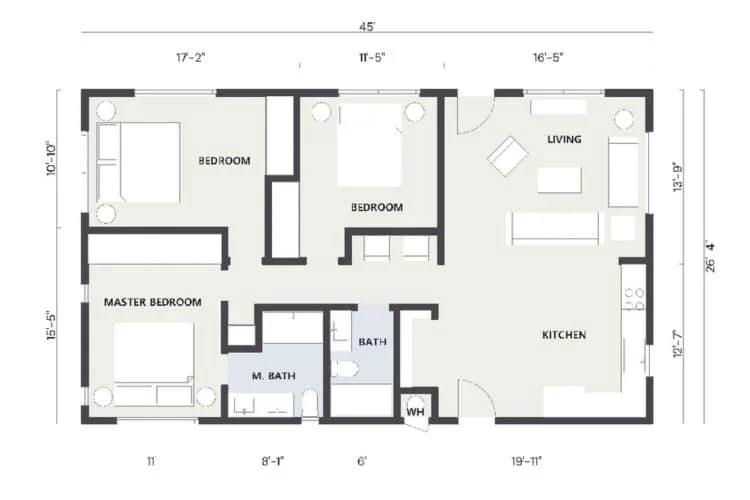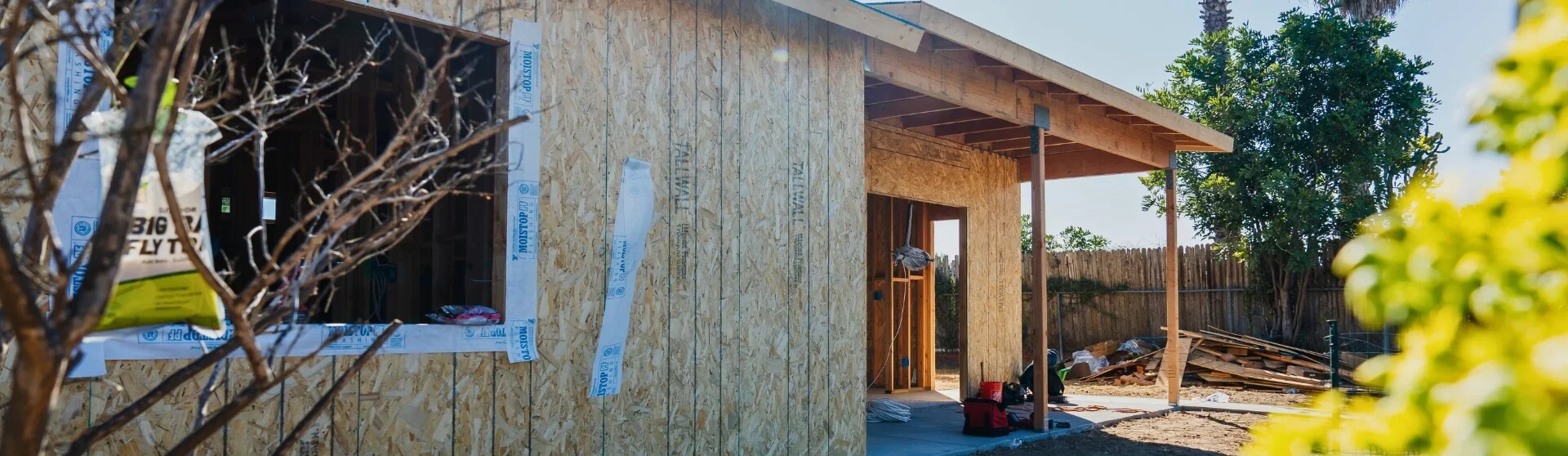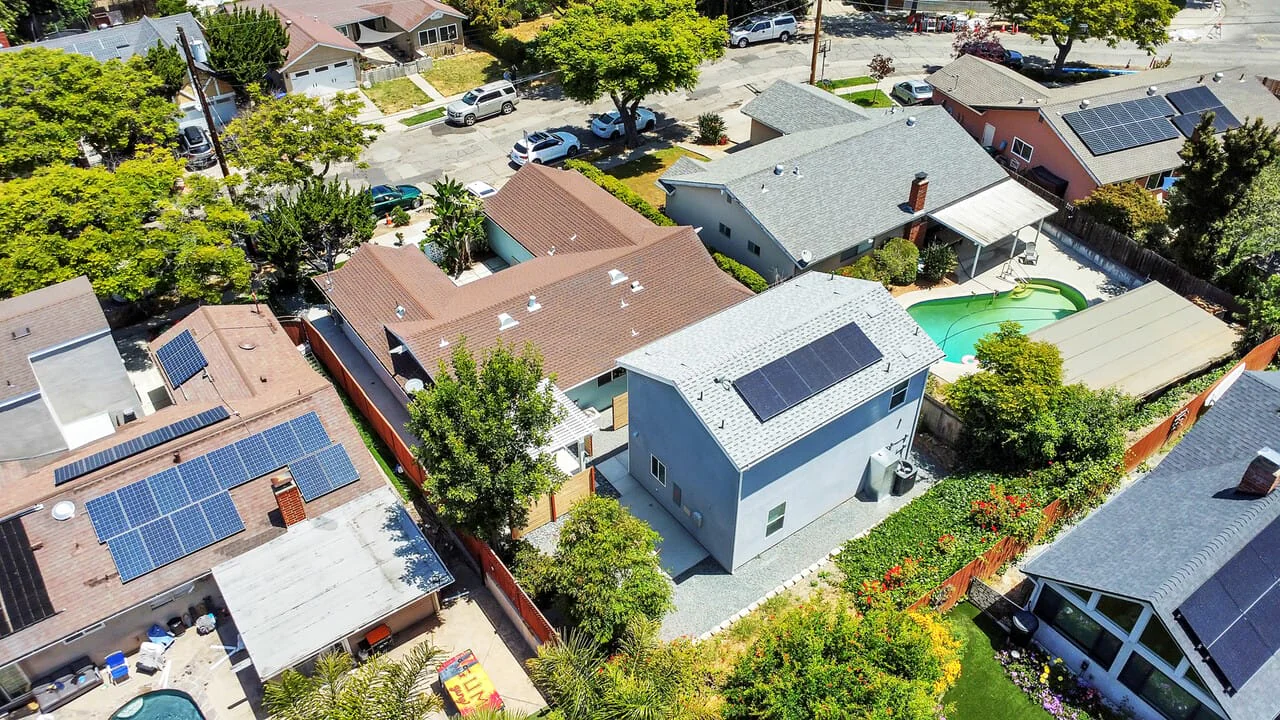


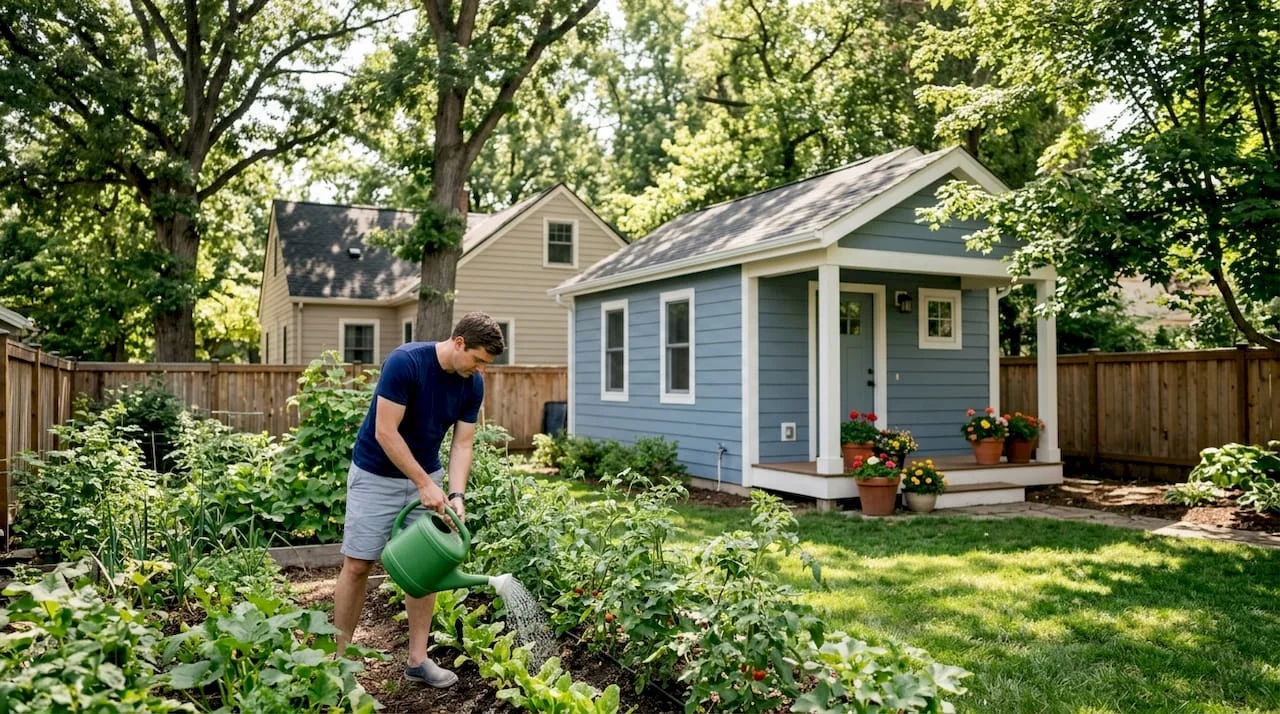
A backyard ADU, formally called a detached accessory dwelling unit, is a self-contained residential structure built on the same lot as a primary home, and it is one of the most financially productive improvements a California homeowner can make in 2026. Nearly half of new housing permits in San Mateo County in 2025 were ADUs, which signals how quickly this once-niche option has become a mainstream property strategy. Whether your goal is rental income, multigenerational living, or long-term appreciation, the reasons to build an ADU are grounded in real numbers and real flexibility. This article breaks down exactly why building a backyard ADU makes sense from every angle: financial, regulatory, and personal.
Why build a backyard ADU instead of other housing options?
Building a backyard ADU is cost-effective because you already own the land. That single fact separates ADUs from nearly every other housing investment. The California Department of Housing and Community Development confirms that ADUs avoid land purchase costs entirely, along with the expense of elevators, structured parking, and major infrastructure upgrades that burden traditional multifamily development.
The construction economics are equally favorable. California HCD notes that wood-frame ADU construction costs significantly less than new multifamily infill buildings. A detached backyard cottage uses the same structural system as a single-family home, which means local contractors can build it without specialized equipment or crews. That keeps labor and material costs predictable.

Permitting has also become far more manageable. California’s recent legislative updates have reduced discretionary review requirements, meaning your project is less likely to get stalled in lengthy public hearings. Most jurisdictions now process ADU applications on a ministerial basis, which means approval is based on objective standards rather than subjective neighborhood opposition.
Key cost advantages of building a backyard ADU include:
- No land acquisition cost since the lot is already owned
- Wood-frame construction at lower per-square-foot cost than multifamily buildings
- No elevator, structured parking, or large utility main requirements
- Simplified permitting with reduced discretionary review in California
- Prefab and modular options that can cut build time and on-site labor costs
Pro Tip: Before hiring a designer, pull your parcel’s zoning data from your city’s planning portal. Confirm setback requirements, maximum ADU size, and utility connection rules. This one step prevents costly redesigns later.
How does a backyard ADU increase property value?
Properties with ADUs appreciate 22% more than comparable homes without them, according to a 2025 FHFA study. That gap is not a rounding error. It reflects how buyers and appraisers now price the income potential and flexibility that an ADU adds to a lot.
The value increase from construction cost varies by market. In most areas, homeowners recover 25% to 50% of construction cost in immediate appraised value. In high-demand California markets like Los Angeles, Santa Monica, or Pasadena, that figure can reach 200% of construction cost over time. The ADU value engineering math works because buyers pay a premium for a property that already generates income or can house a family member.
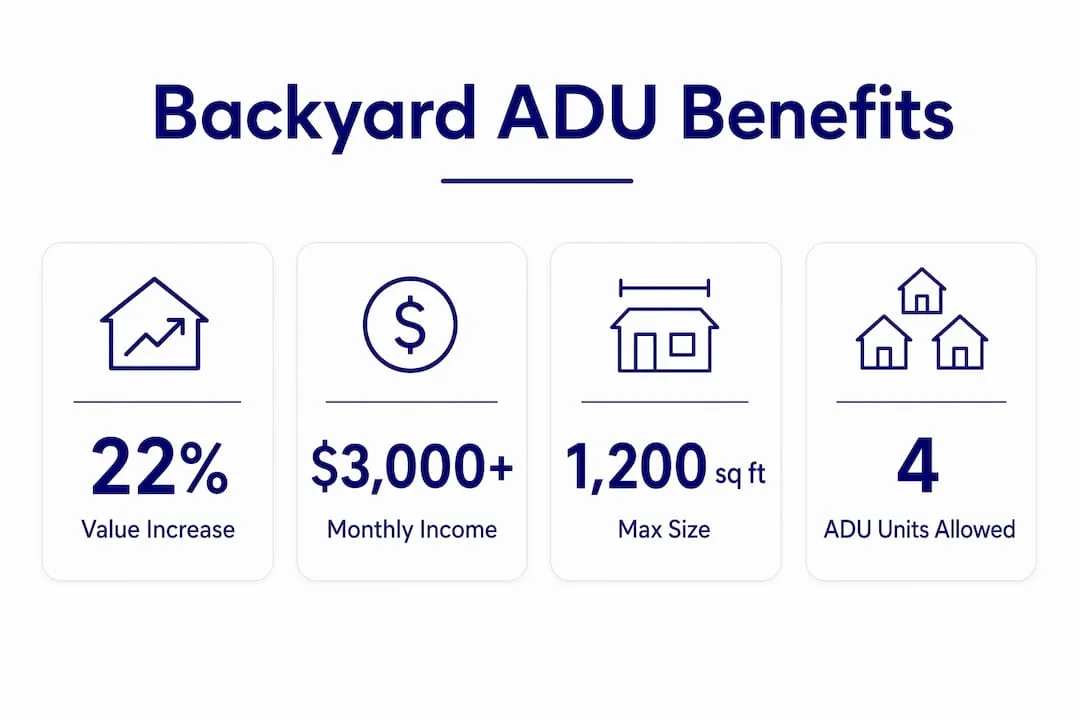
Rental income is the most direct financial return. Business Insider reported on homeowner Elaine Yang, whose backyard ADU generates $3,000 per month in California rental income. At that rate, a $200,000 construction investment pays back in roughly five and a half years through rent alone, before accounting for property appreciation.
Appraisal value depends on two critical factors:
| Factor | Why it matters |
|---|---|
| Permitted ADU status | Unpermitted units cannot be counted in appraisals or used for income verification |
| Separate utility metering | Lenders and appraisers require independent meters to treat ADU income as verifiable |
| Market rental comparables | Local rent data determines the income capitalization value added to the property |
| Legal compliance | Insurance, refinancing, and resale all depend on full code compliance |
The appraisal value of an ADU depends on a combination of market appreciation, income capitalization, and legal compliance status. Skipping permits to save money upfront is the single fastest way to destroy the financial case for building.
What lifestyle advantages do backyard ADUs offer homeowners?
The financial case is strong, but many homeowners build ADUs first for personal reasons and discover the financial benefits later. Lifestyle goals drive the initial decision more often than pure investment logic, and that is not a weakness in the reasoning. It is a sign that ADUs solve real problems that money alone cannot fix.
Here are the most common lifestyle motivations homeowners report:
- Multigenerational housing. An aging parent can live independently in a backyard cottage while remaining close enough for daily support. This arrangement preserves dignity and privacy for both generations without the cost or distance of a separate property purchase.
- Adult children returning home. A detached unit gives young adults a genuine sense of independence while keeping family close. It avoids the awkwardness of shared living spaces and removes pressure from the primary home.
- Dedicated home office or studio. Post-COVID work patterns have made a separate workspace a genuine productivity asset. A backyard ADU eliminates the commute entirely while creating a professional environment free from household distractions.
- Guest accommodations. A self-contained guest unit with its own bathroom and kitchen is a fundamentally different hospitality experience than a spare bedroom. Guests stay longer and more comfortably, and you retain your own space.
- Future flexibility. A unit built today for a parent can become a rental tomorrow, then a studio next year. Flexible living spaces that adapt to changing family needs are among the most durable investments a homeowner can make.
Realtor.com’s 2026 analysis confirms that post-COVID lifestyle trends have made home offices, family housing flexibility, and rental income the three primary motivations for ADU construction. That convergence of personal and financial benefit is what makes the backyard ADU advantages so durable across different homeowner profiles.
How do 2026 California zoning rules affect your ADU options?
California’s regulatory environment for ADUs has shifted dramatically in favor of homeowners. Under rules updated through the California HCD Handbook in March 2026, single-family lots can now have up to four ADUs in addition to the primary dwelling. That is a fundamental change from the single-unit limit that governed most California properties just five years ago.
The current framework allows for different ADU types on a single lot:
| ADU type | Maximum size | Key rule |
|---|---|---|
| Detached ADU | Up to 1,200 sq ft | Must meet setback and lot coverage limits |
| Junior ADU (JADU) | Up to 500 sq ft | Must be within existing primary structure |
| Attached ADU | Up to 50% of primary home | Shares at least one wall with main residence |
| Additional detached ADU | Varies by jurisdiction | Subject to local overlay rules |
The reduction in discretionary review is the most practically significant change. Previously, neighbors could challenge ADU applications through public hearings. Now, permitting is largely ministerial, meaning the city checks your plans against objective standards and either approves or requests corrections. This makes construction timelines far more predictable.
Pro Tip: Even with state-level ADU protections, local jurisdictions retain authority over setbacks, height limits, and design standards. Always verify your specific parcel’s rules with your city’s planning department before finalizing any design.
What financing and construction strategies work best for backyard ADUs?
Financing a backyard ADU does not require a conventional construction loan. Most homeowners use one of three approaches, and the right choice depends on your equity position and risk tolerance.
- Home equity line of credit (HELOC). If you have significant equity, a HELOC gives you flexible draw access during construction. Interest accrues only on what you use, which suits phased builds.
- Second mortgage or cash-out refinance. Some homeowners, like Elaine Yang documented by Business Insider, finance ADUs with second mortgages supported by realistic rental income projections. Lenders increasingly accept projected ADU rent as qualifying income.
- Prefab or all-inclusive contracts. Prefabricated ADU systems from companies like Abodu or Mighty Buildings offer fixed-price contracts that include design, permits, and installation. These reduce financial uncertainty but limit design customization.
Choosing the right builder matters as much as choosing the right financing. A design-build firm with ADU permit experience in your specific city will navigate local requirements far faster than a general contractor learning the process for the first time. Permit-ready detached ADU plans that have already passed city review can cut approval time by weeks or months.
Realistic income estimation is the foundation of any financing plan. A $3,000 per month rental income projection in Los Angeles is conservative for a well-designed one-bedroom unit in a desirable neighborhood. That figure supports a loan payment on a $200,000 to $250,000 construction budget while leaving positive cash flow from day one of occupancy.
Pro Tip: Get three rental comparables from your immediate neighborhood before approaching a lender. Documented local rents strengthen your loan application and give you a realistic payback timeline before you break ground.
Key takeaways
Building a backyard ADU delivers financial returns, lifestyle flexibility, and long-term property value that no other single residential improvement can match at comparable cost.
| Point | Details |
|---|---|
| No land cost advantage | ADUs use your existing lot, eliminating the largest cost in any real estate investment. |
| 22% appreciation premium | Homes with ADUs appreciate significantly faster than comparable properties without them. |
| Rental income potential | California ADUs can generate $3,000 or more per month, creating a strong payback timeline. |
| 2026 regulatory expansion | California now allows up to four ADUs per single-family lot with simplified permitting. |
| Lifestyle and financial alignment | ADUs serve multigenerational living, home offices, and guest housing before or alongside rental use. |
What working with ADU clients has taught me
After working with homeowners and investors across Los Angeles on dozens of ADU projects, one pattern stands out clearly. The clients who get the best outcomes are not the ones who obsess over maximizing square footage or chasing the highest possible rent. They are the ones who start with a clear personal use case and then build the financial model around it.
The homeowners who struggle are usually trying to solve too many problems at once. They want a rental unit, a guest house, and a home office, all in 600 square feet, with a budget that does not account for permit fees or utility connections. That gap between expectation and reality is where projects stall or go over budget.
The regulatory environment in California has genuinely improved. The 2026 ADU design trends we are seeing reflect that. Clients are building smarter, more adaptable layouts because they know the unit may serve different purposes over a 20-year horizon. That long-term thinking is what separates a good ADU investment from a great one.
My honest view is that the financial case for a backyard ADU in California has never been stronger, but the execution still requires discipline. Zoning research, realistic budgeting, and a builder who knows the local permit process are not optional steps. They are the difference between a project that closes in eight months and one that drags on for two years.
, Uni Construction
How Uni Construction helps you build a backyard ADU right
Uni Construction has guided homeowners and investors through the full ADU process in Los Angeles for years, from initial zoning analysis through permit approval and construction completion. The team handles custom design, structural engineering, permit-ready drawings, and construction consulting under one roof, which means you are not coordinating between three separate firms while your project sits in a city queue.
If you are ready to explore what a backyard ADU could look like on your specific property, Uni Construction’s Los Angeles ADU services cover every stage of the process. You can also review completed ADU types and plans to understand which configuration fits your lot, your budget, and your goals before committing to a design direction.
FAQ
A backyard ADU, or detached accessory dwelling unit, is a self-contained residential structure built on the same lot as a primary home. It has its own entrance, kitchen, and bathroom, and it functions as a fully independent living space.
Properties with ADUs appreciate 22% more than comparable homes without them, according to a 2025 FHFA study. In high-demand California markets, the added appraised value can reach up to 200% of the construction cost over time.
Yes, and California ADUs in desirable markets can generate $3,000 or more per month in rental income. The unit must be permitted and separately metered for lenders and appraisers to count that income toward your property’s value.
Under California’s 2026 rules, single-family lots can have up to four ADUs in addition to the primary dwelling, including detached units, junior ADUs, and attached units, subject to local size and setback requirements.
A design-build firm with ADU permit experience in your specific city will complete the project faster and with fewer surprises than a general contractor unfamiliar with local ADU standards. Permit-ready plans and local relationships with city reviewers are concrete time-savers.