

California ADU laws define an accessory dwelling unit (ADU) as a secondary residential unit built on the same parcel as a primary single-family or multifamily home, governed primarily by Government Code section 65852.2. The California Department of Housing and Community Development (HCD) oversees statewide compliance, while local agencies handle permits within state-set boundaries. California ADU laws explained correctly show that the state limits how much local governments can restrict ADU construction, making it far easier to build than most homeowners expect. Junior ADUs (JADUs), a smaller subcategory capped at 500 square feet and carved from existing living space, fall under the same state framework.
What are the current California ADU laws on size, setbacks, and design?
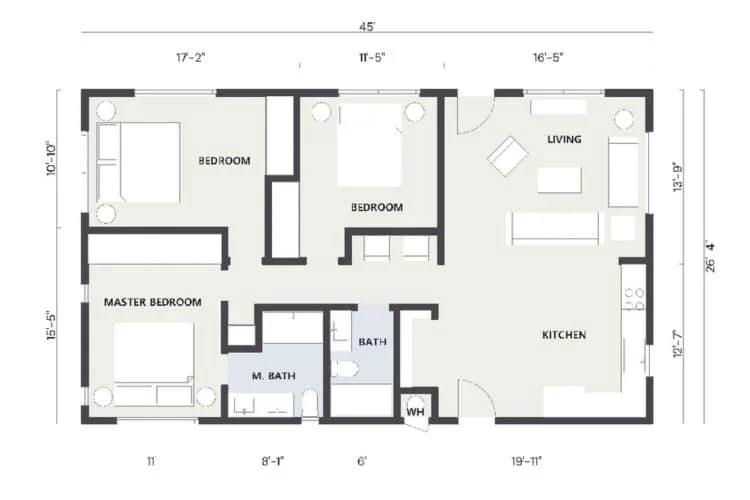
California ADU regulations set a firm floor and a flexible ceiling on unit size. Every ADU must be at least 150 square feet, which is the state minimum for an efficiency unit. That floor matters because some cities previously tried to impose larger minimums to discourage construction. State law overrides those attempts.
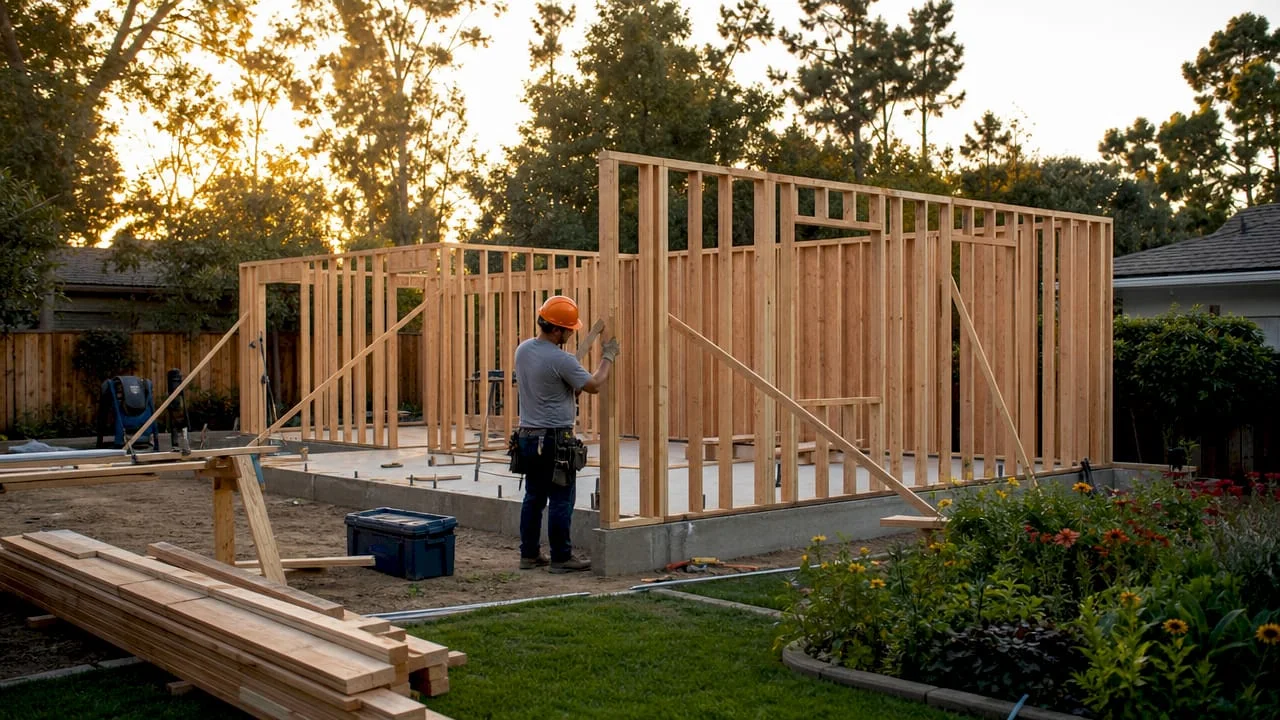
Maximum sizes vary by ADU type. Detached ADUs can reach up to 1,200 square feet under state law, though local jurisdictions may set lower limits within that range. Attached ADUs are generally capped at 50 percent of the primary dwelling’s floor area, up to 1,200 square feet. JADUs max out at 500 square feet and must be within the existing structure, making them a practical choice for garage or basement conversions. For a full breakdown of ADU types available in California, the options range from detached backyard cottages to interior conversions.
| ADU Type | Minimum Size | Maximum Size |
|---|---|---|
| Detached ADU | 150 sq ft | 1,200 sq ft |
| Attached ADU | 150 sq ft | 1,200 sq ft (or 50% of primary) |
| Junior ADU (JADU) | 150 sq ft | 500 sq ft |
Setback rules under state law require a minimum four-foot rear and side setback for detached ADUs. Local agencies cannot impose minimum lot sizes or subjective design standards that would block ADU construction. They can require objective elements like matching exterior materials or compatible roof pitch, but only if those standards do not effectively prevent building.
Parking is one of the most misunderstood parts of California ADU regulations. Local agencies cannot require parking for any ADU located within a half mile of public transit. That rule eliminates a major barrier in dense urban areas like Los Angeles, where transit access is common.
Pro Tip: Check your city’s ADU ordinance against HCD’s list of compliant local programs before submitting plans. If your city’s rules conflict with state law, state law wins and you can cite Government Code section 65852.2 directly in your application.
How do California ADU laws regulate renting and short-term rentals?
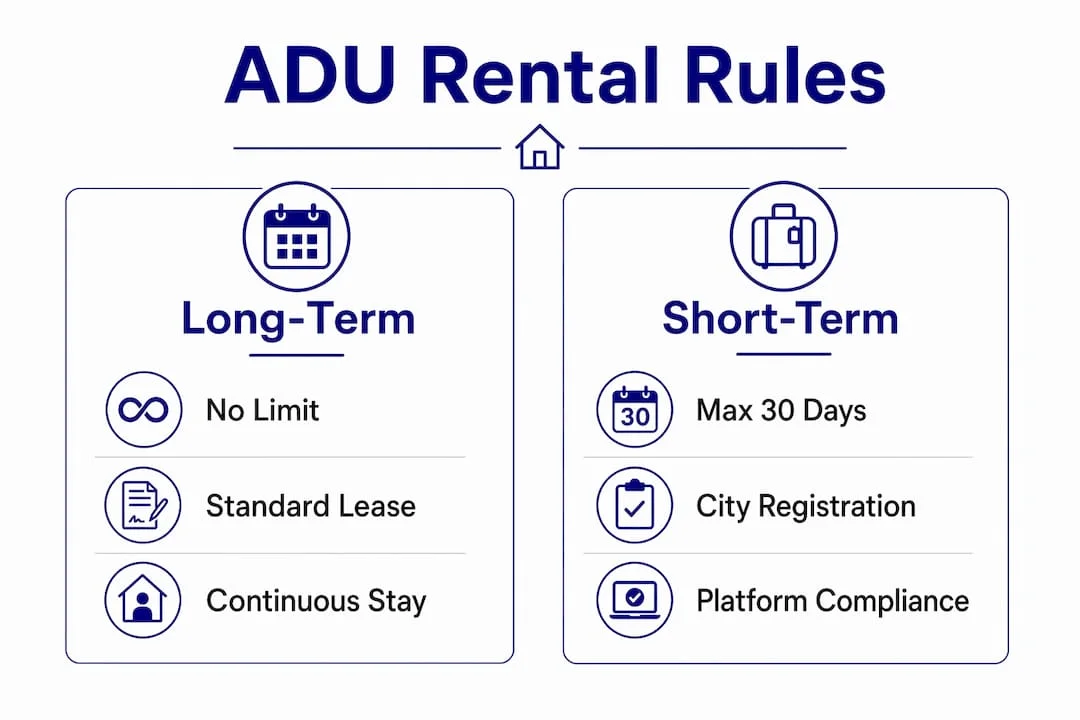
California ADU rental regulations draw a clear line between long-term and short-term use. The state limits ADU short-term rentals to 30 consecutive days per guest, and some cities go further by banning short-term ADU rentals entirely. San Francisco prohibits short-term rentals of ADUs outright. Los Angeles and Palm Springs impose registration requirements and night caps that effectively limit Airbnb-style use.
Owner-occupancy rules have shifted significantly. California removed the statewide owner-occupancy requirement for ADUs from 2020 through 2024, allowing non-resident landlords to build and rent ADUs freely. Some local ordinances still include owner-occupancy conditions, particularly for JADUs, so homeowners should verify their city’s current rules before assuming full flexibility.
The biggest regulatory change for short-term rental ADU California owners in 2026 is SB 346. Under SB 346, platforms like Airbnb and VRBO must report host registration data to local governments starting january 1, 2026. That reporting requirement gives cities real enforcement power for the first time. Hosts who operate without a local short-term rental permit now face a much higher risk of fines and forced removal from platforms.
- ADUs rented long-term (31 days or more) face no state-level lease restrictions beyond standard landlord-tenant law.
- JADUs require a recorded deed restriction prohibiting sale separate from the primary home and typically require the owner to occupy either the JADU or the main unit.
- Cities like Los Angeles cap the number of nights a non-hosted short-term rental can operate per year, regardless of ADU status.
- Violating local short-term rental rules can trigger permit revocation and back-tax liability.
Pro Tip: Register your ADU as a short-term rental with your city before listing it on any platform. SB 346 means platforms will cross-check host data against local registration records starting in 2026, and unregistered hosts are the first to lose listing access.
What is the difference between California ADU laws and SB 9 lot splits?
SB 9, also called the HOME Act, is a state law allowing certain single-family properties to split parcels and build up to two primary dwelling units per resulting lot. That sounds similar to ADU law, but the mechanics are fundamentally different. ADU law adds a secondary unit to your existing parcel. SB 9 creates a new parcel, which changes ownership structure, financing options, and long-term obligations.
Homeowners frequently confuse SB 9 with ADU law, but SB 9 carries significantly higher soft costs and longer timelines. A lot split under SB 9 requires a parcel map, boundary survey, owner-occupancy affidavit, and a recorded covenant committing the owner to occupy one unit for three years. Those steps add months and thousands of dollars before a single permit is filed. ADU law, by contrast, requires none of that. You submit plans, meet objective standards, and receive ministerial approval within 60 days.
| Factor | ADU Law | SB 9 Lot Split |
|---|---|---|
| New parcel created | No | Yes |
| Owner-occupancy required | No (state level) | Yes, 3-year commitment |
| Parcel map required | No | Yes |
| Typical timeline | 60-day approval | Several months |
| Soft costs | Lower | Higher (survey, mapping) |
| Units allowed | 1 ADU + 1 JADU per lot | Up to 2 units per new lot |
Experts recommend ADU law for homeowners who want to add a rental unit or house a family member without subdividing. SB 9 makes sense when the goal is to sell off a portion of the property or create a separately financeable parcel. Combining both paths is possible on some properties, but the eligibility requirements for SB 9 are strict and exclude many urban lots.
Pro Tip: If your goal is rental income or an in-law unit, start with ADU law. Reserve SB 9 for situations where creating a separate sellable parcel is the actual objective. Mixing up the two paths wastes months and money.
What is the permit process for building an ADU in California?
California ADU permit applications follow a ministerial review process, meaning local agencies must approve qualifying applications within 60 days using objective standards only. No public hearings, no discretionary design review, and no California Environmental Quality Act (CEQA) review for most ADU projects. That is a significant advantage over standard residential additions, which can take a year or more to approve in some cities.
The permit process typically follows these steps:
- Confirm zoning eligibility. Verify your parcel is in a single-family or multifamily zone that allows ADUs. Most California residential zones qualify under state law.
- Prepare permit-ready drawings. Submit architectural plans, a site plan showing setbacks, and structural calculations. For attached ADUs, include energy compliance documentation. Review the California ADU permit application requirements before finalizing your drawing set.
- Submit to the local building department. Many cities now accept digital submissions. Include all required forms and pay the plan check fee at submission.
- Respond to corrections within the review window. If the city issues a correction notice, you have time to respond before the 60-day clock restarts. Fast, complete responses keep the timeline on track.
- Obtain building permit and begin construction. Once approved, pull the building permit and schedule inspections at each required phase: foundation, framing, rough mechanical, and final.
Common delays come from incomplete drawing sets, missing structural calculations, and energy compliance errors. Working with a designer familiar with LA County ADU regulations reduces correction cycles significantly. Cities cannot reject an application for subjective reasons, but they can issue corrections for missing objective information, which resets the clock.
Pro Tip: Submit a pre-application checklist request to your building department before filing. Many cities publish their correction lists publicly. Addressing those items before submission eliminates the most common delays.
Key takeaways
California ADU laws give homeowners a state-protected right to build secondary units with ministerial approval, limited local restrictions, and no parking requirements near transit.
| Point | Details |
|---|---|
| Ministerial approval in 60 days | Local agencies must approve qualifying ADU applications within 60 days under state law. |
| Size starts at 150 sq ft | Every ADU must meet the 150-square-foot minimum; detached units can reach 1,200 square feet. |
| Short-term rentals face new rules | SB 346 requires platforms to report host data to cities starting in 2026, raising enforcement risk. |
| ADU law is simpler than SB 9 | ADU law adds a unit to your existing parcel; SB 9 creates a new parcel with far more requirements. |
| Parking waivers near transit | No parking is required for ADUs within a half mile of public transit under California law. |
What I’ve learned after years of building ADUs in California
The single biggest mistake homeowners make is treating ADU law and SB 9 as interchangeable. They are not. ADU law is a housing production tool. SB 9 is a subdivision tool. Conflating them leads homeowners to spend months on parcel maps and owner-occupancy affidavits when all they wanted was a backyard cottage for rental income.
The 60-day ministerial approval window is real, but it only works if your drawings are complete and code-compliant at submission. I have seen projects stall for six months because the applicant submitted incomplete structural calculations and kept triggering correction cycles. The clock resets each time. A thorough drawing set submitted once beats a fast submission that comes back three times.
On the rental side, 2026 is a turning point. SB 346 gives cities actual enforcement data for the first time. Homeowners who have been operating short-term rentals without local registration are now visible to their city government. The risk is not theoretical anymore. Register first, list second.
The California ADU laws explained correctly are genuinely homeowner-friendly. The state has done significant work to remove local barriers. The homeowners who move fastest are the ones who understand what the law actually requires, work with professionals who know local codes, and submit complete applications the first time.
, Uni Construction
How Uni Construction helps California homeowners build ADUs right
California’s ADU rules create real opportunity, but the permit process still requires accurate drawings, structural engineering, and knowledge of local objective standards.
Uni Construction specializes in ADU design in Los Angeles and across California, handling everything from custom architectural plans and permit-ready drawings to structural engineering and construction consulting. The team knows which local corrections to anticipate, which objective standards each city enforces, and how to submit a complete application that moves through the 60-day window without delays. Whether you are planning a detached backyard unit, a Junior ADU conversion, or an attached addition, Uni Construction provides the design and permitting support to get it built correctly and legally. Contact Uni Construction for a consultation tailored to your property and goals.
FAQ
California requires every ADU to be at least 150 square feet, which matches the state standard for an efficiency unit. Local agencies cannot impose a higher minimum size that would effectively block construction.
California limits ADU short-term rentals to 30 consecutive days per guest, and some cities ban them entirely. Under SB 346, platforms must report host data to local governments starting in 2026, so operating without a local permit carries real enforcement risk.
Local agencies must approve qualifying ADU applications within 60 days under Government Code section 65852.2. Submitting a complete, code-compliant drawing set at the start is the most reliable way to hit that timeline.
An ADU adds a secondary unit to your existing parcel with no subdivision required. SB 9 splits your parcel into two separate lots and requires owner-occupancy affidavits, parcel mapping, and a multi-year commitment, making it a much more complex process.
No parking is required for ADUs located within a half mile of public transit under state law. Outside that zone, local agencies may require one parking space per ADU, but they cannot impose requirements that make construction infeasible.