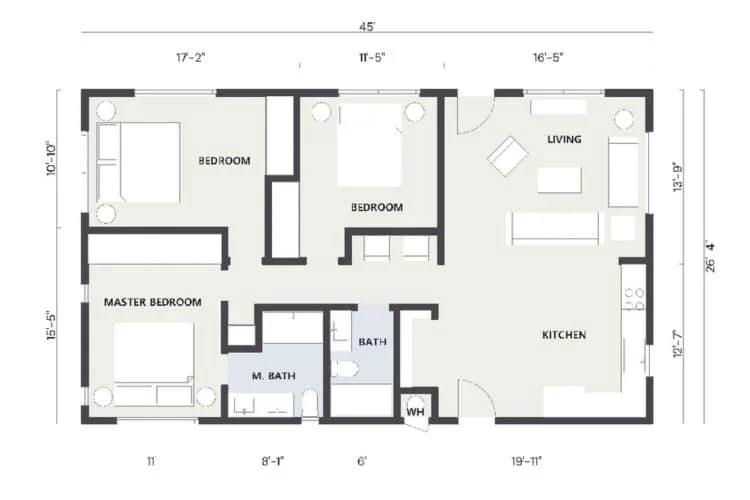



Streamlined ADU permitting cuts months and thousands of dollars from a typical California project. Under California’s 60-day approval rule, a complete application must receive a decision within 60 days, and cities like Los Angeles have reported approvals in 21–30 days for standard pre-approved plans. AB 1332 requires every California city and county to maintain a pre-approved plan library, and AB 2533 opened a legalization pathway for unpermitted units built before January 1, 2020. The result: for most standard lots, the benefits of streamlined ADU permitting are concrete and immediate.
Quick wins from California’s streamlined ADU approval process:
- Permit decisions in as little as 3–4 weeks using pre-approved plans (vs. 3–6 months for custom designs)
- No discretionary hearings or public comment periods for most ADU types
- Potential design and review savings when a suitable pre-reviewed plan reduces repeated work; confirm the plan owner’s price and local fees before budgeting.
- Enforceable deadlines give you a real construction schedule to plan around
- AB 2533 lets pre-2020 unpermitted units get legalized without denial based on code violations alone
What “streamlined” ADU permitting actually means in California
The term “streamlined” has a specific legal meaning here. Ministerial, or by-right, approval means a city reviews your application against objective standards only: no discretionary hearings, no neighbor input sessions, no planning commission vote. If your project meets the code, it gets approved.
The contrast with discretionary review matters: a discretionary process can drag on for months because it invites public comment, design negotiations, and commission decisions that no statute can fully control. Ministerial review removes all of that.
Three legal mechanisms drive California’s streamlined ADU system:
- AB 1332: Requires every local agency to establish a pre-approved ADU plan program by January 1, 2025. Plans are posted publicly so any homeowner can use them.
- HCD 60-day rule: State law requires permitting agencies to approve or deny a complete application within 60 days. If they miss the deadline, the permit is deemed approved.
- SB 543: Codifies a 15-business-day completeness review and formal appeal rights when an application is denied or deemed incomplete.
- CEQA exemption: Most ADU projects are exempt from California Environmental Quality Act review, removing one of the biggest traditional delay sources.
Pro Tip: The 15-business-day completeness review matters more than the 60-day clock. A city cannot start the 60-day approval window until your application is deemed complete. An incomplete submission resets everything. Using pre-approved plans dramatically reduces the chance of an incompleteness notice.
1. You save weeks, sometimes months, on approval time
Time is the most visible benefit. A standard detached ADU using a city’s pre-approved plan library can move from submission to permit issuance in 3–8 weeks in many California cities. Los Angeles has processed some standard plan applications in 21–30 days. A custom-designed ADU on the same lot, going through multiple plan-check correction rounds, routinely takes 3–6 months.

That gap compounds quickly when you factor in construction financing. Every month of delay before a shovel hits the ground is a month of carrying costs, delayed rental income, or postponed family housing.
2. Pre-approved plans cut your design costs significantly
Custom ADU architectural drawings typically run $15,000–$30,000. Adapting a city’s pre-approved plan to your specific lot generally costs $3,500–$5,000. That difference alone can fund a meaningful portion of your construction budget.
Pre-approved plans also reduce plan-check correction cycles, which is where hidden soft costs accumulate. Each correction round means redrawn sheets, resubmission fees, and more waiting. Plans that have already been vetted by the city’s building department skip most of that friction.
3. Reduced plan-check fees in cities that offer them
Los Angeles offers a Standard Plan Program that reduces repeated review of an approved building design. Access and pricing depend on the plan owner, and the property still needs site-specific review. Compare the design license, foundation engineering, site plans and permit charges together before deciding whether a standard plan offers a saving over a custom layout.
4. Predictable timelines let you actually plan your project
Before California’s ADU law reforms, a homeowner had no reliable way to know when a permit would come through. That uncertainty made it nearly impossible to line up a contractor, secure a construction loan, or plan a move-in date.
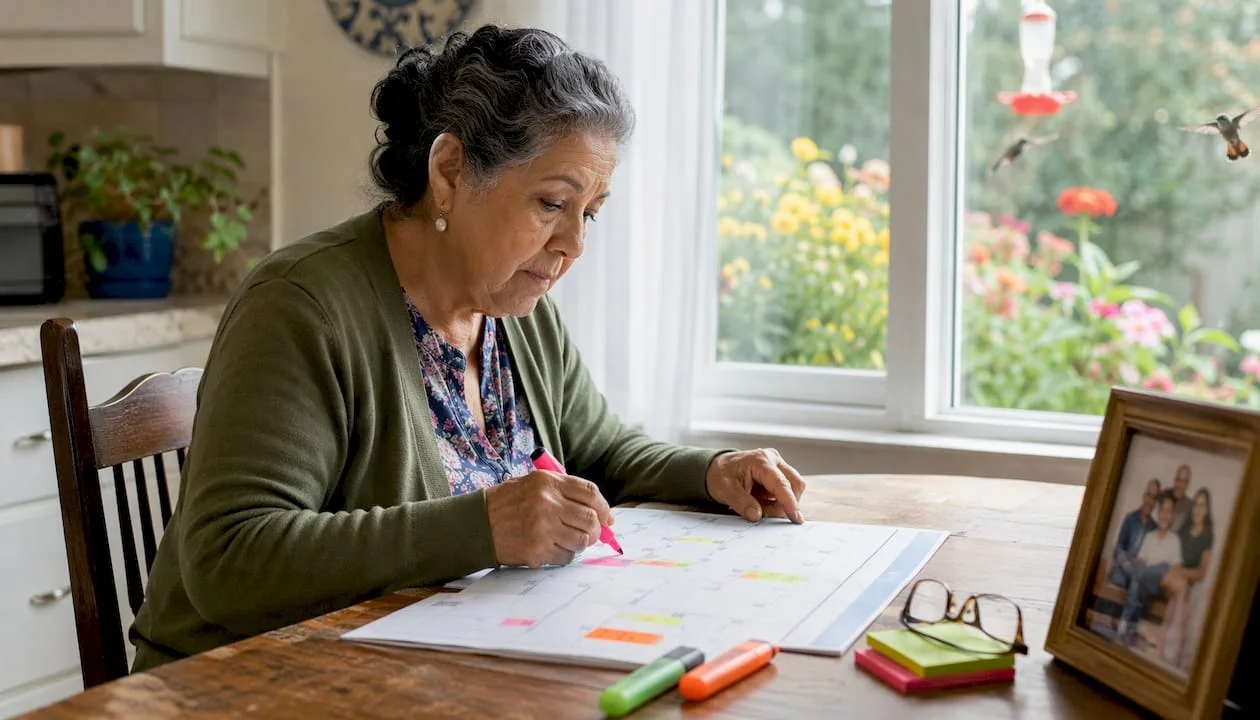
The 60-day statutory clock and the 15-business-day completeness review change that. You now have enforceable deadlines you can build a schedule around. AARP research specifically highlights that by-right approvals reduce uncertainty for older adults planning to age in place, because they eliminate the risk of a discretionary denial after months of waiting.
5. No public hearings means no neighbor veto risk
Discretionary review processes give neighbors a formal channel to object. Ministerial review removes that entirely. Your project is evaluated on code compliance, not community opinion. For homeowners in dense urban neighborhoods, this is often the single most important practical change.
6. Garage conversions and JADUs get the fastest path
Garage conversions remain the most affordable ADU type, and they typically qualify for the same ministerial review as other ADU types. Junior ADUs (JADUs), which are carved out of existing living space and capped at 500 sq ft, often have the simplest permit requirements of all. No new utility connections, no separate address in many cases, and a streamlined application that mirrors the by-right ADU process.
For homeowners who want rental income or caregiver housing without a major construction project, a JADU is often the fastest route from idea to occupancy.
7. AB 2533 gives unpermitted units a real legalization path
If you have a unit built before January 1, 2020, AB 2533 created a streamlined legalization pathway specifically for those structures. Cities cannot deny a legalization permit based solely on building-standard violations. The unit still needs to meet health and safety minimums, but the bar is lower than building new, and the process is ministerial rather than discretionary.
This matters for homeowners who inherited an unpermitted unit or added one before the current rules took effect. Legalizing it protects you from code enforcement, increases your property’s appraised value, and makes the unit financeable.
8. Rental income and property value become more accessible
The financial case for an ADU is well-documented, but it only works if you can actually get the unit built and rented. Streamlined permitting removes the approval bottleneck that used to make ADU projects feel speculative. With a predictable 60-day approval window and a clear construction timeline, you can model rental income projections with real numbers rather than guesses.
Brookings research notes that ADU policy reform is politically attractive precisely because ADUs increase housing density without the neighborhood disruption of larger developments. That political durability means the streamlined rules are unlikely to reverse.
9. Aging-in-place housing becomes genuinely feasible
AARP’s analysis of ADU policy links ministerial approvals directly to aging-in-place outcomes. When a senior homeowner wants to build a unit for a caregiver, or move into a smaller unit on their own property while renting the main house, a lengthy discretionary process can make the project impractical. A 60-day approval window changes the math. For homeowners planning ahead for their own care or a family member’s, the aging-in-place ADU path is now a realistic option rather than a bureaucratic gamble.
10. Impact fee exemptions reduce total project cost
Recent California law includes impact fee exemptions for smaller ADUs in certain circumstances. SB 543 reinforced these protections with clearer procedural rules. Impact fees, which cities charge to fund infrastructure, can add tens of thousands of dollars to a project. Knowing which exemptions apply to your ADU type and size before you submit can materially change your project budget.
What the permit timeline actually looks like step by step
Even with streamlined rules, the process has sequential steps. Here’s what you’ll move through:
- Project scoping: Confirm your lot’s zoning, overlay zones, and utility capacity.
- Plan selection: Choose a city pre-approved plan or commission custom drawings.
- Application submission: Submit site plan, utility letters, Title 24 energy forms, and any required geotech.
- Completeness review: The city has 15 business days to tell you if your package is complete.
- 60-day approval clock: Starts only after a complete determination. The city approves, denies, or the permit is deemed approved.
- Permit issuance: Pay fees, pull the permit, schedule your contractor.
- Inspections and final occupancy: Framing, rough MEP, insulation, and final inspection before the certificate of occupancy.
| Path | Typical Timeline | Key Variable |
|---|---|---|
| Pre-approved plan, standard lot | 3–8 weeks | Completeness of submission |
| Custom plan, standard lot | 3–6 months | Correction rounds |
| Custom plan, complex lot | 6 months | Geotech, utility upgrades, overlays |
| AB 2533 legalization | Varies by city | Extent of code deficiencies |
The three biggest time-savers:
- Choose a pre-approved plan when your lot is standard
- Submit a complete package the first time (use the city’s checklist, not a generic one)
- Contact your utility agencies before you submit, not after
Pro Tip: Request the city’s specific completeness checklist before you prepare your package. Generic ADU checklists miss local requirements. One missing utility letter can trigger an incompleteness notice and restart your clock.
For a granular scheduling breakdown, the 2026 ADU timeline guide walks through each phase with calendar estimates.
Which ADU types and properties qualify for streamlined review
Most single-family residential lots in California qualify for at least one streamlined ADU type. The main categories:
- Detached ADU: New construction in the backyard. State law allows up to 1,200 sq ft; local limits may be lower.
- Attached ADU: Addition to the existing home. Same size limits apply.
- Interior ADU (conversion): Converting existing space like a basement or bonus room. Often the simplest permit path.
- JADU: Up to 500 sq ft carved from existing living space. Requires owner-occupancy in most cases.
- Garage conversion: Existing attached or detached garage converted to living space.
Red flags that usually require additional review or custom engineering:
- Steep topography (slopes over 15% typically trigger geotech)
- Coastal zone or Very High Fire Hazard Severity Zone (VHFHSZ) overlay
- Historic Preservation Overlay Zone (HPOZ) or Mills Act property
- Methane zone designation (common in parts of Los Angeles)
- Unusual setbacks, easements, or shared-wall conditions
AB 2533 applies specifically to units built before January 1, 2020. If your unpermitted unit predates that cutoff, the legalization pathway is ministerial, not discretionary, which is a significant advantage.
How streamlined permitting changes your cost equation
The cost benefits of efficient ADU regulations work at multiple levels. Design fees drop when you use pre-approved plans. Plan-check fees drop in cities that offer fee reductions. And the avoided cost of repeated correction rounds, which can add $2,000–$5,000 per cycle in professional fees and resubmission costs, is often the biggest savings of all.
Where to look for fee reductions and incentives:
- City fee waiver programs (check your city’s ADU webpage directly)
- State or local small-scale housing grants (availability varies by county)
- Utility hookup credits for energy-efficient ADU designs
- Low-interest retrofit or construction loans through community development financial institutions
- Impact fee exemptions under state law for qualifying ADU sizes
For Los Angeles homeowners, the practical benefit of a standard plan is a building design that has already received review. The LADBS program still requires site-specific adaptation, clearances and permit fees. Ask for an itemized proposal so any saving reflects the actual work avoided, including how changes to the selected plan would affect review.
Pro Tip: Pull the fee schedule from your city’s planning department website before you finalize your plan choice. Some cities charge plan-check fees as a percentage of construction value; others use a flat fee for pre-approved plans. The difference can be $3,000–$8,000 on a mid-size detached ADU.
Common mistakes that slow down even streamlined applications
Streamlined rules don’t guarantee a fast approval. The most common reason projects stall despite California’s statutory timelines is an incomplete submission. Cities are required to flag incompleteness within 15 business days, but once they do, your 60-day clock resets.
Mistakes that trigger incompleteness notices:
- Missing utility will-serve letters (water, sewer, electrical)
- Site plan that doesn’t show all required setbacks and easements
- No Title 24 energy compliance forms
- Assuming a pre-approved plan requires no site-specific engineering (it still needs a site plan, drainage, and utility connections)
- Ignoring overlay zone requirements (coastal, fire, historic) that add review steps
Drawbacks of pre-approved plans to know upfront:
- Less design flexibility. You’re working within a fixed floor plan and exterior.
- Site-specific conditions (steep grade, unusual utility locations) may require engineering that adds time and cost.
- Municipal capacity still varies. A city with a backlogged building department processes even complete applications more slowly.
Does pre-approved mean no engineering? No. Pre-approved plans have already been reviewed for building code compliance, but every project still requires site-specific documents: a site plan, drainage and grading information, utility connection details, and sometimes geotech. The pre-approval covers the building design, not the site conditions.
The primary cause of multi-month delays is incomplete submissions and repeated correction cycles. Standardizing your application package, and working with professionals who know the local checklist, is the most reliable way to avoid that trap.
How California’s major cities run their ADU programs
San Francisco
The San Francisco Planning Department administers ADU permitting under state law with some city-specific requirements. SF Planning offers an ADU pre-application process and maintains guidance on its website for homeowners navigating the city’s dense urban lots. Coastal proximity and historic district overlays affect a significant share of SF properties, so checking overlay status early is especially important here.
Permit Sonoma / ADU Ready (Sonoma County)
Permit Sonoma runs the ADU Ready program, a pre-reviewed plan library that county homeowners can use to accelerate approvals. The program posts vetted plans publicly, reducing the design and plan-check burden for standard rural and suburban lots. For Sonoma County homeowners, ADU Ready is the fastest entry point into the permit process.
Pasadena
Pasadena’s ADU Standard Plans Program offers designs that have been pre-reviewed by Building and Safety. The city explains that this can save time in design and permitting. Review the submittal process and the items that are outside the pre-review so the proposed unit, site layout and supporting documents can be assessed together.
Los Angeles
The Los Angeles Standard Plan Program provides pre-reviewed architectural and engineering designs. LADBS still checks site-specific conditions, zoning, foundations and clearances before issuing a permit. Plan ownership, design customization and the scope of site work affect both the cost and the remaining review. Ask the designer and building department which parts of the selected package can be reused.
Pre-approved plans are the single most impactful change for typical single-family homeowners building a standard detached ADU because they virtually eliminate correction rounds in plan check.
Sacramento
Sacramento is frequently cited as a benchmark for fast ADU permitting. The city offers a free plan library, and its internal processing capacity has kept approval times competitive even as application volumes have grown. For homeowners in other cities wondering what fast looks like, Sacramento’s program is the practical reference point.
How a design-build firm speeds up your ADU approval
Hiring a firm that specializes in permit-ready ADU design reduces approval risk in ways that go beyond just drawing the plans. The specific services that shorten timelines:
- Permit-ready drawings: Produced to the local checklist, not a generic standard, so completeness notices are rare.
- Pre-approved plan adaptation: Modifying a city’s standard plan to your lot conditions while keeping it within the pre-approved envelope.
- Early utility coordination: Contacting water, sewer, and electrical providers before submission to get will-serve letters in hand.
- Title 24 energy compliance: Prepared correctly the first time, avoiding a common correction trigger.
- Resubmittal management: If a correction does come back, a professional team turns it around in days, not weeks.
The cost-benefit question is straightforward for most detached ADU projects. Repeated correction rounds, each adding professional fees and weeks of delay, can easily exceed the cost of hiring experienced help upfront. When construction financing is involved, a one-month delay in permit issuance can cost more in interest than the design fee itself.
When to DIY vs. hire a professional:
- DIY is reasonable for a simple interior conversion or JADU on a flat, standard lot where you have prior experience with local permit processes.
- Hire a professional for any detached ADU, a lot with overlay zones, a garage conversion requiring structural work, or any project where you need financing or contractor coordination.
Uni Construction’s permit-ready ADU design services cover the full scope: architectural drawings, structural engineering, Title 24 compliance, and permit coordination from submission through final inspection.
Key Takeaways
California’s streamlined ADU permitting delivers the most value when homeowners choose pre-approved plans, submit complete packages, and engage utility agencies before the application goes in.
| Point | Details |
|---|---|
| 60-day approval clock | State law requires a decision within 60 days of a complete application; the clock starts only after completeness is confirmed. |
| Pre-approved plans save the most | Using a city’s AB 1332 plan library can cut approval time to 3–8 weeks and reduce design fees by $11,000–$25,000. |
| Completeness is the real bottleneck | An incomplete submission resets the 60-day clock; submit with all required documents the first time. |
| AB 2533 legalizes pre-2020 units | Unpermitted ADUs built before January 1, 2020 qualify for a ministerial legalization pathway. |
| Uni Construction handles the full process | Uni Construction provides permit-ready drawings, structural engineering, and permit coordination to reduce correction risk and speed approvals. |
Why Uni Construction focuses on permit-ready ADU design
The gap between “streamlined permitting exists” and “your project actually moves fast” is almost always execution. State law sets the rules; what determines your timeline is how well your application package is prepared. Incomplete submissions, missing utility letters, and plans that don’t account for local overlay requirements are the real causes of multi-month delays, not the statutory framework.
Uni Construction’s approach centers on permit-ready documentation from the start: drawings produced to the local checklist, structural engineering coordinated with the architectural package, and utility outreach that happens before submission rather than after an incompleteness notice. That sequence is what turns a 60-day statutory window into an actual 60-day outcome.
This article prioritizes homeowner outcomes. The goal is to give you the information you need to make the right call for your project, whether that means using a city’s free plan library on your own or engaging a design-build team for a more complex site.
Uni Construction makes permit-ready ADU design straightforward for California homeowners
Getting an ADU permitted in California is faster than it has ever been, but “faster” still requires a complete, accurate application package. That’s where most projects lose time. Uni Construction handles the full design-to-permit scope: architectural drawings calibrated to your city’s checklist, structural engineering, Title 24 energy compliance, and permit coordination through final approval.
For Los Angeles homeowners, Uni Construction’s ADU design and permit services are built around the city’s specific plan libraries, LADBS requirements, and overlay zone conditions. The result is fewer correction rounds, predictable timelines, and a permit package that holds up through inspections. If you’re ready to find out which ADU type and permit path fits your property, contact Uni Construction for a permit-readiness review.
Useful sources
Official and high-quality references to verify rules and find local program details:
- California HCD ADU Handbook (March 2026) , the primary state reference for ADU law, timelines, and local agency obligations
- California HCD ADU Guidance Page , current state law summaries and the 60-day rule
- Los Angeles ADU Program (LADBS) , city-specific program details, standard plans, and fee schedules
- Permit Sonoma / ADU Ready , Sonoma County’s pre-reviewed plan library and application portal
- Pasadena ADU Standard Plans Program for pre-reviewed designs and site submission requirements
- Brookings , California’s ADU policy reform , policy analysis on ADU reform and housing supply
- AARP , Expanding ADU Development and Occupancy , research on aging-in-place benefits and by-right approvals
- SB 543 Analysis (ADU Pilot) , detailed breakdown of the 15-business-day completeness rule and appeal rights
What to look for on municipal pages: a pre-approved plan library link, the current fee schedule (flat fee vs. percentage of construction value), the completeness checklist, and any active fee waiver or grant programs. These details change; check the city’s planning department page directly rather than relying on third-party summaries.