

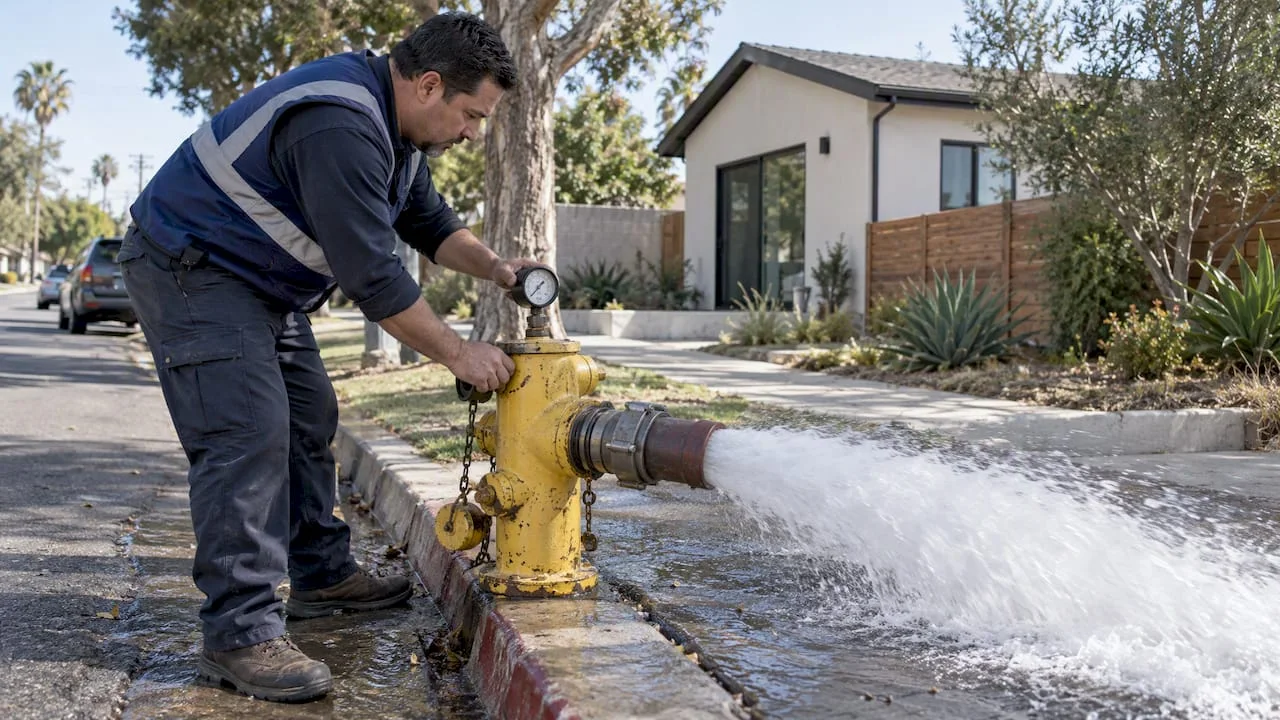
In most Los Angeles ADU projects, fire sprinklers are not required unless the primary house already has an automatic sprinkler system or another local trigger applies. The exceptions to check first are whether the main dwelling is sprinklered, whether your ADU sits on the same lot as a sprinklered structure, and whether fire-hazard-zone status or limited site access forces the fire department’s hand. The next section breaks down the code language and the exact documents a plan checker will want to see.
TL;DR:
- If the primary house does not have sprinklers installed and the ADU is within size limits, a sprinkler system is generally not required in Los Angeles.
- Building a new primary residence with the ADU or if the primary structure is sprinklered triggers the sprinkler requirement for the ADU as well.
- Installing sprinklers may be more practical than upgrading water mains or regrading driveways if site constraints make compliance difficult.
- Fire flow requirements differ: non-sprinklered projects need 1,000 GPM at 20 PSI for an hour, while sprinklered projects need only 500 GPM for half an hour.
- Confirming access distance, fire flow, and sprinkler status early can prevent permit delays and avoid costly redesigns.
Code criteria and exceptions under R313.2 and OSFM guidance
California’s residential fire code requires automatic sprinkler systems in new one and two family dwellings under R313.2 of the County of Los Angeles Residential Code manual. ADUs, however, get a specific carve-out tied to SB1069: an accessory dwelling built on the same lot as an existing single-family home does not trigger a sprinkler requirement on its own as long as the primary residence was never sprinklered and the ADU stays within the size limits set for that exception.
The Office of the State Fire Marshal’s informational bulletin on ADU sprinkler requirements spells this out plainly: if the primary dwelling already has sprinklers installed, the ADU needs them too. If it does not, the ADU is generally exempt, unless you’re building a brand-new primary residence alongside the ADU, in which case both structures typically fall under the standard new-construction rule. California HCD’s ADU guidance reinforces that this exemption is a state policy matter, not something local jurisdictions can tighten arbitrarily, though they can still apply it narrowly based on site conditions.
A plan checker reviewing your Los Angeles ADU application will pull a specific set of facts to apply this rule correctly:
- Whether the primary dwelling on the lot has an existing automatic sprinkler system installed
- The proposed ADU’s square footage, since oversized units can lose the exemption
- Whether you’re converting an existing structure (like a garage) or building new, since new-construction triggers differ
- Confirmation that the ADU and primary dwelling sit on the same parcel
Unpermitted additions complicate this. If the primary house has undocumented square footage or an unpermitted sprinkler retrofit, the fire department may ask for verification before applying the exemption, which can add a round of correspondence to your plan check. Getting ahead of that paperwork, rather than discovering it mid-review, keeps your ADU fire sprinkler exceptions analysis clean from the start.
Fire flow thresholds and how Form 195 speeds things up
Water supply, not just sprinklers, drives a big part of ADU fire review. LA County Fire’s Form 195 for fire flow availability sets the numbers plan checkers use to decide if your site has enough water pressure and volume to support construction.
A non-sprinklered project generally needs 1,000 GPM at 20 PSI sustained for one hour, while a sprinklered project can qualify at 500 GPM at 20 PSI for just half an hour, according to Form 195’s fire flow availability standards. That gap matters most on older lots with undersized water mains, where hitting 1,000 GPM might be impossible without costly main upgrades.
Form 195 works like this:
- You or your design professional request the form and route it to your water purveyor
- The purveyor certifies the available flow and pressure at your site in Part II
- LA County Fire reviews the certified numbers against the project’s sprinkler status to confirm compliance
- Qualifying ADUs under 3,600 square feet can move through this process faster once the form is complete
When public fire flow falls short of the non-sprinklered threshold, installing sprinklers becomes a mitigation option rather than a mandate. Requesting that path means flagging it on your Form 195 submission and in your plan-check narrative so the reviewer knows you’re using sprinklers to offset a water-supply shortfall rather than meeting a separate requirement.
Access distance rules: the 150-foot and 300-foot thresholds
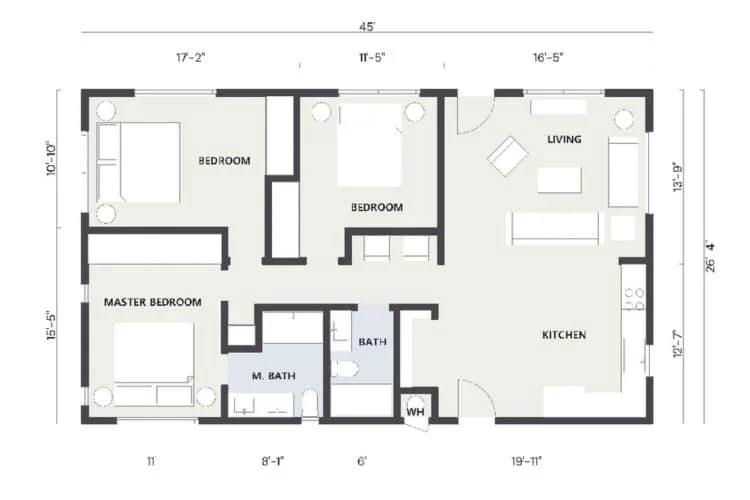
Fire department access distance is where many hillside and infill lots run into trouble, independent of sprinkler status. LA County Fire’s EG-07 guidance for ADUs sets a baseline 150-foot limit from a fire apparatus access road to the farthest point of an exterior wall.
On a lot where the ADU sits farther than 150 feet from legal access, sprinklers change the math. A sprinklered detached ADU can extend that limit to 300 feet, according to EG-07’s access distance provisions. For constrained or hillside parcels where regrading a driveway isn’t realistic, that doubling can be the difference between a feasible project and a dead end.
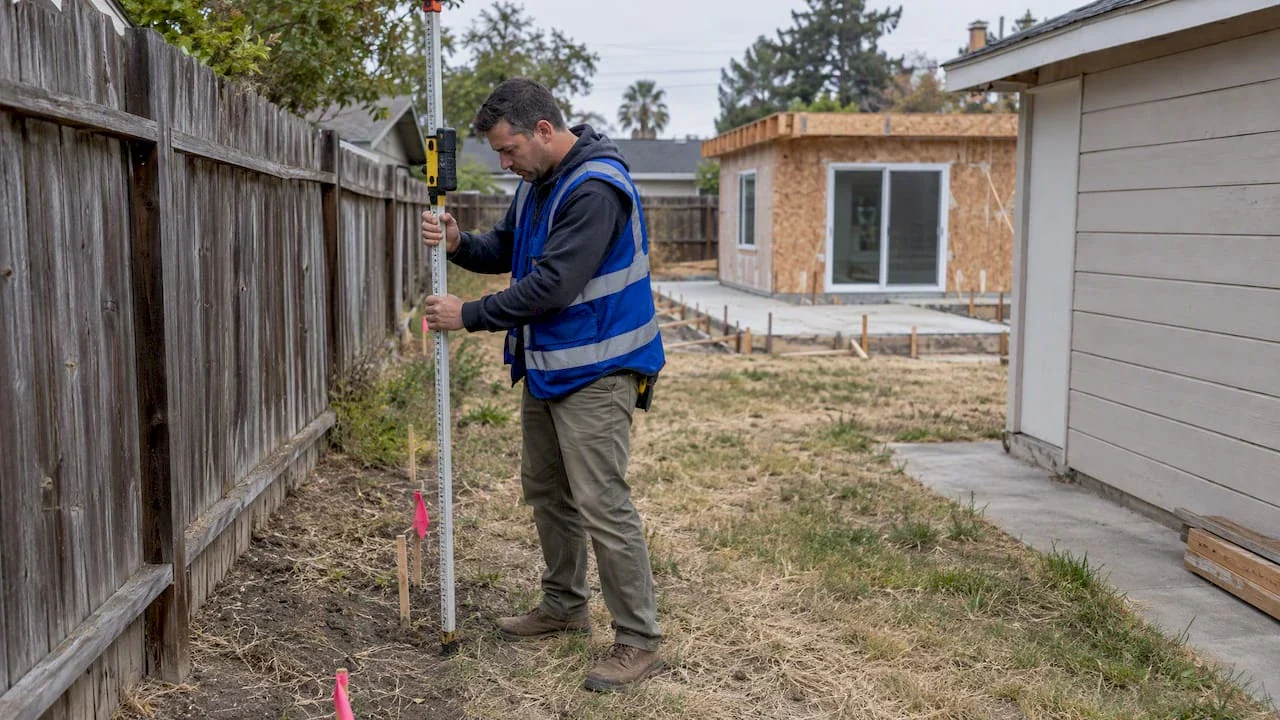
- Measure the actual distance from your access road to the ADU’s farthest exterior wall before finalizing site layout
- Photograph the access route’s width, surface, and grade for your plan submittal
- Confirm the route meets the 20-foot clear-to-sky and 15% grade standards before assuming it qualifies
Pro Tip: Bring your access measurements to the fire department for an early consultation before finishing your design, since a failed access check after drawings are complete usually costs more time than catching it up front.
Steps to confirm requirements and prepare your plan-check package
Confirming whether your ADU needs sprinklers is a short sequence, not a guessing game:
- Verify the primary dwelling’s sprinkler status through existing permit records or a site inspection, since this single fact decides most of the outcome.
- Check your parcel’s Fire Hazard Severity Zone status with LA planning and zoning resources, since hazard zone designation can add requirements beyond the standard exemption.
- Complete Form 195 with your water purveyor to document actual fire flow and pressure at the site, especially if your lot has an older or undersized water main.
- Assemble your plan-check package, including an access exhibit, a sprinkler layout if you’re proposing one, and the correct NFPA system selection, then request an early pre-check meeting with the authority having jurisdiction.
The most common plan-check delays trace back to skipping step one or submitting Form 195 late. Both are avoidable with a short conversation before drawings are finalized.
Our view on when sprinklers are worth installing anyway
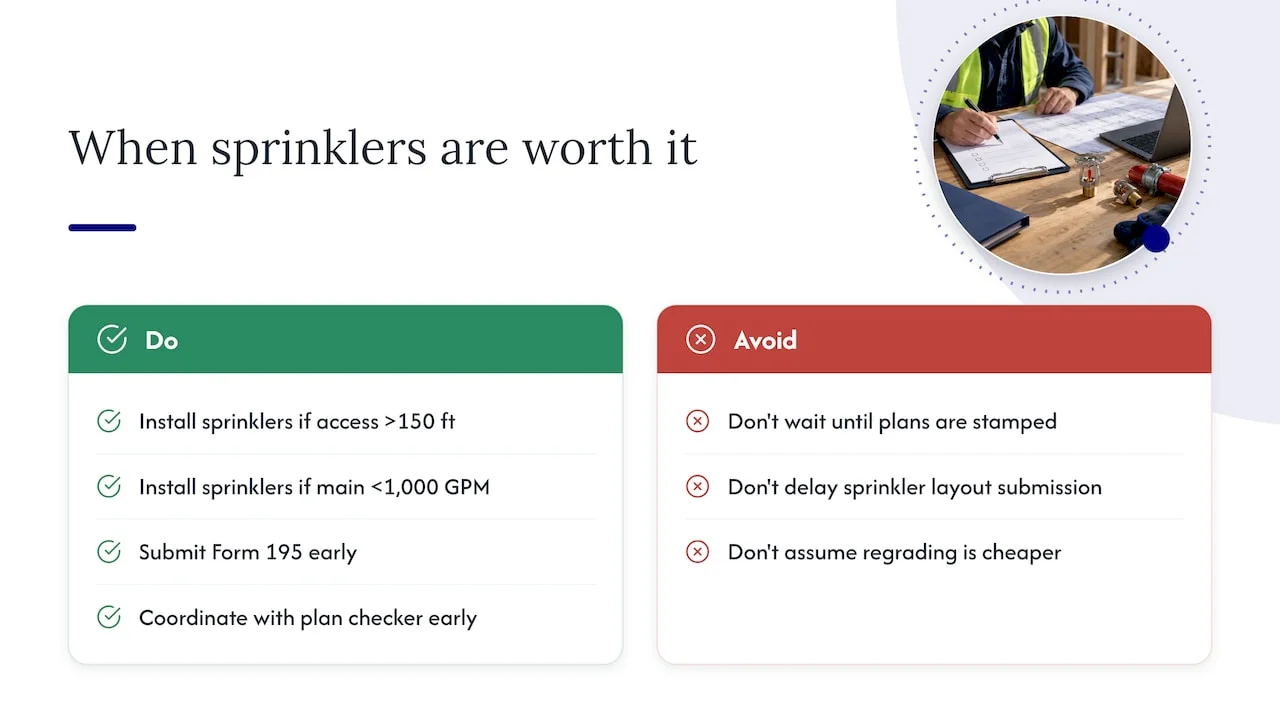
Some owners choose to install sprinklers even when the exemption applies, and that choice usually comes down to site constraints rather than code language. A lot with access longer than 150 feet, or a water main that can’t deliver 1,000 GPM, often makes sprinklers the cheaper fix compared to regrading a driveway or upsizing a water main.
Clients can coordinate with water purveyors and fire plan checkers to get Form 195 and any sprinkler layout submitted early, which is where most ADU permit delays start. Catching an access or fire-flow problem during design, rather than after plans are stamped, keeps a project on schedule and avoids redesign costs that fall on the homeowner.
, Uni Construction
How we support ADU sprinkler and permit coordination
This process can be made faster by handling paperwork and drawings such as design engineering and permit-ready plans, drafting for access exhibits and sprinkler layouts, structural engineering for garage conversions and additions, and coordination with LA County Fire and LADBS during plan-check.
If you’re planning an ADU in Los Angeles and aren’t sure whether your site will trigger a sprinkler requirement, we offer:
- A feasibility review that checks your lot’s access distance and likely Fire Hazard Severity Zone status
- Coordination with your water purveyor to complete Form 195 before you submit for permit
- An estimate and schedule built around your specific site conditions
Start with our design engineering services to get a permit-ready package moving, or review our Los Angeles ADU design services for local project examples.
FAQ
Generally, no, if the ADU sits on the same lot as an existing single-family home that was never sprinklered, thanks to the exemption described in state fire marshal guidance. If the primary dwelling already has sprinklers, or you’re building a new primary residence alongside the ADU, the requirement typically applies to both structures.
Limited fire department access beyond 150 feet, insufficient public fire flow below the threshold in Form 195, or location in a higher Fire Hazard Severity Zone can each push a reviewer toward requiring sprinklers as a mitigation measure. A sprinklered design can also extend the standard access distance from 150 feet to 300 feet.
Form 195 documents fire flow availability for a building permit, and it needs certification from your water purveyor before submission to LA County Fire. Getting it completed early avoids a common source of plan-check delay for ADUs under 3,600 square feet.
Frequent issues include skipping a check on the primary dwelling’s sprinkler status, submitting fire-flow forms late, and underestimating access road requirements on hillside lots. Confirming whether a structure qualifies as an ADU versus a guest house before design starts also prevents permitting confusion down the line.
Grant programs and funding amounts change over time and are not something we administer or track as part of our services, so we recommend confirming current availability directly with California HCD or your local housing authority. We can advise on design and permitting costs once you know your project scope and financing.
Sources
- Fire Flow Availability for Building Permit (Form 195) , LA County Fire Department
- Residential Code Manual R313.2 , County of Los Angeles
- Accessory Dwelling Units and Automatic Residential Fire Sprinkler System Requirements , OSFM (via City of Pasadena)