


Under California law, an ADU must have fire sprinklers only when the primary residence on the same lot is required to have them. Most homeowners with an unsprinklered main house can skip sprinklers in their accessory dwelling unit, thanks to Government Code § 66314. Two things can still change that answer: certain attached or oversized ADUs, and local fire-flow or access conditions your fire department flags during permit review.
TL;DR:
- Most homeowners with an unsprinklered primary residence can skip installing fire sprinklers in their ADU, unless the ADU is attached, oversized, or site-specific conditions trigger requirements.
- Local fire departments can still require sprinklers if site conditions like low fire-flow or poor driveway access fail to meet safety thresholds, regardless of state exemptions.
- Checking permit history and obtaining a fire-flow letter beforehand can prevent costly delays caused by unexpected sprinkler mandates during permit review.
- Installing sprinklers is often a cost-effective way to meet fire safety requirements when water flow or access issues exist, as they can reduce fire-flow demands and improve access allowances.
- Coordinating early with your water provider and fire department, ideally through a pre-submittal meeting, ensures your plans are compliant and reduces the risk of permit delays.
What California law and official guidance say
State law draws a clean line: an ADU’s sprinkler requirement follows whatever applies to the primary residence, not the other way around. Under Government Code § 66323, a local agency cannot require sprinklers in an ADU or JADU if the main house doesn’t already need them, and building an ADU cannot retroactively force sprinklers onto the primary dwelling either.
The state’s ADU handbook and the accompanying OSFM information bulletin walk through how this plays out in practice:
- New standalone homes built under the California Residential Code generally require sprinklers, but that rule targets new primary dwellings, not ADUs added to an existing property.
- If the primary residence predates the sprinkler mandate and was never retrofitted, the ADU typically stays exempt too.
- HCD’s guidance exists partly to stop local agencies from layering extra sprinkler conditions onto ADU permits beyond what state law allows.
Even with that clarity, local fire officials retain some discretion tied to site conditions, which is where things get more specific.
Common scenarios and exceptions homeowners see
Every property is a little different, and the exemption doesn’t apply uniformly across every ADU type.
- Detached ADUs on unsprinklered lots are usually exempt outright. If the primary home was never required to have sprinklers, a standard detached ADU typically inherits that exemption regardless of size, as long as no other trigger applies.
- Attached ADUs face closer scrutiny. An attached unit larger than 500 square feet, or a project where the combined gross floor area of the primary home and ADU exceeds a certain square footage threshold, can cross thresholds that some jurisdictions treat as triggering sprinkler review.
- Junior ADUs (JADUs) carved out of existing living space generally follow the same exemption logic as detached units, since they share the primary structure’s existing systems and footprint.
- Prior remodels matter. If a past addition or renovation on the primary home already triggered a sprinkler requirement under local code, that status usually sticks, meaning any new ADU on the lot inherits a sprinklered baseline rather than starting fresh.
Checking your property’s permit history before you design anything saves a lot of guesswork later.
How local fire departments and site conditions affect requirements
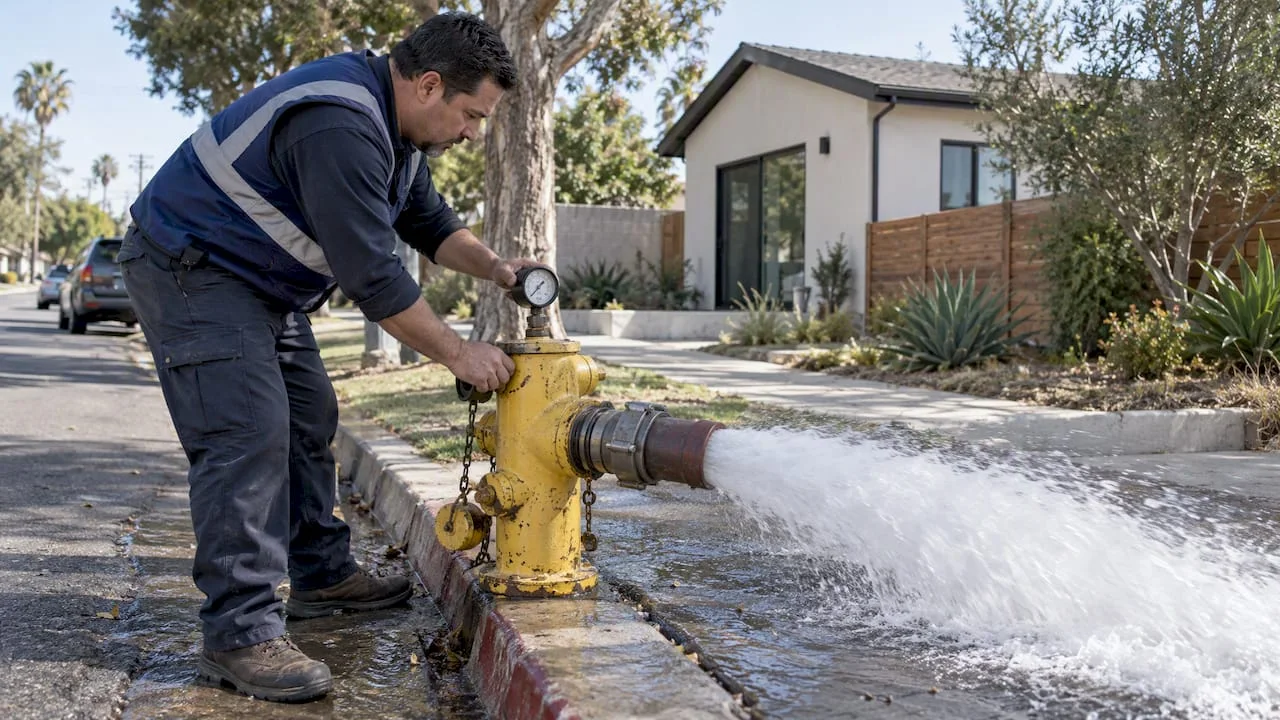
State exemptions don’t override a fire department’s authority to flag site-specific problems. Fire-flow, the volume of water available at adequate pressure to fight a fire, is the most common trigger.
- Local fire codes set minimum fire-flow thresholds based on building size and construction type, and a lot with weak hydrant flow or long driveway access can fall short even when the ADU itself is exempt by statute.
- Sprinklers are one of the few upgrades that let a fire department accept a lower fire-flow number or a longer access distance instead of requiring costly hydrant or road work.
- Access and egress rules, driveway width, turning radius, and distance from a public street to the structure, also factor into whether a reviewer asks for mitigation.
Fire-flow figures illustrate the trade-off: Los Angeles County Fire Department guidance shows sprinklered buildings can meet reduced flow standards, such as a specific reduced fire-flow rate for sprinklered buildings compared to typically higher fire-flow demands for non-sprinklered buildings. That gap is often the deciding factor for hillside or long-driveway lots.
Practical checklist: confirming what your property needs
Don’t guess. A short round of verification up front avoids a sprinkler surprise mid-permit.
- Pull the permit history on your primary residence to see if any past remodel already triggered a sprinkler requirement.
- Request a fire-flow letter from your water provider or municipal utility, showing available gallons per minute and pressure at your service connection.
- Schedule a pre-submittal meeting with your local building and fire departments, bringing a site plan, project scope, and total floor area calculations.
- Ask directly whether sprinklers would be accepted as mitigation for any flow or access shortfall, and what documentation the fire marshal’s office wants to see.
Our California ADU permit guide walks through the broader pre-submittal process if you want the fuller picture before your meeting.
Pro Tip: Bring your fire-flow letter to the pre-submittal meeting even if you don’t think you’ll need it. Fire departments move faster when the numbers are already on paper.
Cost and timeline implications of adding sprinklers
When sprinklers do end up required, whether by statute or as site mitigation, the bill depends on a handful of variables.
- Number of sprinkler heads needed to cover the ADU’s square footage drives most of the material and labor cost.
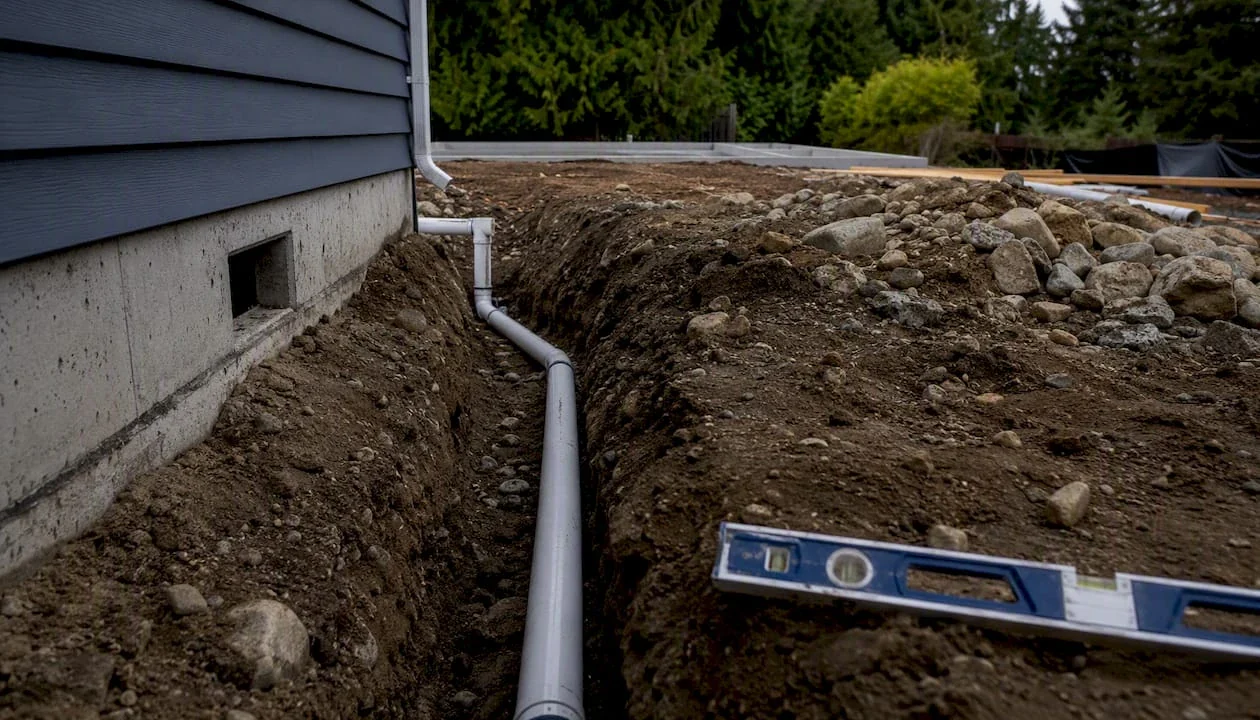
- Distance from the water main to the ADU matters a lot: a unit far from the existing service line means more trenching and pipe.
- Meter or service upgrades get added when the existing water connection can’t support both the house and a sprinklered accessory unit.
- Permit review time typically extends when sprinklers enter the plan late, since it can trigger a second round of fire department sign-off.
Designing for the possibility early, even if you end up exempt, keeps your utility connections and floor plan flexible enough to avoid a costly redesign later.
Sprinklers as mitigation and what else AHJs may accept
Sprinklers aren’t just a compliance box. In many cases they’re the cheapest way to solve a fire-flow or access problem that would otherwise require infrastructure work.
- An approved residential sprinkler system can lower the fire-flow a jurisdiction requires and, in some cases, extend the allowable distance from a fire access road to the structure.
- Some AHJs will instead accept improved driveway access, a new or relocated hydrant, or other engineered fire-safety measures if a homeowner prefers not to sprinkler the unit.
- The right call usually comes down to cost comparison: installing sprinklers is often less disruptive than widening a driveway or extending a water main to add a hydrant.
Getting your fire department’s preference in writing before you finalize design saves a redesign after submittal.
Permit pitfalls we see and how we prevent them
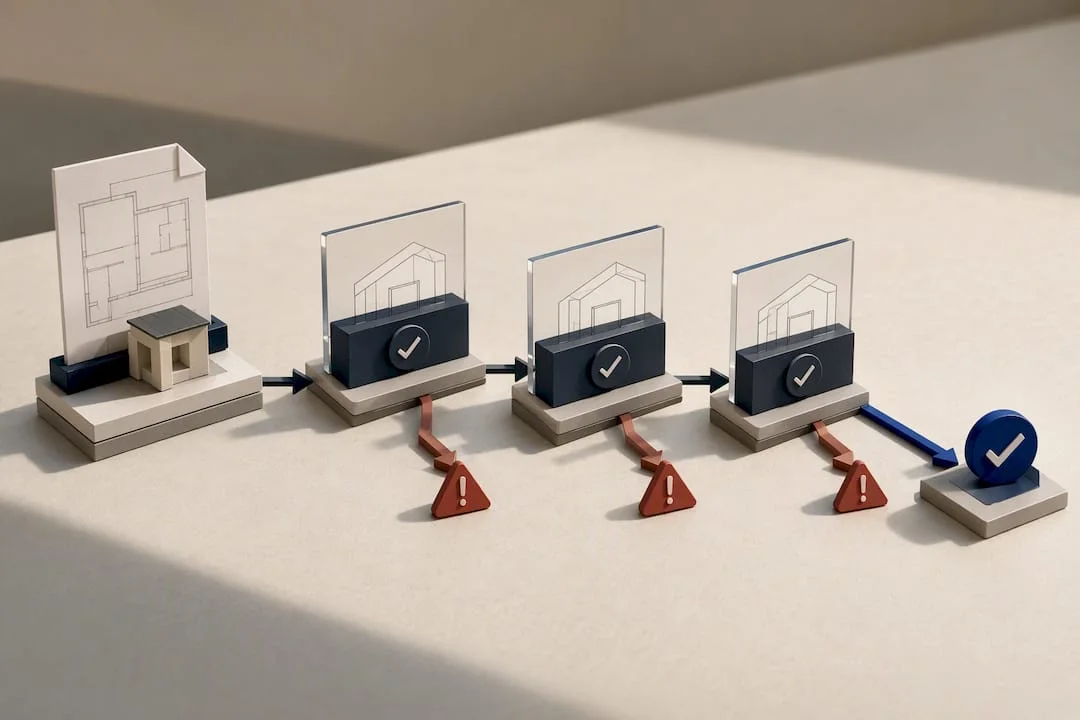
The most common sprinkler-related delay we run into isn’t the law itself. It’s homeowners submitting plans without a fire-flow letter, unclear about their property’s remodel history, or with driveway access that doesn’t meet the local fire code. Each one stalls a permit review by weeks.
Coordinating a site evaluation, checking permit history, and getting in front of the AHJ early solves most of it before plans are even drawn. That’s the sequence we build into every ADU project scope, because a sprinkler condition discovered after submittal costs far more time and money than one caught during design.
**
How Uni Construction can help with sprinkler planning
If your property lands in a gray area on sprinklers, that’s exactly where design coordination pays off. We handle permit-ready drawings, water-flow letter coordination, and direct AHJ conversations as part of the same process, so sprinkler questions get resolved before they become permit delays.
- Permit-ready drawings and structural engineering sized to your lot’s actual conditions.
- Coordination with your water provider on fire-flow documentation.
- Direct AHJ communication to confirm sprinkler status before submittal.
- Full design-to-build project management from first sketch through inspection.
Start with our Design Engineer service to get your property’s fire-flow and sprinkler questions answered before you finalize plans.
Sources
FAQ
New primary dwellings built under the California Residential Code generally require sprinklers, but the requirement for an ADU depends on whether the primary residence on that lot already needs them under Government Code § 66314. If the main house is exempt, the ADU usually is too.
There is no statewide “3x rule” governing ADU sprinklers in California law or the cited HCD and OSFM guidance. If you’ve seen this term locally, ask your building department directly since it isn’t part of the state framework covered here.
The HCD ADU handbook update for March 2026 continues the existing rule that sprinklers in an ADU follow the primary dwelling’s requirement under Government Code § 66323. It also reinforces limits on what local agencies can add beyond state ministerial approval standards.
That figure isn’t addressed in the state statutes, HCD handbook, or OSFM bulletin referenced in this article, so it isn’t covered here. Check directly with HCD or your local housing agency for current ADU financial assistance programs.
Start by checking your primary home’s permit history for any past sprinkler trigger, then request a fire-flow letter from your water provider. A pre-submittal meeting with your local fire department, as outlined in the LACoFD EG-07 guidance, gives you the most reliable answer for your address.