

Every ADU in Los Angeles must connect to the public sewer system or an approved private system , no exceptions. Before your contractor breaks ground, you need three things done: call DigAlert (811) to mark underground utilities, order a professional sewer camera inspection of your existing lateral, and contact both LADBS and LASAN to confirm any site-specific requirements for your parcel. Those three steps determine everything else , whether you can share the main house lateral, whether gravity drainage works, and whether you’re looking at a $5,000 tie-in or a full lateral replacement.
Your immediate action checklist:
- Call 811 (DigAlert) before any digging , required by law
- Hire a licensed plumber to perform a sewer camera/video inspection of your existing lateral
- Contact LADBS (Los Angeles Department of Building and Safety) to confirm permit requirements for your ADU type
- Contact LASAN (Los Angeles Sanitation and Environment) or LA County DPW for public sewer connection approvals
- Pull your parcel’s sewer records from city maps to locate the lateral route and depth
Key Takeaways
An ADU sewer connection in Los Angeles requires a minimum 4-inch ABS or PVC line at 2% slope, a complete permit package with labeled point of connection, and a video inspection of the existing lateral before any permit is submitted.
| Point | Details |
|---|---|
| Minimum technical standards | 4-inch ABS/PVC pipe, 2% slope, 12-inch minimum cover, sewer line starting 24 inches outside the ADU foundation. |
| Video inspection is required | A sewer camera scope must confirm lateral capacity and condition; a failed inspection triggers replacement before ADU approval. |
| Backwater valve triggers | Required when the ADU finished floor is below the upstream manhole elevation; a manufacturer spec sheet and form must be submitted. |
| Budget for contingencies | Build in contingency on sewer scope for older properties; assume lateral replacement until the camera proves otherwise. |
| Uni Construction’s role | Uni Construction handles site evaluation, permit-ready plumbing drawings, agency coordination, and construction management for LA ADU sewer connections. |
What the ADU sewer connection rules in Los Angeles actually require
The technical rules for an ADU sewer connection in Los Angeles come from a layered set of authorities: the California Plumbing Code (CPC), the Los Angeles Municipal Code, LADBS local amendments, and LASAN/LA County DPW guidance. Understanding which layer controls your project is the first thing your designer needs to sort out.
Pipe size and approved materials
For most ADUs, a 4-inch minimum sewer pipe is the practical standard. Sewer line guidance for ADUs confirms the common requirement: 4-inch minimum diameter, with ABS or PVC as the approved materials. Clay pipe is explicitly prohibited under structures per CPC Section 311.1. If your older LA property has clay pipe running under a new foundation or addition, that section must be abandoned and rerouted at least 24 inches outside the foundation , a cost that catches many homeowners off guard on pre-1970s parcels.
Slope, depth, and cover
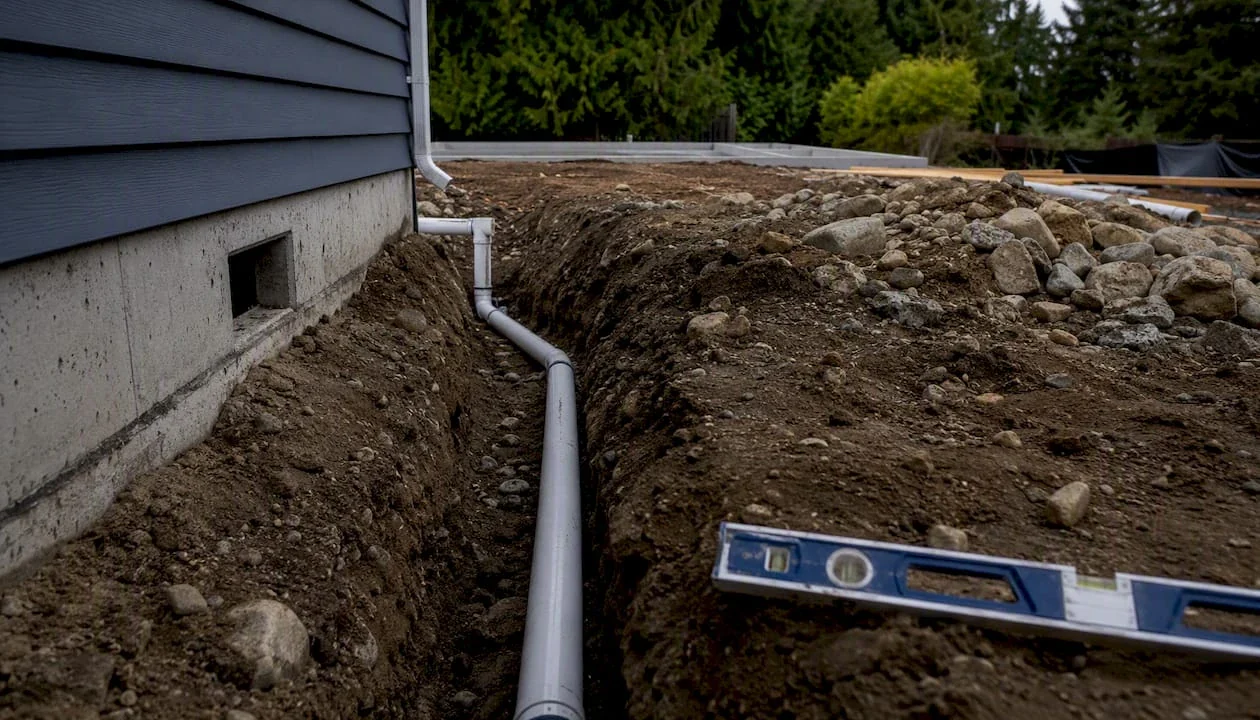
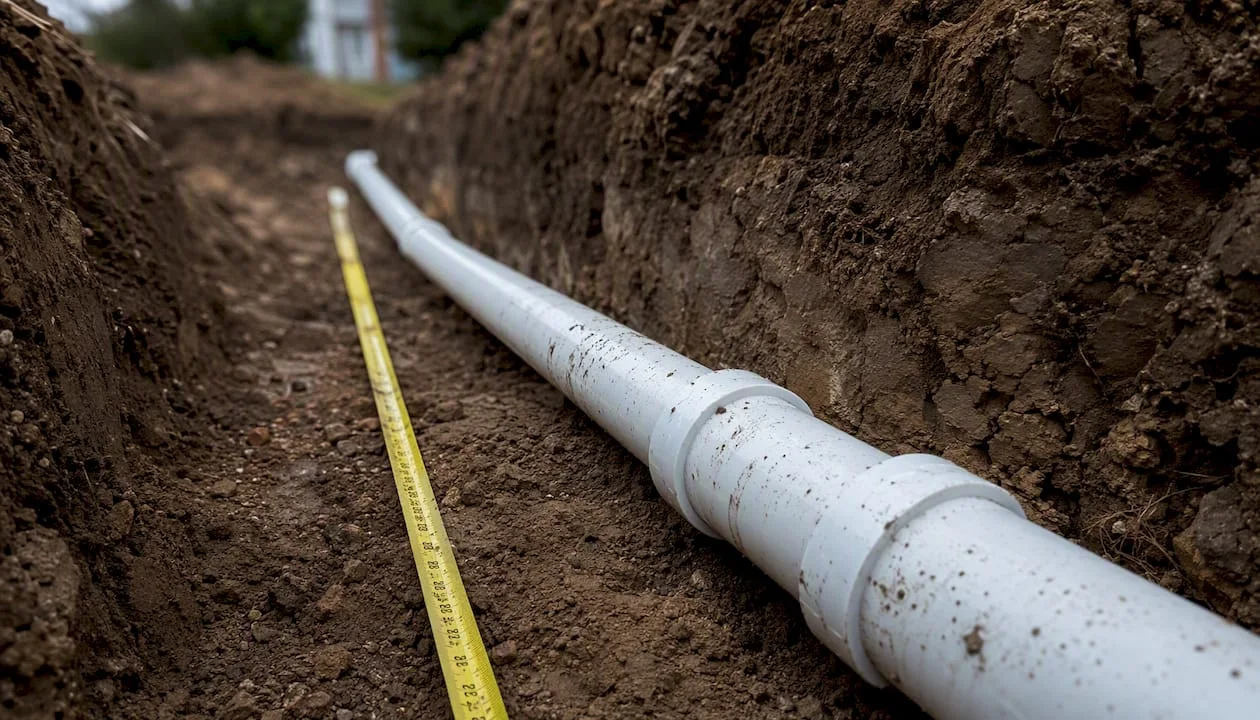
The LA County ADU How-To Guide sets the baseline: the sewer line starts 24 inches outside the ADU foundation, must be installed at minimum 12 inches below grade, and must maintain at least a 2% downward slope (equivalent to 1/4 inch per foot) to the point of connection. That 2% slope is not a suggestion , it’s the threshold that determines whether gravity drainage is even possible for your ADU’s location on the lot.
Cleanouts and backwater valves
A two-way cleanout is recommended within 24 inches of the ADU building, per the same county guidance. This gives future maintenance crews access from both directions without excavating. The backwater valve requirement kicks in when the ADU’s finished floor elevation falls below the elevation of the next upstream manhole cover on the public main , at that point, a backwater valve is required by code to prevent sewage from flowing back into the unit during a sewer surcharge event. When a backwater valve is required, you’ll need to complete a backwater valve form and submit manufacturer specification sheets with your permit package.
Key technical requirements at a glance:
- Minimum 4-inch sewer pipe for most ADUs
- Approved materials: ABS or PVC only (no clay under structures)
- Minimum 2% slope (1/4” per foot) to point of connection
- Sewer line begins 24 inches outside the ADU foundation
- Minimum 12-inch cover/depth below grade
- Two-way cleanout recommended within 24 inches of the ADU
- Backwater valve required when ADU floor is below upstream manhole elevation
Pro Tip: Inspectors flag plan sets that don’t show a labeled point of connection with a slope callout. If your plans show the sewer route but don’t call out the slope percentage and the depth at the connection point, expect a plan-check correction. Label both on the site plan , it takes 30 seconds and saves a two-week delay.
What permits and inspections does an ADU sewer connection require?
The permit path for accessory dwelling unit plumbing in Los Angeles runs through multiple agencies, and the sequence matters. Pulling permits in the wrong order adds weeks.
Permits you’ll need
- Plumbing permit from LADBS , covers all interior and exterior plumbing work for the ADU, including the building sewer from the ADU to the point of connection
- Sewer connection permit from LASAN or LA County DPW , required when connecting to the public sewer main or when work involves the public lateral
- Encroachment permit from the Bureau of Engineering or the relevant city/county agency , required any time work involves a street cut, sidewalk, or public right-of-way
- Sewer Maintenance Saddle permit , may be required by LASAN when adding a new connection point to the public main
The LA County sewer permit example for ADUs shows exactly how these connections are documented: the permit record captures sewer depth, manhole reference, and the labeled entry “Conn Additional BLDG to House Sewer” , which is the data inspectors use to verify the connection meets code.
Agencies to contact
| Agency | Role |
|---|---|
| LADBS | Plumbing permit issuance, plan check, and field inspections |
| LASAN / LA County DPW | Public sewer connection approvals and sewer maintenance saddle permits |
| Bureau of Engineering | Encroachment permits for street cuts and public right-of-way work |
| LADWP | Water service coordination (separate from sewer but often concurrent) |
| DigAlert / 811 | Underground utility marking before any excavation |
Standard inspection sequence
- Underground rough plumbing , sewer line from ADU to connection point, before backfill
- Under-slab or underfloor plumbing , interior drain lines before concrete pour or subfloor installation
- Top-out inspection , drain, waste, and vent system complete above floor
- Sewer connection inspection , actual tie-in to the existing lateral or public main, witnessed by inspector
- Final plumbing inspection , all fixtures installed, system tested, backwater valve and cleanout accessible
Documents required for permit submittal:
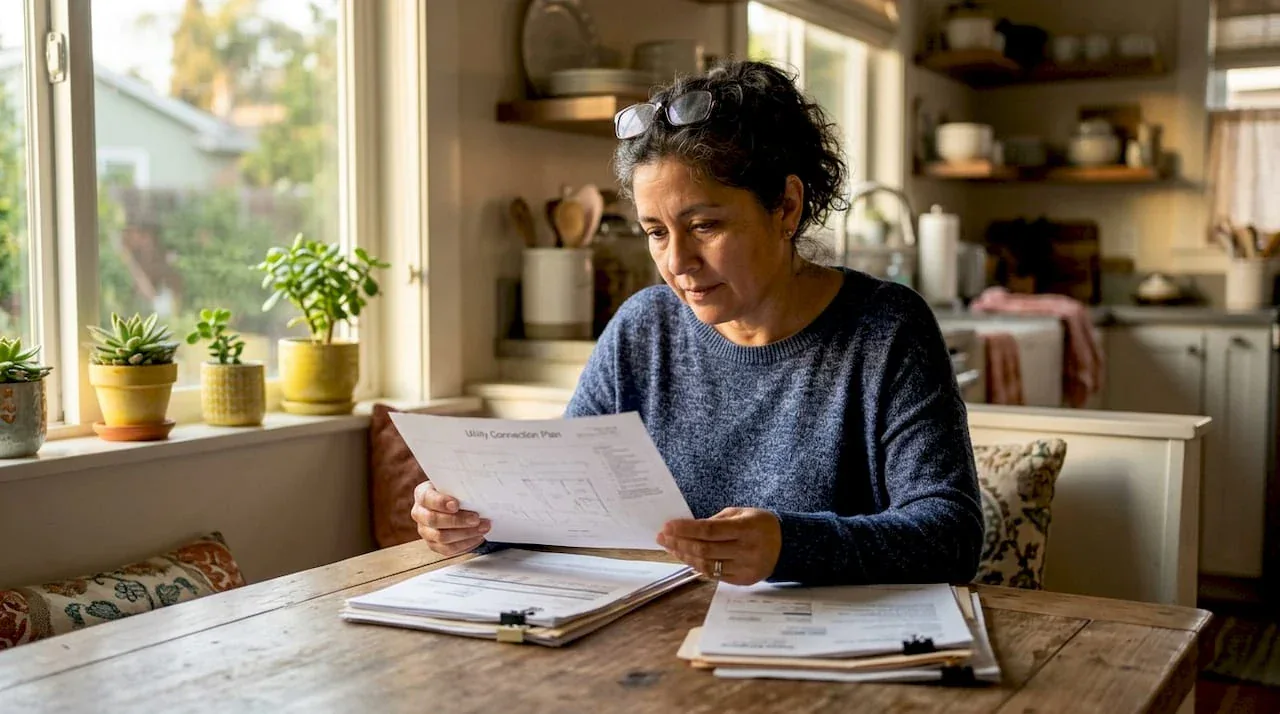
- Site plan showing point of connection, pipe route, slope callouts, and depth measurements
- Plumbing plans with fixture counts and pipe sizing
- Sewer video inspection report from licensed plumber
- Backwater valve form and manufacturer spec sheet (when required)
- Pump manufacturer specifications (when a sewage ejector is required)
- Encroachment permit application (when street cuts are involved)
- Sanitation district approval letter (when a new public connection is required)
For a broader look at the ADU permit process in Los Angeles, the sequencing of sewer permits within the overall ADU approval timeline is covered in detail.
How to locate and verify your existing sewer lateral before designing the connection
Designing an ADU sewer connection without knowing where your lateral is, what condition it’s in, and how deep it runs is how projects end up with expensive surprises after the foundation is poured. Do this work before your designer draws a single line.
Step-by-step lateral investigation
- Call 811 (DigAlert) at least three business days before any digging. This marks gas, electric, water, and telecom lines , not the private sewer lateral, but it protects you from hitting something worse.
- Pull sewer records from city or county maps. LASAN and LA County DPW maintain sewer atlas maps showing the public main location, depth, and manhole references. Your designer or contractor can request these.
- Hire a licensed plumber to perform a sewer camera inspection. The camera goes in through the cleanout (or a pulled toilet if there’s no accessible cleanout) and runs the full length of the lateral to the public main. You want a recorded video and a written report noting pipe material, condition, root intrusion, slope, and any collapsed sections.
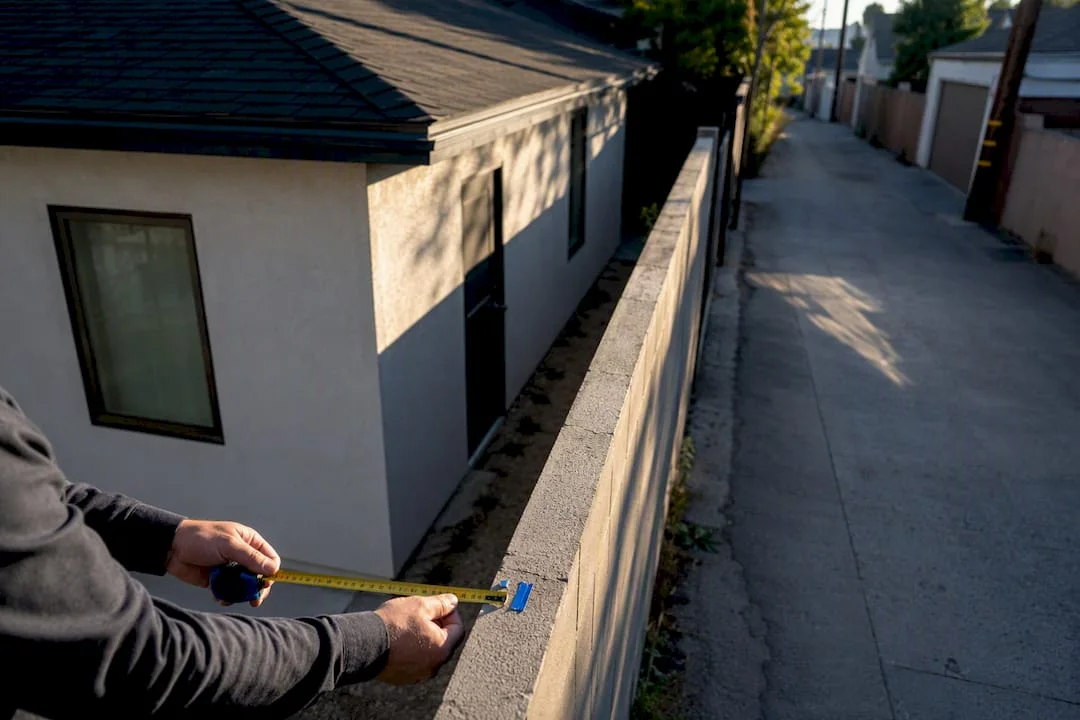
- Expose the connection point if depth or condition is unclear. For older properties, a small hand-dig at the cleanout or the suspected connection point confirms actual depth and pipe material , information your designer needs to show accurate slope callouts on the plans.
- Measure and document. Record the depth at the ADU end, the depth at the connection point, the horizontal distance, and the calculated slope. Note the pipe material and diameter.
What to record for permit submittal
- A copy of the video inspection (MP4 or DVD , inspectors sometimes request it)
- An annotated site plan showing the lateral route, measured depths at key points, and the calculated slope
- A photo of the cleanout location and any manhole reference used
- A written scope note from the plumber stating whether the lateral is adequate for the added load or whether replacement is recommended
ADU plumbing requirements in Los Angeles are explicit: if the video inspection reveals a defective or undersized lateral, repair or replacement is required before ADU approval moves forward.
Pro Tip: When writing up the scope findings for your permit package, phrase it this way: “Existing 4-inch ABS lateral confirmed at [depth] at point of connection; slope calculated at [X]%; lateral in good condition per video inspection dated [date].” Plan checkers can approve that in one read. A vague note like “sewer lateral inspected” sends it back for clarification.
Common problems that delay ADU sewer hookups and how to avoid them
Most sewer-related delays on ADU projects in Los Angeles trace back to the same handful of issues. None of them are surprising , they’re just easier to handle before construction starts than after.
Frequent causes of delay:
- Clay pipe under or near the proposed structure. Pre-1970s properties in LA commonly have clay laterals. CPC prohibits clay under structures, so any clay pipe that would run under the new ADU foundation must be replaced before the foundation is poured. Discovering this after permit issuance means a change order and a schedule hit.
- Insufficient slope. A rear ADU on a flat lot may not have enough elevation change to maintain 2% slope to the connection point. This forces either a redesign of the ADU’s finished floor elevation or a sewage ejector pump , both of which affect cost and permit scope.
- Root intrusion or lateral blockages found on camera. A partially blocked lateral that works fine for one household may not pass capacity review for two units. The camera scope is the only way to know before permits are submitted.
- Garage floor drains connected to the sewer. Garage drains in older LA homes are sometimes illegally connected to the sanitary sewer. When an ADU conversion triggers a plumbing permit, inspectors look for this and require the connection to be severed and the drain rerouted to an approved system.
- Storm drain connections. Similar issue , older properties sometimes have roof drains or area drains tied into the sanitary sewer. These must be corrected as part of the ADU permit.
- Public street cut or encroachment permit required. If the new connection point requires opening the street, you need an encroachment permit from the Bureau of Engineering before any work starts. This adds time and cost that many homeowners don’t budget for.
Red flags to watch for:
- Neighborhood built before 1970 (high probability of clay pipe)
- Rear ADU on a lot with minimal grade change (ejector pump likely)
- No accessible cleanout on the existing lateral (scope is harder; connection point is unknown)
- Public main is far from the property line (long trench, higher cost)
Pro Tip: If your property is in an older LA neighborhood and you haven’t done the camera scope yet, assume lateral replacement until the video proves otherwise. Budget for it, include it in your contractor scope as a contingency line item, and you’ll either use it or have a pleasant surprise. Discovering clay pipe after the foundation is poured is the most expensive version of this lesson.
Realistic cost drivers and timeline for an ADU sewer connection
There’s no single price for an ADU sewer connection in Los Angeles because the variables swing the cost dramatically. Distance to the public main, lot conditions, pipe age, and whether a street cut is involved are the four biggest levers.
Primary cost drivers
- Distance from ADU to public main. Every additional foot of trench adds labor and material cost. A rear ADU on a 150-foot-deep lot costs significantly more to connect than a garage conversion 20 feet from the street.
- Trenching and restoration. Digging through a concrete driveway, a landscaped yard, or a paved alley costs more than open dirt. Street cuts add a separate restoration requirement (asphalt patch, compaction testing) that the city inspects.
- Lateral replacement. If the existing lateral is clay, collapsed, or undersized, full replacement from the ADU to the public main is required. This is typically the single largest cost variable on older properties.
- Sewage ejector pump system. A pump vault, ejector pump, check valve, alarm, and electrical connection add cost beyond the sewer line itself , plus ongoing maintenance.
- Permits and encroachment fees. LADBS plumbing permit fees, LASAN connection fees, and Bureau of Engineering encroachment permit fees vary by project scope. Budget these as a separate line item.
For permit cost context, the ADU permit cost guide for Los Angeles breaks down plan check and agency fee expectations across project types.
Typical timeline stages
- Site investigation (camera scope, records pull, depth measurement): 1–2 weeks
- Design and permit submittal (plumbing plans, site plan, permit package): 2–4 weeks depending on designer workload
- LADBS plan check: variable , over-the-counter for simple projects, 4–8 weeks for standard review; express review options exist
- Construction (simple tie-in to existing lateral): 1–2 weeks
- Construction (lateral replacement or street cut involved): 3–6 weeks, including encroachment permit lead time
- Final inspection scheduling: 1–2 weeks after construction complete
The sewer connection work typically runs concurrently with other ADU utility connections. Coordinating the sewer, water, gas, and electrical permits together avoids redundant inspections and trench openings. The ADU utility connection guide for California homeowners covers that coordination in detail.
What to include with your ADU sewer permit application
A complete submittal on the first pass is the single most effective way to cut weeks off your permit timeline. Plan checkers return incomplete packages , and every correction cycle costs you time.
Document and drawing checklist
- Site plan showing the ADU footprint, the sewer route from ADU to point of connection, labeled connection point (downstream of main house), slope callouts, and depth measurements at key points
- Plumbing plans with fixture unit counts, pipe sizing calculations, and material specifications (ABS or PVC called out)
- Sewer video inspection report (written summary plus video file if requested)
- Backwater valve form with manufacturer specification sheet (when required by elevation conditions)
- Sewage ejector pump manufacturer specifications (when a pump system is required)
- Encroachment permit application or approval (when street cuts or public right-of-way work is involved)
- Sanitation district approval or LASAN connection approval (when a new public main connection is required)
- Any required LADWP coordination documentation for water service
Drawing details that matter to plan checkers
- Label the point of connection clearly , “POC: 2 ft outside existing building, downstream of main house trap” is the language that matches what inspectors expect per the LA County ADU guidelines
- Show slope callouts on the sewer line (e.g., “4” ABS @ 2% slope min.“)
- Locate the two-way cleanout within 24 inches of the ADU and label it on the plan
- If a backwater valve is required, show its location, access point, and the manufacturer model number
- Note any public-work components in a general notes block: “Street cut and asphalt restoration per Bureau of Engineering encroachment permit [number]”
Practical submittal tips:
- Organize your PDF package in the order plan checkers expect: site plan first, then plumbing plans, then supporting documents
- Include a one-page cover letter summarizing the scope: ADU type, square footage, connection type (shared lateral vs. new), and whether a pump or backwater valve is included
- If you’re submitting for a California ADU permit application, confirm whether your jurisdiction uses the city’s online portal or requires an in-person submittal for sewer-related permits
How Uni Construction approaches ADU sewer connections for Los Angeles homeowners
Sewer work is where ADU projects most often go sideways , not because the code is unclear, but because the site conditions on older LA properties rarely match what the plans assumed. Uni Construction’s approach starts with the site evaluation before a single drawing is produced.
Services Uni Construction provides for sewer connections
- Site evaluation and feasibility review: Assessing lot grade, existing lateral location, pipe material, and connection point options before design begins
- Permit-ready plumbing drawings: Site plans and plumbing plans that include all the labeled details plan checkers require , slope callouts, point of connection, cleanout locations, backwater valve placement
- Sewer scope procurement: Coordinating the video inspection with a licensed plumber and incorporating the findings into the permit package
- Agency coordination: Managing submittals to LADBS, LASAN, and the Bureau of Engineering, including encroachment permit applications when street cuts are required
- Construction management: Overseeing lateral work, pump installations, and inspection scheduling through final closeout
Questions to ask any contractor before signing
- Have you replaced a sewer lateral in this neighborhood before, and what pipe material did you find?
- Who pulls the encroachment permit if a street cut is required , you or a subcontractor?
- What’s your process if the camera scope reveals clay pipe under the proposed foundation?
- What warranty do you offer on a sewage ejector pump installation?
- Can you provide references for projects that required a street-cut restoration?
Project milestones Uni Construction typically delivers
- Sewer scope coordinated and report incorporated into permit package
- Site plan and plumbing plans submitted to LADBS with complete supporting documents
- Inspection scheduling managed through underground, top-out, sewer connection, and final
- Final closeout documentation provided to homeowner
Pro Tip: Get the sewer scope findings written into the contract scope before signing. If the video inspection reveals conditions that require lateral replacement, you want that addressed as a defined scope item with a unit price , not a surprise change order after the foundation crew has already mobilized.
What 10 years of ADU sewer work in Los Angeles actually teaches you
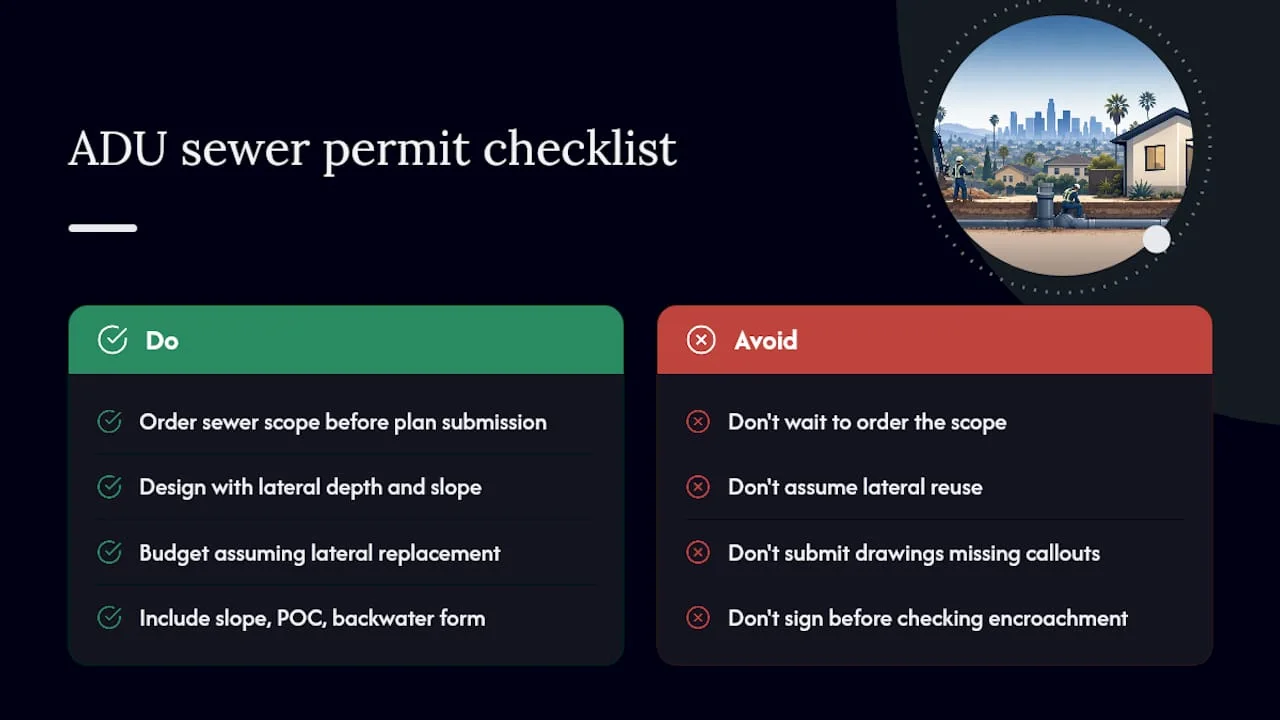
The homeowners who have the smoothest ADU sewer permit experiences share one habit: they treat the sewer scope as a design input, not a permit formality. By the time the scope results come back, the designer should already be incorporating the lateral depth and slope data into the site plan. Waiting until after plan check submittal to order the scope is the most common sequencing mistake, and it costs two to four weeks every time.
The second thing worth saying plainly: in older LA neighborhoods, the default assumption should be lateral replacement, not lateral reuse. The camera scope might prove you wrong , and that’s a good day. But if you budget for a simple tie-in and the camera finds a collapsed clay lateral under the driveway, you’re looking at a change order that can reshape the whole project budget. Assume the harder scenario until the evidence says otherwise.
Plan check friction almost always comes from the same three omissions: no slope callout on the sewer line, no labeled point of connection, and no backwater valve form when the ADU floor elevation triggers the requirement. These are five-minute fixes on a drawing set. The LA County ADU How-To Guide spells out exactly what inspectors look for , read it before your designer submits, not after the correction notice arrives.
One more thing that rarely gets said: the homeowner who asks their contractor “who pulls the encroachment permit?” before signing is the homeowner who doesn’t get surprised by a three-week delay when the street cut turns out to need Bureau of Engineering approval. Ask the question early.
Uni Construction’s ADU sewer and permit service in Los Angeles
Getting the sewer connection right on an ADU project in Los Angeles means knowing the code, knowing the site, and knowing which agency needs what document before you submit. Uni Construction handles all of it , from the initial ADU feasibility review that identifies your lateral’s condition and connection options, through permit-ready plumbing drawings, LADBS and LASAN coordination, and construction management for lateral work and pump installations.
Where most homeowners spend weeks chasing corrections on incomplete submittals, Uni Construction’s permit packages go in complete the first time: slope callouts, labeled point of connection, backwater valve forms, and video scope reports all included. For properties with older laterals, the site evaluation flags replacement risk before design begins , so the budget reflects reality, not optimism.
If you’re ready to move forward, request a site evaluation or project estimate from Uni Construction’s Los Angeles team. The evaluation covers sewer connection options, permit scope, and a realistic timeline for your specific parcel.
Official resources to bookmark
These are the primary agency documents and contacts you’ll reference throughout the permit and construction process:
- LA County ADU How-To Guide (DPW PDF) , the primary local technical guidance document covering sewer installation depth, slope, cleanout placement, and backwater valve requirements
- LA County ADU Guidelines (PDF) , interprets CPC Section 311.1 for ADU connection points and covers exceptions for rear ADUs and separate lateral requirements
- LA County Sewer Permit Example for ADUs (PDF) , shows how sewer connection data (depth, manhole reference, connection type) is documented in county permit records
- LADBS (Los Angeles Department of Building and Safety) , ladbs.org , plumbing permits, plan check, and field inspections
- LASAN (Los Angeles Sanitation and Environment) , lacitysan.org , public sewer connection approvals and sewer maintenance saddle permits
- DigAlert / 811 , call 811 or visit digalert.org , required utility marking before any excavation; call at least three business days in advance
- California Plumbing Code (CPC) , available through the California Building Standards Commission , governs pipe materials, sizing, slope, and cleanout requirements statewide
Sources
- How To Guide for ADUs.pdf
- Sewer Permit (ADU).pdf
- ADU Guidelines.pdf
- Sewer Line Requirements for ADUs in Los Angeles – Guideline