


Most newly built ADUs in Los Angeles are not subject to the Rent Stabilization Ordinance rent-increase cap but the parcel decides the final answer, not the unit type alone. The main factors are the construction date of the original house (before or after October 1, 1978), whether the ADU is detached or converted from existing habitable space, any Ellis Act withdrawal history, and the certificate of occupancy date. Check LAHD’s own guidance before you lease or finance.
TL;DR:
- Most new detached ADUs in Los Angeles are outside the Rent Stabilization Ordinance, but property age and parcel history can still trigger rent control for the main house.
- Classification depends on construction date, Ellis Act withdrawal history, and certificate of occupancy, requiring thorough record checks before leasing or financing.
- Units converted from habitable space are more likely to be rent-controlled if involved in a pre-1978 property, while non-habitable conversions tend to be exempt.
- Owners should run separate rent projections for the ADU and main house, accounting for the 15-year occupancy exemption and Ellis Act filings to avoid legal or underwriting surprises.
- Verifying permit and Ellis Act history early streamlines compliance, preventing costly rework or legal issues after lease signing or loan funding.
How LA Rent Rules and State Law Apply to ADUs
Three separate legal layers govern an ADU’s rent status, and property owners routinely confuse them. Getting the layers straight matters more than memorizing any single rule.
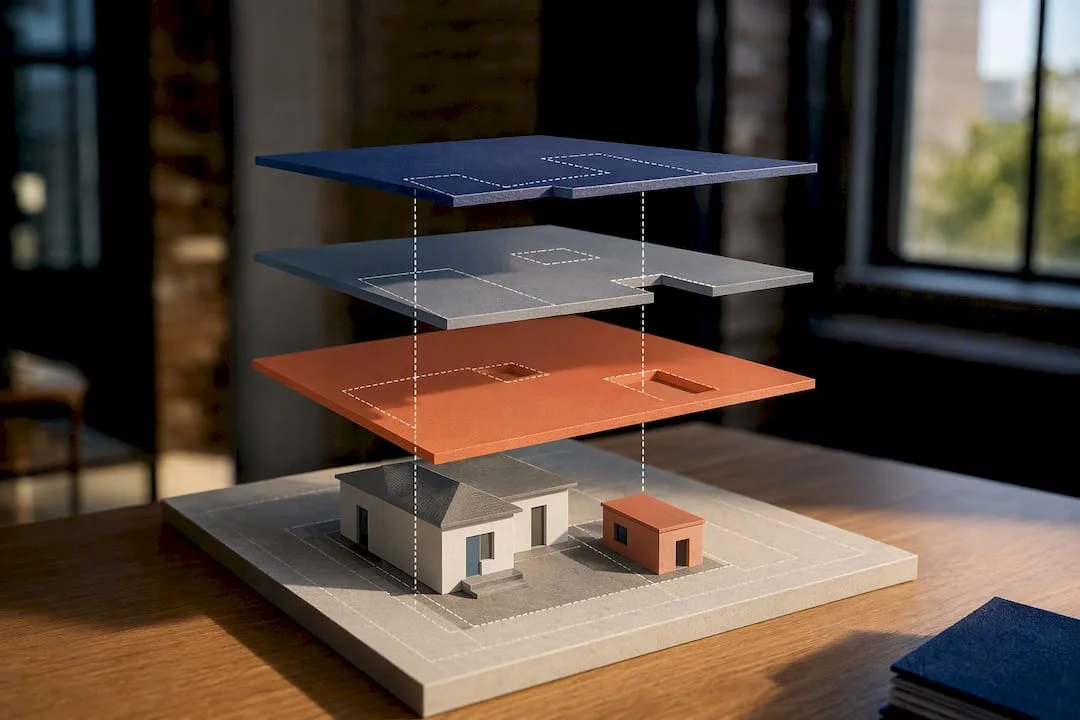
The Rent Stabilization Ordinance (RSO) covers properties with residential buildings constructed on or before October 1, 1978. Under LAHD’s RSO overview, this cutoff is what determines whether a property falls under the ordinance’s rent-cap and eviction rules in the first place. A brand-new detached ADU is usually outside the RSO. The older main house on that same parcel, though, can still carry RSO obligations because it predates the cutoff.
The Just Cause Ordinance (JCO) covers a different problem: eviction protections, not rent amounts. Units that fall outside the RSO, including many new ADUs, often still get JCO tenant protections that limit why and how a landlord can end a tenancy.
Then there’s state law. California Civil Code section 1947.12, enacted through AB 1482, caps annual rent increases statewide at the lower of 5% plus the regional cost-of-living change or 10% over 12 months. But it exempts any unit that received its certificate of occupancy within the past 15 years.
Put together, you’re checking:
- Construction date of the original structure (RSO trigger)
- Eviction rules that may apply regardless of rent-cap status (JCO)
- Statewide caps and the 15-year certificate of occupancy exemption (Civil Code §1947.12)
Verify every figure against LAHD before signing a lease or loan document since city bulletins update these numbers periodically.
Parcel Scenarios That Change the Answer
LAHD’s own guidance walks through specific scenarios, and mapping your property to one of these four gets you most of the way to a correct classification.
- Detached ADU on a pre-1978 parcel. The new detached unit is usually outside the RSO. The pre-1978 main house on the same parcel, however, may still be subject to the RSO on its own terms, so you’re managing two different rule sets under one address.
- Attached ADU added to a pre-1978 home. Watch for the Ellis Act five-year rule. If RSO units on the property were withdrawn from the rental market through an Ellis Act filing, a new unit built within five years of that withdrawal can be pulled back into RSO treatment as a replacement unit.
- Conversion from existing habitable space. Converting a den, garage bedroom, or finished attic that was part of the original pre-1978 house is more likely to fall under the RSO. Converting non-habitable space, like a raw storage garage, more often lands under JCO instead.
- Replacement units after an Ellis Act withdrawal. If your ADU effectively replaces housing that was removed from the rental market, RSO coverage can attach even though the physical structure is new.
Pro Tip: Pull the Ellis Act filing history for your parcel before you finalize ADU design. Discovering a withdrawal on year four of the five-year window after your unit is already framed is a bad time to learn this.
How to Confirm Whether an ADU Is Rent-Controlled
Classification comes down to dates and documents, not guesswork. Before leasing or underwriting, assemble these records:
- Certificate of occupancy date for the ADU and the main dwelling, pulled separately
- Full permit history for the parcel, including any prior demolition or unit-removal permits
- An RSO status lookup through LAHD and a parcel search on ZIMAS
- A search for any Ellis Act filings tied to the address
- Separate files for the ADU and main unit: permits, CO, lease, rent ledger, and current registrations
LAHD recommends keeping these records separate for each unit, because classification hinges on exact construction dates and withdrawal history, not general property age.
Pro Tip: If your Ellis Act search turns up anything within the past five years, stop and call LAHD or a rent-control attorney before signing a lease. That single filing can flip your ADU’s status.
Leasing and Compliance Steps for ADU Owners
Legal occupancy comes before legal leasing, and skipping steps here creates fines you don’t want to explain to a lender later.
- Get final building department approvals and your certificate of occupancy before any tenant moves in, and consider quick interior upgrades from a local interior door replacement dealer to finish your ADU efficiently.
- Register the unit with LAHD if it falls under the RSO or JCO. LAHD lists the RSO registration fee at $38.75 per unit per year and the JCO fee at $31.05 per unit per year, though you should confirm current numbers on LAHD’s billing pages since fees adjust.
- Draft a lease that discloses rent-control status, lists rent amount and any concessions, and spells out notice requirements, utility responsibilities, and parking terms.
- If you’re considering short-term or home-sharing use, know that City Planning’s home-sharing rules are separate from rent control entirely, limited to a host’s primary residence, and require their own registration.
An ADU’s exemption from rent caps says nothing about whether you can list it on a short-term rental platform.
Financial Modeling: Rent Caps, Exemptions, and Underwriting Cautions
The 15-year certificate of occupancy exemption under Civil Code §1947.12 is the single most important date for financial planning, and it’s also the one owners most often overlook when running numbers.
**The most consequential modeling mistake is projecting one blended rent figure for the whole parcel. Model the ADU and main house separately, because the older structure can carry RSO rent-cap exposure while the new ADU does not.
Statistic callout: LAHD’s calculated RSO annual allowable rent increase, effective July 1, 2026 through June 30, 2027, is 3%. This figure resets annually based on CPI, so use it as a planning example, not a permanent assumption.
Watch for these common underwriting errors:
- Assuming ADU exemption status extends to the main house
- Using the statewide 5% plus CPI cap when the unit actually falls under the lower RSO percentage
- Forgetting the 15-year clock starts at certificate of occupancy issuance, not the lease start date
- Skipping a parcel-level Ellis Act check before locking rent projections into a loan application
Owners planning separate income streams for a new ADU and existing house should run each projection independently before presenting numbers to a lender.
What Uni Construction’s Design Team Checks Before Breaking Ground
Rent-control classification depends on the same records a design team needs anyway to secure permits, which is why practical due diligence happens early rather than after leasing starts.
- Request permit and Ellis Act history for the parcel before finalizing whether the ADU will be detached, attached, or a conversion
- Assemble separate permit and certificate of occupancy files for the ADU and the main dwelling from day one
- Track the timeline from design through final inspection, since a clean, complete file speeds up registration once the CO issues
- Final rent-control classification is still LAHD or attorney territory. A design team builds the paper trail that makes that determination fast and defensible.
Why We Tell Owners to Check Status Before Signing Financing
We’ve seen owners get blind sided by unit-level RSO exposure they didn’t know existed, usually because they assumed a new ADU meant a clean slate for the whole parcel. It doesn’t work that way when the main house predates 1978 and carries its own obligations.
A pre-design compliance review, pulling permit history, Ellis Act filings, and CO records before financing closes, catches these surprises when they’re cheap to fix. Finding out after a lease is signed or a loan is funded turns a paperwork issue into a legal one.
, Uni Construction
Get Your ADU’s Rent-Control Status Right From the Start
Figuring out RSO exposure on your own means digging through ZIMAS records, Ellis Act filings, and city bulletins that update without much notice. Record-gathering is built into the design process, pulling parcel history and permit records before drawings are finalized, so an ADU’s likely classification is clearer before spending money on plans that assume the wrong outcome.

Our Design Engineer service handles permit-ready structural drawings with an eye on exactly the compliance questions this guide covers, and our Architectural Designer team can walk a Los Angeles parcel’s specific zoning and rent-control exposure with you before you commit to a detached, attached, or conversion layout. If you’re in Los Angeles and want a straight answer on your property, start with our Los Angeles ADU design page and request a consultation before you finalize your plans.
This article is general information, not a substitute for advice from a qualified lawyer. Consult a qualified legal professional about your own circumstances before acting on anything here.
Sources
FAQ
Most newly built ADUs are not subject to the RSO rent-increase cap, since LAHD guidance treats detached new construction as generally outside the ordinance. The main house on the same parcel can still be RSO-covered if it was built on or before October 1, 1978.
State ADU law continues to streamline permitting and reduce barriers for homeowners statewide, while rent-cap questions run through a separate statute, Civil Code §1947.12. For your specific parcel’s zoning and permit rules, check LA County or city-specific ADU regulations rather than relying on statewide generalities alone.
Buildings constructed after October 1, 1978 generally fall outside the RSO, and statewide, housing with a certificate of occupancy issued within the past 15 years is exempt from the Civil Code §1947.12 rent cap. Single-family homes and condos also carry different exemption rules depending on ownership and occupancy history.
California has offered ADU grant programs to help homeowners cover predevelopment costs like design and permitting fees, though program availability and funding levels change from year to year. Check current state housing agency pages directly for active grant terms before counting on a specific dollar figure.
If your ADU falls under the RSO or JCO, registration is required, and LAHD lists the RSO fee at $38.75 per unit per year and the JCO fee at $31.05 per unit per year. Confirm current fee amounts directly with LAHD, since billing figures are adjusted periodically.