

Adding an ADU to a Los Angeles property can already involve zoning, design, utilities, plan check, and construction coordination. If the property is inside a Historic Preservation Overlay Zone, there is another issue to address before you get too far into the design.
An HPOZ ADU Los Angeles project may still be possible. However, the location, exterior design, existing historic features, and approval path may require more attention than they would on a property outside a historic district.
The biggest mistake is treating the HPOZ as something to check after the plans are finished. It is better to identify the historic rules first and let them guide the design.
Project-Guided by the Uni Construction Team
Trusted ADU and construction guidance that turns confusing design, permitting, and build requirements into clear next steps. The focus is helping homeowners and property owners identify project risks early, avoid unnecessary redesign, and make informed decisions before committing to an ADU design or construction plan.
Quick Answer: Can You Build an ADU in an HPOZ in Los Angeles?
Yes, an ADU can be possible on a property inside a Los Angeles Historic Preservation Overlay Zone. HPOZ status does not automatically prohibit an ADU, but exterior work and new construction can require additional historic-preservation review.
Your property’s HPOZ, historic classification, Preservation Plan, existing buildings, ADU type, and proposed exterior design can all affect the review. Los Angeles City Planning confirms that exterior alterations, additions, and new construction in HPOZs are subject to additional review.
At a Glance
| Question | What Homeowners Should Know |
|---|---|
| Can an ADU be built inside an HPOZ? | It may be possible. HPOZ status does not automatically eliminate ADU eligibility. |
| Is an additional review involved? | Exterior changes and new construction can require HPOZ review. |
| Are all HPOZ rules the same? | No. Each district has its own Preservation Plan. |
| Does the property’s historic status matter? | Yes. Check whether the property or structure is contributing or non-contributing. |
| Where should you check first? | Start with ZIMAS and the applicable HPOZ Preservation Plan. |
| Does LADBS still review the ADU? | Yes. Building plan check, permits, and inspections remain part of the process. |
| Will every project need an HPOZ Board hearing? | Not necessarily. Some work can be reviewed administratively. |
| Should you finish plans before checking the HPOZ? | No. Historic constraints should be checked early. |
What Is a Historic Preservation Overlay Zone?
A Historic Preservation Overlay Zone, or HPOZ, is a Los Angeles historic district with an additional layer of planning control. These districts are intended to protect architectural and cultural resources while allowing appropriate change.
Los Angeles City Planning currently oversees 35 HPOZs encompassing more than 21,000 properties. They include areas such as Hancock Park, Highland Park-Garvanza, Jefferson Park, Carthay Square, Harvard Heights, Angelino Heights, Windsor Square, and West Adams Terrace.
Each HPOZ has its own Preservation Plan. Therefore, a design that works in one district should not automatically be assumed to work in another.
That distinction matters when planning an ADU.
A Craftsman neighborhood may emphasize different architectural features from a Spanish Colonial Revival neighborhood. Likewise, the existing historic character of your own property may affect how a new structure should relate to it.
Can You Build an ADU in a Los Angeles HPOZ?
An HPOZ does not simply create a blanket “no ADUs” rule.
Los Angeles continues to process ADUs inside HPOZs. For example, City Planning records show a 2025 approval for a new 600-square-foot detached ADU in the Harvard Heights HPOZ and another approval for an ADU plus JADU project in Highland Park-Garvanza.
What changes is the planning process around the project.
A normal ADU design may focus primarily on questions such as setbacks, size, height, access, utilities, building code, and the relationship to the main dwelling.
Inside an HPOZ, you may also need to think about:
- historic character;
- location on the lot;
- visibility;
- scale and massing;
- roof form;
- exterior finishes;
- windows and doors;
- existing accessory buildings;
- other character-defining site features.
Therefore, the right question is usually not simply, “Can I build an ADU?”
A better question is:
“What type of ADU can work on this property while satisfying the rules that apply to this specific site?”
How to Check Whether Your Property Is in an HPOZ
Do this before paying for a complete architectural package.
Find the HPOZ in ZIMAS
Start with the City of Los Angeles Zoning Information and Map Access System, commonly called ZIMAS.
The property record can help identify whether the parcel falls within an HPOZ and other planning overlays. LADBS also directs property owners to obtain site-specific zoning information before designing an ADU.
Do not stop after seeing “HPOZ.”
Write down the exact district.
The Preservation Plan for your district is what becomes relevant to the design.
Check Whether the Property Is Contributing or Non-Contributing
The next question is often more important than homeowners expect.
HPOZ historic-resource surveys classify properties or structures as contributing or non-contributing. City Planning explains that contributing properties are historic resources within the district.
A contributing structure helps express the historic character that the district was created to protect.
A non-contributing structure sits inside the district but does not make the same historic contribution.
That classification can affect how proposed exterior changes are reviewed.
Read the Preservation Plan Before Designing
Every HPOZ has a Preservation Plan with district-specific guidance.
Do not rely solely on what a contractor did three neighborhoods away.
Instead, review the plan for your exact HPOZ and compare it against:
- your primary house;
- any garage or accessory building;
- the proposed ADU location;
- roof configuration;
- exterior materials;
- windows;
- doors;
- site features.
This step can influence the basic ADU concept before expensive drawings begin.
Why Contributing Status Matters for an HPOZ ADU
Imagine two similar lots on the same street.
One contains a contributing 1920s house and a historically significant accessory structure. The other contains a later non-contributing building.
Both may sit inside the same HPOZ, yet their design questions can be different.
That is why “I live in an HPOZ” does not provide enough information to determine the best ADU design.
You need to understand what the City is trying to preserve on your particular property.
In practical terms, this means the design team should identify existing character-defining features before deciding what should stay, what can change, and where the ADU should sit.
This is particularly important when a project involves an old garage.
A homeowner may see an obsolete garage as open building space. Historic review may see an accessory structure that contributes to the property’s architectural story.
That does not mean every old garage must remain.
It means you should verify its status before assuming demolition is available.
What Design Features Can Affect an HPOZ ADU in Los Angeles?
HPOZ review is heavily connected to exterior character.
The exact requirements depend on the property and Preservation Plan. However, several design topics repeatedly appear in historic-district projects.
ADU Placement and Visibility
Where the ADU sits can matter as much as what it looks like.
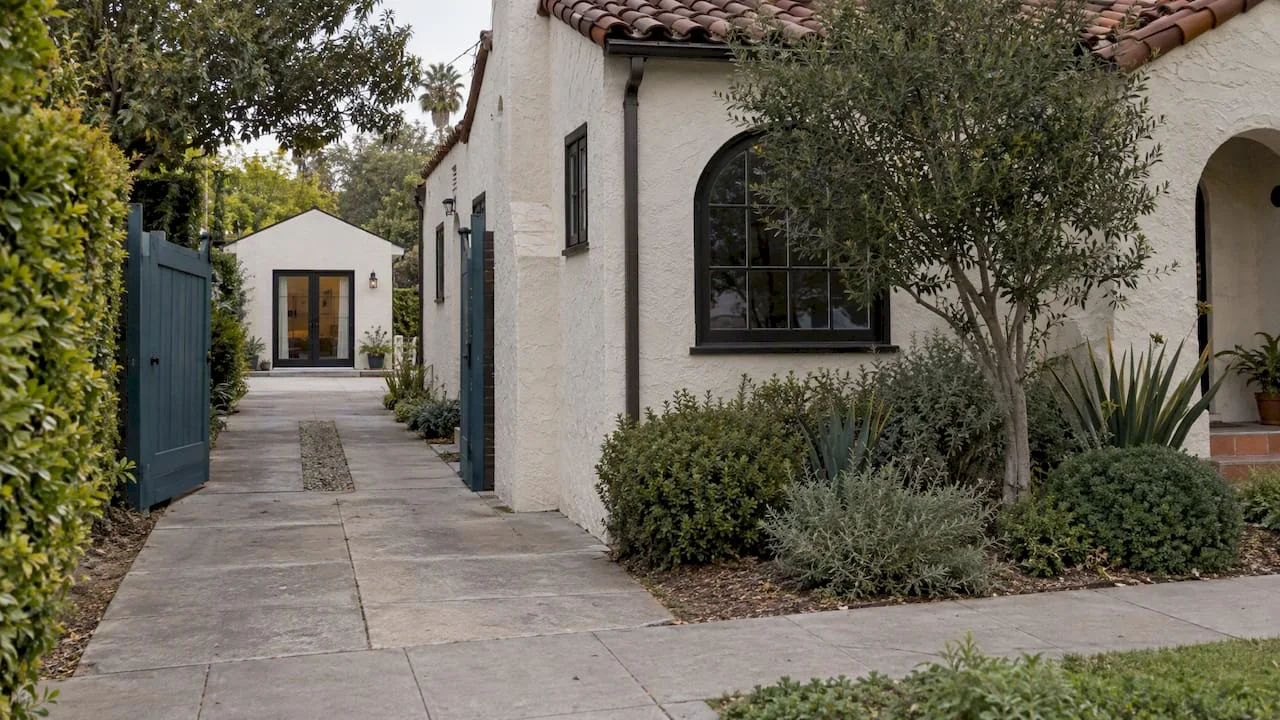
A rear-yard building that remains visually subordinate to the primary residence may create different preservation questions from a structure that dominates the street view.
Your design team should consider:
- view from the street;
- relationship to the main house;
- relationship to neighboring historic buildings;
- distance between structures;
- mature landscaping;
- existing accessory buildings.
Do not choose a footprint solely because it produces the maximum floor area.
The most buildable concept is sometimes the one that creates fewer conflicts between zoning, historic preservation, access, and construction.
Building Scale and Massing
Historic districts often have a recognizable pattern of scale.
A new ADU should therefore be reviewed in relation to the existing building rather than as an isolated object.
Height, wall planes, overall mass, and roof form can influence whether the new structure feels subordinate or visually dominant.
This becomes especially important for two-story ADUs or lots with small historic homes.
Roof Form and Roof Materials
Roof design is one of the easiest ways for a new structure to feel disconnected from an older property.
Depending on the district and building, reviewers may look at:
- roof pitch;
- gable or hip form;
- roof height;
- eave treatment;
- roofing material;
- relationship to the historic building.
That does not mean every roof must be copied.
However, roof form should be addressed intentionally during design.
Exterior Materials and Finishes
Stucco, siding, wood details, masonry, tile, and trim can all affect compatibility.
A real Carthay Square ADU project documented by NeoBuilders, for example, used exterior colors and materials that related to the existing Spanish-style duplex. The project illustrates how material decisions can become part of the historic-review strategy rather than a finish-selection exercise at the end.
For your property, follow the applicable Preservation Plan instead of copying another project’s material list.
Windows and Doors
Window proportions and door placement affect the character of a façade.
Historic review may consider issues such as:
- size;
- shape;
- rhythm;
- material;
- trim;
- placement;
- relationship to the primary house.
Because windows also affect natural light, energy compliance, egress, privacy, and interior layouts, decisions in this area can affect several parts of the ADU design at once.
Existing Garages and Accessory Structures
Garage conversions can be attractive because they use an existing footprint.
Inside an HPOZ, however, you should check the historic status of the garage before treating it as disposable.
One documented Los Angeles HPOZ project required an old garage to be restored rather than demolished. That result was specific to the property and its review, but it illustrates why demolition assumptions should be tested early.
Conversely, Los Angeles has also approved garage-to-ADU conversions inside HPOZs. A 2025 Miracle Mile case, for example, involved conversion of an existing detached garage plus an addition.
The lesson is not “garages cannot be changed.”
The lesson is check before demolition or redesign.
Landscaping and Other Historic Site Features
HPOZ controls can extend beyond buildings.
Los Angeles City Planning says exterior HPOZ review can include landscaping and other changes to the site.
Therefore, mature landscaping, pathways, walls, fences, or other site features may deserve review during feasibility planning.
Does an HPOZ ADU Have to Match the Main House?
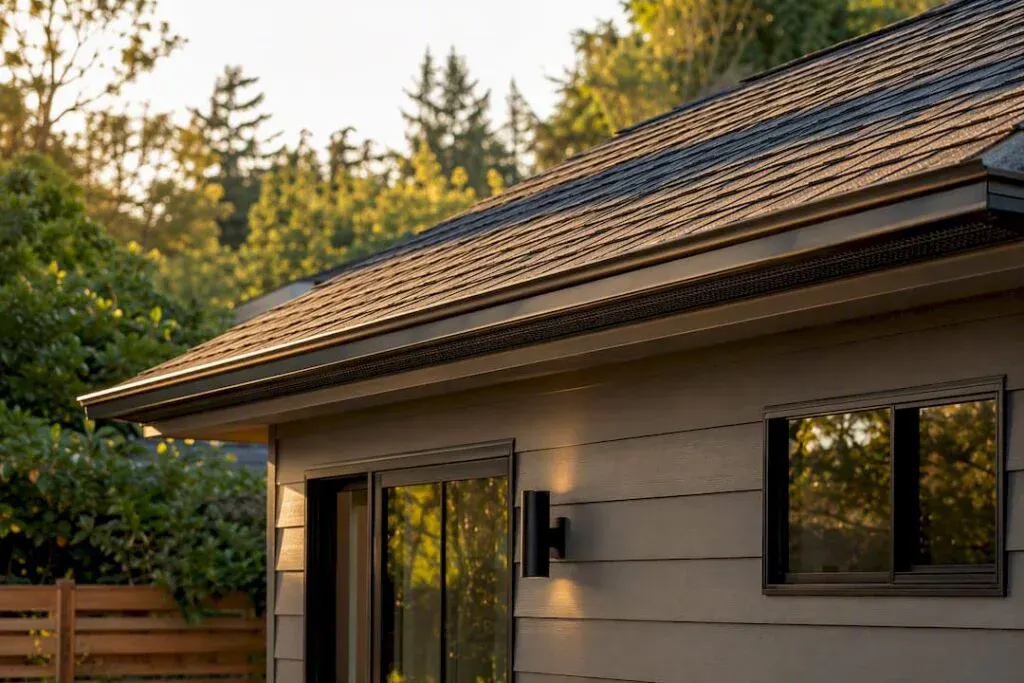
Not necessarily in the sense of creating a miniature copy.
However, an ADU may need to relate appropriately to the historic property and district.
The specific answer depends on the Preservation Plan and proposed work.
Compatibility could involve:
- scale;
- roof form;
- materials;
- proportions;
- exterior color;
- window character;
- architectural detailing.
In some projects, a close visual relationship may be appropriate. In others, a simpler compatible design may make more sense.
Avoid beginning with the assumption that “historic” means adding decorative details to a standard ADU plan.
Good historic compatibility usually starts with proportion, form, placement, and materials.
How the HPOZ ADU Permit Process Works in Los Angeles
The historic review and building permit process should be planned together.
They are not the same thing.
Step 1: Confirm the Property Rules
Before designing, verify:
- base zoning;
- HPOZ;
- contributing status;
- Preservation Plan;
- property dimensions;
- existing buildings;
- easements;
- hillside or fire constraints;
- other overlays.
This gives the design team a realistic starting envelope.
Step 2: Develop the ADU Design
Next, develop the plan around both ADU requirements and historic conditions.
A good ADU design in Los Angeles should account for these issues together instead of treating preservation review as a separate problem at the end.
That can reduce unnecessary redesign.
Step 3: Complete Required Historic-Preservation Review
Exterior work in an HPOZ can require review by Los Angeles City Planning.
The appropriate route depends on the project.
Some projects can be processed administratively. Others may require greater involvement from the HPOZ Board or another historic-review process.
Therefore, do not assume your neighbor’s approval route will automatically apply to your ADU.
Step 4: Complete LADBS Plan Check and Other Clearances
LADBS reviews ADU plans for applicable zoning, building, residential, and related code requirements.
The Department notes that other agency clearances may also be required. Its ADU guidance specifically identifies City Planning clearance for HPOZ properties as one possible requirement.
Depending on the site, additional coordination can involve items such as utilities, fire access, sewer, drainage, trees, or other departments.
Step 5: Obtain Permits and Build to the Approved Plans
Construction should follow the approved drawings and approval conditions.
Do not casually change an exterior material, window configuration, roof detail, or other reviewed feature during construction.
A seemingly small field substitution can create problems if it conflicts with the plans that received approval.
Does Every HPOZ ADU Go Before the HPOZ Board?
No.
Los Angeles City Planning explains that some HPOZ projects are reviewed at staff level while others go to the district’s HPOZ Board for consultation and review.
The City’s Online Application System currently includes HPOZ applications for categories of Conforming Work on both contributing and non-contributing elements.
Recent ADU case records also show projects processed administratively.
For example, a Harvard Heights detached ADU approved in 2025 is recorded as conforming work, with no board-review date shown in the case record.
Therefore, avoid assuming that every HPOZ ADU requires a full public board process.
The project scope determines the correct path.
What to Check Before Paying for Full ADU Plans
Before spending heavily on architecture and engineering, complete a feasibility review.
Check these items first:
- Is the property actually inside an HPOZ?
- Which HPOZ applies?
- Is the primary structure contributing or non-contributing?
- Are accessory structures historically significant?
- What does the Preservation Plan say?
- Which ADU type makes sense: detached, attached, or conversion?
- Are there hillside or fire-zone issues?
- Are there easements or utility conflicts?
- Where are sewer, electrical, and other utility connections?
- Could the proposed ADU affect protected exterior features?
- What HPOZ review path may apply?
- What other City clearances may be required?
This is where an experienced ADU architect Los Angeles team can be useful.
The goal is not simply to draw an attractive ADU.
The goal is to create a project that responds to the property, approvals, building requirements, budget, and eventual construction.
Common HPOZ ADU Mistakes That Can Cost Time and Money
Mistake 1: Designing First and Checking HPOZ Rules Later
This can force major revisions after architecture or engineering work has already started.
Check the historic framework first.
Mistake 2: Assuming a Standard ADU Plan Is Automatically HPOZ-Compatible
Los Angeles offers an ADU Standard Plan Program that can simplify building-code plan review for repeatable designs. However, LADBS states that site-specific factors still have to be reviewed. LADBS
An HPOZ property adds another site-specific consideration.
A pre-approved building design should therefore not be mistaken for automatic approval on every historic lot.
Mistake 3: Assuming Rear-Yard Work Is Invisible and Therefore Irrelevant
Location and visibility can influence review, but HPOZ requirements are not limited to one universal “visible from the street” test.
Check the applicable district and project category.
Mistake 4: Demolishing or Planning Around an Existing Garage Too Early
The old garage may seem inconvenient.
However, its historic status should be confirmed before demolition becomes part of the project strategy.
Mistake 5: Buying Exterior Materials Before Approval
Windows, roofing, siding, tile, trim, doors, and other visible materials can become important design-review items.
Specify them first.
Purchase them after the approval path is sufficiently clear.
Mistake 6: Treating HPOZ Clearance as the Building Permit
Historic-planning review and LADBS building approval serve different purposes.
You may need both.
Mistake 7: Assuming Every Historic District Has Identical Requirements
It does not.
Los Angeles City Planning maintains separate Preservation Plans and district information for individual HPOZs.
What Los Angeles Homeowners Should Know About the 2026 HPOZ Design Standards Update
This area deserves particular attention because the rules are evolving.
Los Angeles City Planning is currently working on objective design standards for housing projects in HPOZs, including ADU-specific standards. The City’s HPOZ page currently provides draft ADU standards, FAQs, workshop materials, and other project documents.The City’s 2025 Housing Element progress reporting described the objective-design project as still in progress and anticipated consideration during 2026.
That means homeowners should distinguish between:
adopted rules that apply now, and
draft standards that may shape future review.
Do not rely on a blog post, including this one, as a permanent substitute for checking the current City requirements when you file.
Before finalizing an HPOZ ADU Los Angeles project, verify the latest version of the applicable rules and Preservation Plan.
Frequently Asked Questions About HPOZ ADUs in Los Angeles
Potentially, yes.
Los Angeles continues to process and approve ADUs within HPOZs. However, historic-preservation review and property-specific conditions can affect the design and approval process.
Not automatically.
The ADU should be evaluated against the applicable Preservation Plan and historic context. Depending on the project, compatibility may involve scale, materials, roof form, windows, placement, or other exterior features.
Start with ZIMAS and the City’s historic-resource information.
City Planning explains that HPOZ surveys identify contributing and non-contributing resources. Does Every ADU Require an HPOZ Board Hearing?
No.
Some HPOZ work can receive administrative or staff-level review, while other work may involve the HPOZ Board. The correct path depends on the proposed project.
It may be possible.
Los Angeles case records include approved garage-to-ADU conversions in HPOZs. However, the garage’s historic status and proposed exterior alterations should be checked before assuming the conversion or demolition path is available.
HPOZ regulation primarily concerns historic resources and exterior/site changes rather than ordinary interior design.
Los Angeles’ zoning rules specifically identify interior modifications that do not change an exterior feature as an HPOZ exemption.
Building, structural, electrical, plumbing, mechanical, energy, and other applicable codes still apply.
Possibly, but a standard plan does not eliminate property-specific review.
LADBS explains that even pre-approved ADU plans are reviewed against site-specific zoning and foundation conditions. An HPOZ property may also require City Planning clearance.
Therefore, confirm HPOZ compatibility before assuming the standard plan can be built unchanged.
Plan Your HPOZ ADU Before You Commit to the Design
An HPOZ does not mean you should abandon an ADU project.
It means you should understand the property before locking in the design.
Confirm the historic district. Check contributing status. Read the Preservation Plan. Review the existing garage and other structures. Then coordinate the ADU layout, exterior design, permitting, utilities, and construction requirements as one project.
An experienced ADU builder Los Angeles team can help identify those conflicts before they become expensive construction or permitting changes.