

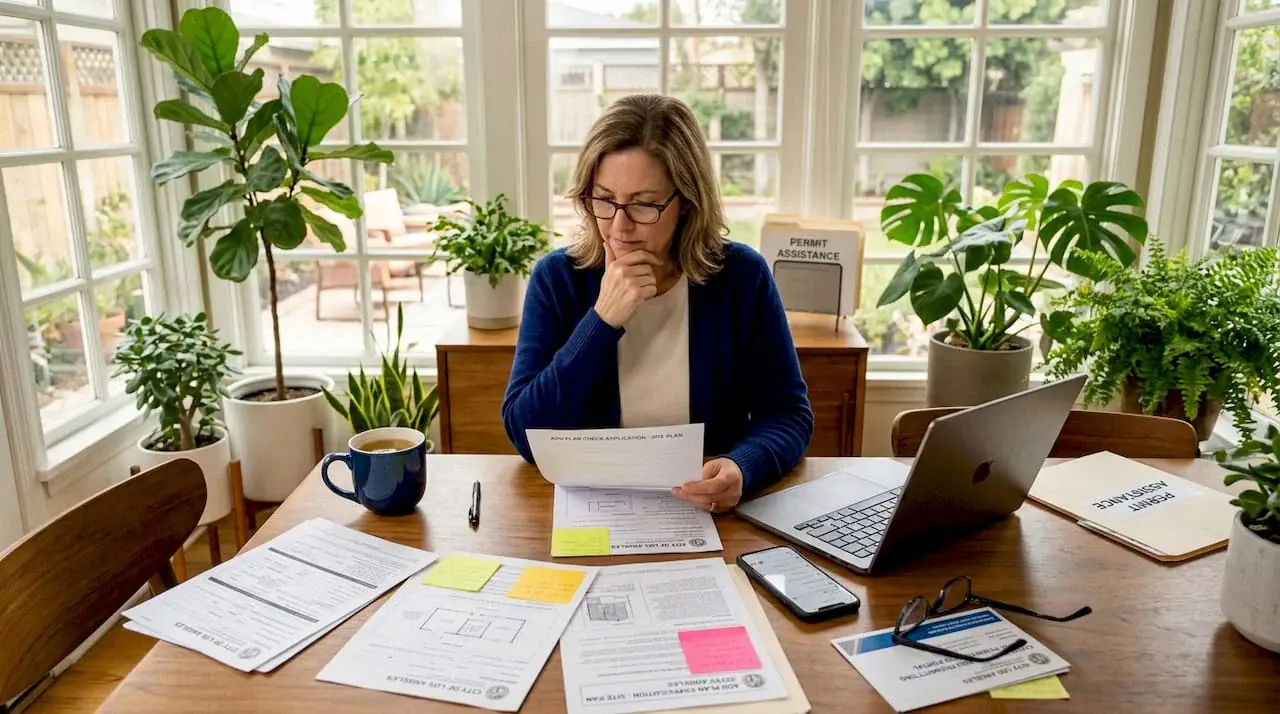
The ADU permit process is the step-by-step approval sequence California homeowners and investors must complete before breaking ground on an accessory dwelling unit. Under state law, local agencies must issue a completeness determination within 15 business days of submission and approve or deny a complete application within 60 days. That statutory framework gives you real leverage, but only if you submit a complete, well-prepared package from the start. This guide walks you through every stage of the accessory dwelling unit application, from document preparation to post-approval construction requirements, with specific strategies to avoid the delays that derail most projects.
What are the essential steps in the California ADU permit application process?
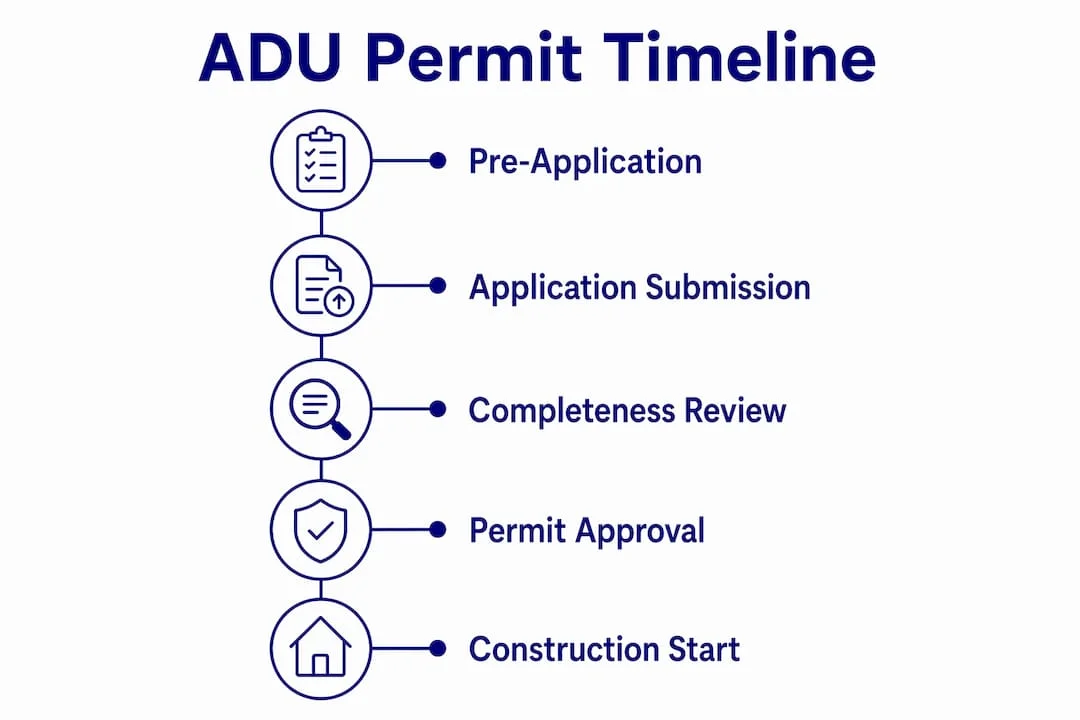
The step-by-step ADU process follows a defined sequence, and skipping or rushing any stage creates compounding delays. Here is the full path from preparation to permit issuance.
- Confirm zoning and property eligibility. Before drafting a single plan, verify that your parcel allows an ADU under local zoning rules. Use your city’s online zoning portal or the ADU feasibility checklist to confirm setbacks, lot coverage limits, and utility capacity.
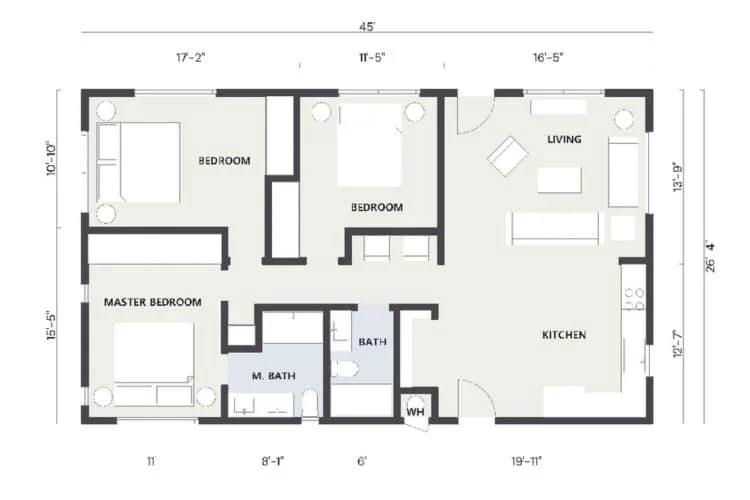
- Prepare your application package. A complete accessory dwelling unit application typically includes a site plan, floor plans, elevations, structural drawings, Title 24 energy calculations, and a soils report if required. Missing even one document triggers a completeness failure and restarts your clock.
- Submit and receive a completeness determination. Once submitted, the agency has 15 business days to notify you in writing whether your application is complete. A complete determination starts the 60-day approval countdown. An incomplete determination stops it entirely.
- Respond to plan check corrections. Most applications receive at least one round of plan check comments. Your architect or engineer must address each comment in writing and resubmit revised drawings. The speed of this cycle depends almost entirely on the quality of your initial submittal.
- Receive final approval and pay permit fees. Once the agency clears all corrections, it issues the permit. You pay remaining fees, receive your permit documents, and are cleared to begin construction under the conditions stated in the approval.
- Post the permit and schedule inspections. California requires the permit to be displayed on site during construction. You must schedule inspections at each required phase, including foundation, framing, rough mechanical, and final.
Pro Tip: Request a pre-application meeting with your local planning department before submitting. A single 30-minute conversation can reveal jurisdiction-specific requirements that are not published online, saving you weeks of back-and-forth.
How do California’s statutory timelines shape the ADU permit process?
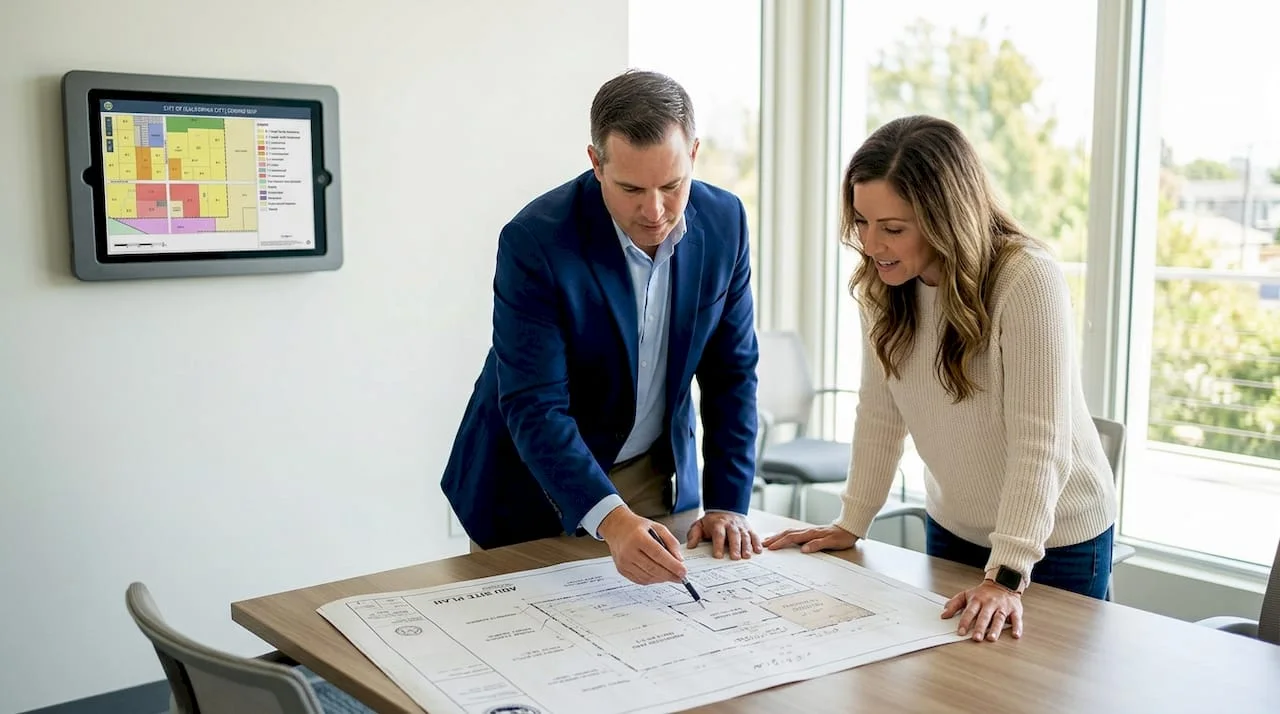
California’s ADU permit requirements are governed by state statute, which means local agencies cannot simply ignore deadlines. Understanding how these timelines work gives you a concrete tool for managing your project schedule.
The 60-day approval clock begins only after a completeness determination is issued. This is the most misunderstood part of the process. Many applicants assume the clock starts at submission. It does not. The agency first has 15 business days to review your package for completeness, and only a written completeness notice triggers the 60-day window.
If the agency finds your application incomplete, it must provide a written list of deficiencies and specific instructions for correcting them. This requirement protects applicants from vague rejections, but it also means every resubmittal restarts the completeness review. One incomplete application can easily add two to four months to your timeline.
Key facts about California ADU permit timelines:
- The 15-business-day completeness window applies to all ADU applications statewide, regardless of city size.
- The 60-day approval period begins only after written completeness confirmation, not at submission.
- Agencies that miss the 60-day deadline are subject to legal challenge, though enforcement varies by jurisdiction.
- Appeals to incompleteness rulings trigger a new 60-business-day agency review period for final determination.
- Local agencies may impose additional procedural steps within the 60-day window, such as fire department review or utility sign-off.
“The 60-day state-level review clock is a guardrail, not a guarantee of construction readiness due to local process variations.” This means your real project timeline depends on how well you manage the completeness stage, not just on statutory deadlines.
What common pitfalls cause delays during the ADU permit process?
Plan check correction cycles are the single largest source of timeline slippage in California ADU permitting. Most delays are preventable with better preparation, not faster agency response.
The most frequent completeness failures
Missing documents are the leading cause of incomplete determinations. The items most commonly absent from first-time submissions include:
- Dimensioned site plans showing all existing and proposed structures
- Title 24 energy compliance documentation
- Structural calculations stamped by a licensed engineer
- Soils or geotechnical reports in hillside or high-liquefaction zones
- Utility connection diagrams for water, sewer, and electrical service
Each missing item sends your application back to square one. Scheduling a pre-submittal meeting with local planning staff before submission is the single most effective way to catch these gaps before they cost you time.
How investors handle multiple projects
Property investors managing several ADU projects simultaneously face a compounding version of this problem. The solution is to build a standardized documentation package that mirrors your city’s intake checklist exactly. Investors who standardize their documentation across projects consistently achieve first-time completeness, cutting months off their aggregate development timelines.
Pro Tip: Build your submittal checklist directly from your city’s published ADU intake requirements, not from a generic template. Los Angeles, Pasadena, and unincorporated LA County each have different documentation standards. Check the LA County ADU regulations page for jurisdiction-specific details.
Comparison: prepared vs. unprepared application outcomes
| Factor | Prepared application | Unprepared application |
|---|---|---|
| Completeness determination | Achieved in first review cycle | Requires one or more resubmittals |
| Time to permit issuance | 60 to 90 days from submission | 4 to 9 months from submission |
| Plan check correction rounds | Zero to one | Two to four or more |
| Total cost impact | Minimal additional fees | Significant resubmittal and consultant costs |
How can preapproved ADU plans reduce your permitting timeline?
Preapproved ADU plan sets can reduce permitting timelines by months and cut development costs by 1% to 2%. For a $500,000 project, that translates to roughly $10,000 in savings. The mechanism is straightforward: preapproved plans have already cleared the agency’s structural and architectural review, so the plan check stage is dramatically shorter.
California legislation now requires local agencies to develop preapproval programs, and agencies must post preapproved ADU plans publicly on their websites to facilitate access. This means you can often download a compliant plan set directly from your city’s portal and submit it with site-specific modifications rather than starting from scratch.
Cities like Seattle and Hawai’i County have demonstrated that preapproved plan libraries reduce both agency workload and applicant costs simultaneously. California jurisdictions are following the same path, with Los Angeles and several surrounding cities actively expanding their preapproved catalogs.
How to use preapproved plans effectively:
- Search your city’s planning department website for an ADU preapproved plan library or catalog.
- Confirm that the plan matches your lot’s setback, height, and square footage constraints before purchasing or downloading.
- Hire a licensed architect to prepare site-specific drawings that connect the preapproved design to your property’s actual conditions.
- Submit the preapproved plan set reference number with your application to signal to reviewers that structural compliance is already established.
For a deeper look at how AB 1332 shapes preapproval programs in California, the pre-approved ADU plans guide from Uni Construction covers the legislative requirements and practical steps in detail.
| Plan type | Typical review time | Cost range | Best for |
|---|---|---|---|
| Custom design | 60 to 120+ days | $15,000 to $40,000+ | Unique lots or complex programs |
| Preapproved plan set | 15 to 45 days | $3,000 to $12,000 | Standard lots with typical configurations |
| Hybrid (preapproved base, custom site) | 30 to 60 days | $8,000 to $20,000 | Most California residential lots |
What should you do after permit approval before starting construction?
Receiving your permit is not the finish line. Several procedural steps must happen between permit issuance and the first day of construction, and skipping them can result in stop-work orders or failed inspections.
After permit approval, the required actions include:
- Pay all remaining fees. Some jurisdictions split fees between application and issuance stages. Confirm the full fee schedule with your building department before your contractor mobilizes.
- Post the permit on site. California requires the permit to be visibly displayed at the construction location throughout the build. Failure to post can result in inspection delays.
- Check the expiration date. Most California building permits expire if construction does not begin within 180 days of issuance or if work is suspended for 180 or more consecutive days. Know your deadline.
- Review all permit conditions. Permits often include specific conditions, such as noise restrictions, construction hours, or requirements for temporary fencing. Your contractor must be briefed on every condition before work begins.
- Coordinate utility connections. Water, sewer, and electrical connections often require separate utility company approvals that run parallel to but separate from the building permit. Start those conversations early.
- Schedule your first inspection. In most California jurisdictions, you must call for a foundation inspection before pouring concrete. Missing this step can require demolition and repour.
Key takeaways
A complete, well-prepared application is the single most important factor in achieving a fast ADU permit approval in California.
| Point | Details |
|---|---|
| Completeness triggers the clock | The 60-day approval window starts only after a written completeness determination, not at submission. |
| Preparation prevents delays | Missing documents are the top cause of resubmittals; build your checklist from your city’s intake requirements. |
| Preapproved plans save time and money | Using a preapproved plan set can cut months from your timeline and reduce costs by 1% to 2%. |
| Post-approval steps are mandatory | Fee payment, permit posting, and inspection scheduling must happen before construction begins. |
| Local rules vary within state law | State timelines set the floor; each jurisdiction adds its own procedural layers on top. |
What working on hundreds of California ADU permits taught me
After years of managing ADU permit applications across Los Angeles and surrounding California counties, the pattern is consistent: the projects that move fastest are not the ones with the most money or the biggest teams. They are the ones where the applicant treated the completeness review as the most important milestone in the entire process.
Most homeowners focus on design. They spend months selecting finishes and floor plans, then hand off a half-finished application package to a permit expediter and wonder why approvals take six months. The agencies are not slow. The applications are incomplete.
The single change that has the biggest impact is scheduling a pre-submittal meeting with the local planning department before any drawings are finalized. That conversation reveals jurisdiction-specific requirements that no checklist captures. In Los Angeles, for example, the Department of Building and Safety has specific digital submission formats that differ from what neighboring cities accept. Showing up with the wrong file format costs you a completeness cycle.
Preapproved plans are genuinely underused. Many California homeowners do not know their city has a preapproved catalog, and many architects do not proactively suggest it because custom design generates more billable hours. If your lot is standard and your program is straightforward, a preapproved plan set is almost always the faster and cheaper path.
The 60-day statutory clock is real protection, but it is not a project management tool. Build your own internal timeline with buffer for one plan check correction cycle, one utility coordination delay, and one inspection scheduling gap. That realistic schedule will serve you far better than assuming the statutory minimum.
, Uni Construction
How Uni Construction can help you navigate the ADU permit process
Uni Construction specializes in ADU design, permit-ready drawings, structural engineering, and construction consulting across Los Angeles and surrounding California counties. The team handles every stage of the accessory dwelling unit application, from pre-submittal feasibility reviews through final permit issuance, with deep experience in the specific requirements of LA City, LA County, Pasadena, and neighboring jurisdictions.
If you are ready to move forward, Uni Construction’s ADU design and build services in Los Angeles include preapproved plan options, full custom design, and permit consulting packages tailored to your property and timeline. Whether you are building a backyard cottage, converting a garage, or adding a junior ADU, the team brings the documentation standards and agency relationships that get applications approved the first time.
FAQ
A complete application receives a decision within 60 days under California state law. In practice, most projects take 3 to 6 months when accounting for plan check corrections and pre-submittal preparation.
A standard accessory dwelling unit application requires a site plan, floor plans, elevations, structural drawings, Title 24 energy calculations, and utility connection diagrams. Specific requirements vary by jurisdiction.
The agency must provide a written list of deficiencies and instructions to correct them. You resubmit the corrected package, and the 15-business-day completeness review restarts.
Yes. California law allows applicants to appeal incompleteness rulings, and the agency must issue a final decision within 60 business days of the appeal filing.
California requires local agencies to develop preapproval programs, but catalog availability varies. Check your city’s planning department website or contact Uni Construction to confirm which preapproved options apply to your specific jurisdiction.