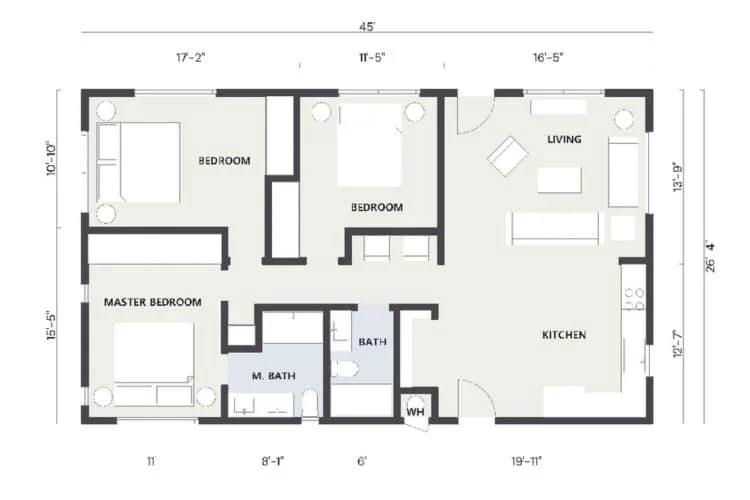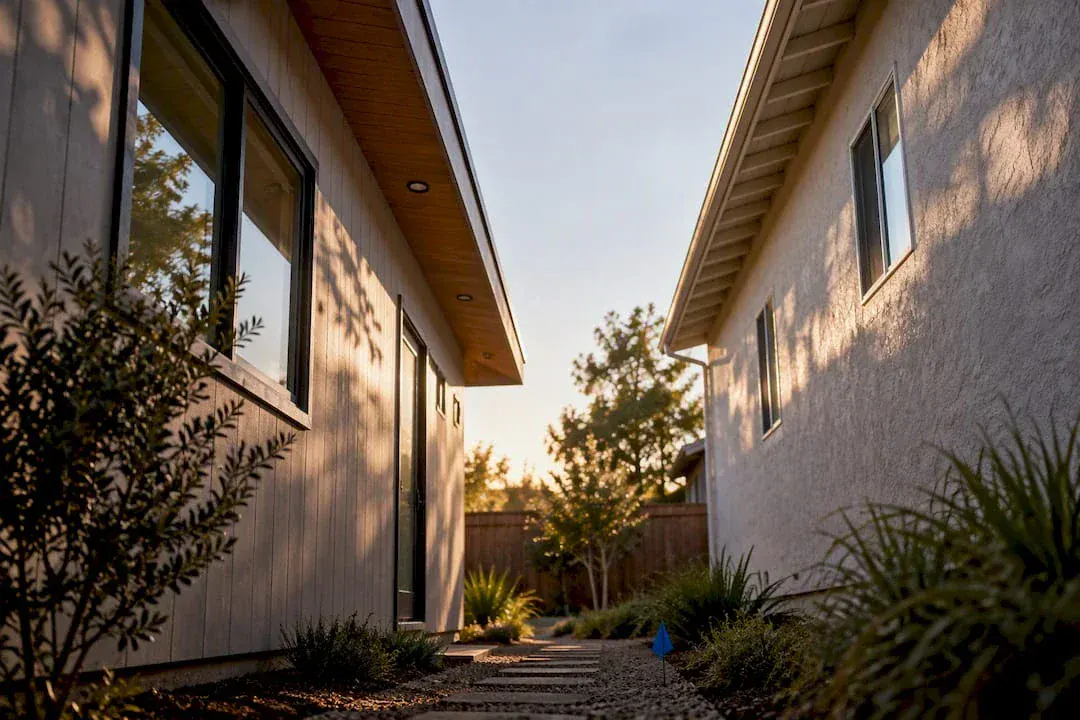



Most Los Angeles homeowners building an ADU do not need to provide a parking space at all. State law caps how much cities can demand, and Los Angeles has adopted those limits through its own zoning memos. The main exceptions: some newly built detached ADUs, properties in very high fire hazard zones, and permits filed alongside a brand-new main house can still trigger a one-space requirement. Everything else, from garage conversions to junior ADUs, is typically exempt.
TL;DR:
- Most Los Angeles ADUs are exempt from requiring parking spaces unless they are newly built detached units or located in high fire hazard zones.
- The state law limits required parking to one space per ADU or bedroom, allowing tandem parking and prohibiting replacement parking when converting garages.
- Four waivers can exempt properties from parking requirements, including proximity to transit within half a mile, garage conversions, junior ADUs, and certain historic or car-share areas.
- Proof of a parking waiver must include clear documentation such as a site plan, transit maps, and specific waiver references to avoid delays.
- Accurate measurement of transit distance and confirmation of fire zone status are crucial before submitting permit applications to ensure proper evaluation of parking requirements.
What Are the ADU Parking Requirements in Los Angeles?
The starting point is California Government Code § 66314, which puts a hard ceiling on what any city, including Los Angeles, can demand. A jurisdiction cannot require more than one parking space per ADU or per bedroom, whichever is smaller, and it must allow tandem parking on a driveway to satisfy that space. The statute also bars cities from requiring replacement parking when a homeowner demolishes or converts a garage or carport as part of building an ADU.
Los Angeles applies this through LAMC 12.22 A.33 and a series of Zoning Administrator memos that translate the state rule into local permitting practice. LADBS confirms on its ADU page that most projects clear plan check without adding a parking space, because the waivers built into state law cover the majority of typical Los Angeles lots.
A parking space can still be required in a few specific scenarios:
- You are building a newly constructed, detached ADU that doesn’t qualify for a transit, car-share, or historic-district exemption.
- Your ADU permit adds square footage to the primary residence at the same time.
- You’re filing for a brand-new primary dwelling and an ADU on the same lot simultaneously.
- The property sits in an area with no existing on-site parking for the main house and no qualifying waiver applies.
Each of these gets refined further in the next sections, so don’t assume you’re stuck with a space requirement just because one of these sounds familiar.
Which ADU Parking Waivers Actually Apply to Your Lot?
Four separate waivers cover most Los Angeles properties, and they stack. You only need one to apply.
- Transit proximity. If your lot sits within a half mile, measured as a walking distance rather than a straight line, of a public bus stop or rail station, no parking is required for the ADU. ZA Memo No. 143 spells this out directly and is the memo plan checkers reference most often.
- Garage or carport conversion. When you convert or demolish an existing garage or carport to build the ADU, the city cannot require you to replace that parking, as long as the demolition or conversion permit is tied to the same project.
- Junior ADUs. A JADU, built entirely within the existing footprint of the main house, never triggers a parking requirement under city guidance.
- Car-share and historic-district exceptions. A lot within a specified distance of a dedicated car-share pickup spot, or inside certain historic preservation overlay zones, can also qualify for a waiver depending on the ordinance in effect at filing.
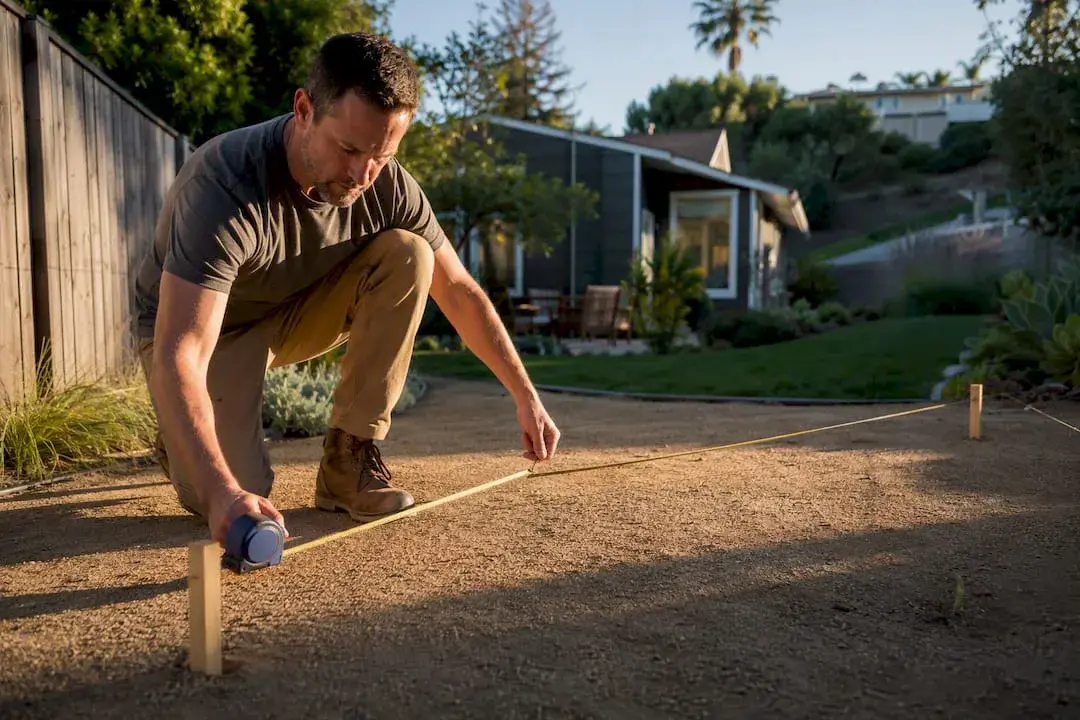
Pro Tip: If your address is close to the half-mile transit line, don’t guess. Measure the actual pedestrian route, not the straight-line distance, since that’s what plan checkers accept as proof.
How Do You Prove a Parking Exemption to LADBS?
Plan checkers approve waivers faster when the documentation is unambiguous. Vague statements like “near a bus stop” invite a correction request that stalls your permit for weeks.
Build your submission around these pieces:
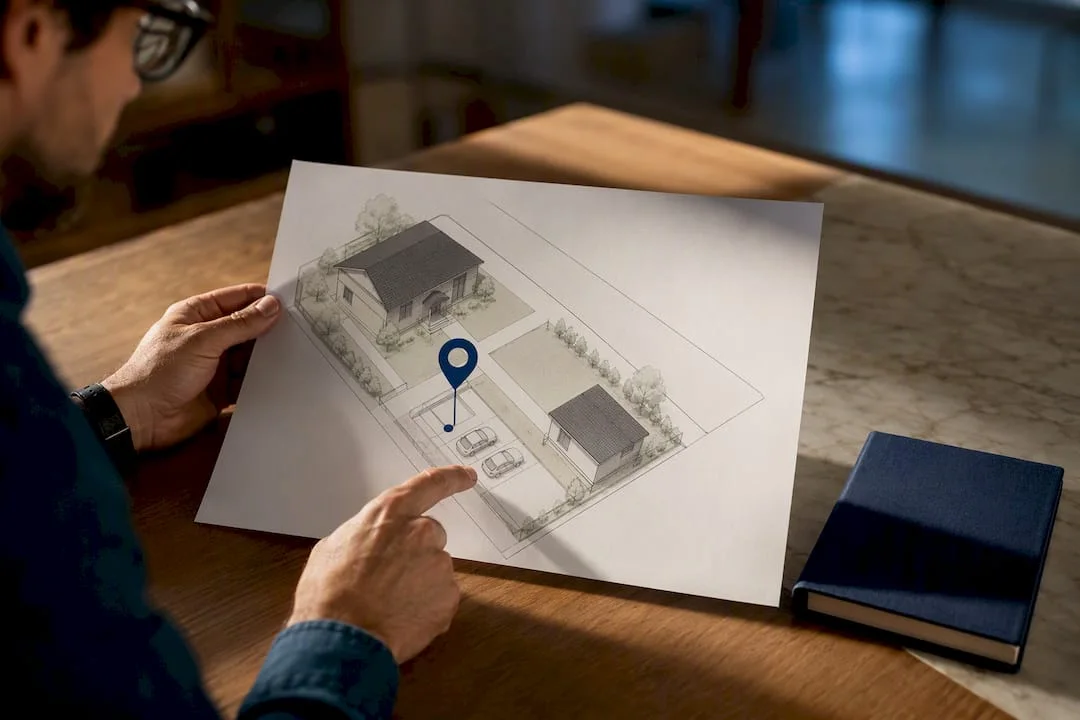
- A signed site plan showing the ADU footprint and any garage or carport being converted or removed.
- A transit-distance map with a labeled pedestrian route from the ADU’s entrance to the nearest stop, not just a screenshot of a map app.
- The permit number for any concurrent demolition or garage-conversion permit tied to the ADU.
- A short narrative statement citing the specific waiver you’re claiming and the code section or ZA memo that supports it.
Pull your transit data from LA Metro’s own route maps or LADOT’s mapping tools rather than a generic navigation app, since those sources match what the city itself uses to verify distance claims.
Pro Tip: Label the waiver directly on the site plan, not just in a cover letter. Plan checkers moving fast through a stack of drawings are far more likely to catch a callout on the plan itself than a note buried in a separate PDF.
Special Cases That Change the Parking Outcome
A handful of situations override the standard waivers, and missing one is the fastest way to get a plan-check rejection after you thought you were exempt.
- Very High Fire Hazard Severity Zones. Properties in a VHFHSZ can face additional fire and life-safety conditions that affect driveway width, tandem parking feasibility, or access requirements, even when a parking waiver otherwise applies.
- Rent Stabilization Ordinance interactions. If your ADU project touches an older multi-unit building already under rent stabilization, the parking analysis can get tangled up with separate housing-code obligations that have nothing to do with the ADU ordinance itself.
- Simultaneous permit filings. Filing for a new primary residence, a new multifamily building, or multiple ADUs at once, on the same application, can remove waivers that would otherwise apply to a standalone ADU permit.
If any of these apply to your property, treat the standard waiver logic as a starting point, not a guarantee, and confirm your specific address against current planning guidance before you finalize drawings.
A 9-Step Checklist Before You File Your ADU Permit
Work through this in order, and you’ll walk into plan check knowing exactly where you stand on parking.
- Identify your ADU type: detached, attached, garage conversion, or JADU.
- Pull your property address up against LA Metro’s transit map and measure the walking distance to the nearest bus or rail stop.
- Check whether your lot sits in a VHFHSZ using the city’s fire hazard severity zone map.
- Confirm whether you’re demolishing or converting an existing garage or carport as part of the project.
- Determine whether you’re filing the ADU permit alongside any new primary dwelling or multifamily unit.
- Draft your site plan with the ADU footprint, any garage conversion, and a labeled transit-distance callout.
- Write a short narrative statement naming the exact waiver you’re claiming.
- Gather permit numbers for any related demolition or conversion filings, and submit them concurrently rather than as a follow-up.
- Decide whether to assemble the package yourself or bring in a design professional, especially if VHFHSZ conditions or multiple simultaneous permits are involved.
Pro Tip: File your demolition or garage-conversion permit at the same time as your ADU permit whenever you’re relying on the replacement-parking waiver. A separate, later filing creates a paper trail that makes it look like the parking was removed independently of the ADU, which invites unnecessary questions.
Once you’ve worked through those nine steps, you’ll know whether your project needs a parking space, a waiver narrative, or nothing more than a clean site plan. For zoning specifics beyond parking, like setbacks and unit size limits, the Los Angeles ADU zoning guide covers the rest of what LAMC governs on your lot.
How Uni Construction Handles ADU Parking Documentation
Parking waivers are usually simple on paper and messy in practice, mostly because plan checkers want the proof formatted a specific way. This proof is built into the permit-ready package from the start rather than treated as an afterthought.
That includes:
- Site evaluations that check transit distance, fire zone status, and existing garage or carport conditions before drawings begin.
- Permit-ready site plans with labeled waiver callouts and transit-distance maps built to the standard plan checkers expect.
- Coordination of concurrent demolition or conversion permits so the replacement-parking waiver is documented contemporaneously, not after the fact.
- Structural and Title 24 energy compliance work bundled into the same package, so a parking question doesn’t stall an otherwise complete application.
Hiring a professional makes the most sense when your lot sits in a VHFHSZ, when you’re filing multiple permits on one property, or when the transit-distance math is close enough that a mismeasured walking route could cost you the waiver. For homeowners weighing project timelines, the ADU approval process guide breaks down what happens after submission.
If you’re ready to get a permit-ready package built around your specific address, Uni Construction’s Los Angeles ADU design services start with the same site evaluation used to confirm parking waivers before drawings are finalized. Homeowners weighing a garage conversion against a detached unit can also review ADU types for Los Angeles properties to see which structure fits their lot and their waiver eligibility.
Where to Find the Official Rules
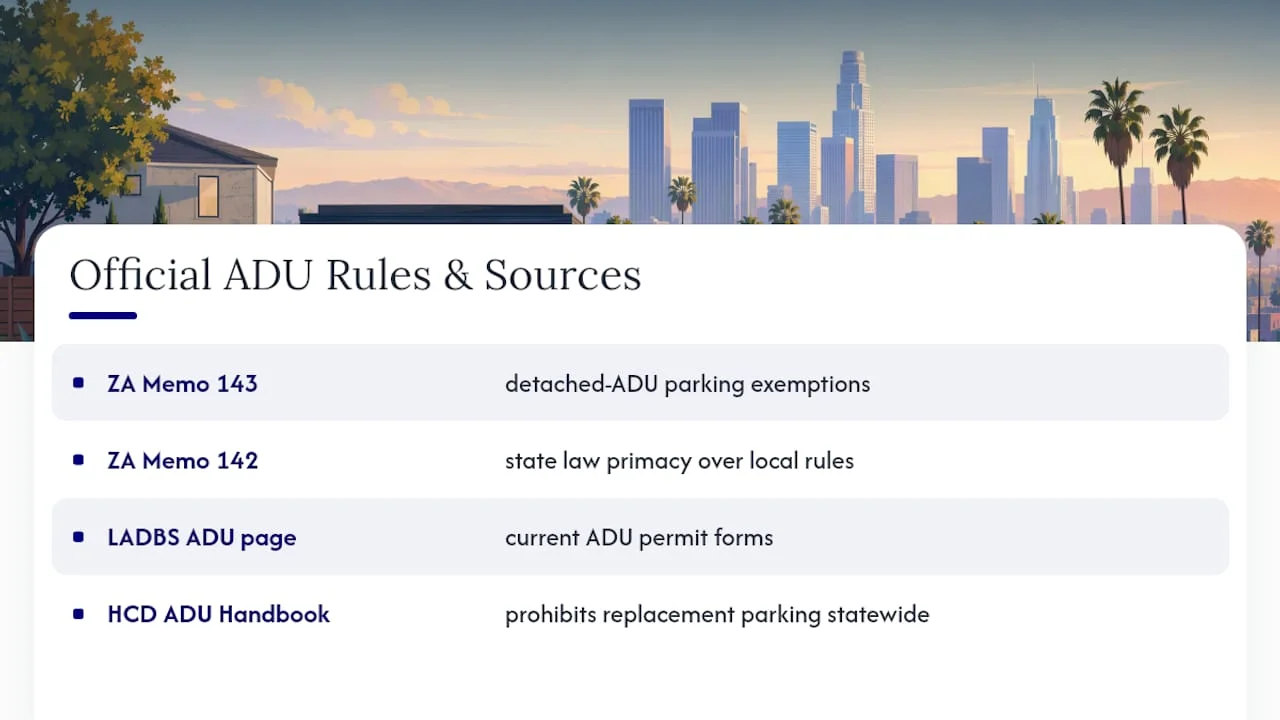
Print or bookmark these for your permit file: ZA Memo No. 143 covers detached-ADU parking exemptions; ZA Memo 142 explains state law’s primacy over local rules; LADBS’s ADU page hosts current forms; and the HCD ADU Handbook supports the replacement-parking prohibition statewide.
What Homeowners Consistently Get Wrong About ADU Parking
The biggest misread on this topic isn’t a legal one. It’s assumption. Homeowners hear “ADU parking is basically eliminated” from a neighbor or a contractor and stop checking their specific address against the transit map, the fire hazard overlay, or the timing of their other permits. That shortcut works until it doesn’t, usually at the plan-check counter, weeks into a project.
The conventional advice treats the waivers as automatic. They’re not automatic. They’re conditional, and the conditions are specific enough that a half mile measured wrong, or a demolition permit filed a month after the ADU permit instead of alongside it, can flip the outcome.
If you take one thing from this guide, prioritize the documentation over the assumption. Measure the transit distance yourself before you draft anything. Confirm your fire hazard zone status early, not after your site plan is done. And if you’re filing more than one permit on the same lot, get clear on how that interacts with your waiver before you submit, not after a correction letter arrives.
, Uni Construction